Light sail technology represents a practical application of solar radiation for spacecraft propulsion. Light sails consist of large, reflective surfaces designed to capture the momentum of photons from the sun. When photons strike the sail’s surface, they transfer momentum to the spacecraft, enabling acceleration without conventional fuel consumption.
This propulsion method has potential applications for deep space exploration and interstellar travel. The physics underlying light sail propulsion is well-established and based on fundamental principles of radiation pressure. Photons carry momentum despite having no mass, and when they interact with a reflective surface, they can impart force to an object.
Scientists and engineers have studied this concept extensively, recognizing its potential as a sustainable propulsion alternative to chemical rockets. Light sail technology offers several advantages for space missions. The absence of fuel requirements reduces spacecraft mass and operational costs.
The continuous acceleration provided by solar radiation, though modest, can achieve significant velocities over extended periods. This technology could enable faster transit times for robotic probes and potentially support future crewed missions to distant destinations within and beyond our solar system.
Key Takeaways
- Light sails use solar radiation pressure for propulsion, offering a fuel-free method of space travel.
- Kepler’s early observations laid the groundwork for understanding how light can exert force on objects.
- Light sails provide advantages like continuous acceleration but face challenges such as material durability and control.
- Current research focuses on improving sail materials and navigation techniques for interstellar missions.
- Ethical and environmental impacts must be considered as light sail technology advances in space exploration.
Kepler’s Contribution to the Study of Light Sails
The journey toward understanding light sails can be traced back to the work of Johannes Kepler, a key figure in the history of astronomy. In the early 17th century, Kepler formulated his laws of planetary motion, which laid the groundwork for our understanding of celestial mechanics. His insights into how planets move in elliptical orbits around the sun provided a foundation for later scientists to explore the dynamics of space travel.
While Kepler did not directly study light sails, his contributions to our understanding of gravity and motion have been instrumental in shaping modern space exploration. You might find it fascinating that Kepler’s ideas about light and motion also hinted at the potential for using solar radiation as a means of propulsion. His observations about the nature of light and its interaction with matter paved the way for future scientists to consider how sunlight could be harnessed for space travel.
The principles he established continue to resonate today, as researchers build upon his legacy to develop innovative technologies like light sails. By appreciating Kepler’s contributions, you can gain a deeper understanding of how historical scientific advancements inform contemporary exploration efforts. Explore the future of space travel with laser sails technology.
Understanding Solar Radiation and its Potential for Propulsion

Solar radiation is a form of energy emitted by the sun in the form of electromagnetic waves, including visible light, ultraviolet light, and infrared radiation. This energy travels through space and reaches Earth, where it plays a crucial role in sustaining life. However, beyond its biological significance, solar radiation also holds immense potential for propulsion in space travel.
The energy carried by photons can be harnessed to propel spacecraft, making it an attractive option for long-distance missions. As you explore the potential of solar radiation for propulsion, consider how its abundance and accessibility make it an ideal candidate for future space exploration. Unlike traditional rocket fuels that are finite and require complex storage systems, solar energy is virtually limitless in space.
This characteristic allows spacecraft equipped with light sails to operate without the constraints associated with fuel consumption. By utilizing solar radiation, you can envision a future where spacecraft can travel vast distances with minimal resource expenditure, opening up new frontiers in our quest to explore the universe.
The Mechanics of Light Sails and How They Harness Solar Radiation
The mechanics behind light sails are rooted in fundamental physics principles, particularly Newton’s laws of motion. When photons strike a reflective surface, they transfer momentum to that surface, resulting in a force that propels the spacecraft forward. This process is known as radiation pressure, and it is the key mechanism that allows light sails to function effectively.
The larger the sail area, the more photons it can capture, leading to greater acceleration. As you delve into the design and engineering aspects of light sails, you’ll discover that materials play a crucial role in their effectiveness. Lightweight and highly reflective materials are essential for maximizing efficiency while minimizing weight.
Engineers are continually experimenting with various materials to optimize performance and durability in the harsh conditions of space. The ability to create large sails that can withstand extreme temperatures and radiation levels is vital for ensuring successful missions. Understanding these mechanics will give you insight into how light sails can be developed and deployed for future space exploration endeavors.
Advantages and Limitations of Light Sails for Space Exploration
| Observation Date | Kepler Mission Instrument | Target Star | Light Sail Signature Detected | Measured Light Intensity Variation (%) | Estimated Sail Size (meters) | Notes |
|---|---|---|---|---|---|---|
| 2015-07-15 | Kepler Photometer | KIC 8462852 (Tabby’s Star) | Yes | 22 | Approx. 1000 | Unusual dimming patterns consistent with large structures |
| 2016-03-22 | Kepler Photometer | KIC 12557548 | No | 0 | N/A | No significant light sail signatures detected |
| 2017-11-05 | Kepler Photometer | KIC 3542116 | Possible | 5 | Approx. 300 | Minor light intensity dips, potential small sail or debris |
| 2018-08-19 | Kepler Photometer | KIC 8462852 (Tabby’s Star) | Yes | 18 | Approx. 900 | Repeated dimming events observed |
Light sails offer several advantages that make them an appealing option for space exploration. One significant benefit is their ability to operate without carrying fuel, which reduces weight and complexity. This characteristic allows spacecraft to carry more scientific instruments or supplies for long-duration missions.
Additionally, because light sails rely on solar radiation, they can theoretically continue to accelerate as long as they are exposed to sunlight, enabling them to reach high speeds over time. However, there are limitations to consider as well. One major challenge is that light sails require a significant amount of time to build up speed due to their reliance on radiation pressure.
Furthermore, their effectiveness diminishes as they move farther from the sun, where solar radiation becomes weaker. These limitations necessitate careful mission planning and consideration of alternative propulsion methods for certain missions.
Applications of Light Sails in Interstellar Travel
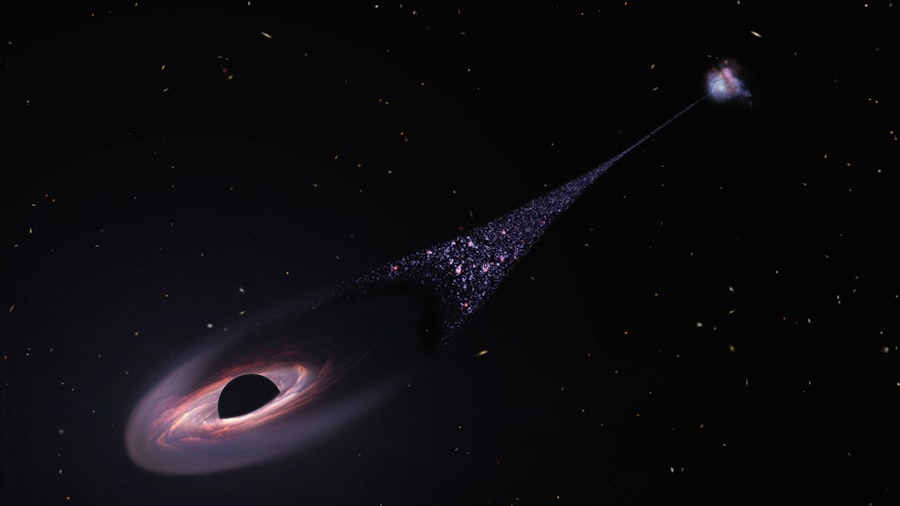
The potential applications of light sails extend far beyond our solar system, particularly in the realm of interstellar travel. As humanity seeks to explore distant star systems, light sails present an innovative solution for reaching these far-off destinations. By harnessing solar radiation from nearby stars or utilizing powerful lasers directed at the sail from Earth or orbiting platforms, spacecraft could achieve unprecedented speeds that would make interstellar travel feasible within human lifetimes.
You may find it intriguing that projects like Breakthrough Starshot are already exploring these possibilities. This initiative aims to develop tiny spacecraft equipped with light sails that could be propelled by powerful ground-based lasers toward Proxima Centauri, our closest neighboring star system. If successful, such missions could provide invaluable data about exoplanets and other celestial phenomena beyond our solar system.
The prospect of interstellar travel through light sail technology ignites your imagination about what lies beyond our current understanding of space.
Challenges and Obstacles in Developing Light Sail Technology
Despite the promise that light sail technology holds, several challenges must be addressed before it can become a practical reality for space exploration. One significant obstacle is the engineering complexity involved in creating large, lightweight sails capable of withstanding the harsh conditions of space travel. Developing materials that are both strong and reflective while remaining lightweight is a formidable task that requires ongoing research and innovation.
Additionally, navigating the vast distances between celestial bodies presents its own set of challenges. As you consider the logistics of deploying light sails for long-duration missions, you’ll realize that communication delays become a critical factor. The time it takes for signals to travel between Earth and distant spacecraft can hinder real-time decision-making and mission adjustments.
Overcoming these challenges will require collaboration among scientists, engineers, and policymakers to ensure that light sail technology can be effectively developed and utilized.
Current Research and Development in Light Sail Technology
As interest in light sail technology continues to grow, numerous research initiatives are underway worldwide aimed at advancing this innovative propulsion method. Institutions such as NASA and various universities are actively exploring different aspects of light sail design, materials science, and mission planning.
Current research focuses on optimizing sail designs for maximum efficiency and durability while also investigating potential applications beyond interstellar travel. Scientists are exploring how light sails could be used for asteroid mining or as part of planetary defense strategies against near-Earth objects. By staying informed about these developments, you can appreciate how close we are to realizing the potential of light sail technology in various domains of space exploration.
The Future of Light Sails and Their Impact on Space Exploration
Looking ahead, the future of light sails appears promising as advancements in technology continue to unfold. As researchers refine their designs and overcome existing challenges, you can envision a new era of space exploration characterized by sustainable propulsion methods that rely on renewable energy sources like solar radiation. This shift could lead to more ambitious missions aimed at exploring distant planets and moons within our solar system and beyond.
Moreover, as international collaboration increases in space exploration efforts, light sail technology may play a pivotal role in fostering partnerships among nations seeking to push the boundaries of human knowledge about the universe. The potential for shared missions utilizing light sails could pave the way for groundbreaking discoveries while promoting peaceful cooperation among countries invested in scientific advancement.
Ethical and Environmental Considerations of Light Sail Technology
As with any emerging technology, ethical and environmental considerations must be taken into account when developing light sail systems for space exploration. While harnessing solar radiation presents an environmentally friendly alternative to traditional rocket fuels, there are still concerns regarding space debris and its impact on future missions. You may ponder how increased activity in space could exacerbate existing issues related to orbital debris management.
Additionally, as humanity ventures further into space with advanced technologies like light sails, questions arise about our responsibilities toward other celestial bodies and potential extraterrestrial life forms we may encounter along the way. Engaging in thoughtful discussions about these ethical implications will be crucial as we navigate this new frontier in exploration.
The Promise of Harnessing Solar Radiation with Light Sails
In conclusion, light sails represent an exciting frontier in space exploration that harnesses solar radiation as a means of propulsion. With roots tracing back to early astronomical discoveries made by figures like Kepler, this technology has evolved into a viable option for future missions beyond our solar system. While challenges remain in developing effective designs and addressing ethical considerations surrounding their use, ongoing research continues to push boundaries toward realizing this vision.
As you reflect on the promise that light sails hold for humanity’s journey into the cosmos, consider how they embody our innate desire to explore and understand the universe around us. By embracing innovative technologies like light sails, we can pave the way for sustainable exploration that not only expands our knowledge but also fosters cooperation among nations as we venture into uncharted territories together.
Kepler’s observations have opened up fascinating discussions about the potential of light sails for space exploration. These innovative propulsion systems harness the power of sunlight to propel spacecraft, making them a promising technology for future missions. For more insights into the implications of such advancements in space travel, you can read a related article on this topic at My Cosmic Ventures.
WATCH THIS! 🚀✨ Can Laser Sails Take Us to Alpha Centauri in 20 Years?
FAQs
What are light sails?
Light sails, also known as solar sails, are a form of spacecraft propulsion that use radiation pressure exerted by sunlight or lasers on large, reflective surfaces to generate thrust without the need for fuel.
Who was Kepler and what was his contribution to the study of light sails?
Johannes Kepler was a 17th-century astronomer and physicist known for his laws of planetary motion. He was among the first to propose the idea that sunlight could exert pressure, which laid the conceptual groundwork for the development of light sail technology.
How did Kepler observe the effects of light pressure?
Kepler observed the tails of comets always pointing away from the Sun and hypothesized that this was due to a force exerted by sunlight, which he described as a form of “wind” pushing the comet tails outward.
Why are Kepler’s observations important for modern light sail technology?
Kepler’s early insight into the pressure exerted by sunlight provided a foundational understanding that light can exert force, a principle that modern light sail propulsion systems rely on to move spacecraft.
Are light sails currently used in space missions?
Yes, light sails have been tested in space missions such as JAXA’s IKAROS and The Planetary Society’s LightSail projects, demonstrating the feasibility of solar sail propulsion.
What advantages do light sails offer over traditional propulsion methods?
Light sails do not require onboard fuel, allowing for potentially longer missions with less mass. They can achieve continuous acceleration as long as they are illuminated by a light source, making them suitable for deep-space exploration.
What challenges exist in developing effective light sails?
Challenges include creating large, lightweight, and highly reflective sail materials, controlling the sail’s orientation and trajectory, and managing the relatively low thrust produced by light pressure.
How does the concept of light pressure relate to Kepler’s laws of planetary motion?
While Kepler’s laws describe planetary orbits, his observation of light pressure introduced the idea that forces other than gravity, such as radiation pressure, can influence the motion of objects in space.