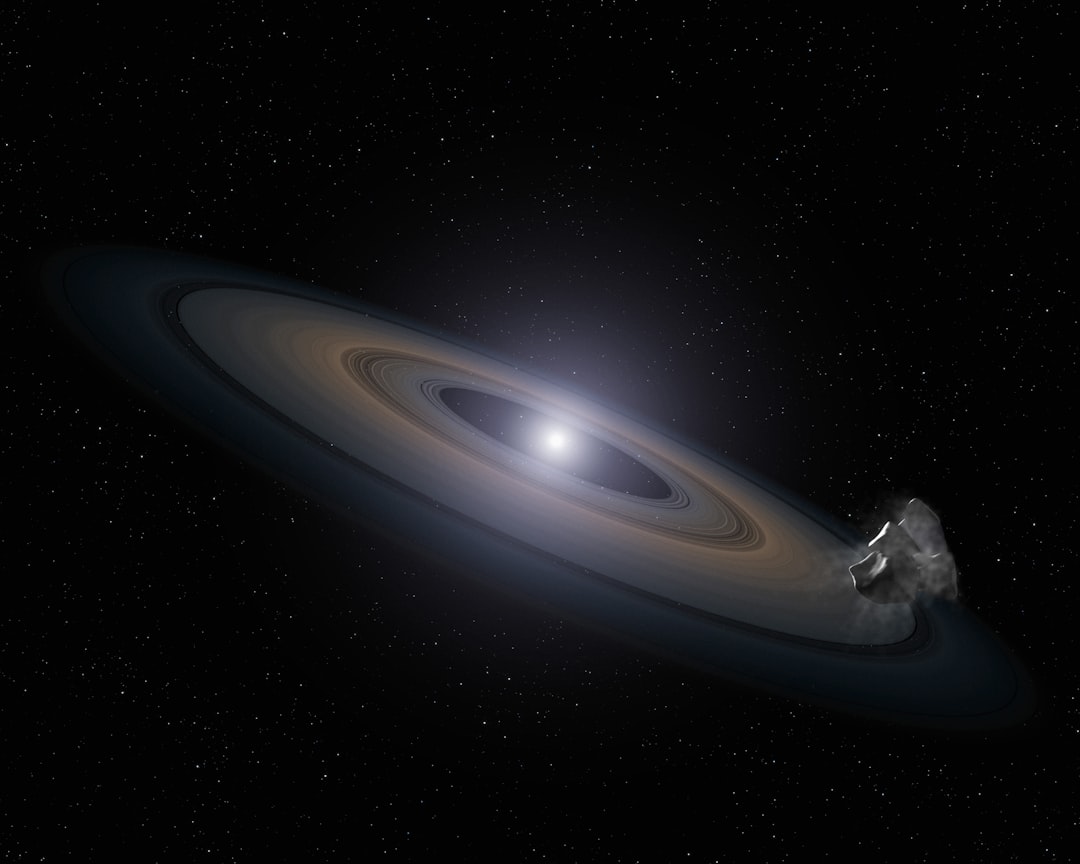
The James Webb Space Telescope (JWST) has made headlines with its groundbreaking discoveries, particularly regarding the origins of the universe. Launched in December 2021, this state-of-the-art observatory has provided astronomers with unprecedented insights into the cosmos, including observations that push the boundaries of our understanding of the Big Bang. The telescope’s advanced technology allows it to peer deeper into space and time than ever before, revealing galaxies that formed just a few hundred million years after the universe’s inception.
This remarkable capability has opened a new chapter in cosmology, prompting scientists to reevaluate long-held beliefs about the early universe. The implications of JWST’s findings are profound, as they challenge existing models of cosmic evolution and the formation of celestial structures. By capturing light from some of the earliest galaxies, JWST offers a glimpse into a time when the universe was still in its infancy.
This discovery not only enhances our knowledge of cosmic history but also raises new questions about the processes that shaped the universe as we know it today. As researchers delve into the data collected by JWST, they are beginning to piece together a more comprehensive narrative of the universe’s birth and evolution.
Key Takeaways
- JWST’s discovery sheds light on the early universe and the Big Bang theory.
- The Big Bang theory is crucial in understanding the origins and evolution of the universe.
- JWST is a powerful tool for studying the early universe and cosmic history.
- JWST’s discovery challenges existing theories and prompts a reevaluation of our understanding of the universe.
- The impact of JWST’s discovery on our understanding of the universe is significant and far-reaching.
The Significance of the Big Bang Theory in Astronomy
The Big Bang Theory stands as one of the cornerstones of modern astronomy, providing a framework for understanding the universe’s origins and its subsequent expansion. According to this theory, the universe began as an infinitely small and dense point approximately 13.8 billion years ago, rapidly expanding and cooling to form the cosmos we observe today. This model has been supported by a wealth of observational evidence, including the cosmic microwave background radiation and the redshift of distant galaxies.
The Big Bang Theory not only explains the current state of the universe but also offers insights into its future trajectory. The significance of the Big Bang Theory extends beyond mere historical context; it serves as a guiding principle for astronomers and physicists alike. By establishing a timeline for cosmic events, this theory allows scientists to make predictions about the formation and evolution of galaxies, stars, and other celestial bodies.
Furthermore, it provides a basis for understanding fundamental concepts such as dark matter and dark energy, which play crucial roles in shaping the universe’s structure and dynamics. As JWST continues to unveil new data, it is poised to refine and expand upon this foundational theory, potentially leading to revolutionary advancements in our comprehension of cosmic phenomena.
Overview of the James Webb Space Telescope (JWST)
The James Webb Space Telescope represents a monumental leap forward in astronomical technology. Developed through a collaboration between NASA, the European Space Agency (ESA), and the Canadian Space Agency (CSA), JWST is designed to observe the universe in infrared wavelengths, allowing it to penetrate cosmic dust clouds and reveal hidden celestial objects. With its large primary mirror measuring 6.5 meters in diameter, JWST is capable of capturing light from some of the faintest and most distant objects in the universe.
This capability is crucial for studying early galaxies that formed shortly after the Big Bang. Equipped with advanced instruments such as the Near Infrared Camera (NIRCam) and the Mid-Infrared Instrument (MIRI), JWST can conduct a wide range of scientific investigations. From studying exoplanets’ atmospheres to examining the formation of stars and galaxies, JWST’s versatility makes it an invaluable tool for astronomers.
Its location at the second Lagrange point (L2), approximately 1.5 million kilometers from Earth, provides a stable environment for observations while minimizing interference from our planet’s atmosphere. As JWST embarks on its mission, it promises to revolutionize our understanding of the universe and our place within it.
How JWST’s Discovery Challenges Existing Theories
| Discovery | Challenges | Existing Theories |
|---|---|---|
| JWST’s Observations | Question | Current Understanding |
| Formation of Early Galaxies | Redefines | Galaxy Formation Models |
| Composition of Exoplanet Atmospheres | Contradicts | Previous Atmospheric Models |
| Star Formation Processes | Challenges | Accepted Star Formation Theories |
The discoveries made by JWST have begun to challenge existing theories about galaxy formation and evolution in significant ways. For decades, astronomers have relied on models that suggest galaxies formed gradually over billions of years through processes such as mergers and accretion. However, JWST’s observations have revealed galaxies that appear fully formed much earlier than previously thought, suggesting that these structures may have developed more rapidly than current models can account for.
This revelation raises critical questions about the mechanisms driving galaxy formation in the early universe. Moreover, JWST’s findings indicate that some of these early galaxies exhibit unexpected characteristics, such as high levels of star formation and complex structures. These observations challenge traditional notions about how galaxies evolve over time and suggest that our understanding of cosmic history may need significant revision.
As researchers analyze this new data, they are compelled to reconsider existing theories and develop more comprehensive models that can accommodate these surprising discoveries. The implications extend beyond galaxy formation; they may also influence our understanding of dark matter and dark energy, which are integral to explaining cosmic evolution.
The Impact of JWST’s Discovery on Our Understanding of the Universe
The impact of JWST’s discoveries on our understanding of the universe is profound and far-reaching.
This newfound knowledge not only enhances our comprehension of how galaxies formed but also sheds light on the conditions that prevailed in the early universe.
As astronomers analyze these observations, they are beginning to construct a more nuanced picture of cosmic evolution that incorporates both established theories and new insights. Furthermore, JWST’s findings have implications for fundamental questions about the nature of the universe itself. For instance, understanding how galaxies formed and evolved in their infancy can inform theories about dark matter and dark energy—two enigmatic components that govern cosmic dynamics.
As researchers grapple with these discoveries, they are likely to uncover new relationships between various cosmic phenomena, leading to a more integrated understanding of how the universe operates on both large and small scales.
The Technical Challenges of Observing the Early Universe
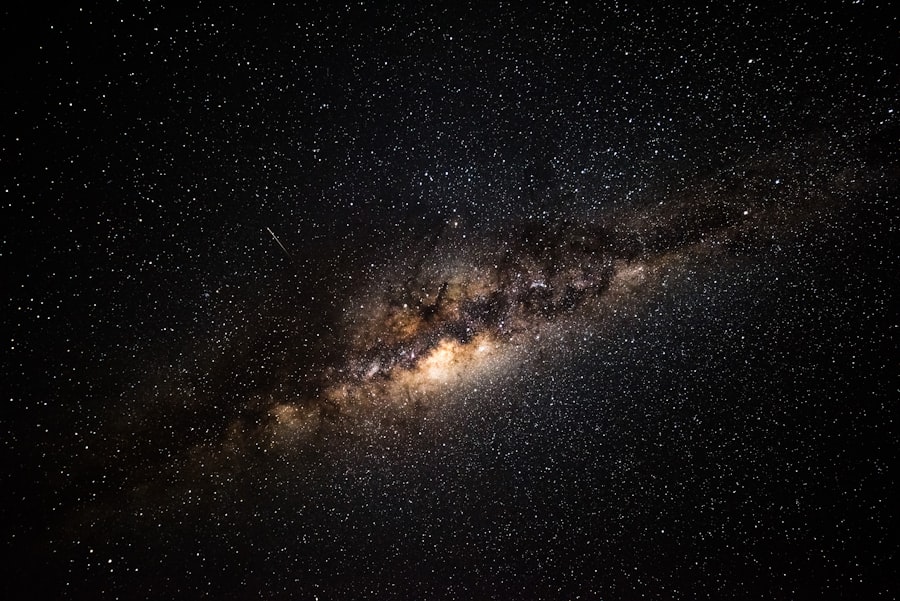
Observing the early universe presents a unique set of technical challenges that require innovative solutions. One of the primary difficulties lies in detecting faint light from distant galaxies that formed billions of years ago. As light travels through space, it becomes redshifted due to the expansion of the universe, making it increasingly difficult to observe these ancient objects with traditional telescopes.
JWST’s ability to operate in infrared wavelengths is crucial for overcoming this challenge, as it allows astronomers to capture light that has shifted beyond the visible spectrum. Additionally, observing distant galaxies requires precise calibration and advanced imaging techniques to ensure accurate data collection. The vast distances involved mean that even minor errors can lead to significant discrepancies in measurements.
To address these challenges, JWST employs sophisticated instruments designed for high sensitivity and resolution. The telescope’s design also includes features such as sunshields to protect its instruments from solar radiation and maintain optimal operating temperatures. These technical innovations enable JWST to push the boundaries of astronomical observation and unlock secrets about the early universe.
The Role of JWST in Advancing Astronomical Research
JWST plays a pivotal role in advancing astronomical research by providing unprecedented access to previously unobservable regions of space and time. Its capabilities extend beyond merely capturing images; it enables scientists to conduct detailed spectroscopic analyses that reveal critical information about celestial objects’ composition, temperature, and motion. This wealth of data allows researchers to explore fundamental questions about star formation, galaxy evolution, and even the potential for life beyond Earth.
Moreover, JWST serves as a collaborative platform for scientists worldwide, fostering international partnerships and interdisciplinary research efforts.
As researchers continue to analyze its observations, they are likely to uncover new insights that will shape future studies and inspire innovative theories about the universe’s nature.
The Future Implications of JWST’s Big Bang Discovery
The implications of JWST’s discoveries regarding the Big Bang extend far into the future of astronomical research. As scientists continue to analyze data from this groundbreaking telescope, they will refine existing models and develop new theories that account for unexpected findings about early galaxies. This iterative process will likely lead to significant advancements in our understanding of cosmic evolution and may even prompt a reevaluation of fundamental concepts within physics.
Furthermore, JWST’s discoveries may inspire future missions aimed at exploring other aspects of cosmic history or investigating phenomena beyond our current comprehension. As researchers build upon JWST’s findings, they may identify new areas of inquiry that require further exploration through advanced telescopes or space missions. The ongoing evolution of our understanding of the universe will undoubtedly be influenced by JWST’s contributions, paving the way for future generations of astronomers to continue unraveling its mysteries.
Reactions from the Scientific Community
The scientific community has responded with enthusiasm and intrigue to JWST’s groundbreaking discoveries related to the Big Bang. Researchers have expressed excitement over the telescope’s ability to capture images and data from some of the earliest galaxies ever observed. Many scientists view these findings as validation of their hypotheses regarding galaxy formation while simultaneously recognizing that they challenge established theories in significant ways.
Conferences and symposiums dedicated to discussing JWST’s discoveries have emerged as platforms for collaboration among astronomers worldwide. Researchers are eager to share their interpretations of the data and explore its implications across various fields within astrophysics. This collaborative spirit reflects a broader trend within science: as new discoveries emerge, they often prompt collective efforts to understand their significance fully.
Potential Follow-Up Studies and Observations
As astronomers continue to analyze data from JWST, numerous potential follow-up studies and observations are on the horizon. Researchers are particularly interested in conducting deeper surveys of specific regions in space where early galaxies have been identified. These follow-up observations could provide additional insights into galaxy formation processes and help clarify discrepancies between existing models and new findings.
Moreover, scientists may utilize JWST’s capabilities to investigate other cosmic phenomena related to galaxy evolution, such as star formation rates or interactions between galaxies during their formative years. By expanding their focus beyond individual galaxies to consider broader cosmic structures, researchers can gain a more comprehensive understanding of how galaxies fit into the larger tapestry of the universe.
The Continued Evolution of Our Understanding of the Universe
In conclusion, JWST’s discoveries regarding the Big Bang represent a significant milestone in humanity’s quest to understand the cosmos. By challenging existing theories and providing new insights into early galaxy formation, this remarkable telescope is reshaping our comprehension of cosmic history. As researchers continue to analyze its data and explore follow-up studies, they will undoubtedly uncover further revelations that deepen our understanding of how the universe evolved over billions of years.
The journey toward unraveling the mysteries of the universe is ongoing; each discovery builds upon previous knowledge while simultaneously raising new questions for future exploration. With JWST at the forefront of astronomical research, scientists are poised to embark on an exciting era marked by unprecedented discoveries that will continue to illuminate our place within this vast cosmos.
The James Webb Space Telescope (JWST) continues to revolutionize our understanding of the universe, offering unprecedented insights into the moments following the Big Bang. Recently, astronomers have utilized JWST’s advanced capabilities to peer deeper into the cosmos, uncovering new data that challenges existing theories about the early universe’s formation. For a detailed exploration of these groundbreaking discoveries and their implications for our understanding of cosmic history, you can read a related article on My Cosmic Ventures. This article delves into the latest findings and discusses how JWST is reshaping our comprehension of the universe’s origins.
WATCH THIS! Did JWST DISPROVE The BIG BANG?!?!
FAQs
What is JWST?
JWST stands for James Webb Space Telescope. It is a large, space-based observatory that will be used for a wide range of astronomical research.
What is the Big Bang theory?
The Big Bang theory is the prevailing cosmological model for the observable universe from the earliest known periods through its subsequent large-scale evolution. It states that the universe was in an extremely hot and dense state before expanding rapidly.
What is the significance of JWST in relation to the Big Bang theory?
The JWST is expected to provide valuable insights into the early universe, including the period just after the Big Bang. It will be able to observe the first galaxies that formed after the Big Bang and study the processes that led to the formation of stars and galaxies.
How will JWST contribute to our understanding of the universe?
JWST will be able to observe the universe in infrared wavelengths, allowing it to see through dust clouds and study objects that are too faint or distant for other telescopes to detect. This will provide new information about the formation and evolution of galaxies, stars, and planetary systems.
When is the JWST expected to launch?
The JWST is currently scheduled to launch in December 2021.