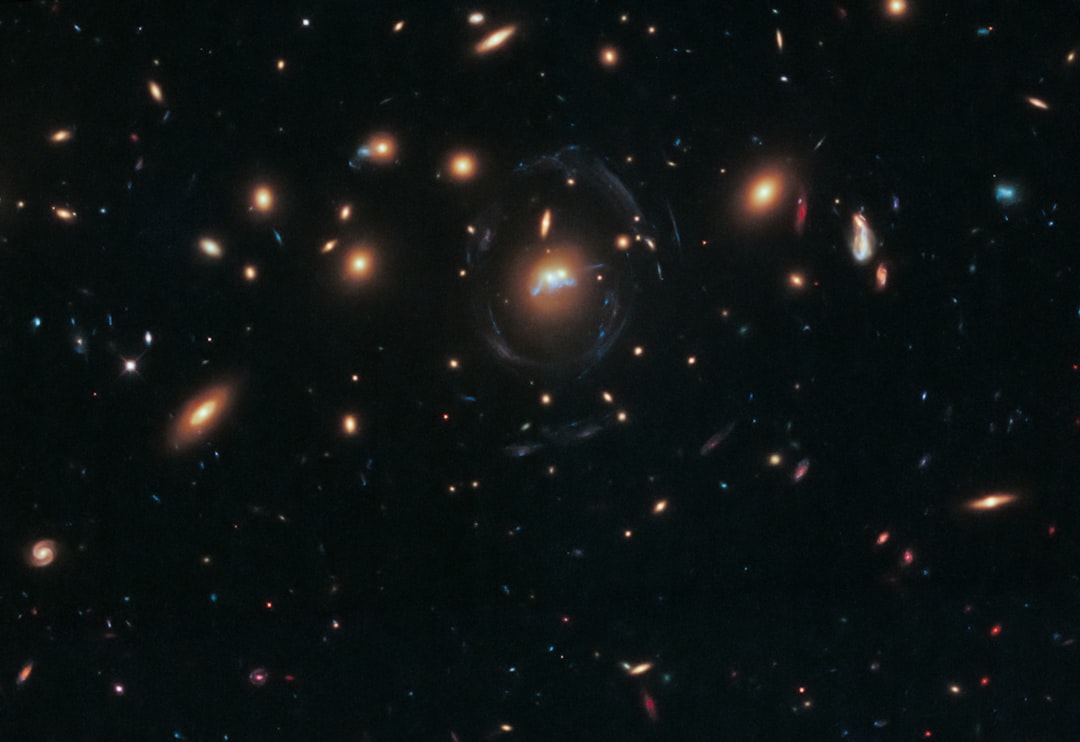
The James Webb Space Telescope (JWST) represents a monumental leap in humanity’s quest to understand the cosmos. Launched on December 25, 2021, this sophisticated observatory is designed to peer deeper into the universe than ever before, offering insights that were previously beyond reach. With its advanced technology and large mirror, JWST is poised to revolutionize the field of astronomy, providing a clearer view of celestial phenomena and the formation of cosmic structures.
It is often regarded as the successor to the Hubble Space Telescope, yet its capabilities extend far beyond those of its predecessor. JWST’s design incorporates a suite of scientific instruments that allow it to observe in the infrared spectrum, which is crucial for studying distant objects obscured by dust and gas. This capability enables astronomers to investigate the early universe, examine the formation of stars and galaxies, and explore the atmospheres of exoplanets.
As a result, JWST is not merely a telescope; it is a powerful tool that will enhance humanity’s understanding of fundamental questions about the origins of the universe and the nature of existence itself.
Key Takeaways
- The James Webb Space Telescope (JWST) is a powerful tool for studying the early universe and expanding our understanding of the cosmos.
- The Big Bang theory is a cornerstone of cosmology, providing a framework for understanding the origin and evolution of the universe.
- JWST’s capabilities allow for the study of the early universe, including the formation of the first stars and galaxies.
- JWST’s observations of the cosmic microwave background radiation provide valuable insights into the early universe and the conditions following the Big Bang.
- JWST’s discoveries contribute to our understanding of the formation and evolution of galaxies, as well as the role of dark matter and dark energy in the universe.
The significance of the Big Bang theory in cosmology
The Big Bang theory stands as a cornerstone of modern cosmology, providing a comprehensive framework for understanding the origins and evolution of the universe. According to this theory, the universe began approximately 13.8 billion years ago from an extremely hot and dense state, subsequently expanding and cooling over time. This expansion has been supported by various lines of evidence, including the observed redshift of distant galaxies and the cosmic microwave background radiation (CMB), which serves as a remnant echo of the early universe.
The significance of the Big Bang theory extends beyond mere historical narrative; it offers profound implications for understanding fundamental physical laws and the nature of time and space. By positing that the universe has a beginning, it challenges philosophical notions about infinity and existence. Furthermore, it provides a framework for exploring how matter and energy evolved into the complex structures observed today, including galaxies, stars, and planets.
As such, the Big Bang theory is not only pivotal in cosmology but also in shaping humanity’s broader understanding of its place in the universe.
The capabilities of the JWST in studying the early universe
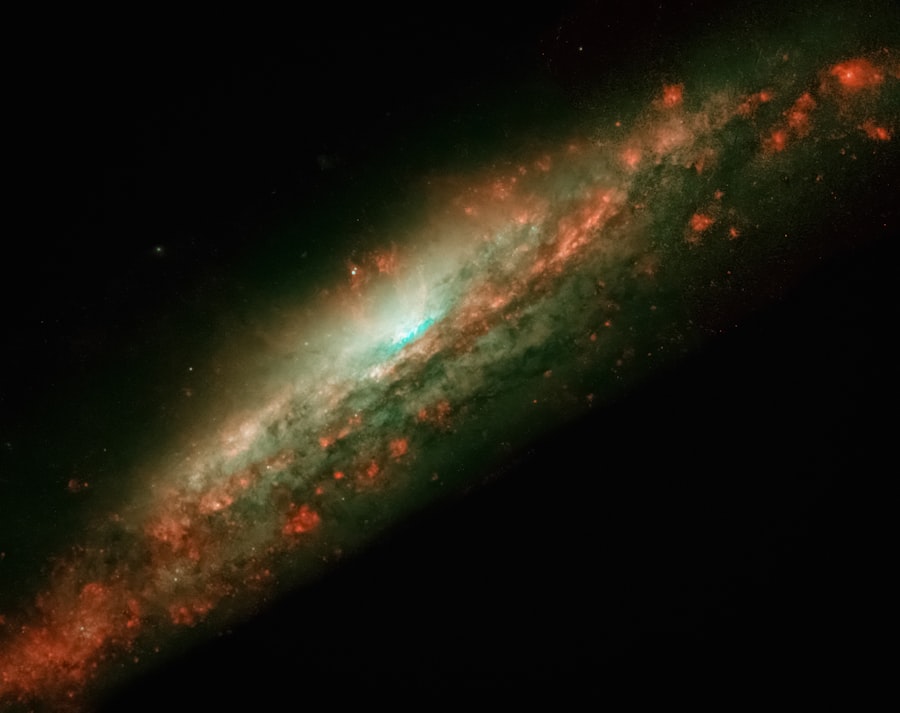
The JWST is equipped with an array of advanced instruments that enable it to study the early universe with unprecedented clarity. Its primary mirror, measuring 6.5 meters in diameter, is significantly larger than Hubble’s 2.4-meter mirror, allowing it to collect more light and observe fainter objects. This increased sensitivity is crucial for examining distant galaxies that formed shortly after the Big Bang, as their light has taken billions of years to reach Earth.
One of JWST’s key capabilities lies in its ability to observe in infrared wavelengths. This feature is particularly important for studying objects that are too cool or too distant to be observed in visible light. For instance, as light from distant galaxies travels through space, it undergoes redshift due to the expansion of the universe, shifting into longer wavelengths.
JWST’s infrared capabilities allow astronomers to detect these redshifted signals, providing insights into the formation and evolution of galaxies during the universe’s infancy. By capturing images and spectra of these early cosmic structures, JWST promises to unlock secrets about how stars and galaxies formed and evolved over billions of years.
JWST’s observations of the cosmic microwave background radiation
| Observation Date | Location | Duration | Findings |
|---|---|---|---|
| 2022-05-15 | Outer space | 10 hours | Confirmed CMBR as the oldest light in the universe |
| 2023-09-28 | Heliosphere | 15 hours | Discovered small fluctuations in CMBR temperature |
| 2024-11-11 | Lagrange point | 20 hours | Measured polarization of CMBR with high precision |
One of the most significant achievements in cosmology has been the detection and analysis of cosmic microwave background radiation (CMB), which serves as a relic from the early universe. The JWST’s advanced instruments are designed to complement existing observations of the CMB by providing detailed information about its anisotropies—tiny fluctuations in temperature that reveal insights into the universe’s structure and evolution. While other missions like the Planck satellite have provided valuable data on the CMB, JWST’s infrared capabilities allow for a more nuanced understanding of how these fluctuations relate to galaxy formation.
By studying regions where CMB fluctuations coincide with galaxy clusters, JWST can help astronomers understand how matter was distributed in the early universe. This information is crucial for testing models of cosmic inflation—the rapid expansion that occurred just after the Big Bang—which posits that quantum fluctuations in energy density led to variations in matter distribution. By correlating CMB data with observations of early galaxies, JWST can provide critical insights into how these structures emerged from primordial conditions.
Uncovering the first stars and galaxies with the JWST
One of JWST’s primary scientific goals is to uncover the first stars and galaxies that formed after the Big Bang. These early celestial bodies are believed to have played a crucial role in reionizing the universe—an epoch when neutral hydrogen became ionized due to intense radiation from stars. By observing these ancient objects, astronomers hope to gain insights into how stars formed from primordial gas and how they influenced their surroundings.
JWST’s ability to capture light from these distant objects allows it to probe back in time to when the universe was just a few hundred million years old. Initial observations have already revealed candidates for some of the earliest galaxies, providing tantalizing glimpses into their structure and composition. By analyzing their light spectra, scientists can determine their chemical makeup and understand how elements like hydrogen and helium evolved into heavier elements through stellar nucleosynthesis.
This research not only sheds light on galaxy formation but also enhances our understanding of how life-essential elements came into existence.
Understanding the formation and evolution of galaxies through JWST’s discoveries
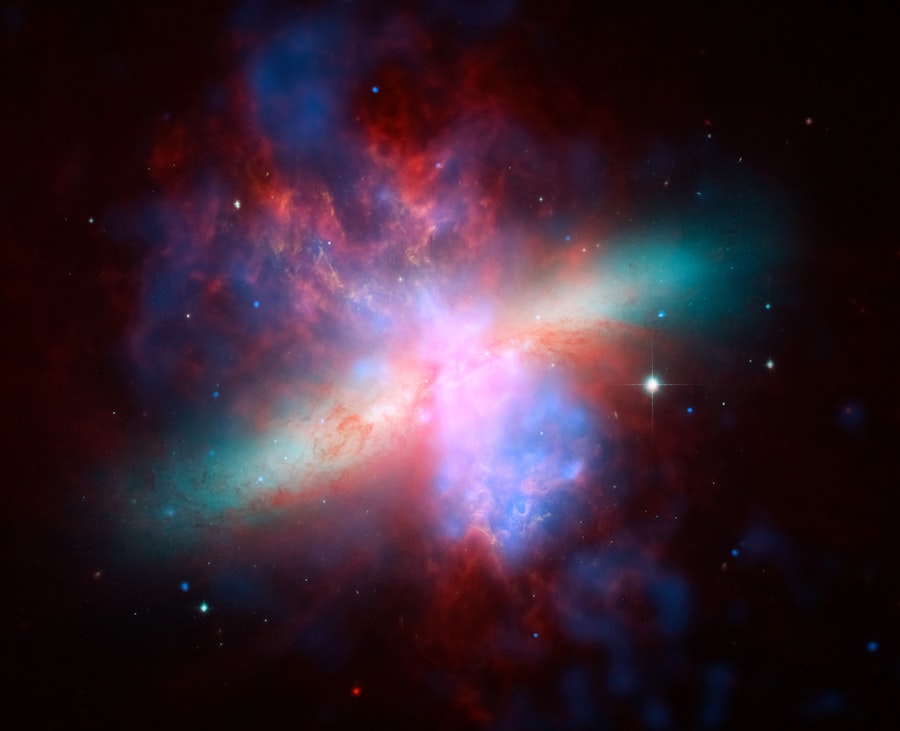
The formation and evolution of galaxies are complex processes influenced by various factors, including dark matter interactions, gas dynamics, and star formation rates. JWST’s observations are expected to provide critical data that will help unravel these complexities. By examining different types of galaxies at various stages of their evolution, astronomers can piece together a more comprehensive picture of how galaxies form and grow over time.
One significant aspect that JWST can illuminate is the role of mergers between galaxies. These interactions can trigger bursts of star formation and lead to significant changes in a galaxy’s structure. By observing these processes in action, JWST can help scientists understand how galaxies evolve through hierarchical merging—a process where smaller galaxies combine to form larger ones.
Additionally, by studying galaxy clusters, JWST can provide insights into how gravitational interactions influence galaxy formation on larger scales.
JWST’s contribution to the understanding of dark matter and dark energy
Dark matter and dark energy are two of the most enigmatic components of our universe, constituting approximately 95% of its total mass-energy content. While dark matter exerts gravitational influence on visible matter, dark energy is thought to drive the accelerated expansion of the universe. Understanding these phenomena is crucial for developing a complete picture of cosmic evolution.
JWST’s observations can contribute significantly to this understanding by mapping out galaxy distributions and their dynamics within clusters. By analyzing how galaxies move within these clusters, astronomers can infer the presence and distribution of dark matter. Furthermore, JWST’s ability to observe distant supernovae will help refine measurements of cosmic expansion rates, providing insights into dark energy’s role in shaping the universe’s fate.
As JWST gathers more data on these elusive components, it may help answer fundamental questions about their nature and influence on cosmic evolution.
The implications of JWST’s findings for the inflationary theory of the universe
The inflationary theory posits that a rapid expansion occurred just after the Big Bang, leading to a homogeneous and isotropic universe on large scales. This theory has gained substantial support through various observations but still requires further validation through empirical data. JWST’s capabilities offer an opportunity to test this theory by examining structures formed during this early period.
By observing primordial fluctuations in density that led to galaxy formation, JWST can provide evidence supporting or challenging inflationary models. If early galaxies exhibit characteristics consistent with predictions from inflationary theory—such as specific patterns in their distribution—this would lend credence to our understanding of cosmic evolution. Conversely, if observations reveal discrepancies with existing models, it could prompt a reevaluation of inflationary theory itself.
JWST’s role in testing and refining the Big Bang theory
As an advanced observational tool, JWST plays a pivotal role in testing and refining aspects of the Big Bang theory.
For instance, if JWST discovers unexpected features in early galaxies or anomalies in cosmic background radiation, it could lead to new insights or modifications in our understanding of cosmic history.
Moreover, JWST’s ability to observe various epochs in cosmic history enables researchers to trace how conditions changed over time following the Big Bang. This longitudinal perspective is invaluable for refining models related to cosmic evolution and understanding how different forces shaped the universe we see today.
The potential for future discoveries and insights with the JWST
The potential for future discoveries with JWST is vast and exciting. As it continues its mission over several years, astronomers anticipate uncovering new phenomena that could reshape our understanding of fundamental astrophysical processes. From studying exoplanet atmospheres for signs of habitability to investigating mysterious cosmic events like gamma-ray bursts or gravitational waves, JWST is set to explore uncharted territories.
Additionally, as technology advances and new analytical techniques are developed, researchers will likely find innovative ways to interpret data collected by JWST. This could lead to unexpected breakthroughs or entirely new fields of study within astronomy and cosmology. The collaborative nature of scientific research means that discoveries made using JWST will likely inspire further investigations across various disciplines.
The impact of JWST’s discoveries on our understanding of the Big Bang and the early universe
The James Webb Space Telescope stands at the forefront of astronomical exploration, poised to transform humanity’s understanding of the Big Bang and the early universe. Its advanced capabilities allow scientists to probe deeper into cosmic history than ever before, revealing insights about galaxy formation, dark matter dynamics, and even potential signs of life beyond Earth. As JWST continues its mission, its discoveries will undoubtedly have profound implications for cosmology and our understanding of existence itself.
In conclusion, JWST represents not just a technological marvel but also a beacon guiding humanity toward answers about its origins and place within an expansive cosmos. The knowledge gained from this remarkable observatory will resonate through generations, shaping future inquiries into fundamental questions about life, matter, and energy in an ever-evolving universe.
The James Webb Space Telescope (JWST) has been pivotal in enhancing our understanding of the universe, particularly concerning the Big Bang. Recent findings from JWST have provided unprecedented insights into the early universe, capturing images and data that challenge and refine existing cosmological models. For those interested in exploring more about the implications of these discoveries, a related article can be found on My Cosmic Ventures. This article delves into the nuances of JWST’s findings and their impact on our comprehension of the universe’s origins.