The James Webb Space Telescope (JWST) represents a monumental leap in humanity’s quest to understand the cosmos. Launched on December 25, 2021, this sophisticated observatory is often heralded as the successor to the Hubble Space Telescope, yet it is designed to delve deeper into the universe’s mysteries than its predecessor ever could. With its advanced technology and innovative design, JWST aims to explore the farthest reaches of space and time, providing insights into the formation of stars, galaxies, and planetary systems.
The telescope’s capabilities promise to revolutionize the field of astronomy and reshape our understanding of the universe. JWST is not merely an upgrade; it is a paradigm shift in astronomical observation. Equipped with a large primary mirror measuring 6.5 meters in diameter, JWST can capture light from some of the most distant objects in the universe.
Its instruments are designed to observe in the infrared spectrum, allowing it to peer through cosmic dust and gas that often obscure visible light. This ability to see beyond the visible spectrum opens up new avenues for exploration, enabling scientists to study celestial phenomena that have remained hidden from view until now. As JWST embarks on its mission, it stands poised to answer fundamental questions about the origins of the universe and our place within it.
Key Takeaways
- JWST is the most powerful space telescope ever built, set to revolutionize our understanding of the universe.
- JWST will have a significant impact on astronomy and astrophysics, enabling breakthrough discoveries and new insights.
- JWST’s advanced technology will allow it to observe the universe’s earliest galaxies and stars, breaking the timeline of the universe.
- The telescope’s unprecedented capabilities include the ability to study exoplanets and understand the early universe in ways never before possible.
- JWST’s development has faced challenges and delays, but it represents a collaborative international effort with the potential to transform our understanding of the cosmos.
The Impact of JWST on Astronomy and Astrophysics
The impact of JWST on astronomy and astrophysics is expected to be profound and far-reaching. By providing unprecedented access to previously unobservable regions of space, JWST is set to enhance our understanding of cosmic evolution. Its ability to capture high-resolution images and spectra will allow astronomers to study the formation and evolution of galaxies over billions of years.
This capability will enable researchers to trace the history of star formation and understand how galaxies interact and evolve over time. Moreover, JWST’s observations will likely lead to groundbreaking discoveries about dark matter and dark energy, two of the most enigmatic components of the universe. By examining the distribution of galaxies and their gravitational effects, scientists hope to gain insights into these elusive phenomena.
The telescope’s advanced instruments will also facilitate studies of cosmic microwave background radiation, shedding light on the conditions of the early universe. As a result, JWST is expected to redefine existing theories and inspire new lines of inquiry in astrophysics.
How JWST Will Break the Universe Timeline
One of the most exciting prospects of JWST is its potential to break the timeline of the universe as we know it. By observing light from some of the earliest galaxies formed after the Big Bang, JWST will provide a glimpse into a period that has remained largely speculative until now. The telescope’s sensitivity to infrared light allows it to detect objects that are billions of light-years away, effectively looking back in time to when the universe was just a fraction of its current age.
This capability will enable astronomers to study the formation of stars and galaxies during the “cosmic dawn,” a time when the first luminous objects began to illuminate the dark universe. By analyzing the light from these ancient galaxies, scientists can gather crucial information about their composition, structure, and evolution. This data will not only enhance our understanding of how galaxies formed but also provide insights into the conditions that led to the emergence of life-sustaining planets.
The Unprecedented Capabilities of JWST
| Capability | Description |
|---|---|
| Observing Range | JWST can observe in the infrared spectrum, allowing it to see through dust clouds and observe the earliest galaxies. |
| Resolution | It has a high resolution, allowing it to capture detailed images of distant objects. |
| Multi-wavelength Observations | JWST can observe in multiple wavelengths simultaneously, providing a comprehensive view of celestial objects. |
| Exoplanet Studies | It is equipped with instruments to study the atmospheres of exoplanets, potentially identifying signs of habitability. |
| Longevity | JWST is designed to have a long operational life, allowing for continuous observations and discoveries. |
JWST’s capabilities are nothing short of revolutionary. Its primary mirror, composed of 18 hexagonal segments, allows for a collecting area that is more than six times larger than that of Hubble. This increased light-gathering power enables JWST to observe fainter objects and capture more detailed images than ever before.
Additionally, its suite of scientific instruments is designed for a wide range of observations, from imaging distant galaxies to analyzing the atmospheres of exoplanets. The telescope’s Near Infrared Camera (NIRCam) and Mid-Infrared Instrument (MIRI) are particularly noteworthy for their ability to capture images across various wavelengths. NIRCam can detect light from stars and galaxies formed shortly after the Big Bang, while MIRI can observe cooler objects such as brown dwarfs and distant galaxies shrouded in dust.
This versatility allows JWST to address a multitude of scientific questions simultaneously, making it an invaluable tool for astronomers seeking to unravel the complexities of the universe.
JWST’s Role in Understanding the Early Universe
Understanding the early universe is one of JWST’s primary missions. The telescope’s ability to observe distant galaxies will provide insights into how these structures formed and evolved over time.
This research will not only enhance our knowledge of galaxy formation but also shed light on the processes that led to star formation and chemical enrichment in the universe. Furthermore, JWST’s observations will help scientists investigate the reionization epoch, a critical period when neutral hydrogen in the universe became ionized due to radiation from early stars and galaxies. Understanding this phase is essential for comprehending how matter transitioned from a dark, featureless state into a complex web of stars and galaxies.
By providing data on this transformative era, JWST will contribute significantly to our understanding of cosmic evolution.
JWST’s Contribution to Exoplanet Research
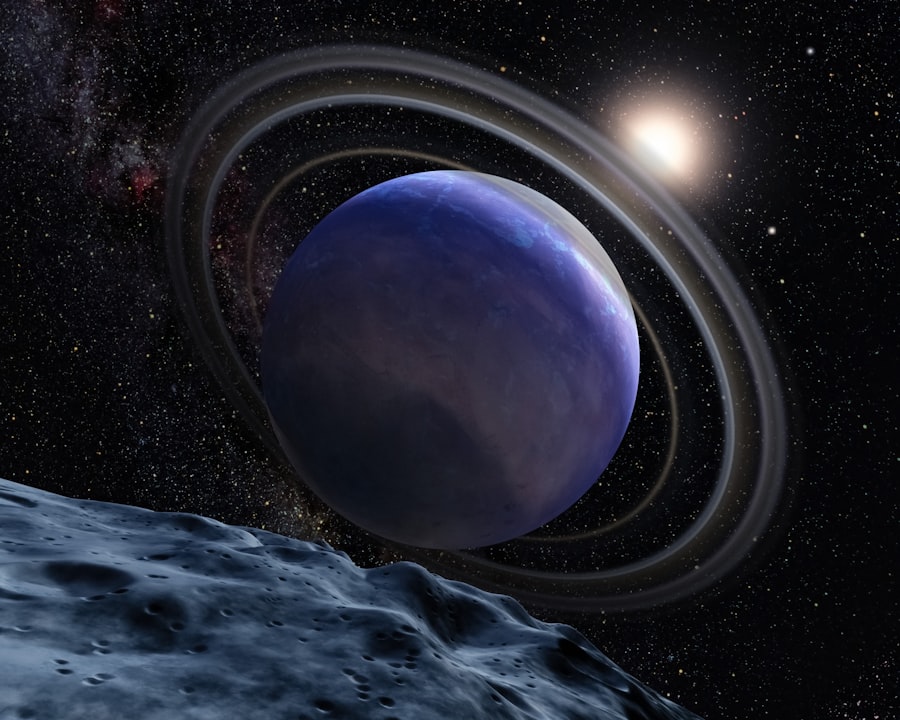
In addition to its role in studying distant galaxies, JWST is poised to make significant contributions to exoplanet research. The telescope’s advanced instruments are designed to analyze the atmospheres of exoplanets by observing how starlight interacts with their atmospheres during transits. This capability will allow scientists to identify chemical signatures indicative of potential habitability or even signs of life.
JWST’s ability to detect water vapor, carbon dioxide, methane, and other molecules in exoplanet atmospheres will provide crucial information about their composition and climate conditions. By studying a diverse range of exoplanets—ranging from gas giants to rocky worlds—astronomers hope to gain insights into planetary formation processes and assess their potential for supporting life. This research could ultimately reshape our understanding of where life might exist beyond Earth.
The Technology Behind JWST’s Revolutionary Observations
The technology that powers JWST’s revolutionary observations is a testament to human ingenuity and collaboration. At its core lies a complex system of mirrors and instruments designed for precision and sensitivity. The primary mirror’s segmented design allows for optimal light collection while minimizing weight—a crucial factor for space missions.
Each segment can be adjusted independently, ensuring that they work together as a single optical surface. In addition to its mirror system, JWST employs advanced cooling techniques to maintain its instruments at extremely low temperatures necessary for infrared observations. The telescope’s sunshield, roughly the size of a tennis court, protects its sensitive components from solar radiation while allowing it to operate in deep space conditions.
This combination of cutting-edge technology enables JWST to achieve unprecedented levels of sensitivity and resolution in its observations.
The Challenges and Delays in the Development of JWST
Despite its groundbreaking potential, the development of JWST was fraught with challenges and delays. Originally slated for launch in 2007, various technical hurdles, budget overruns, and management issues pushed back its timeline by over a decade. These challenges included difficulties in constructing its complex mirror system and ensuring that all components would function seamlessly in space.
The rigorous testing process also contributed to delays as engineers sought to ensure that every aspect of JWST met stringent performance standards. While these setbacks were frustrating for scientists and engineers alike, they ultimately resulted in a more robust and capable observatory. The lessons learned during this lengthy development phase have not only improved JWST but also provided valuable insights for future space missions.
The Collaboration and International Effort Behind JWST
The success of JWST is a testament to international collaboration in scientific research. Developed through a partnership between NASA, the European Space Agency (ESA), and the Canadian Space Agency (CSA), this ambitious project brought together experts from around the world. Each agency contributed unique expertise and resources, resulting in a telescope that embodies global cooperation in pursuit of knowledge.
This collaborative effort extended beyond engineering and design; it also involved extensive input from astronomers worldwide who provided guidance on scientific priorities and observational strategies. The diverse perspectives contributed by researchers from different countries have enriched JWST’s mission objectives, ensuring that it addresses a wide range of scientific questions relevant to humanity’s understanding of the universe.
The Future of Astronomy and Astrophysics with JWST
As JWST embarks on its mission, it heralds a new era for astronomy and astrophysics. The wealth of data it generates will likely lead to discoveries that challenge existing theories and inspire new lines of inquiry. With its ability to observe distant galaxies, study exoplanet atmospheres, and investigate cosmic phenomena, JWST will serve as a cornerstone for future research endeavors.
Moreover, JWST’s findings are expected to complement those from other observatories, both ground-based and space-based.
The collaborative nature of modern astronomy ensures that discoveries made by JWST will resonate throughout the scientific community for years to come.
Anticipating the Groundbreaking Discoveries of JWST
In conclusion, the James Webb Space Telescope stands as a beacon of hope for astronomers eager to unlock the secrets of the universe. Its unprecedented capabilities promise groundbreaking discoveries that will reshape our understanding of cosmic history, galaxy formation, exoplanets, and more. As it begins its mission, scientists around the world eagerly anticipate the wealth of knowledge that will emerge from its observations.
The journey ahead is filled with potential; each new discovery has the power to inspire future generations and deepen humanity’s connection with the cosmos. As we look toward an exciting future in astronomy and astrophysics with JWST at the forefront, one thing remains clear: this remarkable observatory is set to illuminate our understanding of the universe like never before.
The James Webb Space Telescope (JWST) has revolutionized our understanding of the universe, offering unprecedented insights that challenge our existing cosmic timeline. By peering deeper into the cosmos than ever before, JWST has uncovered galaxies that formed much earlier than previously thought, suggesting that the universe’s timeline may need significant revision. For a deeper dive into how JWST’s discoveries are reshaping our understanding of the cosmos, you can explore a related article on this topic by visiting My Cosmic Ventures. This article delves into the implications of JWST’s findings and how they might alter our perception of the universe’s history.
WATCH THIS! Did JWST DISPROVE The BIG BANG?!?!
FAQs
What is JWST?
JWST stands for James Webb Space Telescope, which is a large, space-based observatory set to launch in 2021. It is designed to be the premier observatory of the next decade, serving thousands of astronomers worldwide.
How did JWST break the universe timeline?
The JWST is expected to revolutionize our understanding of the universe by observing the first galaxies that formed in the early universe, studying the formation of stars and planetary systems, and examining the potential for life on exoplanets.
What are the key features of JWST?
The JWST has a large, segmented primary mirror, a sunshield to protect it from the heat of the Sun, and a suite of scientific instruments designed to observe the universe in infrared wavelengths.
How will JWST impact our understanding of the universe?
JWST’s ability to observe the universe in infrared wavelengths will allow it to see through dust clouds and study the formation of stars and galaxies in unprecedented detail. It will also be able to study the atmospheres of exoplanets, potentially identifying signs of habitability.
When will JWST be launched?
The JWST is scheduled to be launched in 2021, following several delays in its development and construction. Once in space, it will be positioned at the second Lagrange point (L2), approximately 1.5 million kilometers from Earth.