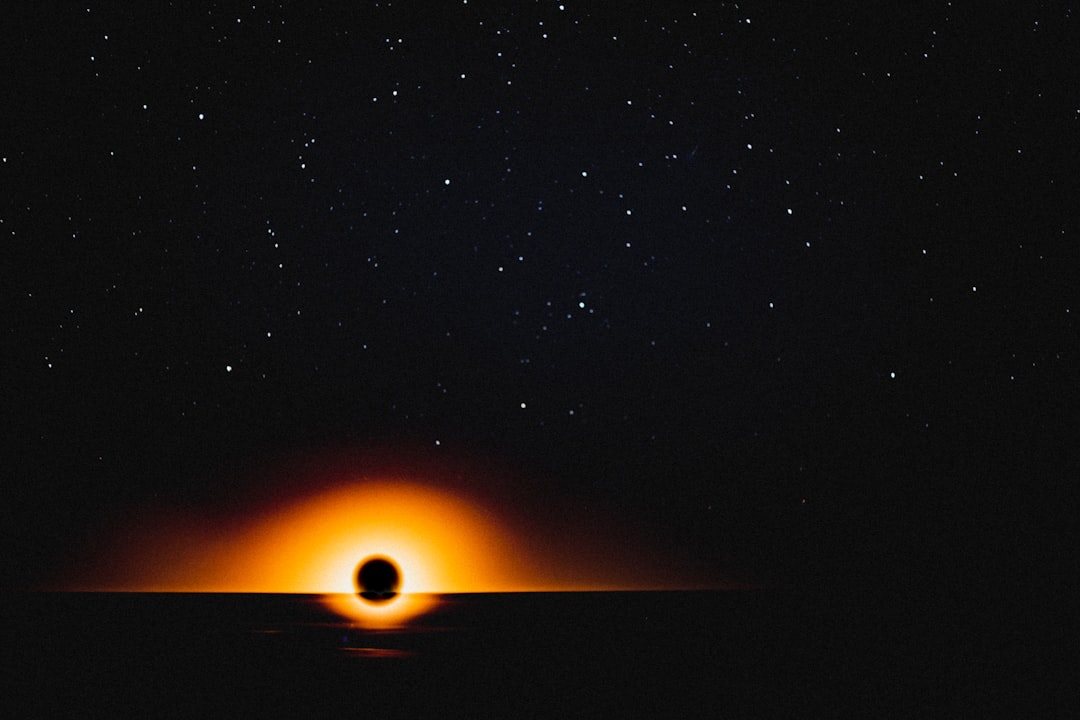
Black holes have long captivated the imagination of scientists and the general public alike. These enigmatic cosmic entities, formed from the remnants of massive stars, possess gravitational forces so intense that nothing, not even light, can escape their grasp. The concept of a black hole challenges the very fabric of our understanding of physics, pushing the boundaries of what is known about the universe.
As researchers delve deeper into the mysteries surrounding these celestial phenomena, they uncover insights that not only enhance our comprehension of black holes but also illuminate fundamental questions about the nature of reality itself. The term “black hole” was first coined in the 1960s, but the idea has roots that trace back to the early 18th century.
Today, black holes are classified into several categories, including stellar, supermassive, and intermediate black holes, each varying in size and formation processes. As scientists continue to explore the universe, black holes remain a focal point of research, offering a unique lens through which to examine the laws of physics and the evolution of galaxies.
Key Takeaways
- Black holes form from the gravitational collapse of massive stars and feature an event horizon beyond which nothing can escape.
- The singularity at a black hole’s core represents a point of infinite density where known physics breaks down.
- Phenomena like time dilation and spaghettification occur near black holes due to extreme gravitational forces.
- Hawking radiation suggests black holes can slowly evaporate, raising questions about information loss.
- Advances in observation and future missions aim to deepen our understanding of black holes and their role in astrophysics.
Understanding Black Hole Formation
The formation of black holes is a complex process that begins with the life cycle of massive stars. When a star exhausts its nuclear fuel, it can no longer support itself against gravitational collapse. This collapse leads to a supernova explosion, during which the outer layers of the star are expelled into space.
What remains is a core that can collapse under its own gravity, potentially forming a black hole if it exceeds a certain mass threshold. This threshold is known as the Tolman-Oppenheimer-Volkoff limit, which is approximately three solar masses. In addition to stellar black holes, supermassive black holes are found at the centers of most galaxies, including our own Milky Way.
Their formation is still a subject of intense research and debate among astrophysicists. Some theories suggest that they may form from the merging of smaller black holes or from the direct collapse of massive gas clouds in the early universe. Understanding how these colossal entities come into existence is crucial for piecing together the history and evolution of galaxies throughout cosmic time.
Black Hole Interior: The Event Horizon
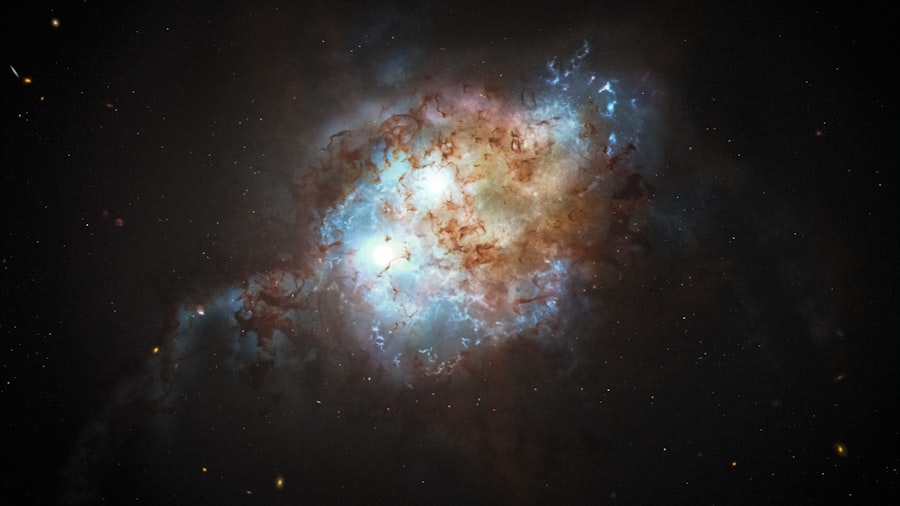
The event horizon is one of the most intriguing features of a black hole. It represents the boundary beyond which nothing can escape the gravitational pull of the black hole. Once an object crosses this threshold, it is inexorably drawn toward the singularity at the center, where density becomes infinite and the laws of physics as we know them cease to function.
The event horizon is not a physical surface but rather a point of no return, marking the limit of our observational capabilities. The nature of the event horizon raises profound questions about causality and information. For an outside observer, time appears to slow down for an object approaching the event horizon, leading to fascinating implications for our understanding of time itself.
This phenomenon has led to various interpretations in theoretical physics, including discussions about how information behaves when it crosses this boundary. The event horizon serves as a gateway into a realm where conventional physics breaks down, inviting scientists to explore new theories and models that could explain what lies beyond.
Exploring the Singularity
| Metric | Description | Current Value | Projected Value (2030) |
|---|---|---|---|
| AI Processing Speed | Computational power of AI systems measured in FLOPS | 1 ExaFLOP | 100 ExaFLOPS |
| Machine Learning Model Size | Number of parameters in state-of-the-art AI models | 175 Billion | 1 Trillion |
| Human Brain Equivalent Computation | Estimated FLOPS required to simulate human brain | 10^18 FLOPS | 10^20 FLOPS |
| AI Autonomy Level | Degree of independent decision-making by AI systems | Level 3 (Conditional Automation) | Level 5 (Full Automation) |
| AI Integration in Daily Life | Percentage of daily tasks assisted or performed by AI | 30% | 80% |
| Ethical AI Framework Adoption | Percentage of organizations implementing ethical AI guidelines | 45% | 90% |
At the heart of every black hole lies a singularity—a point where gravitational forces compress matter to an infinitely small volume, resulting in infinite density. The singularity represents a breakdown in our current understanding of physics, as general relativity predicts conditions that cannot be reconciled with quantum mechanics. This paradox has led physicists to seek a unified theory that can describe both gravitational and quantum phenomena.
The nature of singularities poses significant challenges for theoretical physicists. While general relativity provides a framework for understanding large-scale cosmic structures, it fails to account for the behavior of matter and energy at quantum scales. As such, singularities remain one of the most profound mysteries in modern astrophysics.
Researchers are actively exploring various approaches, including string theory and loop quantum gravity, in hopes of developing a comprehensive theory that can bridge these two realms and shed light on what occurs at the core of a black hole.
Time Dilation and Spaghettification
One of the most fascinating consequences of black holes is time dilation—a phenomenon predicted by Einstein’s theory of relativity. As an object approaches a black hole’s event horizon, time appears to slow down relative to an outside observer. This effect becomes increasingly pronounced as one gets closer to the event horizon, leading to bizarre scenarios where an observer falling into a black hole would experience time differently than someone watching from afar.
Spaghettification is another intriguing consequence associated with black holes. This term describes the process by which objects are stretched and compressed due to extreme gravitational gradients near a black hole. As an object approaches the event horizon, the gravitational pull on its nearest side becomes significantly stronger than on its farthest side, leading to an elongation effect reminiscent of spaghetti.
This phenomenon highlights the extreme conditions present near black holes and serves as a reminder of how different physical laws operate in such environments.
Hawking Radiation and Black Hole Evaporation
In 1974, physicist Stephen Hawking proposed a groundbreaking theory suggesting that black holes are not entirely black but can emit radiation due to quantum effects near their event horizons. This radiation, now known as Hawking radiation, arises from virtual particle pairs that spontaneously form in empty space. When one particle falls into the black hole while its partner escapes, it results in a net loss of mass for the black hole over time.
Hawking’s discovery has profound implications for our understanding of black holes and their eventual fate. If Hawking radiation is indeed real, it suggests that black holes can gradually lose mass and ultimately evaporate completely over astronomical timescales. This revelation challenges traditional notions about black holes as eternal entities and raises questions about what happens to information contained within them during this process.
Black Hole Information Paradox
The black hole information paradox arises from the apparent conflict between quantum mechanics and general relativity regarding information preservation. According to quantum theory, information cannot be destroyed; however, if a black hole evaporates completely through Hawking radiation, it seems that any information about matter that fell into it would be lost forever. This paradox has sparked intense debate among physicists and has led to various proposed solutions.
Some researchers suggest that information may be encoded in subtle correlations within Hawking radiation itself, allowing it to be recovered despite appearing lost during evaporation. Others propose that information could be preserved on the event horizon in a holographic manner or that it might be released in some form when a black hole eventually evaporates. The resolution of this paradox remains one of the most significant challenges in theoretical physics and could have far-reaching implications for our understanding of reality.
Theoretical Models of Black Hole Interior
The interior structure of black holes remains largely speculative due to our inability to observe what occurs beyond the event horizon directly. Various theoretical models have been proposed to describe this enigmatic region, each attempting to reconcile general relativity with quantum mechanics. One such model is based on the idea that spacetime may be fundamentally different inside a black hole than outside it.
Some theories suggest that instead of encountering a singularity at the center, matter may be compressed into a state resembling a quantum foam or a highly dense state governed by quantum gravity effects. Other models propose that black holes could connect to other regions of spacetime through wormholes or serve as gateways to alternate universes. These ideas challenge conventional notions about space and time and invite further exploration into the nature of reality itself.
Observing Black Holes from Earth
Despite their elusive nature, scientists have developed innovative methods for observing black holes indirectly from Earth. One approach involves studying the effects of their immense gravitational pull on nearby stars and gas clouds. By monitoring their motion and behavior, astronomers can infer the presence and properties of an unseen black hole lurking nearby.
In recent years, advancements in technology have enabled more direct observations as well. The Event Horizon Telescope (EHT) collaboration made headlines in 2019 when it captured the first-ever image of a black hole’s shadow in the galaxy M87. This groundbreaking achievement marked a significant milestone in astrophysics and provided valuable insights into the structure and behavior of supermassive black holes.
Future Missions to Study Black Holes
As interest in black hole research continues to grow, future missions are being planned to enhance our understanding further. Space-based observatories like NASA’s James Webb Space Telescope aim to observe distant galaxies and their central supermassive black holes in unprecedented detail. These missions will provide critical data on how black holes influence galaxy formation and evolution over cosmic time.
By detecting ripples in spacetime caused by these cataclysmic events, scientists can gain insights into the properties and populations of binary black holes across the universe.
Implications for the Future of Astrophysics
The study of black holes holds profound implications for the future of astrophysics and our understanding of fundamental physics principles. As researchers continue to unravel their mysteries, they may uncover new insights into gravity, quantum mechanics, and even the nature of spacetime itself. The ongoing exploration of black holes challenges existing paradigms and encourages scientists to think beyond traditional boundaries.
Moreover, advancements in technology and observational techniques promise to revolutionize our understanding further. As new discoveries emerge from future missions and theoretical developments unfold, humanity’s grasp on these cosmic enigmas will undoubtedly deepen—potentially reshaping our understanding of existence itself in ways yet unimagined. The journey into the heart of darkness continues to inspire curiosity and wonder about what lies beyond our current knowledge.
For those intrigued by the mysteries of black holes and the potential timelines of their interiors, a fascinating read can be found in the article on My Cosmic Ventures. This article delves into the theoretical implications of black hole interiors and how they might shape the future of our universe, offering insights that bridge the gap between astrophysics and cosmology.
WATCH THIS 🛑 The Impossible Proof: Our Universe Is a Black Hole’s Interior
FAQs
What is the future universe black hole interior timeline?
The future universe black hole interior timeline refers to the theoretical sequence of events and physical processes that occur inside a black hole as the universe evolves over time. It involves understanding how black holes change internally, including the fate of matter and spacetime within their event horizons.
Why is studying the interior of black holes important for understanding the future universe?
Studying the interior of black holes helps scientists understand fundamental physics under extreme conditions, such as gravity and quantum effects. Insights into black hole interiors can reveal how information is preserved or lost, influence models of cosmic evolution, and contribute to theories about the ultimate fate of the universe.
Can we observe the interior of black holes directly?
No, the interior of black holes cannot be observed directly because their event horizons prevent any information or light from escaping. Our understanding relies on theoretical models, simulations, and indirect observations of black hole effects on surrounding matter and radiation.
What happens to matter inside a black hole over time?
Inside a black hole, matter is thought to be compressed to extremely high densities as it approaches the singularity, a point of infinite density and zero volume. Over time, the internal structure may evolve according to general relativity and quantum gravity effects, but the exact details remain uncertain due to the limits of current physics.
How does the concept of time behave inside a black hole?
Inside a black hole, the conventional understanding of time changes drastically. The roles of space and time coordinates can switch, and time may effectively end at the singularity. This means that the usual flow of time as experienced outside the black hole does not apply in the same way inside.
What theories explain the future evolution of black hole interiors?
Several theories attempt to explain black hole interiors, including classical general relativity, quantum gravity approaches like loop quantum gravity, and string theory. These theories explore possibilities such as singularity resolution, information preservation, and the existence of wormholes or other exotic structures inside black holes.
How does the black hole interior timeline relate to the overall fate of the universe?
The evolution of black hole interiors may influence the universe’s long-term fate by affecting how matter and information are stored or released. Some hypotheses suggest that black holes could play a role in cosmic recycling, or that their evaporation via Hawking radiation impacts the universe’s energy balance over extremely long timescales.
What is Hawking radiation and how does it affect black holes in the future?
Hawking radiation is theoretical radiation emitted by black holes due to quantum effects near the event horizon. Over vast timescales, this radiation causes black holes to lose mass and eventually evaporate, which influences the future state of black holes and their interiors in the evolving universe.
Are there any current experiments or observations that inform us about black hole interiors?
While direct observation of black hole interiors is impossible, experiments such as gravitational wave detection and imaging of black hole shadows (e.g., by the Event Horizon Telescope) provide indirect data. These observations help refine models of black hole behavior and test predictions about their internal structure.
What challenges do scientists face in understanding the black hole interior timeline?
Key challenges include the breakdown of known physics at singularities, the lack of a complete theory of quantum gravity, and the inability to obtain direct observational data from inside black holes. These obstacles make it difficult to fully map the timeline and processes occurring within black hole interiors.