
The age of the universe is a profound question that has captivated scientists, philosophers, and curious minds alike for centuries. It is a fundamental aspect of cosmology, the branch of astronomy that studies the origin, evolution, and eventual fate of the universe. Understanding the age of the universe not only provides insight into the timeline of cosmic events but also helps to contextualize humanity’s place within this vast expanse.
The quest to determine how long the universe has existed has led to remarkable advancements in scientific thought and technology, shaping our understanding of the cosmos. As researchers delve deeper into the mysteries of the universe, they grapple with complex concepts such as time, space, and the very fabric of reality. The age of the universe is not merely a number; it represents a narrative of cosmic evolution, from the birth of stars and galaxies to the formation of planets and life itself.
This article will explore various aspects related to the age of the universe, including foundational theories, recent discoveries, and ongoing debates that continue to shape our understanding of this enigmatic topic.
Key Takeaways
- The age of the universe is estimated to be around 13.8 billion years old, based on various scientific observations and calculations.
- The Big Bang Theory is the prevailing explanation for the origin of the universe and provides a framework for determining its age.
- Recent discoveries and observations, such as the cosmic microwave background radiation, have provided further evidence for the age of the universe.
- There is ongoing debate and research surrounding the precise age of the universe, with different cosmological models and new technologies playing a key role in age determination.
- Accurate age determination of the universe is crucial for understanding its evolution, the formation of galaxies, and the fundamental laws of physics.
The Big Bang Theory and the Age of the Universe
At the heart of modern cosmology lies the Big Bang Theory, which posits that the universe began as an infinitely small and dense point approximately 13.8 billion years ago. This explosive event marked the inception of space and time, leading to an expansion that continues to this day. The Big Bang Theory provides a framework for understanding not only the age of the universe but also its subsequent evolution.
As matter cooled and coalesced, it formed the first atoms, stars, and galaxies, setting the stage for the complex structures observed in the cosmos today. The age of the universe is primarily derived from measurements related to this theory. By studying cosmic microwave background radiation—an afterglow from the early universe—scientists can glean information about its age and expansion rate.
Observations from satellites like the Wilkinson Microwave Anisotropy Probe (WMAP) and the Planck spacecraft have provided critical data that support the Big Bang model. These measurements have allowed cosmologists to estimate that the universe is approximately 13.8 billion years old, a figure that has become widely accepted in scientific circles.
Recent Discoveries and Observations
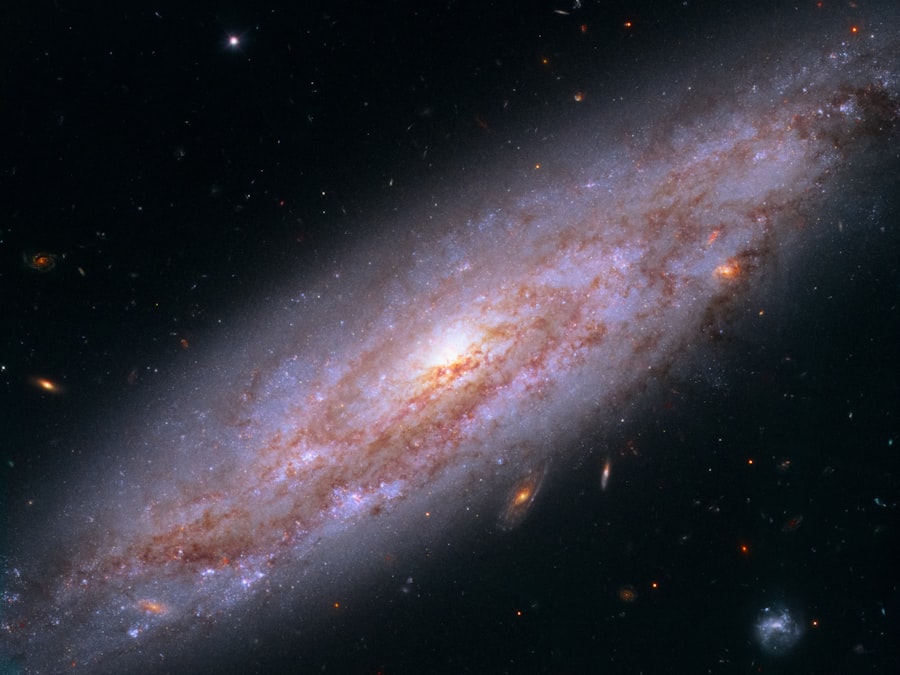
In recent years, advancements in observational technology have led to significant discoveries that refine our understanding of the universe’s age. For instance, astronomers have utilized powerful telescopes to observe distant galaxies and measure their redshifts, which indicate how fast they are moving away from Earth. This data contributes to calculations regarding the expansion rate of the universe, known as the Hubble constant.
However, discrepancies in measurements from different methods have sparked discussions about potential revisions to our understanding of cosmic age. Additionally, researchers have made strides in studying ancient celestial objects, such as globular clusters and white dwarf stars. These objects serve as cosmic time capsules, preserving information about their formation and evolution over billions of years.
By analyzing their properties and ages, scientists can cross-reference their findings with other methods of age determination, further refining estimates for the universe’s age. Such discoveries underscore the dynamic nature of cosmological research and highlight how new observations can reshape established theories.
The Debate Over the Age of the Universe
| Debate Topic | Arguments | Evidence |
|---|---|---|
| Young Universe | Religious beliefs, lack of evidence for old age | Religious texts, some scientific anomalies |
| Old Universe | Scientific observations, cosmic microwave background radiation | Astronomical data, fossil records, radioactive dating |
Despite significant progress in determining the age of the universe, debates persist within the scientific community regarding its exact timeline. One major point of contention arises from differing measurements of the Hubble constant. While some methods suggest a value around 70 kilometers per second per megaparsec, others indicate a higher rate closer to 73 kilometers per second per megaparsec.
This discrepancy raises questions about our understanding of cosmic expansion and could imply that new physics may be at play. Moreover, alternative models and theories challenge traditional views on cosmic age. Some researchers propose modifications to existing cosmological models or suggest entirely new frameworks that could account for observed phenomena without relying solely on established theories like the Big Bang.
These debates are crucial for advancing scientific knowledge, as they encourage rigorous examination of existing paradigms and foster innovative thinking about the nature of the universe.
The Role of Cosmological Models in Determining the Age of the Universe
Cosmological models play a pivotal role in estimating the age of the universe by providing theoretical frameworks that describe its evolution over time. The Lambda Cold Dark Matter (ΛCDM) model is currently the most widely accepted cosmological model, incorporating dark energy and cold dark matter as essential components driving cosmic expansion. This model allows scientists to simulate various scenarios regarding how matter and energy interact throughout cosmic history.
By applying these models to observational data, researchers can derive estimates for key parameters such as density, expansion rate, and curvature of space-time. These parameters are instrumental in calculating the age of the universe. However, as new data emerges and discrepancies arise between different measurement techniques, cosmologists must continually refine their models to ensure they accurately reflect reality.
This iterative process highlights the importance of theoretical frameworks in guiding empirical research while remaining adaptable to new findings.
The Impact of New Technology on Age Determination
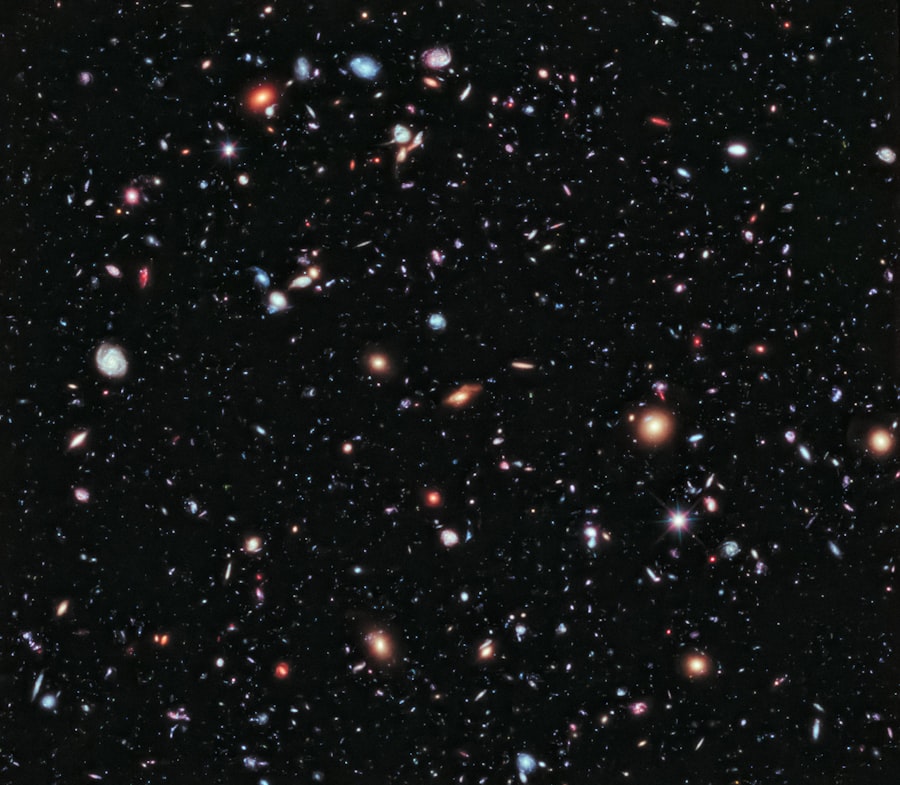
The advent of new technologies has revolutionized our ability to determine the age of the universe with unprecedented precision. Advanced telescopes equipped with cutting-edge instruments allow astronomers to observe distant galaxies and cosmic phenomena in greater detail than ever before. For instance, space-based observatories like Hubble and James Webb have provided invaluable insights into stellar populations and galaxy formation processes.
Moreover, improvements in computational power enable researchers to analyze vast datasets more efficiently, facilitating complex simulations that model cosmic evolution over billions of years. Machine learning algorithms are increasingly being employed to identify patterns within astronomical data, leading to more accurate age estimates for celestial objects. As technology continues to evolve, it promises to unlock further mysteries surrounding the universe’s age and its intricate history.
The Role of Dark Matter and Dark Energy in Age Calculations
Dark matter and dark energy are two enigmatic components that significantly influence calculations regarding the age of the universe. Dark matter, which does not emit or absorb light, constitutes approximately 27% of total mass-energy content in the universe. Its gravitational effects play a crucial role in shaping galaxies and large-scale structures.
Understanding dark matter’s properties is essential for accurately modeling cosmic evolution and determining how it affects age estimates. On the other hand, dark energy accounts for roughly 68% of the universe’s energy density and is responsible for its accelerated expansion. The interplay between dark matter and dark energy complicates age calculations, as their effects must be carefully considered when interpreting observational data.
As researchers continue to investigate these mysterious components, they may uncover new insights that refine our understanding of cosmic age and evolution.
Theories and Hypotheses About the Age of the Universe
Throughout history, various theories and hypotheses have emerged regarding the age of the universe. In ancient times, many cultures held beliefs rooted in mythology or religious texts that described creation events without a scientific basis. However, as humanity’s understanding of astronomy evolved, so too did theories about cosmic origins.
In addition to the Big Bang Theory, alternative hypotheses have been proposed over time. Some scientists have suggested cyclic models where the universe undergoes infinite cycles of expansion and contraction. Others have explored ideas related to multiverse theories or variations on inflationary models that could alter perceptions of cosmic age.
Each theory contributes to a broader dialogue about our understanding of time and existence within an ever-expanding cosmos.
The Importance of Accurate Age Determination for Understanding the Universe
Accurate determination of the universe’s age is paramount for several reasons. Firstly, it provides context for understanding cosmic events such as star formation, galaxy collisions, and supernova explosions. By knowing when these events occurred relative to one another, scientists can piece together a coherent narrative about how structures evolved over time.
Furthermore, accurate age estimates are essential for testing fundamental theories in physics and cosmology. They allow researchers to validate or challenge existing models based on observational evidence. As new discoveries emerge—whether through advanced technology or theoretical advancements—having a reliable framework for understanding cosmic age ensures that scientific inquiry remains grounded in empirical reality.
Implications of an Older Universe for Cosmology and Astrophysics
The implications of an older universe extend far beyond mere numbers; they challenge existing paradigms within cosmology and astrophysics. If future research were to suggest an older universe than currently accepted estimates, it could necessitate revisions to fundamental theories regarding cosmic evolution and structure formation. An older universe might also influence our understanding of stellar lifecycles and galactic dynamics.
Such shifts would reverberate through various fields within astrophysics, prompting researchers to reevaluate established concepts while exploring new avenues for inquiry.
Conclusion and Future Research Directions
In conclusion, determining the age of the universe remains one of science’s most intriguing challenges—a quest that intertwines observational data with theoretical frameworks across multiple disciplines. As researchers continue to explore this vast topic through advanced technology and innovative thinking, they will undoubtedly uncover new insights that refine our understanding of cosmic history. Future research directions may include deeper investigations into dark matter and dark energy’s roles in shaping cosmic evolution or exploring alternative cosmological models that challenge conventional wisdom.
Additionally, ongoing observations from next-generation telescopes promise to provide unprecedented data that could further illuminate this complex subject. Ultimately, as humanity seeks answers about its place within an expansive cosmos, understanding the age of the universe will remain a cornerstone for unraveling its mysteries—a journey that continues to inspire curiosity and wonder across generations.
In recent discussions about the age of the universe, a fascinating article titled “Is the Universe Older Than We Thought?” has sparked considerable interest among cosmologists and astronomy enthusiasts alike. This article delves into the latest research and theories that suggest the universe might be older than previously estimated. For those intrigued by this topic, a related article on cosmic phenomena and their implications on our understanding of the universe can be found on My Cosmic Ventures. This piece provides additional insights and complements the ongoing debate about the universe’s age. You can read more about it by visiting My Cosmic Ventures.
WATCH THIS! Did JWST DISPROVE The BIG BANG?!?!
FAQs
What is the current estimated age of the universe?
The current estimated age of the universe is approximately 13.8 billion years.
How do scientists determine the age of the universe?
Scientists determine the age of the universe through various methods, including studying the cosmic microwave background radiation, the expansion rate of the universe, and the ages of the oldest stars and galaxies.
Has the estimated age of the universe changed over time?
Yes, the estimated age of the universe has changed over time as new data and observations have become available. However, the current estimate of 13.8 billion years is widely accepted within the scientific community.
What would it mean if the universe were older than previously thought?
If the universe were older than previously thought, it would have significant implications for our understanding of cosmic evolution, the formation of galaxies and stars, and the nature of dark matter and dark energy.
What are some potential reasons for a discrepancy in the estimated age of the universe?
A discrepancy in the estimated age of the universe could be due to uncertainties in the measurements of cosmic parameters, variations in the expansion rate of the universe, or the presence of unknown physical processes that affect our understanding of cosmic evolution.