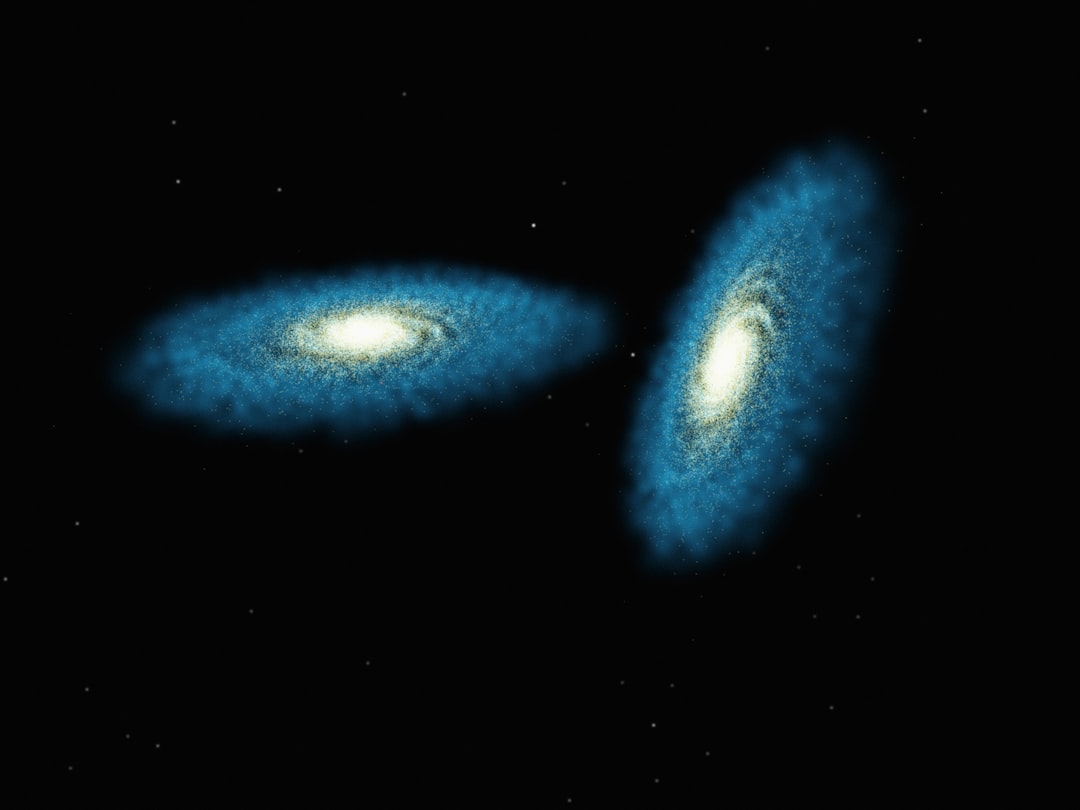
The question of whether the universe is deleting galaxies is a provocative one, sparking curiosity and perhaps a touch of cosmic dread. To approach this, it is essential to examine the current cosmological model and the processes at play within the vastness of space. The idea of “deletion” suggests a deliberate act of removal, which is not how celestial mechanics typically operate. Instead, what might be perceived as deletion are rather natural evolutionary processes, often over immense timescales, that lead to the transformation or dispersal of galactic structures.
Galaxies are not static entities; they are dynamic systems that evolve over billions of years. Their formation, growth, and eventual fates are governed by fundamental forces and processes, primarily gravity. Understanding these processes is key to understanding if galaxies disappear or simply change form. Imagine a galaxy not as a solid object, but as a sprawling metropolis, constantly being built, rebuilt, and at times, parts of it are slowly abandoned or incorporated into larger structures.
Birth of Galaxies: From Cosmic Seeds to Stellar Nurseries
The earliest galaxies are thought to have formed from slight overdensities in the primordial universe, areas where matter was slightly more concentrated. Gravity then acted as a relentless architect, pulling this matter together.
Dark Matter Halos: The Invisible Framework
A significant component of this early structure was dark matter, an invisible substance that interacts only through gravity. This dark matter provided the gravitational scaffolding, the unseen framework, upon which ordinary matter could accrete. These dark matter halos, vast and invisible, acted as cosmic funnels, drawing in gas and dust.
Primordial Gas Accretion: Fueling the Fires
As dark matter halos grew, they attracted vast clouds of hydrogen and helium, the primordial gases left over from the Big Bang. These gases, as they fell into the gravitational wells of the halos, began to compress and heat up, eventually reaching densities and temperatures sufficient for star formation.
Growth and Mergers: The Cosmic Dance of Giants
Galaxies rarely exist in isolation. They reside in clusters and superclusters, influenced by the gravitational pull of their neighbors. This proximity often leads to interactions, from gentle gravitational nudges to cataclysmic collisions and mergers.
Galactic Encounters: Close Approaches and Tidal Forces
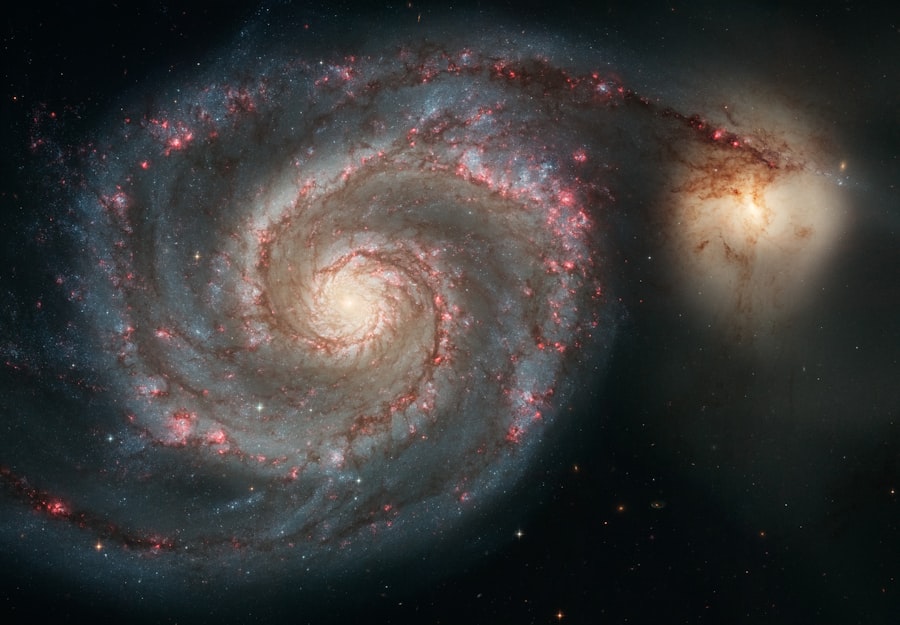
When galaxies pass close to each other, their mutual gravitational attraction can distort their shapes. Stars can be flung out into long streams, creating spectacular tidal tails. This is akin to two ships sailing past each other, their wakes occasionally intertwining.
Mergers: The Ultimate Galactic Transformation
The most dramatic form of interaction is a galactic merger, where two or more galaxies collide and eventually merge into a single, larger entity. This process can be incredibly violent, triggering bursts of star formation as gas clouds are compressed. The supermassive black holes at the centers of galaxies can also interact, sometimes merging themselves.
Hierarchical Merging: Building Larger Structures from Smaller Ones
The prevailing model of galaxy formation and evolution is the hierarchical model. This posits that smaller structures, like dwarf galaxies, merge to form larger galaxies, which in turn merge to form even larger ones. This is like building a skyscraper from individual bricks, then assembling those skyscrapers into a vast, interconnected city.
In exploring the intriguing concept of whether the universe is deleting galaxies, one can find valuable insights in the article titled “The Fate of Galaxies: Understanding Cosmic Evolution” on My Cosmic Ventures. This article delves into the processes that lead to the formation and potential disappearance of galaxies over cosmic time. For more information, you can read the full article here: The Fate of Galaxies: Understanding Cosmic Evolution.
The Myth of Galactic “Deletion”: Unpacking the Terminology
The notion of galaxies being “deleted” evokes an active, almost malicious, process of erasure. Scientifically, however, there is no known mechanism that would deliberately annihilate entire galaxies. What might appear as deletion are, in fact, the outcomes of natural astrophysical processes.
Stellar Evolution: The Life and Death of Stars Within Galaxies
The stars within a galaxy are constantly undergoing their own life cycles: birth, evolution, and death. While individual stars do not “delete” the galaxy, their collective evolution plays a role in the galaxy’s overall state.
Supernovae and Stellar Remnants: Recycling Galactic Material
Massive stars end their lives in spectacular supernova explosions, scattering heavy elements into space. These elements become the building blocks for new stars and planets. Less massive stars shed their outer layers, forming planetary nebulae, and eventually cool into white dwarfs. Neutron stars and black holes are the dense remnants of even more massive stars. These events are not acts of deletion, but rather immense acts of recycling, where the material that once comprised stars is returned to the galactic environment, ready to form new generations.
Mass Loss from Stars: A Gradual Dissipation
While not “deletion,” the cumulative effect of mass loss from stars through stellar winds and planetary nebulae over billions of years does contribute to a very slow dispersal of a galaxy’s baryonic matter. However, this is a gradual process, not a sudden disappearance.
Active Galactic Nuclei (AGN) and Quasars: Galactic Feedback Mechanisms
Some galaxies host supermassive black holes at their centers. When these black holes actively accrete matter, they can become incredibly luminous, forming Active Galactic Nuclei (AGN) and quasars. These processes can have profound effects on the surrounding galaxy.
Jets and Outflows: Disrupting Star Formation
AGN can launch powerful jets of plasma and energetic radiation that extend far beyond the galaxy. These outflows can heat and expel gas from the galaxy, effectively shutting down star formation. This is not deletion of the galaxy itself, but rather a process that can quench the galaxy’s ability to form new stars, leading to a more evolved, less active state. Imagine a city where the power supply is cut off; the buildings remain, but life as it was lived there ceases.
Feedback Loops: Regulating Galactic Growth
These AGN feedback mechanisms are believed to play a crucial role in regulating the growth of galaxies, preventing them from becoming too massive. This is a self-regulating process, not an act of destruction in the sense of deletion.
“Ghost” Galaxies: Evidence of Transformation, Not Erasure
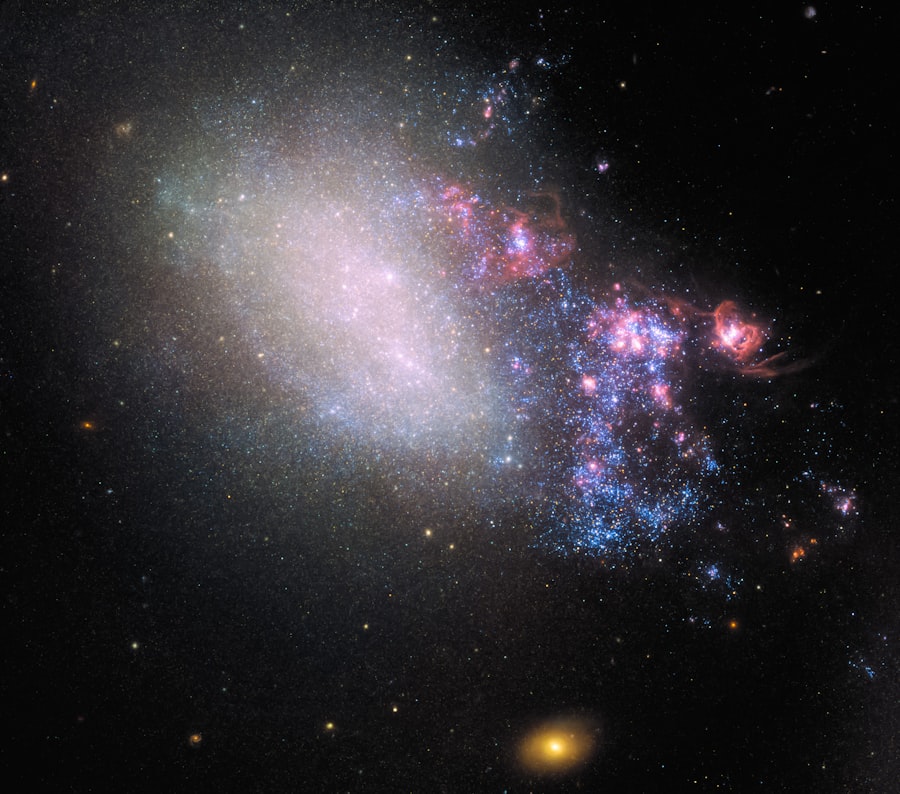
The term “ghost” galaxy might evoke imagery of spectral remnants, but scientifically, it refers to galaxies that are very dim and contain very few stars. This lack of visible presence can give the impression that they have vanished.
Ultra-Faint Dwarf Galaxies: The Faint End of the Galactic Spectrum
Ultra-faint dwarf galaxies are the smallest and least luminous galaxies known. They are often found orbiting larger galaxies, like our own Milky Way. Their low stellar content makes them difficult to detect, but they are still very much present.
Tidal Stripping: The Slow Erosion of Outer Layers
When dwarf galaxies orbit larger galaxies, they are subject to strong tidal forces. These forces can gradually strip away the galaxy’s stars and gas, leaving behind a more diffuse and less luminous entity. This is like a sculpted monument slowly being eroded by wind and rain over millennia – the form changes, but the material is still there, just distributed differently.
Satellite Galaxies: Subject to Galactic Imperialism
Many galaxies are satellites of larger ones. Their fates are often intertwined with their hosts. Over time, the gravitational pull of the host galaxy can lead to the disruption and assimilation of satellite galaxies. Parts of them might be absorbed, or their gas might be stripped away.
Tidal Dwarf Galaxies: Fragile Offspring of Cosmic Collisions
A fascinating phenomenon is the formation of “tidal dwarf galaxies.” These are thought to form from material ejected during galactic collisions. These newly formed dwarf galaxies are often very fragile and can be accreted by their parent galaxies or other nearby galaxies. Their ephemeral nature might contribute to the perception of deletion.
The Role of Cosmic Expansion and Dark Energy
The expansion of the universe itself plays a profound role in the distribution and detectability of galaxies. While it doesn’t “delete” galaxies in the sense of destroying them, it can push them beyond our observable horizon.
The Observable Universe: A Cosmic Horizon
The observable universe is the portion of the cosmos from which light has had time to reach us since the Big Bang. As the universe expands, galaxies that are now beyond this horizon are effectively lost to our direct observation. Imagine sailing further and further away from a distant island; eventually, it sinks below the horizon, becoming unseeable, even though it still exists.
Redshift and Distance: Measuring the Expanding Cosmos
The redshift of light from distant galaxies is a direct consequence of the expansion of space. The further away a galaxy is, the more its light is stretched, or redshifted. This relationship allows us to estimate distances and understand the scale of cosmic expansion.
Dark Energy: Accelerating the Separation
The discovery of dark energy has revealed that the expansion of the universe is not only happening, but it is accelerating. This acceleration means that galaxies that are sufficiently far away will recede from us at speeds faster than the speed of light, making their light reach us even less frequently, and eventually not at all.
The Ultimate Isolation: Galaxies Beyond Our Reach
As the universe continues to expand at an accelerating rate, galaxies that are not gravitationally bound to our local group will eventually recede beyond our observable horizon. This means that in the unimaginably distant future, the night sky might appear much emptier, not because galaxies have been deleted, but because they have moved too far away for their light to ever reach us. This is a gradual fading into invisibility, a testament to the relentless march of cosmic expansion.
Recent discussions in astrophysics have raised intriguing questions about the fate of galaxies, particularly whether the universe is actively deleting them. This concept is explored in depth in a related article that examines the mechanisms behind galaxy formation and destruction. For those interested in understanding the cosmic processes at play, you can read more about it in this insightful piece on galaxy dynamics. The findings suggest that various factors, including dark energy and cosmic expansion, may contribute to the gradual disappearance of these celestial structures.
The Future of Galactic Existence: Transformation, Not Annihilation
| Metric | Value | Explanation |
|---|---|---|
| Galaxy Collision Rate | ~1 per billion years per galaxy | Frequency at which galaxies merge or interact, potentially leading to galaxy destruction or transformation. |
| Galaxy Disruption Events | Observed in hundreds | Number of documented cases where galaxies are tidally disrupted or stripped of stars. |
| Dark Energy Effect | Accelerating expansion | Causes galaxies to move apart, reducing interactions but not deleting galaxies directly. |
| Galaxy Evaporation Timescale | Trillions of years | Estimated time for galaxies to lose stars due to gravitational interactions, effectively “evaporating”. |
| Star Formation Rate Decline | Decreasing over billions of years | Indicates galaxies are aging and becoming less active, but not being deleted. |
| Black Hole Consumption | Minor fraction of galaxy mass | Supermassive black holes consume some matter but do not delete entire galaxies. |
When considering the “deletion” of galaxies, it is more accurate to think in terms of transformation, dispersal, and eventual unobservability due to cosmic expansion. Galaxies are not being systematically erased; rather, they are participating in the grand, ongoing evolution of the universe.
The Fate of Galaxies in a Cold, Dark Future
Cosmological models predict a future where the universe continues to expand indefinitely. In this scenario, galaxies will move further apart, and star formation will eventually cease as the gas reservoirs are depleted.
The Andromeda-Milky Way Collision: A Local Example
On a local scale, we have a preview of galactic interaction with the impending collision and merger of the Milky Way and Andromeda galaxies. This event, predicted to occur in about 4.5 billion years, will result in the formation of a larger elliptical galaxy. While the individual galaxies will cease to exist in their current forms, their constituent stars and matter will be incorporated into a new, larger structure.
The Long Decline: Fading into Obscurity
Over truly astronomical timescales, galaxies will continue their evolutionary trajectories. Stars will burn out, leaving behind stellar remnants. Black holes will continue to accrete matter, and mergers will continue to reshape galactic structures.
Unanswered Questions and Ongoing Research
While our understanding of galaxy evolution has advanced significantly, there are still many unanswered questions. The precise mechanisms by which galaxies form and evolve, the role of dark matter and dark energy in these processes, and the ultimate fate of galactic structures are areas of active research.
The Intergalactic Medium: The Cosmic Glue and Binder
The intergalactic medium, the tenuous gas that fills the space between galaxies, plays a crucial role in galactic evolution, supplying fuel for star formation and influencing the dynamics of galaxy clusters.
Observational Astronomy and Future Telescopes: Peeking into the Past and Future
Ground-based and space-based telescopes, like the James Webb Space Telescope, are continuously pushing the boundaries of our observational capabilities, allowing us to witness galaxies in different stages of their evolution and to probe deeper into the universe’s past. These instruments are like time machines, allowing us to see the universe in its younger years.
In conclusion, the universe is not “deleting” galaxies in the conventional sense. Instead, galaxies are undergoing a continuous process of evolution, transformation, and interaction. Their forms change, their stellar populations shift, and their distances from us grow ever larger with cosmic expansion. While some may appear to fade from view, their fundamental matter is either recycled, incorporated into larger structures, or simply outpaced by the inexorable expansion of the cosmos, a grand cosmic ballet of creation and transformation that has been underway for billions of years.
FAQs
What does it mean for the universe to be “deleting” galaxies?
The phrase “deleting galaxies” is a metaphorical way to describe processes that lead to the disappearance or transformation of galaxies over cosmic time, such as galaxy collisions, mergers, or the cessation of star formation, rather than an actual deletion like erasing data.
Are galaxies actually disappearing from the universe?
Galaxies are not disappearing in the sense of vanishing completely; instead, they evolve. Some galaxies merge with others, forming larger galaxies, while others may lose their ability to form new stars and become less visible, but the matter remains in the universe.
What processes cause galaxies to change or “disappear”?
Key processes include galaxy mergers, where two or more galaxies combine; interactions with other galaxies that strip away gas and stars; and the exhaustion of gas needed for star formation, leading to “dead” or quiescent galaxies that no longer shine brightly.
Is the universe losing galaxies over time?
The total number of galaxies may decrease in some regions due to mergers, but on a large scale, the universe continues to expand and new structures can form. The overall number of galaxies is not simply decreasing but changing in form and distribution.
How do astronomers study the evolution and fate of galaxies?
Astronomers use telescopes across various wavelengths (optical, radio, infrared, etc.) to observe galaxies at different distances and ages, computer simulations to model galaxy interactions, and surveys to track changes in galaxy populations over billions of years.