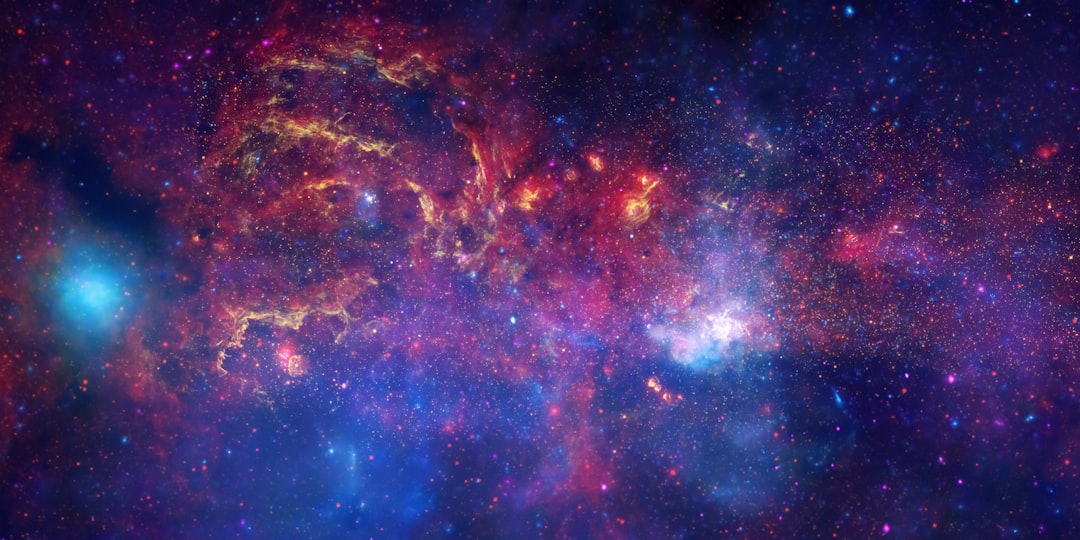
The notion of the universe functioning as a colossal computer has captivated the minds of scientists, philosophers, and futurists alike. This concept suggests that the fundamental processes of the cosmos can be likened to computational operations, where information is processed, stored, and transmitted across vast expanses of space and time. By viewing the universe through this lens, one can explore the intricate relationships between physical laws, information theory, and the very fabric of reality itself.
This perspective not only challenges traditional views of existence but also opens up new avenues for understanding the nature of consciousness, reality, and the potential for artificial intelligence. As humanity continues to advance technologically, the parallels between computational systems and the universe become increasingly apparent. Just as computers manipulate data through binary code, the universe appears to operate on a set of fundamental principles that govern its behavior.
This idea invites a re-examination of how humans perceive their place within the cosmos and raises profound questions about the nature of existence itself. The exploration of this concept is not merely an academic exercise; it has far-reaching implications for science, philosophy, and even spirituality.
Key Takeaways
- The universe can be conceptualized as a vast computational system processing information at a fundamental level.
- Quantum mechanics plays a crucial role in supporting the idea of the universe functioning like a giant computer.
- There is ongoing debate and criticism regarding the feasibility and implications of viewing the universe as a computational entity.
- Understanding the universe as a computer could lead to new practical applications and advancements in technology and physics.
- Philosophical and ethical questions arise from this theory, influencing how we perceive reality and our place within it.
Theoretical Basis for the Universe as a Giant Computer
The theoretical underpinnings of the universe as a giant computer draw from various fields, including physics, information theory, and cosmology. One of the most significant contributions to this idea comes from the work of physicists like John Archibald Wheeler, who famously coined the phrase “it from bit.” This phrase encapsulates the notion that all physical phenomena can be understood as manifestations of information. According to this view, the universe is fundamentally composed of bits of information that interact in complex ways to create the reality we observe.
Additionally, concepts from quantum mechanics further bolster this theoretical framework. Quantum information theory posits that information is a fundamental component of reality, much like matter and energy. The behavior of subatomic particles can be described in terms of information processing, where states exist in superposition until observed.
This aligns with the idea that the universe operates like a computer, where information is constantly being computed and re-computed at every moment. The implications of these theories suggest that understanding the universe may require a shift in perspective—one that embraces information as a core element of existence.
Comparing the Universe to a Computer System

When comparing the universe to a computer system, several parallels emerge that highlight their similarities. At its core, a computer processes data through a series of operations governed by algorithms. Similarly, the universe operates according to physical laws that dictate how matter and energy interact.
Just as a computer’s hardware provides the necessary infrastructure for processing information, the fabric of spacetime serves as the medium through which cosmic events unfold. This comparison invites deeper inquiry into how these systems function and what they reveal about reality. Moreover, both systems exhibit remarkable complexity and adaptability.
A computer can run various programs and applications, each designed to perform specific tasks or solve particular problems.
This complexity raises intriguing questions about whether there are universal “programs” or “codes” that dictate the behavior of everything from subatomic particles to celestial bodies.
Evidence Supporting the Universe as a Giant Computer
| Metric | Description | Value/Observation | Source/Study |
|---|---|---|---|
| Computational Capacity of the Universe | Estimated number of operations the universe can perform since the Big Bang | ~10^120 operations | Seth Lloyd, “Computational Capacity of the Universe” (2002) |
| Information Content of the Universe | Estimated number of bits of information contained in the observable universe | ~10^90 bits | Rolf Landauer, “Information is Physical” (1991) |
| Quantum Computation Analogies | Universe behaves like a quantum computer processing information at fundamental levels | Quantum entanglement and superposition observed in particles | David Deutsch, “The Fabric of Reality” (1997) |
| Holographic Principle | Information describing a volume of space can be thought of as encoded on a boundary to the region | Entropy proportional to surface area, not volume | Gerard ‘t Hooft, Leonard Susskind (1993-1995) |
| Cellular Automata Models | Universe modeled as a grid of discrete cells updating states based on rules | Conway’s Game of Life analogies and Wolfram’s “A New Kind of Science” | Stephen Wolfram (2002) |
| Speed of Light as Processing Limit | Speed of light interpreted as maximum information transfer rate | ~3 x 10^8 m/s | Special Relativity, foundational physics |
Support for the idea that the universe functions as a giant computer can be found in various scientific observations and theories. One compelling piece of evidence lies in the field of quantum computing, which leverages principles of quantum mechanics to process information in ways that classical computers cannot. Quantum computers operate on qubits, which can exist in multiple states simultaneously, mirroring how particles behave in superposition.
This suggests that if the universe is indeed a computational entity, it may utilize similar principles to process vast amounts of information efficiently. Furthermore, advancements in cosmology have revealed patterns and structures within the universe that resemble computational processes. For instance, researchers have identified fractal patterns in cosmic structures, indicating that similar algorithms may govern both natural phenomena and computational models.
The discovery of cosmic microwave background radiation also provides insights into the early universe’s conditions, suggesting that it underwent a series of transformations akin to data processing stages in a computer system. These findings lend credence to the notion that the universe operates on principles reminiscent of computation.
Challenges and Criticisms of the Universe as a Giant Computer Theory
Despite its intriguing implications, the theory that the universe functions as a giant computer is not without its challenges and criticisms. One significant concern revolves around the nature of consciousness and whether it can be adequately explained through computational models. Critics argue that reducing consciousness to mere information processing overlooks its qualitative aspects—such as subjective experience and emotional depth—that cannot be easily quantified or computed.
Additionally, some scientists question whether this analogy truly captures the essence of physical reality or if it merely serves as a metaphorical framework for understanding complex phenomena. The risk of oversimplification looms large; equating the universe with a computer may lead to misconceptions about its nature and functioning. As such, proponents of this theory must navigate these criticisms carefully while continuing to explore its potential implications.
Implications of the Universe as a Giant Computer
The implications of viewing the universe as a giant computer extend far beyond theoretical musings; they touch upon various aspects of human existence and understanding. For one, this perspective encourages interdisciplinary collaboration between fields such as physics, computer science, and philosophy. By fostering dialogue among these disciplines, researchers can develop more comprehensive models that account for both physical laws and informational processes.
Moreover, this conceptual framework has profound implications for humanity’s future relationship with technology. If the universe operates on principles akin to computation, it raises questions about artificial intelligence and its potential role in understanding or even replicating aspects of reality. As AI continues to evolve, insights gleaned from this perspective may inform ethical considerations surrounding its development and integration into society.
Philosophical and Ethical Considerations
The philosophical ramifications of considering the universe as a giant computer are vast and multifaceted. One key area of inquiry revolves around determinism versus free will. If reality is fundamentally computational, it raises questions about whether human actions are predetermined by underlying algorithms or if individuals possess genuine agency within this framework.
This debate has significant implications for ethics, morality, and accountability. Furthermore, ethical considerations arise regarding humanity’s role within this computational universe. As technology advances and artificial intelligence becomes more sophisticated, society must grapple with questions about responsibility and stewardship over these creations.
If humans are part of a larger computational system, what obligations do they have toward one another and toward their environment? These inquiries challenge individuals to reflect on their values and responsibilities in an increasingly interconnected world.
The Role of Quantum Mechanics in the Universe as a Giant Computer Theory
Quantum mechanics plays a pivotal role in shaping the understanding of the universe as a giant computer. The principles governing quantum behavior—such as superposition and entanglement—suggest that information processing occurs at levels far beyond classical computation capabilities. This insight implies that if the universe operates like a computer, it does so using quantum principles that allow for complex interactions and computations on an unprecedented scale.
Moreover, quantum mechanics introduces an element of uncertainty into this computational model. Unlike classical systems where outcomes can often be predicted with certainty, quantum systems exhibit probabilistic behavior that challenges traditional notions of determinism. This aspect adds depth to the idea of the universe as a giant computer by suggesting that it may not only process information but also do so in ways that incorporate randomness and unpredictability.
The Search for a Unified Theory of Everything
The quest for a unified theory of everything—a comprehensive framework that reconciles general relativity with quantum mechanics—aligns closely with the concept of the universe as a giant computer. Many physicists believe that such a theory could reveal fundamental truths about how information is processed within the cosmos. By uncovering these underlying principles, researchers may gain insights into both cosmic phenomena and technological advancements.
This search for unity also reflects humanity’s desire to understand its place within the larger tapestry of existence. If successful, a unified theory could provide answers to some of life’s most profound questions: What is reality? How do consciousness and matter interact?
What role does humanity play in this grand computational scheme? These inquiries underscore not only scientific curiosity but also philosophical exploration.
Practical Applications of the Universe as a Giant Computer
The implications of viewing the universe as a giant computer extend into practical applications across various fields. In computer science, insights derived from this perspective could inform advancements in quantum computing and algorithms designed to mimic natural processes. By harnessing principles observed in cosmic phenomena, researchers may develop more efficient computational models capable of solving complex problems.
In addition to technological advancements, this conceptual framework may influence approaches to environmental sustainability and resource management. Understanding natural systems as computational entities could lead to innovative strategies for addressing ecological challenges by mimicking nature’s algorithms in human-designed systems. This approach emphasizes harmony with natural processes rather than exploitation—a shift that could have profound implications for future generations.
The Future of the Universe as a Giant Computer Theory
As humanity continues its journey into an increasingly complex technological landscape, exploring the concept of the universe as a giant computer offers valuable insights into existence itself. While challenges and criticisms persist regarding this theory’s validity, its potential implications for science, philosophy, and ethics cannot be overlooked. By embracing this perspective, individuals may cultivate a deeper understanding not only of their place within the cosmos but also their responsibilities toward one another and future generations.
Looking ahead, ongoing research into quantum mechanics, artificial intelligence, and cosmology will undoubtedly shape how society perceives its relationship with technology and reality itself.
The intriguing concept of whether the universe functions as a giant computer has sparked numerous discussions in the scientific community. For those interested in exploring this idea further, a related article can be found at this link, which delves into the implications of computational theories in understanding the fabric of reality.
WATCH THIS! The Universe Has a Resolution Limit (And We’ve Hit It)
FAQs
What does it mean to say the universe is a giant computer?
The idea suggests that the universe operates like a computational system, processing information through physical laws and interactions, similar to how a computer processes data.
Who proposed the concept of the universe as a computer?
Physicist John Archibald Wheeler popularized the phrase “it from bit,” implying that information is fundamental to the physics of the universe. Other scientists like Stephen Wolfram and Seth Lloyd have also contributed to this concept.
Is there scientific evidence supporting the universe as a computer?
While the idea is intriguing and has theoretical support in fields like digital physics and quantum computing, it remains a hypothesis without direct empirical proof.
How does quantum computing relate to the universe as a computer?
Quantum computing uses principles of quantum mechanics to process information. Some theories propose that the universe itself performs quantum computations at a fundamental level.
Does this concept imply the universe is conscious or intelligent?
No, the idea that the universe functions like a computer does not necessarily imply consciousness or intelligence; it is a metaphor for how physical processes might be understood as information processing.
What are the implications if the universe is a giant computer?
If true, it could revolutionize our understanding of physics, reality, and information, potentially impacting fields like cosmology, quantum mechanics, and computer science.
Is the universe being a computer the same as simulation theory?
Not exactly. Simulation theory suggests the universe is an artificial simulation created by an external entity, whereas the universe as a computer concept views the universe itself as a computational system without implying an external simulator.
Can this idea be tested or falsified?
Currently, the concept is largely theoretical and philosophical, making it difficult to test or falsify with existing scientific methods. Research continues in related areas like quantum information theory.