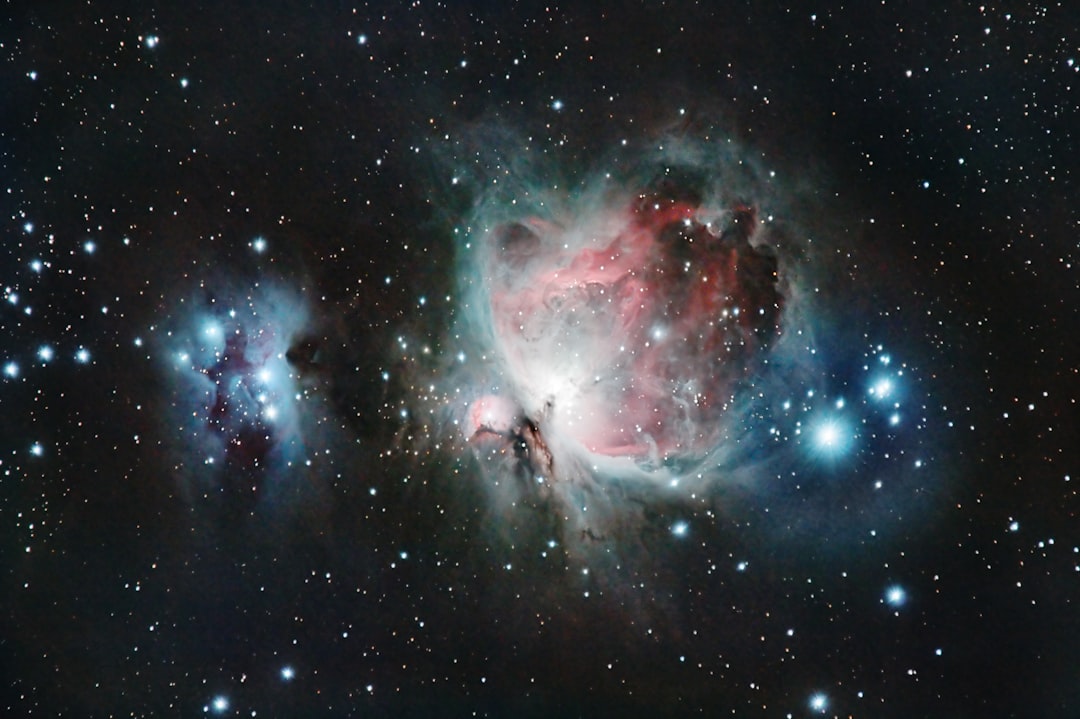
The phrase “there’s no such thing as a free lunch” is often used to convey the idea that everything comes with a cost, whether it be financial, physical, or otherwise. In the context of the universe, this concept takes on a more profound significance. The notion of a “free lunch” in the cosmos suggests that there may be phenomena or resources available without the usual trade-offs or sacrifices.
This idea has intrigued scientists, philosophers, and thinkers alike, prompting them to explore whether the universe offers any genuine opportunities for gain without corresponding losses. As humanity delves deeper into the mysteries of the cosmos, the question of whether a “free lunch” exists becomes increasingly relevant.
By examining the fundamental laws that govern the universe, one can begin to unravel the complexities surrounding this idea. The implications of a “free lunch” could reshape our understanding of energy, matter, and the very fabric of reality itself.
Key Takeaways
- The concept of a “free lunch” in the universe challenges the idea of something coming from nothing.
- The laws of thermodynamics, particularly the second law, suggest that a true “free lunch” is impossible in the universe.
- Energy plays a crucial role in the universe and is closely tied to the concept of a “free lunch”.
- Cosmic inflation and the Big Bang theory offer potential for a “free lunch” scenario in the early universe.
- Entropy, as a measure of disorder, presents challenges to the possibility of a “free lunch” in the universe.
The laws of thermodynamics and their implications for the idea of a “free lunch”
The laws of thermodynamics serve as foundational principles in understanding energy and its transformations within the universe. The first law, often referred to as the law of energy conservation, states that energy cannot be created or destroyed; it can only change forms. This principle directly challenges the notion of a “free lunch,” as it implies that any gain in energy must be offset by an equivalent loss elsewhere.
In essence, if something appears to be free, it is likely that hidden costs exist, waiting to be uncovered. The second law of thermodynamics introduces the concept of entropy, which measures the degree of disorder within a system. As energy transformations occur, entropy tends to increase, leading to a natural tendency toward disorder.
This law further complicates the idea of a “free lunch,” as it suggests that while energy may be available in certain forms, its usefulness diminishes over time due to increasing entropy. Thus, even if one were to find an apparent source of free energy, the inevitable increase in entropy would impose limitations on its practical application.
The role of energy in the universe and its connection to the concept of a “free lunch”

Energy is a fundamental component of the universe, driving processes from the smallest atomic interactions to the grandest cosmic events. It manifests in various forms—kinetic, potential, thermal, and more—each playing a crucial role in shaping the universe’s structure and behavior. The quest for understanding energy’s role leads to questions about its availability and accessibility.
If energy could be harnessed without cost or consequence, it would fundamentally alter humanity’s relationship with nature and technology. The connection between energy and the idea of a “free lunch” lies in the potential for discovering untapped sources or mechanisms that could provide energy without traditional limitations. For instance, concepts such as zero-point energy or harnessing cosmic radiation have sparked interest among researchers seeking innovative solutions to energy crises.
However, these ideas often face skepticism due to their alignment with established thermodynamic principles. The challenge remains: can humanity truly find a way to access energy freely, or is every potential source bound by the constraints imposed by nature?
The potential for a “free lunch” in the context of cosmic inflation and the Big Bang theory
| Concept | Description |
|---|---|
| Cosmic Inflation | A period of extremely rapid expansion of the universe postulated to have occurred immediately after the Big Bang. |
| Big Bang Theory | The prevailing cosmological model for the observable universe from the earliest known periods through its subsequent large-scale evolution. |
| Free Lunch | The idea that cosmic inflation could have provided the universe with a “free lunch” of energy, leading to the observed large-scale structure and uniformity. |
| Potential | Theoretical possibility that cosmic inflation may have resolved certain cosmological puzzles without requiring fine-tuning of initial conditions. |
Cosmic inflation and the Big Bang theory offer intriguing frameworks for exploring the origins of the universe and its subsequent evolution.
This phenomenon raises questions about whether this initial burst of energy could be considered a form of “free lunch.” If so, what implications would this have for our understanding of cosmic evolution?
The idea that the universe began with an immense release of energy challenges conventional notions of cost and consequence. If energy was abundant during this early phase, it prompts further inquiry into how this initial surplus influenced subsequent cosmic structures and events. However, while cosmic inflation may suggest an abundance of energy at one point in time, it does not negate the fundamental laws governing energy conservation and entropy.
Thus, while there may have been an initial “free lunch,” subsequent processes have likely imposed costs that continue to shape the universe’s trajectory.
The concept of entropy and its relationship to the possibility of a “free lunch” in the universe
Entropy plays a pivotal role in understanding the limitations surrounding the idea of a “free lunch.” As previously mentioned, entropy measures disorder within a system and tends to increase over time. This natural progression toward disorder implies that while energy may be available at certain moments or locations, its utility diminishes as entropy rises. In this sense, any perceived “free lunch” is often accompanied by hidden costs that manifest as increased entropy.
The relationship between entropy and a “free lunch” becomes particularly evident when considering processes such as energy conversion and resource utilization. For instance, harnessing solar energy may seem like an abundant source of power; however, converting that energy into usable forms inevitably incurs losses due to inefficiencies and entropy. Thus, while one might access solar power freely from nature’s bounty, the reality is that there are always trade-offs involved in its practical application.
The search for evidence of a “free lunch” in the cosmic microwave background radiation

The cosmic microwave background radiation (CMB) serves as a remnant from the early universe, providing valuable insights into its origins and evolution. Scientists have studied this radiation extensively to glean information about cosmic inflation and other fundamental processes. Within this context, researchers have sought evidence that might support or refute the existence of a “free lunch” in terms of energy distribution across the cosmos.
The CMB presents an intriguing opportunity for exploration because it represents a snapshot of the universe when it was just 380,000 years old. Analyzing its uniformity and fluctuations can reveal information about how energy was distributed during this formative period. If evidence were found suggesting an abundance of energy without corresponding costs or consequences during this time, it could lend credence to the idea of a “free lunch.” However, current interpretations align with established thermodynamic principles, indicating that while early conditions may have appeared favorable for free energy distribution, they ultimately adhere to natural laws governing conservation and entropy.
The role of dark energy and dark matter in the question of whether the universe is a “free lunch”
Dark energy and dark matter constitute two of the most enigmatic components of the universe, accounting for approximately 95% of its total mass-energy content. Their existence raises profound questions about the nature of reality and whether they contribute to any notion of a “free lunch.” Dark energy is believed to drive the accelerated expansion of the universe, while dark matter plays a crucial role in shaping cosmic structures through gravitational interactions. The interplay between dark energy and dark matter complicates discussions surrounding free resources in the cosmos.
While dark energy appears to provide an inexhaustible force driving expansion, its true nature remains elusive. If dark energy can be harnessed or understood more fully, it could potentially offer insights into accessing vast amounts of energy without traditional limitations. However, current scientific understanding suggests that even these mysterious forces are bound by fundamental laws governing energy conservation and entropy.
The implications of quantum mechanics for the idea of a “free lunch” in the universe
Quantum mechanics introduces an entirely new dimension to discussions about free resources in the universe. At subatomic scales, particles exhibit behaviors that defy classical intuitions about causality and conservation. Phenomena such as quantum entanglement and virtual particles challenge conventional notions about how energy operates at fundamental levels.
This raises intriguing possibilities regarding whether quantum effects could allow for forms of free energy or resources. For instance, concepts like quantum tunneling suggest that particles can traverse barriers without expending traditional forms of energy. Such behaviors prompt speculation about whether similar principles could apply on larger scales or within specific contexts—potentially leading to scenarios where resources appear available without cost.
However, these ideas remain speculative and must contend with established thermodynamic principles that govern macroscopic systems.
The potential for extraterrestrial life and its connection to the concept of a “free lunch” in the universe
The search for extraterrestrial life has long captivated human imagination and scientific inquiry. As researchers explore distant planets and moons within our solar system and beyond, questions arise about whether life elsewhere might have discovered ways to access resources freely—essentially finding their own versions of a “free lunch.” If life forms exist that can utilize energy sources more efficiently than humanity currently does, it could reshape our understanding of resource utilization across different environments. Moreover, if extraterrestrial civilizations have developed advanced technologies capable of harnessing energy from their surroundings without incurring significant costs or consequences, it raises profound questions about our own technological limitations.
The potential for discovering such civilizations could lead humanity to rethink its approach to resource management and sustainability on Earth.
The philosophical and theological implications of the idea of a “free lunch” in the universe
The concept of a “free lunch” extends beyond scientific inquiry into philosophical and theological realms. It invites contemplation about existence itself—whether life has inherent value or if everything comes at a cost. Philosophers have long debated notions surrounding value creation versus consumption; thus, exploring whether anything exists without trade-offs can lead to profound insights about human existence.
From a theological perspective, discussions about free resources may intersect with beliefs regarding creation and divine providence. If one were to posit that certain aspects of existence are indeed free gifts from a higher power—such as love or consciousness—it raises questions about how these gifts interact with established laws governing nature. Ultimately, grappling with these implications can lead individuals toward deeper reflections on their place within an intricate web connecting science, philosophy, and spirituality.
The ongoing debate about whether the universe is a “free lunch” and its significance for our understanding of the cosmos
The question of whether there exists a “free lunch” in the universe remains an open debate among scientists, philosophers, and thinkers alike. While various theories propose intriguing possibilities—from cosmic inflation to quantum mechanics—the fundamental laws governing thermodynamics continue to impose constraints on our understanding. As humanity seeks answers about existence itself—its origins and future—the exploration surrounding this concept will undoubtedly shape perspectives on resource utilization and sustainability.
Ultimately, whether one views aspects of existence as freely given or bound by costs reflects broader beliefs about life’s nature and purpose. As researchers continue their quest for knowledge across disciplines—from astrophysics to philosophy—the ongoing dialogue surrounding free resources will play an essential role in shaping humanity’s understanding not only of itself but also its place within an expansive cosmos filled with mysteries yet to be unraveled.
In exploring the intriguing question “Is the Universe a Free Lunch?”, one might find it beneficial to delve into related discussions that expand on the mysteries of the cosmos. A fascinating article that complements this topic can be found on My Cosmic Ventures, which delves into the complexities and wonders of the universe. This article provides additional insights and perspectives that can enrich your understanding of cosmic phenomena. For more information, you can read the related article on