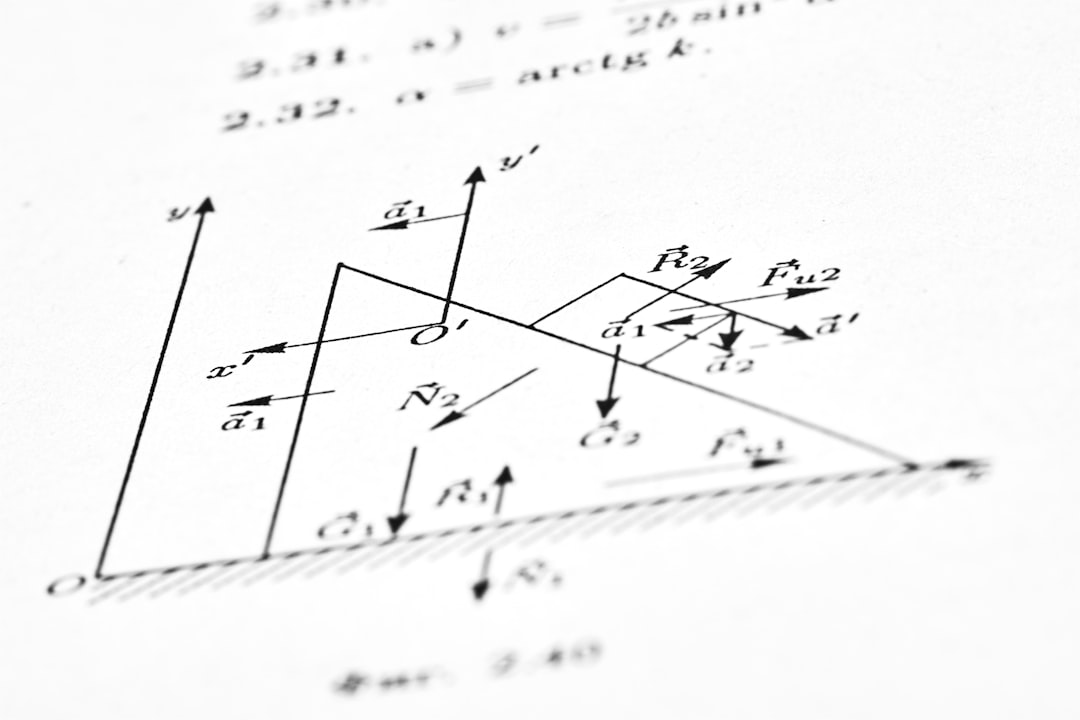
The Equivalence Principle stands as a cornerstone of modern physics, particularly within the realms of general relativity and gravitational theory. Formulated by Albert Einstein, this principle posits that the effects of gravity are indistinguishable from those experienced in an accelerating reference frame. In simpler terms, an observer in free fall cannot tell whether they are in a gravitational field or moving uniformly through space.
This profound insight not only reshaped the understanding of gravity but also laid the groundwork for the development of general relativity, which describes gravity as the curvature of spacetime caused by mass. The implications of the Equivalence Principle extend far beyond theoretical musings; they have practical consequences in various fields, including astrophysics and cosmology. For instance, the principle suggests that light should bend in a gravitational field, a prediction that has been confirmed through numerous observations.
As scientists delve deeper into the mysteries of the universe, the Equivalence Principle continues to serve as a guiding beacon, illuminating the path toward understanding complex phenomena such as black holes and the nature of spacetime itself.
Key Takeaways
- The equivalence principle is a foundational concept in physics linking gravity and acceleration.
- Firewalls challenge the equivalence principle by suggesting violent phenomena at black hole horizons.
- Experimental tests continue to probe the validity of the equivalence principle under extreme conditions.
- Quantum mechanics plays a crucial role in exploring and potentially resolving firewall paradoxes.
- Ongoing debates and alternative theories aim to reconcile firewalls with the equivalence principle without violations.
Theoretical Foundations of the Equivalence Principle
At its core, the Equivalence Principle is rooted in the geometric interpretation of gravity. Einstein’s revolutionary idea was that massive objects warp the fabric of spacetime, creating what can be perceived as gravitational attraction. This geometric perspective allows for a unified description of gravity and motion, where inertial frames and gravitational fields are treated equivalently.
The principle can be divided into two main forms: the weak equivalence principle, which asserts that the trajectory of a freely falling test mass is independent of its composition and structure, and the strong equivalence principle, which extends this idea to include all physical laws. The theoretical underpinnings of the Equivalence Principle have been rigorously tested and validated through various experiments and observations. For example, the famous Eötvös experiment demonstrated that different materials fall at the same rate in a gravitational field, supporting the weak equivalence principle.
Furthermore, Einstein’s field equations, which describe how matter influences spacetime curvature, are fundamentally built upon this principle. As such, any deviation from the Equivalence Principle would necessitate a reevaluation of our understanding of gravity and its role in the universe.
Firewalls and Their Implications for the Equivalence Principle
In recent years, the concept of firewalls has emerged as a contentious topic in theoretical physics, particularly concerning black holes and their relationship with the Equivalence Principle. A firewall is theorized to be a boundary of high-energy radiation that exists at the event horizon of a black hole. This idea arose from attempts to reconcile quantum mechanics with general relativity, particularly in light of the information paradox posed by black holes.
According to this paradox, information that falls into a black hole seems to be lost forever, contradicting quantum mechanics’ tenet that information cannot be destroyed. The existence of firewalls poses significant challenges to the Equivalence Principle. If firewalls were to exist, they would create a scenario where an observer falling into a black hole would experience extreme conditions at the event horizon, contradicting the notion that they should feel nothing unusual until crossing it.
This apparent violation raises profound questions about the nature of spacetime and gravity at extreme scales. The implications extend beyond theoretical discussions; they challenge fundamental principles that have stood for decades and could reshape our understanding of black holes and their behavior.
Experiments Testing the Equivalence Principle
| Experiment | Type | Year | Precision | Key Result | Notes |
|---|---|---|---|---|---|
| Eötvös Experiment | Torsion Balance | 1922 | 10⁻⁸ | Confirmed equivalence of inertial and gravitational mass | First high precision test of the equivalence principle |
| Lunar Laser Ranging | Laser Ranging | 1970s–Present | 10⁻¹³ | No violation detected | Measures Earth-Moon distance to test equivalence principle |
| MICROSCOPE Satellite | Space-based Torsion Balance | 2016–2018 | 10⁻¹⁵ | No violation detected | Most precise space test of equivalence principle to date |
| Galileo Galilei (GG) Experiment | Space-based Rotating Torsion Balance | Planned | 10⁻¹⁷ (goal) | Expected to improve precision | Future mission aiming to test equivalence principle |
| Atom Interferometry Tests | Quantum Interferometry | 2010s–Present | 10⁻¹² to 10⁻¹³ | No violation detected | Tests equivalence principle using cold atoms |
The quest to validate or challenge the Equivalence Principle has led to numerous experimental endeavors over the years. One notable experiment is the Lunar Laser Ranging experiment, which measures the distance between Earth and its moon using laser beams. By analyzing how these beams are affected by Earth’s gravitational field, scientists can test predictions made by general relativity and assess whether different masses fall at different rates in a gravitational field.
Another significant experiment is the MICROSCOPE mission, launched by the French space agency CNES in 2016. This satellite aims to test the weak equivalence principle with unprecedented precision by measuring how different materials respond to gravity in free fall.
As technology advances, researchers continue to explore innovative methods to test this foundational principle, seeking answers to questions that have lingered for decades.
The Debate Surrounding Firewalls and the Equivalence Principle
The introduction of firewalls into discussions about black holes has sparked intense debate among physicists regarding their compatibility with the Equivalence Principle. Proponents of firewalls argue that they are necessary to resolve contradictions arising from quantum mechanics and general relativity, particularly concerning information loss. They contend that if an observer were to cross an event horizon without encountering a firewall, it would lead to violations of quantum principles.
Conversely, many physicists maintain that firewalls contradict the essence of the Equivalence Principle. They argue that if an observer falling into a black hole experiences a firewall, it would imply that their experience is fundamentally different from that of an observer in free fall elsewhere in spacetime. This contradiction raises significant concerns about how gravity operates at extreme scales and whether our current theories can adequately describe such phenomena.
The ongoing debate highlights not only the complexities inherent in reconciling quantum mechanics with general relativity but also underscores the need for further research into both firewalls and their implications for established principles like equivalence.
The Role of Quantum Mechanics in Understanding Firewalls
Quantum mechanics plays a pivotal role in shaping contemporary discussions about firewalls and their implications for black hole physics. The tension between quantum mechanics and general relativity has long been recognized as one of the most significant challenges in theoretical physics. Quantum mechanics asserts that information is preserved, while general relativity suggests that information can be lost when it falls into a black hole.
This fundamental conflict has led to various proposals aimed at reconciling these two frameworks. Firewalls emerged as one such proposal, suggesting that an energetic barrier exists at the event horizon to prevent information from being lost. This idea stems from attempts to uphold unitarity—the principle that quantum evolution is reversible—while also addressing issues related to black hole evaporation and Hawking radiation.
However, this approach raises further questions about how quantum effects manifest in extreme gravitational environments and whether they can coexist with established principles like equivalence. As researchers delve deeper into these complexities, they continue to explore how quantum mechanics can provide insights into phenomena that challenge our current understanding.
Alternative Theories to Explain Firewalls without Violating the Equivalence Principle
In light of the challenges posed by firewalls to the Equivalence Principle, several alternative theories have emerged that seek to explain black hole behavior without invoking firewalls or violating established principles. One such theory is based on the concept of “soft hair,” proposed by physicists Stephen Hawking, Malcolm Perry, and Andrew Strominger. This idea suggests that black holes may possess additional degrees of freedom—referred to as “soft hair”—that encode information about what has fallen into them without leading to contradictions with quantum mechanics.
Another alternative involves exploring modifications to general relativity itself or considering new frameworks such as loop quantum gravity or string theory. These approaches aim to provide a more comprehensive understanding of gravity at quantum scales while preserving key principles like equivalence. By investigating these alternative theories, researchers hope to uncover new insights into black hole physics and resolve longstanding paradoxes without compromising foundational concepts.
Implications for Black Hole Physics and the Equivalence Principle
The ongoing discourse surrounding firewalls and their relationship with the Equivalence Principle carries profound implications for black hole physics as a whole. If firewalls were proven to exist, it would necessitate a reevaluation of how black holes are understood within both classical and quantum frameworks. Such a shift could lead to new insights into black hole formation, evaporation, and their ultimate fate within the universe.
Moreover, any violation or modification of the Equivalence Principle would have far-reaching consequences for our understanding of gravity itself. It could prompt physicists to reconsider fundamental aspects of spacetime geometry and challenge long-held beliefs about how mass interacts with gravity on both macroscopic and microscopic scales. As researchers continue to grapple with these complex issues, they remain committed to exploring new avenues of inquiry that may ultimately reshape our understanding of black holes and their role in cosmic evolution.
The Future of Research on Firewalls and the Equivalence Principle
As scientific inquiry progresses, research on firewalls and their implications for the Equivalence Principle is poised for continued evolution. With advancements in observational technology and experimental techniques, physicists are better equipped than ever to test fundamental principles and explore new theories related to black holes. Future experiments may provide critical insights into whether firewalls exist or if alternative explanations can account for observed phenomena without violating established principles.
Additionally, interdisciplinary collaboration between physicists specializing in quantum mechanics, general relativity, and cosmology will be essential for addressing these complex questions comprehensively. By fostering dialogue across disciplines, researchers can develop innovative approaches that bridge gaps between theoretical frameworks and empirical observations. The future landscape of research promises exciting possibilities as scientists strive to unravel one of nature’s most profound mysteries: the interplay between firewalls, black holes, and the Equivalence Principle.
Potential Consequences of Violating the Equivalence Principle
Violating the Equivalence Principle would have significant ramifications not only for theoretical physics but also for our broader understanding of reality itself. If experiments were to demonstrate deviations from this principle, it could signal a need for new physics beyond general relativity—a paradigm shift that might reshape foundational concepts about gravity and spacetime. Such violations could also impact various fields beyond astrophysics, including cosmology and particle physics.
For instance, if gravity were found to behave differently under certain conditions or with specific materials, it could lead to new insights into dark matter or dark energy—two enigmatic components that constitute much of our universe’s mass-energy content. Ultimately, any deviation from established principles like equivalence would necessitate a reevaluation of our understanding of fundamental forces and their interactions within the cosmos.
The Current State of Understanding of Firewalls and the Equivalence Principle
The exploration of firewalls and their implications for the Equivalence Principle represents one of contemporary physics’ most intriguing challenges. As researchers grapple with reconciling quantum mechanics with general relativity while addressing paradoxes related to black holes, they continue to push boundaries in theoretical inquiry and experimental validation. The ongoing debate surrounding firewalls highlights not only fundamental questions about information preservation but also broader implications for our understanding of gravity itself.
As scientific inquiry progresses into uncharted territories, it remains essential for physicists to remain open-minded about potential new theories while rigorously testing established principles like equivalence. The future holds promise for groundbreaking discoveries that may ultimately reshape humanity’s understanding of reality—illuminating pathways toward resolving some of nature’s most profound mysteries surrounding black holes and their enigmatic behavior within our universe.
The discussion surrounding the equivalence principle and its potential violation by firewalls has sparked significant debate in the field of theoretical physics. For a deeper exploration of related concepts, you can read more in the article available at mycosmicventures.
com/sample-page/’>this link. This article delves into the implications of firewalls on our understanding of black holes and the fundamental principles of gravity.
WATCH THIS! The Paradox That Broke Physics: Quantum vs. Black Holes
FAQs
What is the equivalence principle in physics?
The equivalence principle is a fundamental concept in Einstein’s theory of general relativity. It states that the effects of gravity are locally indistinguishable from acceleration, meaning that an observer in free fall experiences no gravitational field.
What are firewalls in the context of black holes?
In theoretical physics, firewalls refer to hypothetical high-energy zones at the event horizon of a black hole. They are proposed to resolve paradoxes related to information loss by suggesting that an infalling observer would encounter a “firewall” of radiation, contradicting classical expectations.
How does the firewall hypothesis relate to the equivalence principle?
The firewall hypothesis challenges the equivalence principle because it suggests that an observer crossing a black hole’s event horizon would experience violent effects, such as intense radiation, rather than a smooth passage. This contradicts the principle that free-falling observers should not detect local gravitational effects.
Is there experimental evidence supporting the existence of firewalls?
Currently, there is no direct experimental evidence for firewalls. The concept remains theoretical and is part of ongoing debates in quantum gravity and black hole physics.
Do firewalls definitively violate the equivalence principle?
The question is still under investigation. If firewalls exist as proposed, they would imply a violation of the equivalence principle at the event horizon. However, alternative theories aim to reconcile black hole information paradoxes without violating this principle.
Why is the equivalence principle important in understanding black holes?
The equivalence principle underpins general relativity and predicts that crossing a black hole’s event horizon should be uneventful for an infalling observer. It is crucial for understanding the nature of spacetime and gravity near black holes.
What are the implications if firewalls violate the equivalence principle?
If firewalls violate the equivalence principle, it would suggest that our current understanding of gravity and quantum mechanics is incomplete, potentially requiring new physics to explain black hole interiors and the fate of information.
Are there alternative solutions to the black hole information paradox besides firewalls?
Yes, alternatives include the idea of black hole complementarity, fuzzballs in string theory, and modifications to quantum mechanics or gravity that preserve the equivalence principle while resolving information loss issues.