
The implications of this concept extend beyond mere philosophical musings; they touch upon the fundamental nature of consciousness and existence itself. If reality is indeed a digital simulation, it raises questions about free will, identity, and the essence of human experience. Are individuals merely avatars in a grand cosmic game, or do they possess genuine agency?
This inquiry into the nature of reality invites a deeper examination of the parameters that define existence and challenges the assumptions that have long been held about the universe and humanity’s place within it.
Key Takeaways
- Reality as a digital simulation challenges traditional views of existence and consciousness.
- Technology and popular culture significantly influence how we perceive and debate the nature of reality.
- Scientific theories provide some support for the possibility that our reality is simulated.
- Accepting a simulated reality raises complex ethical, moral, and existential questions.
- Ongoing technological advancements will continue to shape and evolve the discussion on the simulation hypothesis.
The philosophical debate surrounding the nature of reality has been a topic of discussion for centuries, with thinkers from various disciplines contributing to the discourse. Philosophers such as René Descartes and Immanuel Kant have pondered the distinction between appearance and reality, questioning whether humans can ever truly know the world as it is. The simulation hypothesis adds a contemporary layer to this age-old debate, suggesting that even the most fundamental aspects of reality could be illusory.
This perspective aligns with philosophical skepticism, which posits that certainty about the external world is inherently unattainable.
Moreover, this debate has implications for epistemology—the study of knowledge itself. If reality is a simulation, then the methods through which individuals acquire knowledge must be scrutinized. Traditional empirical approaches may be inadequate in discerning truth from illusion within a simulated framework.
This philosophical inquiry not only challenges established paradigms but also invites new ways of thinking about knowledge, perception, and existence. As individuals grapple with these concepts, they are compelled to confront their beliefs about reality and consider the possibility that their understanding may be fundamentally flawed.
The role of technology in shaping our understanding of reality cannot be overstated. With advancements in virtual reality (VR), augmented reality (AR), and artificial intelligence (AI), individuals are increasingly immersed in environments that blur the lines between the real and the digital. These technologies have not only transformed entertainment and communication but have also influenced how people perceive their surroundings and interact with one another.
As individuals engage with these digital realms, they may begin to question the authenticity of their experiences and the nature of their existence.

Furthermore, technology serves as both a tool and a lens through which reality is interpreted. The proliferation of social media platforms and digital communication has altered interpersonal dynamics, creating a new form of social reality that exists parallel to physical interactions. This shift raises questions about authenticity and connection in an age where curated online personas often overshadow genuine human experiences.
As technology continues to evolve, it shapes not only individual perceptions but also collective understandings of what constitutes reality itself.
The influence of popular culture on the perception of reality as a simulation is evident in various forms of media, from films to literature and video games. Works such as “The Matrix” and “Inception” have popularized the idea that reality may be an elaborate construct, prompting audiences to question their own experiences. These narratives resonate with viewers because they tap into deep-seated anxieties about existence and control in an increasingly complex world.
By presenting scenarios where characters navigate simulated realities, popular culture encourages individuals to reflect on their own lives and consider the possibility that they too may be living within a constructed framework.
| Media Type | Example | Theme | Impact on Audience | Year Released |
|---|---|---|---|---|
| Film | The Matrix | Reality as a simulated construct | Encourages questioning of perceived reality and existence | 1999 |
| Film | Inception | Layers of reality and dream manipulation | Prompts reflection on the nature of consciousness and control | 2010 |
| Literature | Neuromancer (by William Gibson) | Virtual reality and cybernetic worlds | Introduces concepts of digital existence and identity | 1984 |
| Video Game | The Sims | Simulated life and control over virtual beings | Explores themes of control and constructed realities | 2000 |
| Literature | Snow Crash (by Neal Stephenson) | Metaverse and virtual worlds | Highlights the blending of virtual and real-life experiences | 1992 |
Moreover, these cultural representations often serve as a commentary on contemporary society’s relationship with technology. As individuals become more reliant on digital devices and virtual experiences, they may find themselves grappling with existential questions similar to those faced by characters in these stories. The blending of fiction and reality in popular culture not only entertains but also provokes critical thought about the implications of living in a world where simulations are becoming increasingly sophisticated.
This interplay between media and perception underscores the power of storytelling in shaping collective beliefs about existence.
The implications of reality as a digital simulation for human existence are profound and multifaceted. If individuals are indeed living within a simulation, it raises questions about purpose, meaning, and agency. The notion that life could be an elaborate game orchestrated by an advanced civilization challenges traditional views on morality and ethics.
If actions are predetermined by algorithms or external forces, what does that mean for concepts such as accountability and responsibility? This existential dilemma forces individuals to confront uncomfortable truths about their lives and the choices they make.
Additionally, accepting the idea of a simulated reality could lead to a sense of liberation for some. If life is merely a construct, individuals may feel empowered to redefine their existence and pursue experiences without fear of consequence. Conversely, this realization could also lead to nihilism—a belief that life lacks inherent meaning or value.
The psychological ramifications of such acceptance are significant, as individuals navigate their understanding of self-worth and purpose in a potentially illusory world. Ultimately, the implications extend beyond individual contemplation; they challenge societal norms and values that have long been rooted in the belief in an objective reality.
Scientific theories and evidence supporting the idea of a simulated reality have emerged from various fields, including physics, computer science, and cosmology. One prominent argument comes from philosopher Nick Bostrom’s simulation hypothesis, which posits that if advanced civilizations can create realistic simulations of their ancestors, it is statistically likely that most beings experience life within such simulations rather than in base reality. This perspective invites rigorous examination of technological capabilities and raises questions about the nature of consciousness itself.
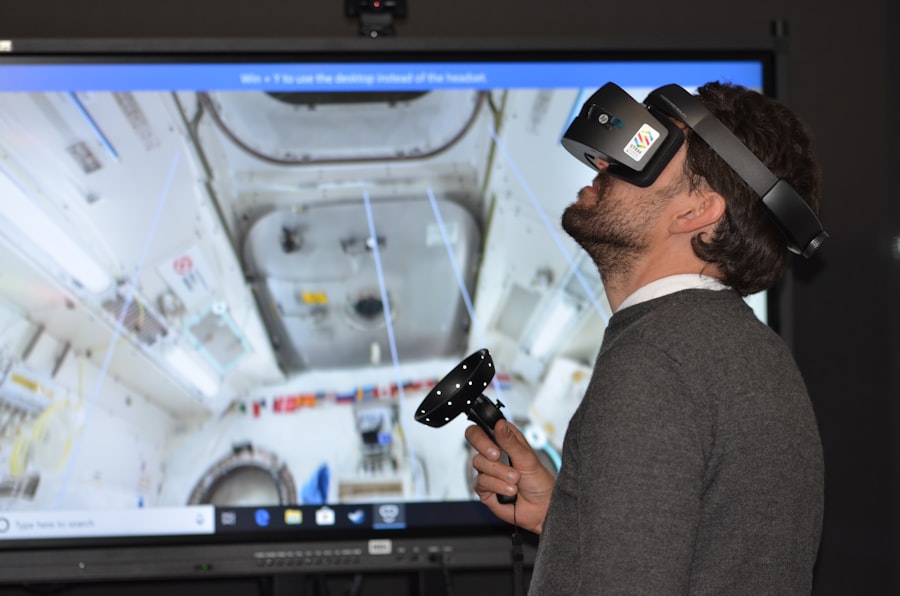
Moreover, certain scientific phenomena lend credence to the simulation hypothesis. For instance, quantum mechanics presents peculiarities that challenge classical notions of reality, such as wave-particle duality and entanglement. These phenomena suggest that at fundamental levels, reality may not operate according to intuitive principles.
Some theorists argue that these anomalies could be indicative of underlying computational processes akin to those found in simulations. As scientists continue to explore these concepts, they contribute to an evolving dialogue about the nature of existence and whether humanity’s understanding is merely scratching the surface of a more complex reality.
The ethical and moral considerations of living in a simulated reality present complex dilemmas for individuals and societies alike. If one accepts that life is a simulation, it raises questions about moral responsibility—are individuals accountable for their actions if they are merely following predetermined paths? This inquiry challenges conventional ethical frameworks that rely on notions of free will and personal agency.
Philosophers must grapple with how moral principles apply within a context where reality itself may be artificially constructed.
Furthermore, ethical implications extend to issues surrounding consent and autonomy within simulated environments. If advanced civilizations create simulations for their own purposes, what rights do simulated beings possess? This inquiry touches upon broader discussions about artificial intelligence and sentience—if entities within simulations exhibit consciousness or self-awareness, do they deserve moral consideration?
As society navigates these ethical waters, it must confront uncomfortable truths about power dynamics, exploitation, and the responsibilities inherent in creating simulated realities.
The potential consequences of accepting reality as a digital simulation are vast and varied. On one hand, this acceptance could lead to a sense of liberation for some individuals who may feel empowered to redefine their lives outside traditional constraints. Embracing the idea that life is a simulation might encourage people to pursue passions without fear or hesitation, fostering creativity and exploration.
However, this perspective could also lead to existential despair for others who grapple with feelings of insignificance or futility in an illusory world.
Moreover, societal implications could arise from widespread acceptance of this concept. If large segments of the population begin to view life as a simulation, it may influence cultural values and priorities. Questions surrounding authenticity, purpose, and connection could reshape interpersonal relationships and community dynamics.
As individuals navigate this new understanding of existence, they may seek alternative forms of meaning—whether through spirituality, creativity, or social engagement—leading to shifts in collective consciousness.
Advancements in technology will undoubtedly impact humanity’s understanding of reality in profound ways. As virtual environments become increasingly immersive and indistinguishable from physical experiences, individuals may find themselves grappling with questions about authenticity and existence more frequently. The development of AI capable of simulating human behavior raises further inquiries into consciousness—if machines can replicate human-like experiences convincingly, what does that mean for humanity’s unique status?
Additionally, as technology continues to evolve at an unprecedented pace, it may facilitate new avenues for exploring philosophical questions surrounding reality. Virtual simulations could serve as experimental platforms for testing theories about consciousness and existence in ways previously unimaginable. As researchers harness these tools for exploration, they may uncover insights that challenge existing paradigms and reshape humanity’s understanding of its place within the universe.
The relationship between consciousness and the simulation hypothesis remains a focal point for philosophical inquiry. If reality is indeed a simulation, it raises questions about the nature of consciousness itself—what does it mean to be aware within an artificial construct? Some theorists posit that consciousness may emerge from complex computational processes akin to those found in simulations, suggesting that awareness could be an inherent feature of advanced systems rather than solely a biological phenomenon.
Moreover, this inquiry invites exploration into the nature of subjective experience within simulated environments. If consciousness can exist within a digital framework, it challenges traditional notions of identity and selfhood—what constitutes “self” when one’s experiences are mediated by algorithms? As researchers delve into these questions, they contribute to an evolving dialogue about consciousness that transcends disciplinary boundaries and invites interdisciplinary collaboration.
The future of the debate on reality as a digital simulation is likely to evolve alongside advancements in technology and philosophical inquiry. As society grapples with increasingly complex questions surrounding existence, consciousness, and morality within simulated frameworks, new perspectives will emerge that challenge established paradigms. The interplay between science fiction narratives and philosophical discourse will continue to shape public perceptions while prompting critical reflection on humanity’s place within an ever-evolving technological landscape.
As individuals navigate this ongoing debate, they will confront fundamental questions about identity, agency, and purpose in an age where simulations become increasingly sophisticated. The exploration of these themes will not only enrich philosophical discourse but also foster greater awareness of the ethical implications inherent in creating simulated realities. Ultimately, as humanity continues its quest for understanding amidst uncertainty, the dialogue surrounding reality as a digital simulation will remain a vital aspect of contemporary thought—inviting reflection on what it truly means to exist in an ever-changing world.
The concept of reality as a digital simulation has intrigued philosophers and scientists alike, prompting discussions about the nature of existence and consciousness. A related article that delves into these themes can be found on My Cosmic Ventures, which explores the implications of living in a simulated reality. For more insights, you can read the article [here](https://www.mycosmicventures.com/).
WATCH THIS! The Universe Has a Resolution Limit (And We’ve Hit It)
FAQs
What does it mean to say reality is a digital simulation?
The idea that reality is a digital simulation suggests that the universe and everything within it, including consciousness, are part of a computer-generated environment created by an advanced civilization or entity.
Who first proposed the simulation hypothesis?
Philosopher Nick Bostrom popularized the simulation hypothesis in 2003, arguing that future civilizations might run detailed simulations of their ancestors, and that we could be living in one of these simulations.
Is there scientific evidence supporting the simulation hypothesis?
Currently, there is no direct scientific evidence proving that reality is a digital simulation. The hypothesis remains speculative and philosophical, though some researchers explore theoretical ways to test it.
What are some arguments in favor of the simulation hypothesis?
Proponents argue that if advanced civilizations can create realistic simulations, and if they run many such simulations, it becomes statistically likely that we are in one. They also point to certain physical phenomena that might resemble computational limits.
What are common criticisms of the simulation hypothesis?
Critics highlight the lack of empirical evidence, the difficulty of testing the hypothesis, and philosophical concerns about consciousness and reality. Some also argue it is unfalsifiable and therefore not scientifically useful.
Can the simulation hypothesis be tested or proven?
Testing the hypothesis is challenging. Some scientists have proposed looking for anomalies or “glitches” in physical laws or cosmic background radiation, but no conclusive tests currently exist.
How does the simulation hypothesis relate to philosophy?
The hypothesis raises questions about the nature of reality, consciousness, and existence, linking to philosophical discussions on metaphysics, epistemology, and the mind-body problem.
Does believing in the simulation hypothesis change how we live?
For some, it prompts reflection on the nature of existence and ethics, but practically, it does not change everyday life or scientific understanding unless proven true.
Are there any popular culture references to the simulation hypothesis?
Yes, movies like “The Matrix” and books like Philip K. Dick’s works explore themes similar to the simulation hypothesis, depicting realities that are artificial or simulated.
What fields of study are involved in exploring the simulation hypothesis?
Philosophy, physics, computer science, and cognitive science all contribute to discussions about the simulation hypothesis, each bringing different perspectives and methods.