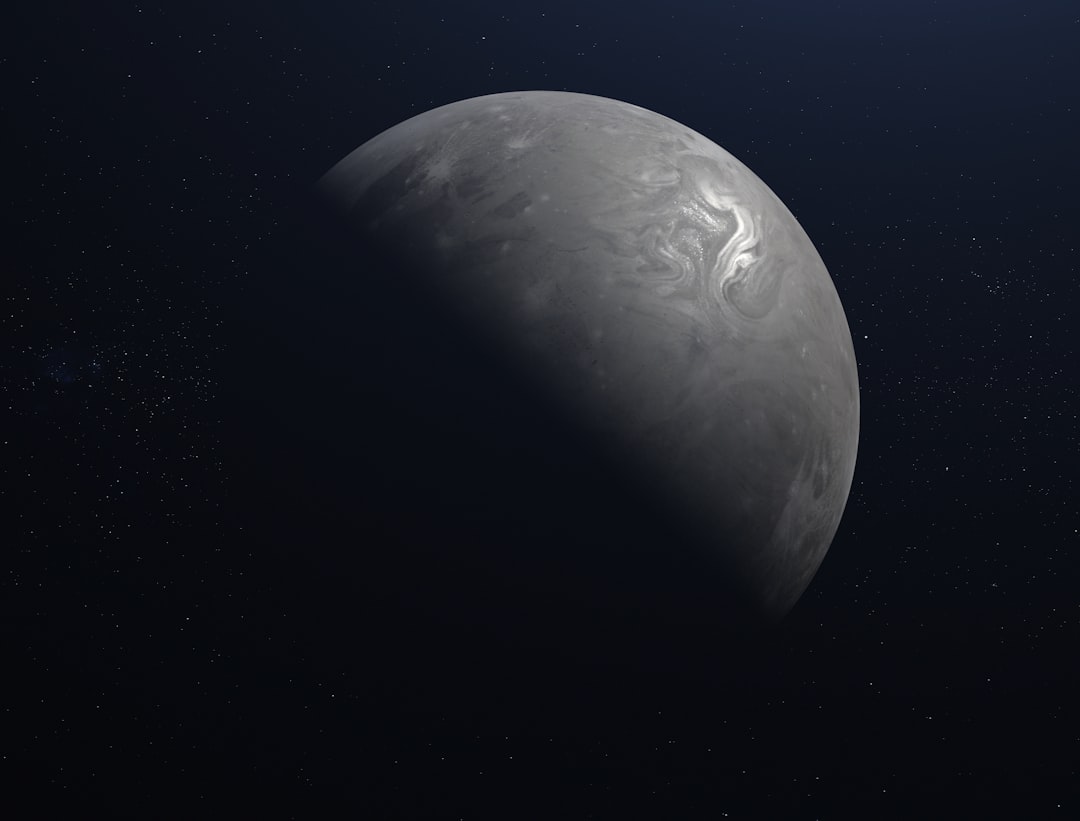
In October 2017, the astronomical community was abuzz with excitement as the first interstellar object ever detected in our solar system made its grand entrance. Named ‘Oumuamua, which means “scout” or “messenger” in Hawaiian, this elongated, cigar-shaped object captured the attention of scientists and enthusiasts alike. Its discovery marked a significant milestone in the field of astronomy, as it provided a tangible glimpse into the vastness of space beyond our solar system.
Oumuamua’s trajectory suggested that it originated from another star system, making it a unique specimen for study and sparking a flurry of interest regarding its nature and origins. The object was first spotted by astronomers using the Pan-STARRS1 telescope in Hawaii. Initial observations revealed that Oumuamua was moving at an extraordinary speed, traveling through our solar system at approximately 196,000 miles per hour.
This rapid velocity, combined with its unusual shape and behavior, led to a myriad of questions about its composition and purpose. As researchers delved deeper into the data, they began to speculate about the implications of such an object visiting our cosmic neighborhood, igniting debates that would resonate throughout the scientific community.
Key Takeaways
- Oumuamua is the first known interstellar object to pass through our solar system, sparking great interest and debate among scientists and the public.
- Various theories have been proposed to explain Oumuamua’s origins, including it being a fragment of a larger body or a comet from another star system.
- Oumuamua’s unusual characteristics, such as its elongated shape and lack of a visible coma, have led to speculation about its nature and composition.
- The unexpected acceleration exhibited by Oumuamua as it passed through our solar system has raised questions about its potential artificial origin.
- While some scientists have suggested the possibility of Oumuamua being an alien probe, others have presented arguments against this hypothesis, citing natural explanations for its behavior.
Theories on Oumuamua’s Origins
The origins of Oumuamua have been a topic of intense speculation since its discovery. One prevailing theory suggests that it is a fragment of a larger body that was ejected from its home star system due to gravitational interactions. This scenario is not uncommon in the cosmos; many celestial bodies are expelled from their original orbits due to the gravitational pull of larger objects.
In this context, Oumuamua could be considered a wanderer, having traveled vast distances across the galaxy before entering the solar system. Another theory posits that Oumuamua may have originated from a binary star system. In such systems, interactions between stars can lead to the ejection of material into interstellar space.
This hypothesis is supported by the object’s elongated shape and rapid rotation, which could be indicative of a history involving complex gravitational dynamics. Regardless of its origins, Oumuamua’s journey through our solar system has provided astronomers with a unique opportunity to study an object that is fundamentally different from those typically found within our own celestial neighborhood.
Characteristics of Oumuamua

Oumuamua’s physical characteristics are as intriguing as its origins. The object is estimated to be about 800 meters long and only 80 meters wide, giving it an elongated, cigar-like appearance. This unusual shape has led to various interpretations regarding its composition and structure.
Some scientists believe that Oumuamua may be composed of metal-rich materials, while others suggest it could be a rocky or icy body. The lack of a visible coma or tail, which is typically associated with comets, further complicates the understanding of its nature. In addition to its shape, Oumuamua’s surface features have also drawn attention.
Observations indicate that it reflects sunlight in a way that suggests a highly reflective surface, possibly covered in metallic or crystalline materials. The object’s color appears to be reddish-brown, which is consistent with other bodies found in the outer solar system. These characteristics have led researchers to consider Oumuamua as a potential representative of a new class of interstellar objects, expanding our understanding of what exists beyond our solar system.
Oumuamua’s Unusual Acceleration
| Observation Date | Acceleration (mm/s^2) | Source |
|---|---|---|
| October 2017 | 0.0009 | Initial Observation |
| June 2018 | 0.00025 | Follow-up Observation |
| November 2018 | 0.00004 | Further Analysis |
One of the most perplexing aspects of Oumuamua’s journey through the solar system was its unexpected acceleration. As it traveled away from the Sun, astronomers noted that it was moving faster than predicted based solely on gravitational forces. This deviation from expected behavior raised eyebrows and prompted extensive investigation into possible explanations.
Some scientists initially speculated that outgassing—a phenomenon where gas is expelled from a comet as it heats up—could be responsible for the acceleration. However, Oumuamua did not exhibit any signs of outgassing, leading researchers to seek alternative explanations. The unusual acceleration has led to various hypotheses, including the possibility that Oumuamua is a lightweight object with a large surface area relative to its mass.
This could result in solar radiation pressure exerting a more significant influence on its trajectory than previously anticipated. Another theory suggests that the object may have been influenced by gravitational interactions with other celestial bodies during its passage through the solar system. Regardless of the cause, this unexpected behavior has fueled ongoing discussions about the nature of interstellar objects and their dynamics as they traverse different gravitational fields.
Possibility of Oumuamua being an Alien Probe
The notion that Oumuamua could be an alien probe has captured the imagination of both scientists and the public alike. Some researchers have proposed that its unusual characteristics and trajectory might indicate an artificial origin rather than a natural one. The idea is not entirely unfounded; after all, humanity has only recently begun to explore the cosmos and send probes beyond our own planet.
If intelligent life exists elsewhere in the universe, it is conceivable that they might develop similar technologies for exploration. Proponents of this theory point to Oumuamua’s elongated shape and rapid rotation as potential indicators of artificial design. They argue that such features could be consistent with a spacecraft built for interstellar travel.
Additionally, the object’s unexpected acceleration has led some to speculate about advanced propulsion systems that could allow for such behavior. While these ideas remain speculative, they highlight humanity’s innate curiosity about the possibility of extraterrestrial life and technology.
Arguments Against Oumuamua being an Alien Probe
Despite the allure of the alien probe hypothesis, many scientists remain skeptical about this interpretation of Oumuamua’s nature. Critics argue that there is insufficient evidence to support the idea that the object is anything other than a natural phenomenon. The lack of definitive signs of technology or artificial construction raises questions about the validity of such claims.
Furthermore, many researchers emphasize that extraordinary claims require extraordinary evidence, and thus far, no compelling data has emerged to substantiate the notion of an alien probe. Additionally, some scientists suggest that attributing Oumuamua’s characteristics to artificial design may detract from valuable scientific inquiry into its natural origins. By focusing on the possibility of extraterrestrial technology, researchers risk overlooking important insights into the formation and evolution of interstellar objects.
The consensus among many astronomers is that while the idea of an alien probe is fascinating, it remains speculative without concrete evidence to support it.
Oumuamua’s Potential Impact on the Search for Extraterrestrial Life
Regardless of its true nature, Oumuamua has had a profound impact on humanity’s search for extraterrestrial life. Its discovery has reignited interest in exploring interstellar objects and their potential implications for understanding life beyond Earth. The very existence of such an object challenges preconceived notions about what is possible in our universe and encourages scientists to broaden their search parameters when considering where life might exist.
Moreover, Oumuamua serves as a reminder that our solar system is not an isolated entity but rather part of a vast cosmic landscape filled with diverse celestial bodies. This realization has prompted researchers to consider new avenues for exploration and study, including missions aimed at detecting other interstellar objects that may pass through our solar system in the future. The excitement surrounding Oumuamua has invigorated discussions about how humanity might one day communicate with or learn from potential extraterrestrial civilizations.
Ongoing Research and Observations of Oumuamua
Since its discovery, ongoing research efforts have sought to unravel the mysteries surrounding Oumuamua. Astronomers continue to analyze data collected during its brief passage through our solar system, employing advanced telescopes and observational techniques to glean insights into its composition and behavior. While direct observation opportunities have passed, researchers are utilizing computer simulations and modeling to better understand how similar objects might behave in different environments.
In addition to studying Oumuamua itself, scientists are also focusing on identifying other interstellar objects that may enter our solar system in the future. The lessons learned from Oumuamua’s journey have informed strategies for detecting and characterizing these transient visitors more effectively. As technology advances and observational capabilities improve, astronomers hope to uncover more about these enigmatic travelers from beyond our solar neighborhood.
The Implications of Oumuamua’s Discovery
The discovery of Oumuamua carries significant implications for humanity’s understanding of the universe and our place within it. It challenges long-held assumptions about the isolation of our solar system and highlights the dynamic nature of cosmic interactions. The fact that an object from another star system could traverse our own serves as a reminder that we are part of a much larger cosmic tapestry.
Furthermore, Oumuamua’s journey raises questions about the potential for other interstellar objects to harbor life or provide clues about extraterrestrial civilizations. As scientists continue to explore these possibilities, they are reminded of the importance of remaining open-minded and curious about what lies beyond our current understanding. The implications extend beyond scientific inquiry; they touch upon philosophical questions about humanity’s role in the universe and our quest for knowledge.
The Future of Oumuamua Studies
Looking ahead, studies related to Oumuamua will likely continue to evolve as new technologies emerge and our understanding deepens. Future missions aimed at exploring interstellar objects may provide opportunities for direct observation and analysis, allowing scientists to gather data that was not possible during Oumuamua’s brief visit. As more interstellar objects are detected, researchers will be better equipped to compare their characteristics and behaviors with those observed in Oumuamua.
Moreover, interdisciplinary collaboration will play a crucial role in advancing research on interstellar objects. By bringing together experts from various fields—such as astronomy, physics, engineering, and astrobiology—scientists can develop innovative approaches to studying these enigmatic visitors from beyond our solar system. The excitement surrounding Oumuamua has already inspired new initiatives aimed at enhancing our understanding of interstellar phenomena.
What Oumuamua Means for Humanity’s Understanding of the Universe
In conclusion, Oumuamua represents more than just an intriguing celestial object; it symbolizes humanity’s insatiable curiosity about the universe and our place within it. Its discovery has opened new avenues for exploration and inquiry while challenging existing paradigms regarding interstellar travel and life beyond Earth. Whether viewed as a natural phenomenon or a potential artifact of extraterrestrial intelligence, Oumuamua serves as a reminder that there is still much to learn about the cosmos.
The implications of Oumuamua’s journey extend far beyond scientific inquiry; they touch upon fundamental questions about existence and humanity’s role in an ever-expanding universe. Ultimately, Oumuamua invites us all to ponder what lies beyond our current understanding and inspires future generations to explore the mysteries that await us among the stars.
In the ongoing debate about the mysterious interstellar object ‘Oumuamua, some scientists have speculated whether it could be an alien probe. This intriguing possibility has sparked numerous discussions and articles exploring the nature and origin of ‘Oumuamua. For those interested in delving deeper into this topic, a related article can be found on My Cosmic Ventures. This article provides insights into the various theories surrounding ‘Oumuamua and examines the evidence that has led some to consider the probe hypothesis. To read more about this fascinating subject, visit the article on My Cosmic Ventures.
WATCH THIS! 🚀NASA’s Biggest Alien Secret Exposed
FAQs
What is Oumuamua?
Oumuamua is the first known interstellar object to pass through our solar system. It was discovered in October 2017 by astronomers using the Pan-STARRS1 telescope in Hawaii.
Is Oumuamua a probe?
There is no conclusive evidence to support the idea that Oumuamua is a probe or any type of artificial object. Most scientists believe it is a natural object, possibly a comet or asteroid, based on its observed characteristics.
What are the characteristics of Oumuamua?
Oumuamua is an elongated, cigar-shaped object with a reddish color. It is estimated to be about 800 meters long and 80 meters wide. It is also tumbling through space, rather than rotating smoothly.
Why do some people think Oumuamua is a probe?
Some scientists have speculated that Oumuamua could be an alien probe due to its unusual characteristics and the fact that it originated from outside our solar system. However, this is purely speculative and not supported by any direct evidence.
What is the current scientific consensus on Oumuamua?
The current scientific consensus is that Oumuamua is most likely a natural object, such as a comet or asteroid, based on its observed characteristics and behavior. Further study and observation may provide more insights into its true nature.