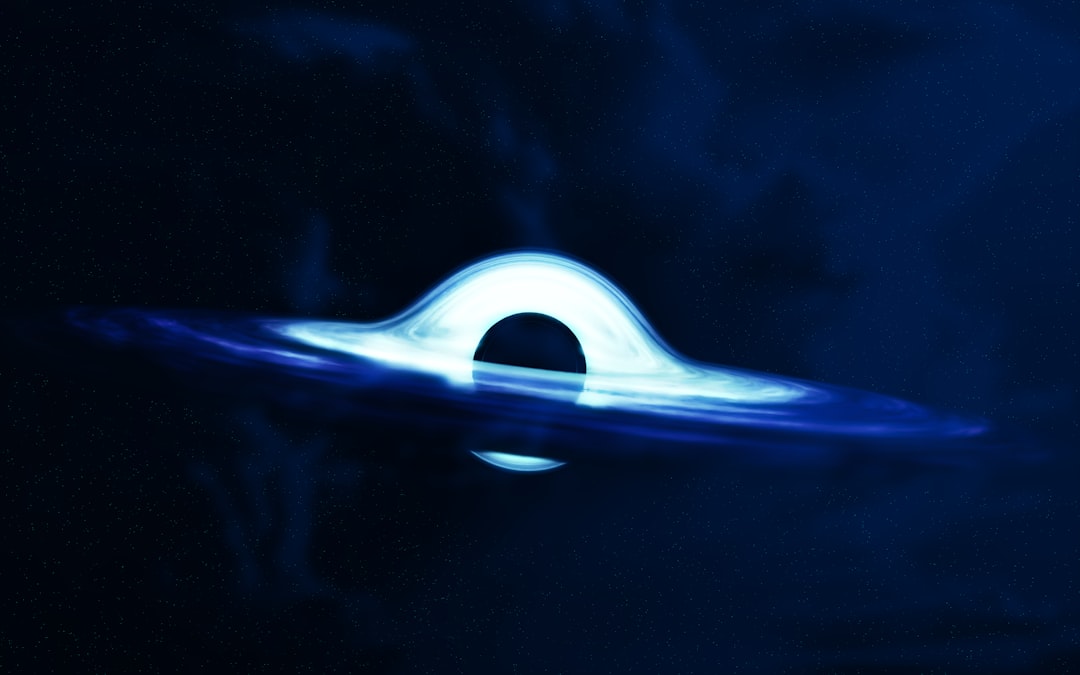
A black hole collision refers to the event where two black holes come into close proximity and ultimately merge into a single, larger black hole. This phenomenon is a result of the gravitational forces exerted by these massive entities, which can be millions to billions of times more massive than the Sun. When two black holes orbit each other, they emit gravitational waves—ripples in spacetime that can be detected by advanced instruments on Earth.
The collision itself is a cataclysmic event, releasing an enormous amount of energy and altering the fabric of spacetime in the vicinity. The study of black hole collisions has gained significant attention in recent years, particularly following the groundbreaking detection of gravitational waves by the LIGO (Laser Interferometer Gravitational-Wave Observatory) in 2015. This discovery confirmed a long-held theoretical prediction and opened a new window into understanding the universe.
The merging of black holes not only provides insights into their properties but also sheds light on the fundamental laws of physics, including general relativity and quantum mechanics.
Key Takeaways
- Black hole collision occurs when two black holes merge together, releasing a massive amount of energy in the form of gravitational waves.
- The likelihood of Earth colliding with a black hole is extremely low due to the vast distances between black holes and our planet.
- Scientists monitor black holes using telescopes, space-based observatories, and gravitational wave detectors to study their behavior and potential collisions.
- A black hole collision near Earth could have catastrophic effects, including gravitational disruption and the release of high-energy radiation.
- Historical evidence of black hole collisions is inferred from the detection of gravitational waves and the observation of merging black holes in distant galaxies.
The Likelihood of Earth Colliding with a Black Hole
The likelihood of Earth colliding with a black hole is exceedingly low, primarily due to the vastness of space and the relative scarcity of black holes in our immediate cosmic neighborhood. While black holes are indeed prevalent in the universe, they are typically located far from our solar system. The nearest known black hole, V616 Monocerotis, is approximately 3,000 light-years away, making it highly improbable that it would pose any threat to Earth.
Moreover, the dynamics of celestial mechanics suggest that even if a black hole were to wander into our solar system, the chances of it directly colliding with Earth are minuscule. The gravitational influence of a black hole would likely alter the orbits of nearby celestial bodies rather than result in a direct impact. Thus, while the concept of a black hole collision may evoke fear and fascination, it remains a theoretical concern rather than an imminent reality.
How Scientists Monitor Black Holes
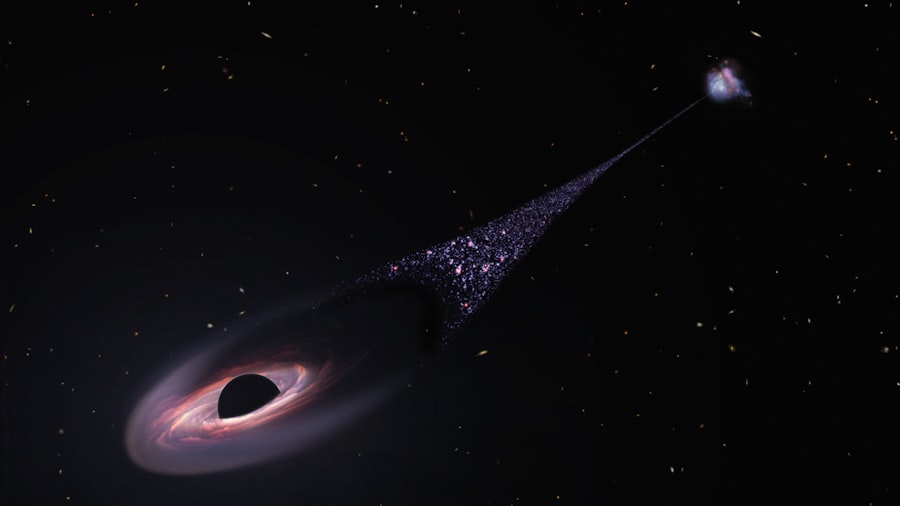
Scientists employ various methods to monitor black holes and study their behavior. One of the primary techniques involves observing the effects of a black hole’s gravity on nearby stars and gas clouds. By tracking the motion of these objects, astronomers can infer the presence of a black hole and estimate its mass.
This indirect observation is crucial since black holes themselves do not emit light; they are detected through their gravitational influence on surrounding matter. In addition to tracking stellar movements, scientists utilize advanced telescopes equipped with specialized instruments to detect X-rays emitted by matter as it spirals into a black hole. This process, known as accretion, generates immense heat and radiation, allowing researchers to identify active black holes in distant galaxies.
Furthermore, gravitational wave observatories like LIGO and Virgo have revolutionized the field by providing direct evidence of black hole mergers, enabling scientists to study these events in real-time and gain insights into their properties.
The Potential Effects of a Black Hole Collision
| Effects | Description |
|---|---|
| Gravitational Waves | Release of energy in the form of ripples in spacetime |
| Black Hole Merger | Formation of a larger black hole through the collision of two smaller ones |
| Disruption of Nearby Objects | Impact on surrounding stars, planets, and other celestial bodies |
| Emission of Radiation | Release of high-energy particles and electromagnetic radiation |
The potential effects of a black hole collision are profound and far-reaching. When two black holes merge, they release an extraordinary amount of energy in the form of gravitational waves, which can ripple through spacetime and be detected across vast distances.
In terms of direct consequences for Earth, however, the effects would be negligible given the vast distances involved. A collision occurring millions of light-years away would not pose any immediate threat to our planet. Nevertheless, understanding these cosmic events is crucial for comprehending the evolution of galaxies and the fundamental processes that govern the universe.
The study of black hole collisions can provide insights into the lifecycle of stars and the formation of supermassive black holes at the centers of galaxies.
Historical Evidence of Black Hole Collisions
Historical evidence of black hole collisions primarily comes from observations made through gravitational wave detections. Since LIGO’s first detection in 2015, numerous events have been cataloged, providing a wealth of data on how often these collisions occur and their characteristics. Each detection offers a glimpse into the lives of black holes, revealing information about their masses, spins, and the dynamics leading up to their mergers.
Additionally, astronomers have identified specific galaxies that exhibit signs of past black hole collisions through their unique emissions and structural anomalies. These observations suggest that such events are not only possible but likely occurred throughout cosmic history. By studying these historical events, scientists can better understand the evolution of galaxies and the role that black holes play in shaping cosmic structures.
The Role of Gravity in Black Hole Collisions
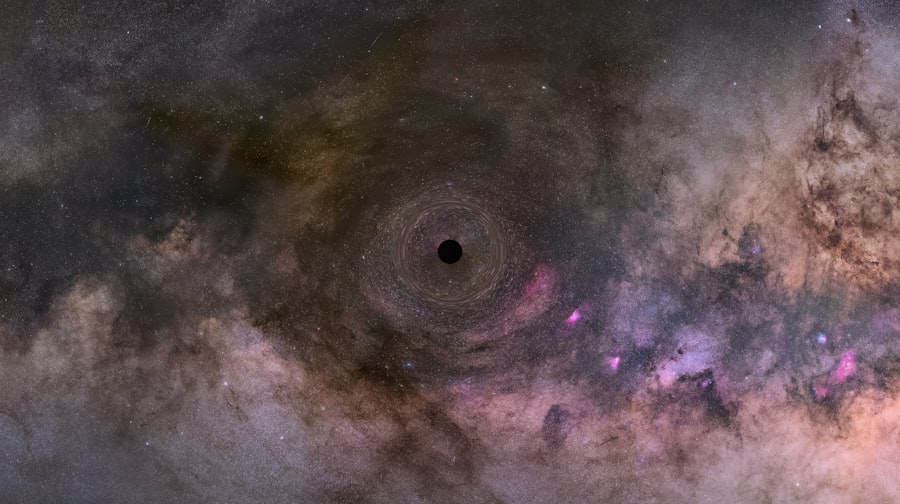
Gravity plays a pivotal role in black hole collisions, acting as the driving force behind their interactions. The immense gravitational pull exerted by black holes causes them to attract nearby matter and other celestial bodies. As two black holes approach each other, their gravitational fields become increasingly intertwined, leading to complex orbital dynamics that can result in a merger.
The process begins with two black holes spiraling towards one another due to gravitational attraction. As they get closer, they emit gravitational waves that carry away energy and angular momentum, causing them to accelerate towards each other. Eventually, they collide and merge into a single entity, resulting in a new black hole that is larger than either of its predecessors.
This intricate dance governed by gravity not only highlights the power of these cosmic giants but also serves as a testament to the fundamental principles of physics that govern our universe.
How Earth’s Orbit Could Impact the Likelihood of a Collision
Earth’s orbit plays a crucial role in determining its vulnerability to cosmic events, including potential collisions with black holes. The solar system is situated within the Milky Way galaxy, which is home to numerous stars and stellar remnants, including black holes. However, due to the vast distances between these objects and their relatively low density in space, Earth’s orbit remains stable and secure.
If Earth’s orbit were to change significantly—due to external gravitational influences or catastrophic events—it could theoretically increase the likelihood of encountering a rogue black hole. However, such scenarios are highly unlikely given our current understanding of celestial mechanics. The stability of Earth’s orbit is maintained by the gravitational pull from the Sun and other planets in the solar system, ensuring that any potential threats from distant black holes remain minimal.
The Search for Black Holes Near Earth
The search for black holes near Earth has become an intriguing area of research for astronomers and astrophysicists alike. While many black holes exist throughout the universe, identifying those closest to our solar system is essential for understanding their potential impact on Earth. Researchers utilize various observational techniques to locate these elusive entities, including monitoring stellar movements and analyzing X-ray emissions from accreting matter.
Despite extensive searches, only a handful of candidates have been identified within a few thousand light-years from Earth. These include stellar-mass black holes formed from collapsing stars and supermassive black holes located at the centers of galaxies. While none pose an immediate threat to our planet, ongoing research continues to refine detection methods and expand our knowledge about these fascinating cosmic phenomena.
The Possibility of Detecting a Black Hole Collision in Advance
Detecting a black hole collision in advance presents significant challenges due to the nature of these events and their rapid progression. Gravitational waves emitted during the merger process travel at the speed of light, making it difficult to predict when and where such collisions will occur. However, advancements in technology have improved scientists’ ability to monitor potential precursors to these events.
By observing binary systems where two black holes are in close orbit around each other, researchers can identify patterns that may indicate an impending collision. These observations allow scientists to estimate when a merger might take place based on gravitational wave emissions leading up to the event. While predicting exact timings remains elusive, ongoing developments in gravitational wave astronomy hold promise for enhancing our understanding of these cosmic phenomena.
Strategies for Mitigating the Risk of a Black Hole Collision
Given the extremely low probability of Earth colliding with a black hole, strategies for mitigating this risk are largely theoretical at this point. However, scientists emphasize the importance of continued research into understanding black holes and their behavior within our galaxy. By enhancing observational capabilities and refining detection methods, researchers can better assess potential threats posed by nearby celestial bodies.
Additionally, fostering public awareness about cosmic phenomena can help demystify fears surrounding black holes and their potential impact on Earth. Education plays a vital role in promoting scientific literacy and encouraging curiosity about the universe’s complexities. While direct mitigation strategies may not be necessary at present, ongoing research will contribute to humanity’s understanding of its place within the cosmos.
The Implications of a Black Hole Collision for Life on Earth
The implications of a black hole collision for life on Earth are largely speculative due to the improbability of such an event occurring within our solar system.
However, given current knowledge about cosmic distances and the rarity of such occurrences, life on Earth remains largely unaffected by distant black hole collisions.
Instead, studying these phenomena offers valuable insights into fundamental questions about existence and the nature of reality itself. Understanding how black holes interact with their surroundings can deepen humanity’s appreciation for the universe’s complexity while reinforcing our place within it. In conclusion, while black hole collisions are fascinating cosmic events that capture human imagination, their likelihood poses minimal risk to Earth or its inhabitants.
Ongoing research continues to unravel mysteries surrounding these enigmatic entities while enhancing our understanding of fundamental physics and cosmic evolution.
The possibility of a black hole hitting Earth is a topic that has intrigued scientists and the public alike. While the likelihood of such an event is extremely low, understanding the nature of black holes can help us grasp the vastness of the universe and the forces at play. For more insights on cosmic phenomena and their implications for our planet, you can read a related article on this subject at My Cosmic Ventures.
WATCH THIS! The Invisible Threat: A Rogue Black Hole Headed for Our Solar System?
FAQs
What is a black hole?
A black hole is a region in space where the gravitational pull is so strong that nothing, not even light, can escape from it. It is formed when a massive star collapses under its own gravity.
Can a black hole hit Earth?
It is highly unlikely that a black hole could hit Earth. Black holes are typically located far away in space, and their gravitational pull would need to be extremely strong to affect Earth.
What would happen if a black hole did hit Earth?
If a black hole were to come close to Earth, the gravitational forces would cause significant disruptions to the planet and its orbit. However, the likelihood of this scenario is extremely low.
Are there any known black holes near Earth?
There are no known black holes in close proximity to Earth. The nearest known black hole is located in the constellation of Vela, approximately 1,000 light years away from Earth.
How do scientists study black holes?
Scientists study black holes using telescopes and other instruments that can detect the effects of their gravitational pull on nearby objects. They also use mathematical models and simulations to understand the behavior of black holes.