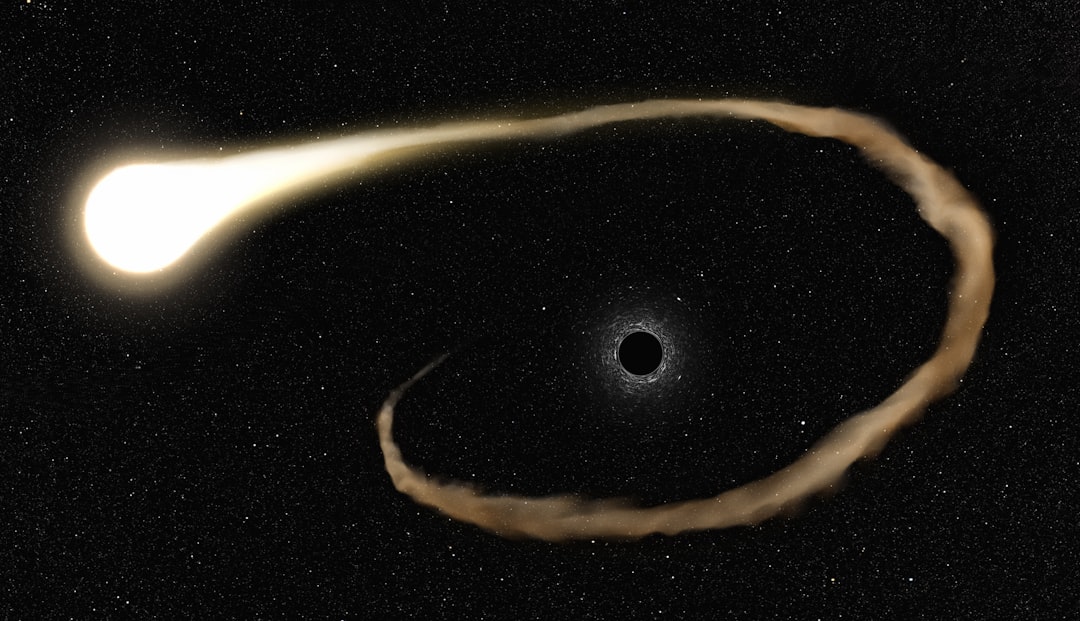
Black holes have long captivated the imagination of scientists and the general public alike.
The concept of a black hole challenges the very fabric of our understanding of physics, particularly in the realms of general relativity and quantum mechanics.
As researchers delve deeper into the mysteries of the universe, black holes remain a focal point of inquiry, revealing insights into the nature of space, time, and the fundamental forces that govern the cosmos. The allure of black holes lies not only in their mysterious nature but also in their potential implications for our understanding of the universe. They serve as laboratories for testing theories of gravity and spacetime, and their study can shed light on the evolution of galaxies and the formation of cosmic structures.
As scientists continue to explore these celestial phenomena, they uncover new dimensions of knowledge that challenge existing paradigms and inspire further investigation into the unknown.
Key Takeaways
- Black holes are mysterious and fascinating cosmic entities that have captured the imagination of scientists and the public alike.
- An invisible black hole is a type of black hole that does not emit any detectable radiation, making it difficult to observe using traditional methods.
- The recent discovery of an invisible black hole near Earth has raised concerns about its potential impact on our planet.
- Characteristics of an invisible black hole include its ability to exert gravitational pull without being visible and its potential to disrupt nearby celestial bodies.
- The presence of an invisible black hole near Earth poses potential dangers, including gravitational disturbances and disruptions to the solar system.
What is an Invisible Black Hole?
An invisible black hole is a type of black hole that does not emit any detectable radiation or light, making it exceedingly difficult to observe directly. Unlike stellar black holes, which can be identified by their interactions with nearby matter or their effects on surrounding stars, invisible black holes remain hidden from conventional observational techniques. They are often detected indirectly through their gravitational influence on nearby celestial bodies or through the effects they have on the fabric of spacetime itself.
The term “invisible” does not imply that these black holes lack mass or gravitational pull; rather, it highlights the challenge of observing them through traditional means. Invisible black holes can exist in various forms, including primordial black holes formed in the early universe or supermassive black holes residing at the centers of galaxies.
Discovery of the Invisible Black Hole Near Earth

The discovery of an invisible black hole near Earth has sent ripples through the scientific community, igniting excitement and curiosity about its implications. Researchers have identified a black hole located within a few thousand light-years from our planet, a relatively close proximity in astronomical terms. This finding was made possible through advanced observational techniques that allowed scientists to detect the gravitational effects of the black hole on nearby stars and gas clouds.
The identification of this invisible black hole marks a significant milestone in astrophysics, as it provides a unique opportunity to study a black hole’s properties and behavior without the interference of visible light. By analyzing the motion of stars in its vicinity, scientists can infer crucial information about the black hole’s mass, spin, and other characteristics. This discovery not only enhances our understanding of black holes but also raises questions about how many more such entities may exist in our galactic neighborhood.
Characteristics of the Invisible Black Hole
| Characteristic | Description |
|---|---|
| Mass | The mass of an invisible black hole can range from a few times the mass of the sun to millions of times the mass of the sun. |
| Size | The size of an invisible black hole is determined by its event horizon, which is the boundary beyond which nothing can escape its gravitational pull. |
| Formation | Invisible black holes are formed from the remnants of massive stars that have undergone gravitational collapse. |
| Effects on Light | Due to their intense gravitational pull, invisible black holes can bend and distort light, creating gravitational lensing effects. |
| Accretion Disk | Some invisible black holes are surrounded by an accretion disk of gas and dust that emits X-rays as it spirals into the black hole. |
The characteristics of an invisible black hole are defined by its mass, spin, and charge, which collectively influence its gravitational field and interactions with surrounding matter. The mass of this particular black hole has been estimated to be several times that of our Sun, placing it within the category of stellar black holes. Its spin, which refers to its rotation around its axis, plays a crucial role in determining how it interacts with nearby objects and influences spacetime.
Additionally, invisible black holes can exhibit unique behaviors that set them apart from their more visible counterparts. For instance, they may have accretion disks composed of gas and dust spiraling into them, generating X-ray emissions detectable by specialized instruments. However, in the case of an invisible black hole, such emissions may be minimal or absent altogether, making it challenging to study using traditional methods.
Understanding these characteristics is essential for piecing together the broader puzzle of black hole formation and evolution.
Potential Dangers of the Invisible Black Hole
While invisible black holes may seem distant and benign, they pose potential dangers to Earth and its inhabitants. The gravitational pull exerted by a nearby black hole could disrupt the orbits of celestial bodies within its vicinity, leading to unpredictable consequences for planetary systems. If an invisible black hole were to pass too close to our solar system, it could alter the trajectories of planets and other objects, potentially resulting in catastrophic collisions or ejections from their orbits.
Moreover, the presence of an invisible black hole could have implications for the stability of our galaxy as a whole. The gravitational interactions between stars and black holes can lead to complex dynamics that may influence star formation rates and galactic evolution. Understanding these potential dangers is crucial for assessing the risks associated with nearby black holes and developing strategies for monitoring their effects on our cosmic environment.
Impact of the Invisible Black Hole on Earth
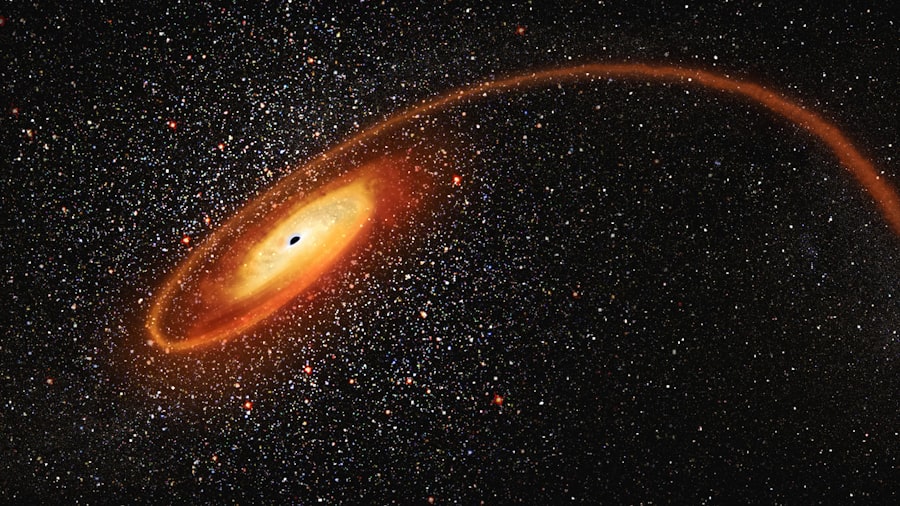
The impact of an invisible black hole on Earth is a subject of ongoing research and speculation. While the likelihood of a black hole directly affecting our planet is low due to vast distances in space, its gravitational influence could still extend to our solar system. For instance, if an invisible black hole were to pass through our solar neighborhood, it could perturb the orbits of comets and asteroids, potentially sending them hurtling toward Earth.
Additionally, scientists are investigating how the presence of an invisible black hole might affect cosmic rays and other high-energy particles that reach our planet. The gravitational field surrounding a black hole can accelerate particles to near-light speeds, creating high-energy phenomena that could have implications for Earth’s atmosphere and climate. Understanding these potential impacts is essential for assessing how such cosmic entities interact with our planet and contribute to broader astrophysical processes.
Scientific Research and Study of the Invisible Black Hole
The scientific research surrounding invisible black holes is multifaceted and involves various disciplines within astrophysics. Researchers employ advanced observational techniques, including gravitational wave detection and radio astronomy, to study these elusive entities indirectly. By analyzing data from observatories around the world, scientists can gather insights into the behavior and characteristics of invisible black holes.
Moreover, theoretical models play a crucial role in guiding research efforts. Scientists develop simulations to predict how invisible black holes interact with their surroundings and influence cosmic structures. These models help researchers understand phenomena such as accretion processes and gravitational wave emissions associated with black hole mergers.
As technology advances and new observational tools become available, the study of invisible black holes is poised to yield even more groundbreaking discoveries.
Theoretical Explanations for the Presence of the Invisible Black Hole
The presence of an invisible black hole near Earth raises intriguing theoretical questions about its origin and formation. One possibility is that it formed from the remnants of a massive star that underwent a supernova explosion. However, alternative theories suggest that it could be a primordial black hole created in the early universe during rapid inflationary periods.
These primordial black holes may have formed from density fluctuations in the early cosmos and could account for a significant portion of dark matter. Another avenue of exploration involves examining how invisible black holes interact with other celestial bodies over time. Theories propose that they could capture stars or gas clouds through gravitational interactions, leading to their growth and evolution.
Understanding these theoretical frameworks is essential for piecing together the history of this particular invisible black hole and its role within our galaxy.
Future Observations and Monitoring of the Invisible Black Hole
Future observations and monitoring efforts will be critical for advancing knowledge about invisible black holes. As technology continues to evolve, astronomers are developing new instruments capable of detecting subtle gravitational effects associated with these entities. Projects such as gravitational wave observatories aim to capture signals from merging black holes, providing valuable data on their properties and behaviors.
Additionally, ongoing surveys of nearby star systems will enhance our understanding of how invisible black holes interact with their surroundings. By tracking stellar motions and analyzing changes in gravitational fields, researchers can refine their models and predictions regarding these elusive cosmic phenomena. The future holds great promise for uncovering new insights into invisible black holes and their significance within the broader context of astrophysics.
Public Awareness and Education about the Invisible Black Hole
Public awareness and education about invisible black holes are essential for fostering interest in astrophysics and promoting scientific literacy. Engaging educational programs can help demystify these complex concepts for audiences ranging from schoolchildren to adults. By utilizing visual aids such as simulations and interactive exhibits, educators can convey the fundamental principles underlying black holes while sparking curiosity about the universe.
Moreover, outreach initiatives can encourage public participation in scientific endeavors through citizen science projects that involve monitoring celestial events or contributing to data analysis efforts. By fostering a sense of community around astronomical research, individuals can gain a deeper appreciation for the mysteries of space while contributing to ongoing scientific discoveries related to invisible black holes.
Conclusion and Implications of the Invisible Black Hole’s Existence
The existence of an invisible black hole near Earth carries profound implications for our understanding of the universe. It challenges existing paradigms while opening new avenues for exploration in astrophysics. As researchers continue to investigate these enigmatic entities, they uncover insights that deepen our comprehension of cosmic phenomena and their interconnectedness.
Ultimately, studying invisible black holes not only enhances scientific knowledge but also inspires wonder about the vastness of space and our place within it. As humanity grapples with existential questions about life beyond Earth, understanding these cosmic mysteries becomes increasingly vital for shaping future explorations into the unknown realms of our universe. The journey into understanding invisible black holes is just beginning, promising exciting discoveries that will continue to captivate generations to come.
Recent discoveries have suggested the existence of an invisible black hole lurking near Earth, sparking interest in the scientific community. For more insights on this intriguing topic, you can read a related article that delves into the implications of such cosmic phenomena and their potential effects on our understanding of the universe. Check it out here: Invisible Black Hole Near Earth.
WATCH THIS! The Invisible Threat: A Rogue Black Hole Headed for Our Solar System?
FAQs
What is an invisible black hole?
An invisible black hole is a black hole that does not emit any detectable radiation, making it difficult to observe using traditional telescopes or other astronomical instruments.
How close is the invisible black hole to Earth?
The article “invisible black hole near earth” is hypothetical and not based on any scientific evidence. There is currently no known invisible black hole near Earth.
What are the potential effects of an invisible black hole near Earth?
If an invisible black hole were to exist near Earth, its gravitational pull could potentially disrupt the orbits of nearby celestial bodies and have other gravitational effects on the surrounding space.
How do scientists study invisible black holes?
Scientists study invisible black holes indirectly by observing their effects on nearby stars and other celestial objects. They also use advanced astronomical instruments and techniques to detect gravitational waves, which can be produced by the interactions of black holes.
Are invisible black holes a common occurrence in the universe?
While invisible black holes are difficult to detect, they are believed to be relatively common in the universe. They are thought to form from the collapse of massive stars and can also result from the mergers of smaller black holes.