The cosmos has always been a source of fascination and intrigue, with its vastness and the myriad of celestial bodies that inhabit it. Among these wonders, interstellar objects—those that originate from outside our solar system—have captured the attention of astronomers and scientists alike. Recently, one such object has emerged, drawing significant interest due to its peculiar trajectory anomaly.
This anomaly has raised questions about the forces at play in the universe and the nature of the object itself. As researchers delve deeper into this enigma, they are not only seeking to understand the object’s path but also what it reveals about the dynamics of interstellar space. The trajectory anomaly of this interstellar object has sparked a wave of curiosity and speculation within the scientific community.
Unlike typical celestial bodies that follow predictable orbits, this object exhibits behavior that defies conventional understanding. The implications of such an anomaly extend beyond the object itself, potentially reshaping theories about the formation and evolution of celestial bodies in our universe. As scientists embark on a quest to decode this mystery, they are poised to uncover insights that could alter humanity’s comprehension of interstellar phenomena.
Key Takeaways
- The interstellar object’s mysterious trajectory anomaly has puzzled scientists since its discovery.
- The interstellar object was first discovered by astronomers in 2017, and its unusual characteristics immediately caught their attention.
- Initial observations and calculations revealed that the object’s trajectory did not behave as expected for a typical celestial body.
- The unusual characteristics of the object’s trajectory have led to various theories and hypotheses about its origin and behavior.
- Potential explanations for the object’s behavior include gravitational interactions with unseen celestial bodies or even the possibility of extraterrestrial technology.
Discovery of the Interstellar Object
The discovery of the interstellar object in question was a remarkable achievement, marking a significant milestone in astronomical research. It was first detected by astronomers utilizing advanced telescopes equipped with cutting-edge technology capable of scanning the night sky for transient objects. The initial sighting occurred during a routine survey, where the object was identified as moving at an unusually high velocity, suggesting it was not bound by the gravitational pull of our solar system.
This revelation prompted further investigation, leading to a flurry of excitement among researchers eager to learn more about this cosmic visitor. As news of the discovery spread, it became clear that this interstellar object was unlike anything previously observed. Named ‘Oumuamua’—a Hawaiian term meaning “scout” or “messenger”—the object quickly became a focal point for astronomers worldwide.
Its unique characteristics and trajectory raised numerous questions about its origin and composition. The scientific community rallied around this newfound curiosity, eager to analyze data and share findings in hopes of unraveling the mysteries surrounding this enigmatic traveler from beyond the stars.
Initial Observations and Calculations
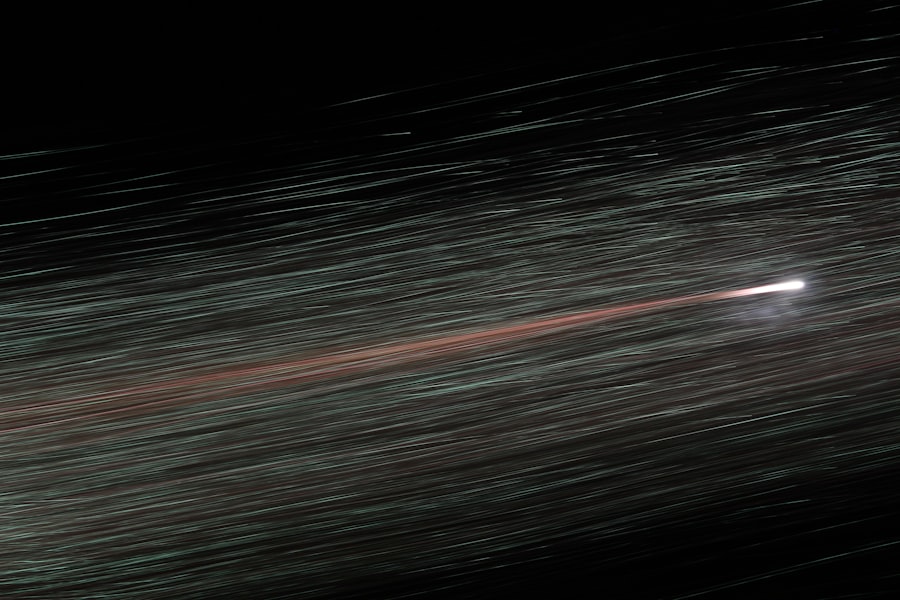
Following its discovery, initial observations of the interstellar object were conducted using a variety of telescopes and instruments. Researchers meticulously tracked its movement across the sky, gathering data on its brightness, shape, and speed. These observations revealed that the object was elongated rather than spherical, leading to speculation about its composition and structure.
Calculations based on its trajectory indicated that it was traveling at an extraordinary speed, far exceeding that of typical asteroids or comets within our solar system. The data collected during these early observations provided a foundation for further analysis. Scientists employed sophisticated models to simulate the object’s trajectory, attempting to predict its future path and potential interactions with other celestial bodies.
The object’s trajectory exhibited deviations that could not be easily explained by gravitational influences alone, prompting researchers to consider alternative explanations for its unusual behavior.
Unusual Characteristics of the Object’s Trajectory
| Object | Unusual Characteristics | Trajectory |
|---|---|---|
| 1 | Erratic movements | Unpredictable path |
| 2 | Acceleration changes | Unusual speed variations |
| 3 | Unexplained deviations | Unexpected changes in direction |
One of the most striking aspects of the interstellar object’s trajectory is its hyperbolic path, which suggests that it is not merely passing through our solar system but is on a one-time journey through space. Unlike typical comets or asteroids that orbit the sun in predictable patterns, this object’s trajectory deviated significantly from expected norms. As it approached the sun, astronomers noted an unexpected acceleration that could not be attributed solely to gravitational forces.
This peculiar acceleration raised eyebrows among scientists, leading to intense scrutiny and debate regarding its implications. Some theorized that the object might be emitting gas or dust—similar to a comet—causing it to gain speed as it neared the sun. However, subsequent observations failed to provide evidence of such activity, leaving researchers puzzled.
The anomaly in its trajectory not only challenged existing models of celestial mechanics but also opened up new avenues for exploration into the nature of interstellar objects.
Theories and Hypotheses about the Anomaly
In light of the trajectory anomaly, scientists have proposed several theories to explain the object’s behavior. One prominent hypothesis suggests that it may be influenced by non-gravitational forces, such as radiation pressure from sunlight or outgassing phenomena typically associated with comets. This theory posits that as the object approaches the sun, solar radiation could exert pressure on its surface, altering its path in ways not accounted for by traditional gravitational models.
Another intriguing hypothesis considers the possibility that the object is not a natural celestial body at all but rather an artificial construct—perhaps a probe or spacecraft from an advanced civilization. While this idea may seem far-fetched to some, it has sparked discussions about the potential for extraterrestrial life and technology beyond our solar system. The notion that intelligent beings could have sent a probe through interstellar space raises profound questions about humanity’s place in the universe and our understanding of life beyond Earth.
Potential Explanations for the Object’s Behavior
As researchers continue to investigate the interstellar object’s trajectory anomaly, they have explored various potential explanations for its behavior. One possibility is that it is composed of materials unlike those found in typical asteroids or comets. If it were made of a denser material or had an unusual shape, it could interact with solar radiation differently than expected, leading to unexpected accelerations.
Additionally, some scientists have suggested that gravitational interactions with other celestial bodies could play a role in altering the object’s path. As it travels through our solar system, it may encounter gravitational influences from planets or other objects that could affect its trajectory in subtle ways. However, these explanations remain speculative until further observations can provide more definitive data regarding the object’s composition and interactions.
Comparison with Known Celestial Bodies
To better understand the interstellar object’s unique characteristics, researchers have drawn comparisons with known celestial bodies within our solar system. For instance, they have examined similarities between this object and comets, which often exhibit irregular shapes and unpredictable trajectories due to their volatile compositions. However, unlike typical comets that display visible tails or halos when heated by solar radiation, this interstellar object has not shown any signs of outgassing or fragmentation.
Moreover, comparisons with asteroids have also been made, particularly regarding their orbital dynamics and physical properties. While many asteroids follow stable orbits within the asteroid belt or around planets, this interstellar object’s hyperbolic trajectory sets it apart from these familiar celestial bodies. By analyzing these differences and similarities, scientists hope to glean insights into the formation processes and evolutionary histories of both interstellar objects and their solar system counterparts.
Implications for Our Understanding of Interstellar Objects
The study of this interstellar object’s trajectory anomaly carries significant implications for humanity’s understanding of interstellar objects as a whole. It challenges existing paradigms regarding how such bodies behave as they traverse through different gravitational fields and environments. The findings could lead to revisions in current models used to predict the paths and characteristics of future interstellar visitors.
Furthermore, this anomaly highlights the importance of continued observation and research into interstellar objects. As more such bodies are discovered and studied, they may reveal new insights into the formation and evolution of planetary systems across the galaxy. Understanding these objects could also provide clues about the conditions present in other star systems and how they compare to our own solar system.
Collaborative Efforts to Study the Anomaly
Recognizing the significance of this interstellar object’s trajectory anomaly, scientists from various institutions have come together in collaborative efforts to study it further. This interdisciplinary approach brings together astronomers, physicists, and planetary scientists who share their expertise and resources to analyze data more comprehensively. By pooling their knowledge and skills, researchers aim to develop a more nuanced understanding of this cosmic enigma.
Collaborative projects often involve sharing observational data from multiple telescopes around the world, allowing for a more extensive analysis of the object’s behavior over time. Additionally, international partnerships have emerged as scientists seek to leverage global resources in their quest for answers. This spirit of collaboration underscores the importance of collective inquiry in advancing humanity’s understanding of complex astronomical phenomena.
Future Research and Observations
Looking ahead, future research and observations will play a crucial role in unraveling the mysteries surrounding this interstellar object’s trajectory anomaly. As technology continues to advance, astronomers will have access to more powerful telescopes and instruments capable of capturing finer details about such objects as they pass through our solar system. These advancements will enable researchers to gather more comprehensive data on their physical properties and behaviors.
Moreover, ongoing monitoring efforts will be essential as scientists track this object’s journey through space. By observing its interactions with other celestial bodies and analyzing any changes in its trajectory over time, researchers hope to gain deeper insights into its nature and origins. The pursuit of knowledge about this interstellar visitor is not merely an academic exercise; it holds profound implications for humanity’s understanding of our place in the cosmos.
Conclusion and Speculation on the Object’s Origin
In conclusion, the mysterious trajectory anomaly exhibited by this interstellar object has captivated scientists and sparked widespread interest within the astronomical community. As researchers continue their investigations into its unique characteristics and behavior, they are confronted with questions that challenge existing paradigms about celestial bodies beyond our solar system. Theories abound regarding its origin—ranging from natural formations shaped by cosmic forces to potential artificial constructs from advanced civilizations.
Ultimately, while definitive answers may remain elusive for now, each new discovery brings humanity one step closer to understanding not only this particular object but also the broader implications for interstellar exploration and our comprehension of life beyond Earth. As we gaze into the depths of space, we are reminded that there is still much to learn about our universe—and perhaps even more about ourselves as we seek answers among the stars.
Recent studies on interstellar objects have highlighted intriguing trajectory anomalies that challenge our understanding of celestial mechanics. One such article discusses the implications of these anomalies for our knowledge of the universe and the potential for future exploration. For more insights, you can read the full article [here](https://www.mycosmicventures.com/sample-page/).
WATCH THIS! The Object Defying Gravity: Is This Proof of Alien Technology?
FAQs
What is an interstellar object?
An interstellar object is an astronomical object that originates from outside the solar system and travels through interstellar space.
What is a trajectory anomaly?
A trajectory anomaly refers to a deviation from the expected path or course of an object, such as an interstellar object, as it travels through space.
What is the significance of an interstellar object trajectory anomaly?
An interstellar object trajectory anomaly can provide valuable insights into the dynamics and behavior of interstellar objects, as well as the gravitational influences they encounter during their journey through space.
How are interstellar object trajectory anomalies detected?
Interstellar object trajectory anomalies are typically detected through observations and measurements made by telescopes and other astronomical instruments, which track the position and movement of interstellar objects as they pass through the solar system.
What are some possible causes of interstellar object trajectory anomalies?
Possible causes of interstellar object trajectory anomalies include gravitational interactions with planets, stars, or other celestial bodies, as well as non-gravitational forces such as outgassing or radiation pressure.
What can we learn from studying interstellar object trajectory anomalies?
Studying interstellar object trajectory anomalies can help scientists better understand the dynamics of interstellar objects, the effects of gravitational and non-gravitational forces on their trajectories, and the overall behavior of objects traveling through interstellar space.