Interstellar objects, those enigmatic visitors from beyond the solar system, have captivated the attention of astronomers and scientists alike. These celestial bodies, which traverse the vast expanses of space, originate from other star systems and offer a unique glimpse into the dynamics of the universe. Unlike asteroids and comets that are native to our solar system, interstellar objects provide invaluable insights into the formation and evolution of planetary systems across the cosmos.
Their study not only enhances our understanding of the solar neighborhood but also raises profound questions about the nature of life and the potential for extraterrestrial existence. The significance of interstellar objects extends beyond mere curiosity; they serve as messengers from distant realms, carrying with them clues about the conditions and processes that govern their home systems. As humanity’s observational capabilities have advanced, so too has the ability to detect and analyze these fleeting visitors.
The discovery of interstellar objects has opened a new frontier in astronomy, prompting researchers to explore their origins, compositions, and potential implications for our understanding of life in the universe.
Key Takeaways
- Interstellar objects are celestial bodies that originate from outside our solar system and travel through interstellar space.
- ‘Oumuamua was the first interstellar object discovered in 2017, and its unusual characteristics sparked great interest and debate among scientists.
- Understanding the trajectory of interstellar objects can provide valuable insights into the dynamics of our galaxy and the processes that govern the movement of celestial bodies.
- The composition and structure of interstellar objects can vary widely, and studying them can offer clues about the conditions and materials present in other planetary systems.
- Interstellar objects can have a significant impact on planetary systems, potentially influencing the formation and evolution of planets and other celestial bodies.
The Discovery of ‘Oumuamua: The First Interstellar Visitor
The first confirmed interstellar object to pass through our solar system was ‘Oumuamua, a cigar-shaped entity that was detected in October 2017. Its discovery marked a watershed moment in astronomical history, as it was the first time scientists had identified an object originating from outside the solar system. The name ‘Oumuamua, which means “scout” or “messenger” in Hawaiian, reflects its role as a harbinger of new knowledge about interstellar phenomena.
The object exhibited unusual characteristics, including its elongated shape and rapid velocity, which sparked intense debate among researchers regarding its nature and origin. As astronomers studied ‘Oumuamua’s trajectory, they noted its hyperbolic path, indicating that it was not bound by the gravitational pull of the sun. This observation confirmed its interstellar origin and raised questions about how such objects are formed and ejected from their home systems.
The peculiarities of ‘Oumuamua’s motion led to various hypotheses about its composition, with some suggesting it could be a fragment of a larger body or even an artificial construct.
Understanding the Trajectory of Interstellar Objects
The trajectory of interstellar objects is a critical aspect of their study, as it reveals much about their origins and interactions with celestial bodies. Unlike objects that are gravitationally bound to a star, interstellar visitors follow hyperbolic or parabolic paths that indicate they are merely passing through our solar system. The study of these trajectories involves complex calculations and simulations that take into account various gravitational influences, including those from planets and other celestial bodies.
Understanding these trajectories is essential for predicting future encounters with interstellar objects. As more advanced telescopes and detection methods come online, astronomers are increasingly able to identify potential interstellar visitors before they make their closest approach to Earth. This proactive approach allows for more detailed observations and analyses, enhancing our understanding of these transient entities.
By mapping their paths and studying their velocities, researchers can glean insights into the dynamics of their home systems and the processes that led to their ejection into interstellar space.
The Composition and Structure of Interstellar Objects
| Interstellar Object | Composition | Structure |
|---|---|---|
| Oumuamua | Unknown, possibly rocky or metallic | Highly elongated, cigar-shaped |
| 2I/Borisov | Cometary, with ice and dust | Spherical nucleus with a coma and tail |
| Other interstellar objects | Varied compositions, including rocky, icy, or metallic | Varied structures, such as irregular shapes or cometary features |
The composition and structure of interstellar objects are subjects of intense investigation, as they hold clues to the conditions present in their home systems. While ‘Oumuamua was primarily characterized by its unusual shape and rapid movement, subsequent discoveries have revealed a diverse array of interstellar visitors with varying compositions. Some objects appear to be rocky or metallic, while others exhibit characteristics similar to comets, such as icy surfaces or volatile materials.
The study of these compositions is facilitated by advanced observational techniques, including spectroscopy, which allows scientists to analyze the light reflected off these objects. By examining the spectral signatures, researchers can identify the chemical elements present and infer details about their formation processes. This information is crucial for understanding not only the individual objects but also the broader context of planetary system formation across different stellar environments.
The Impact of Interstellar Objects on Planetary Systems
Interstellar objects can have significant impacts on planetary systems, both during their passage through and after their interactions with these systems. When an interstellar object approaches a star or a planet, gravitational interactions can alter its trajectory or even lead to collisions. Such events can have profound consequences for the bodies involved, potentially leading to changes in orbits or even the ejection of material into space.
Moreover, the presence of interstellar objects can influence the dynamics of planetary formation. For instance, if an interstellar object were to collide with a protoplanetary disk, it could introduce new materials that might contribute to planet formation or alter existing structures within the disk. These interactions highlight the interconnectedness of celestial bodies and underscore the importance of studying interstellar objects in understanding planetary system evolution.
Interstellar Object Dynamics: Gravitational Interactions and Orbital Pathways
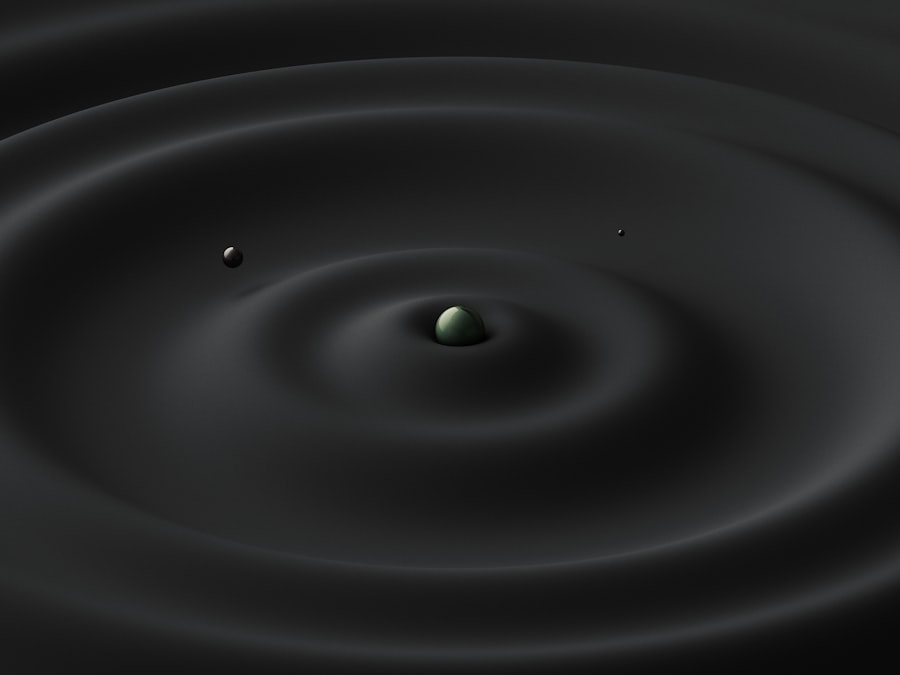
The dynamics of interstellar objects are governed by gravitational interactions with other celestial bodies. As these objects traverse through a solar system, they experience forces that can significantly alter their trajectories. The gravitational pull from planets can either capture an object into orbit or slingshot it away at high velocities, depending on the specifics of the encounter.
Understanding these dynamics requires sophisticated modeling techniques that simulate various scenarios involving different masses and velocities. Researchers utilize computer simulations to predict how an interstellar object will behave as it approaches a star or planet. These models help scientists anticipate potential future encounters with such objects and assess their likelihood of impacting Earth or other celestial bodies within our solar system.
The Role of Interstellar Objects in the Formation of Planetary Systems
Interstellar objects may play a crucial role in the formation and evolution of planetary systems. As remnants from other star systems, they carry materials that could enrich protoplanetary disks with diverse chemical compositions. This influx of material can influence the types of planets that form within a given system and affect their physical characteristics.
Additionally, interstellar objects may serve as catalysts for planetary formation by providing building blocks for larger bodies. When these objects collide with dust and gas in a protoplanetary disk, they can contribute to accretion processes that lead to planet formation. This interplay between interstellar visitors and nascent planetary systems highlights the dynamic nature of cosmic evolution and underscores the importance of studying these transient entities.
The Potential for Interstellar Objects to Carry Organic Material
One of the most intriguing aspects of interstellar objects is their potential to carry organic material across vast distances. The discovery of complex organic molecules in comets and asteroids within our solar system raises questions about whether similar compounds could be found in interstellar visitors. If such materials exist within these objects, they could provide insights into the building blocks of life and the processes that lead to its emergence.
The possibility that interstellar objects could deliver organic compounds to young planets adds another layer to the ongoing search for extraterrestrial life.
This tantalizing prospect has spurred further research into the composition of interstellar objects and their implications for astrobiology.
The Future of Interstellar Object Research and Observation
As technology continues to advance, the future of interstellar object research looks promising. New telescopes equipped with cutting-edge detection capabilities are being developed to identify potential interstellar visitors more efficiently. These instruments will enable astronomers to observe objects at greater distances and with higher precision than ever before.
In addition to ground-based observatories, space missions are being proposed to study interstellar objects up close. For instance, missions like NASA’s proposed “Comet Interceptor” aim to rendezvous with an incoming comet or interstellar object for detailed analysis. Such missions could provide unprecedented data on these enigmatic visitors and deepen our understanding of their origins and compositions.
Implications for Astrobiology and the Search for Extraterrestrial Life
The study of interstellar objects holds significant implications for astrobiology and humanity’s quest to understand life beyond Earth. The potential for these objects to carry organic material raises questions about how life might arise in different environments across the universe. If interstellar visitors can deliver essential building blocks for life to planets in other star systems, it suggests that life could be more widespread than previously thought.
Furthermore, understanding how interstellar objects interact with planetary systems can inform researchers about habitable zones around stars and the conditions necessary for life to thrive. By examining how these transient entities influence planetary formation and evolution, scientists can refine their models for identifying potentially habitable exoplanets in distant star systems.
The Continuing Exploration of Interstellar Object Dynamics
The exploration of interstellar objects represents an exciting frontier in astronomy and planetary science. As researchers continue to uncover new discoveries about these enigmatic visitors from beyond our solar system, they are not only expanding our knowledge of cosmic dynamics but also deepening our understanding of life’s potential across the universe. The ongoing study of interstellar objects promises to yield valuable insights into planetary formation processes, organic material delivery mechanisms, and ultimately, the conditions necessary for life.
As humanity’s observational capabilities improve and new missions are launched to study these transient entities up close, the mysteries surrounding interstellar objects will gradually unfold. Each discovery will contribute to a more comprehensive understanding of our place in the cosmos and may even bring us closer to answering one of humanity’s oldest questions: Are we alone in this vast universe? The journey into this uncharted territory is just beginning, promising exciting revelations about our universe’s past, present, and future.
In recent years, the study of interstellar object dynamics has gained significant attention, particularly with the discovery of objects like ‘Oumuamua and Borisov. These celestial bodies, originating from outside our solar system, offer unique insights into the composition and behavior of distant star systems. A related article on this topic can be found on My Cosmic Ventures, which delves into the fascinating journey of these interstellar travelers and their implications for our understanding of the cosmos. For more detailed information, you can read the article by visiting this link.
WATCH THIS! 🚀NASA’s Biggest Alien Secret Exposed
FAQs
What is an interstellar object?
An interstellar object is an astronomical object that originates from outside the solar system and travels through interstellar space.
What are the dynamics of interstellar objects?
Interstellar objects follow trajectories determined by the gravitational forces of the stars and other celestial bodies they encounter as they travel through space.
How do scientists study the dynamics of interstellar objects?
Scientists study the dynamics of interstellar objects by observing their trajectories, analyzing their speed and direction of travel, and using computer simulations to model their interactions with other celestial bodies.
What can the study of interstellar object dynamics tell us about the universe?
Studying the dynamics of interstellar objects can provide insights into the formation and evolution of planetary systems in other star systems, as well as the distribution of matter in the galaxy.
Have interstellar objects been observed in our solar system?
Yes, the first confirmed interstellar object to be observed in our solar system was 1I/2017 U1, also known as ‘Oumuamua, which was discovered in 2017. Another interstellar object, 2I/Borisov, was observed in 2019.