Interstellar objects, those celestial bodies that traverse the vast expanses of space between stars, have captivated the attention of astronomers and scientists alike. These enigmatic entities, which include comets, asteroids, and other fragments of material, originate from outside the solar system and offer a unique glimpse into the processes that govern the formation and evolution of planetary systems. The first confirmed interstellar object, ‘Oumuamua, was detected in 2017, sparking a wave of interest and research into these cosmic wanderers.
Since then, the study of interstellar objects has expanded, revealing not only their physical characteristics but also their chemical compositions, which hold vital clues to understanding the universe’s origins. The significance of interstellar objects lies in their potential to provide insights into the building blocks of planets and stars. Unlike solar system objects, which have been influenced by the gravitational forces and environmental conditions of our sun, interstellar objects are thought to be remnants from other star systems.
This distinction makes them invaluable for comparative studies, as they can reveal information about the diversity of materials present in different regions of the galaxy. As researchers delve deeper into the study of these objects, they uncover a wealth of information that could reshape our understanding of cosmic history.
Key Takeaways
- Interstellar objects are celestial bodies that originate from outside our solar system and travel through interstellar space.
- Studying the chemical composition of interstellar objects is crucial for understanding the building blocks of the universe and the processes that lead to the formation of planetary systems.
- Scientists use spectroscopy and other analytical techniques to analyze the chemical composition of interstellar objects, including the identification of organic molecules and isotopic ratios.
- Recent discoveries have revealed that interstellar objects can have unique compositions, such as the high metallicity of ‘Oumuamua and the carbon-rich nature of 2I/Borisov.
- Understanding the chemical composition of interstellar objects can provide insights into the origins of our solar system and the diversity of planetary systems in the universe.
- By comparing the chemical composition of interstellar objects with that of solar system objects, scientists can gain a better understanding of the differences and similarities between different planetary systems.
- Challenges in studying interstellar object chemical composition include limited observational data and the need for advanced instrumentation to analyze faint and distant objects.
- Future research directions include developing new technologies for remote sensing and sample return missions to study interstellar objects up close.
- Collaboration with space missions and telescopes, such as the James Webb Space Telescope and the Vera C. Rubin Observatory, is essential for advancing our knowledge of interstellar object chemical composition.
- Understanding interstellar object chemical composition has potential applications in astrobiology, planetary science, and the search for habitable exoplanets, expanding our understanding of the universe and our place within it.
Importance of Studying Interstellar Object Chemical Composition
The chemical composition of interstellar objects is crucial for several reasons. Firstly, it allows scientists to identify the fundamental elements and compounds that constitute these bodies, providing insights into the processes that led to their formation. By analyzing the chemical makeup of interstellar objects, researchers can draw parallels with known materials from our solar system and beyond, enhancing our understanding of how different environments influence chemical evolution.
This knowledge is essential for piecing together the puzzle of how stars and planets form and evolve over time. Moreover, studying the chemical composition of these objects can shed light on the conditions present in their parent star systems. For instance, variations in elemental abundances can indicate whether an object originated from a rocky planet or a gas giant.
Such distinctions are vital for understanding the diversity of planetary systems across the galaxy. Additionally, interstellar objects may contain organic compounds or prebiotic materials that could provide clues about the origins of life itself. By examining these chemical signatures, scientists hope to uncover whether life’s building blocks are common throughout the universe or unique to Earth.
Methods of Analyzing Interstellar Object Chemical Composition
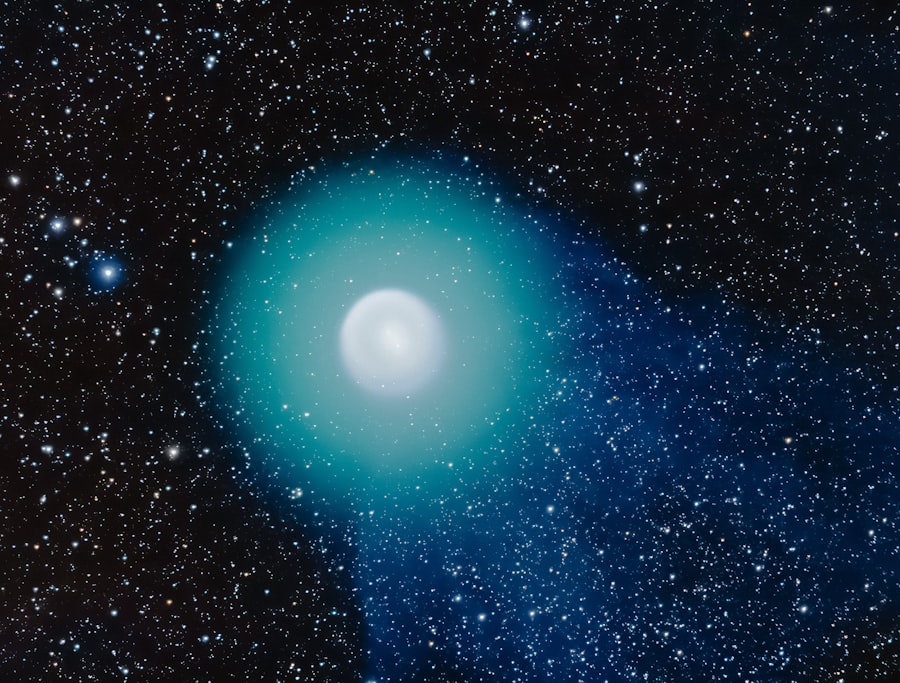
To analyze the chemical composition of interstellar objects, scientists employ a variety of sophisticated techniques. One primary method involves spectroscopy, which allows researchers to study the light emitted or absorbed by an object. By examining the spectral lines produced when light interacts with an object’s surface or atmosphere, scientists can identify specific elements and compounds present.
This technique has been instrumental in characterizing both ‘Oumuamua and subsequent interstellar visitors. In addition to spectroscopy, researchers utilize mass spectrometry to determine the isotopic ratios of elements within interstellar objects. This method involves vaporizing a sample and measuring the mass-to-charge ratio of its ions.
By analyzing these ratios, scientists can infer details about an object’s origin and history. Furthermore, advancements in remote sensing technologies enable astronomers to gather data from increasingly distant interstellar objects without needing direct samples. These methods collectively enhance our ability to decode the chemical signatures embedded within these cosmic travelers.
Discoveries and Findings of Interstellar Object Chemical Composition
| Interstellar Object | Chemical Composition | Discovery Date |
|---|---|---|
| Oumuamua | Unknown | October 19, 2017 |
| 2I/Borisov | Carbon-based | August 30, 2019 |
| 1I/’Oumuamua | Unknown | October 19, 2017 |
The study of interstellar object chemical composition has yielded remarkable discoveries that challenge existing paradigms in astrophysics. For instance, ‘Oumuamua’s unusual shape and lack of a visible cometary tail led to extensive debate regarding its nature. Subsequent analyses revealed that it likely contained a mixture of metals and silicates, suggesting a complex formation history that may involve interactions with other celestial bodies.
This finding has prompted researchers to reconsider how such objects are formed and what processes govern their evolution. Another significant discovery came from the analysis of 2I/Borisov, a second confirmed interstellar comet detected in 2019. Unlike ‘Oumuamua, Borisov exhibited a clear cometary tail and was found to contain a rich array of organic molecules, including cyanide and carbon-based compounds.
This discovery has profound implications for understanding the potential for life beyond Earth, as it suggests that organic materials may be more widespread in the universe than previously thought.
Implications of Interstellar Object Chemical Composition on Understanding Cosmic Origins
The chemical composition of interstellar objects carries significant implications for understanding cosmic origins. By studying these materials, scientists can gain insights into the processes that shaped the early universe and contributed to the formation of stars and planets. For example, variations in elemental abundances among different interstellar objects may reflect diverse conditions in their parent star systems, offering clues about how different environments influence chemical evolution.
Furthermore, interstellar objects may serve as time capsules containing remnants from the early solar system or even earlier epochs in cosmic history. Analyzing their compositions can help researchers reconstruct the timeline of events leading to planet formation and the emergence of life. This knowledge is crucial for developing models that explain not only our solar system’s history but also the broader context of planetary formation across the galaxy.
Comparison of Interstellar Object Chemical Composition with Solar System Objects
Comparing the chemical composition of interstellar objects with that of solar system bodies reveals intriguing differences and similarities that enhance our understanding of both realms. Solar system objects, such as asteroids and comets, have undergone significant alterations due to solar radiation and gravitational interactions with planets. In contrast, interstellar objects are believed to retain more primitive characteristics reflective of their original environments.
For instance, while many solar system comets exhibit signs of alteration due to solar heating and outgassing, interstellar comets like Borisov appear to preserve their original chemical signatures more faithfully. This preservation allows scientists to study materials that have not been subjected to the same processes as those found within our solar system. Such comparisons can illuminate how different environments influence chemical evolution and provide insights into the diversity of materials available for planet formation across various star systems.
Challenges and Limitations in Studying Interstellar Object Chemical Composition
Despite significant advancements in studying interstellar object chemical composition, researchers face numerous challenges and limitations.
Most interstellar objects pass through our solar system relatively quickly, leaving limited time for observation and analysis.
This transient nature necessitates rapid response capabilities from astronomers and scientists to capture data before these objects depart. Additionally, many interstellar objects are faint and difficult to detect against the backdrop of space. Their small sizes and low reflectivity further complicate observations, often requiring advanced telescopes equipped with specialized instruments for detailed analysis.
Even when data is collected, interpreting spectral signatures can be challenging due to overlapping lines from various elements and compounds. These complexities underscore the need for continued innovation in observational techniques and analytical methods to enhance our understanding of these cosmic wanderers.
Future Research Directions in Interstellar Object Chemical Composition
As interest in interstellar objects continues to grow, future research directions are likely to focus on several key areas. One promising avenue involves enhancing observational capabilities through next-generation telescopes equipped with advanced spectroscopic instruments. These tools will enable astronomers to gather more detailed data on interstellar objects’ chemical compositions, potentially leading to new discoveries about their origins and evolution.
Another important direction is the development of missions aimed at directly sampling interstellar material. Concepts such as sample return missions or spacecraft designed to intercept and analyze these objects could revolutionize our understanding by providing direct evidence of their compositions. Such missions would allow scientists to study materials in ways that remote sensing cannot achieve, offering unprecedented insights into the building blocks of planetary systems.
Collaboration with Space Missions and Telescopes for Studying Interstellar Object Chemical Composition
Collaboration between space missions and ground-based telescopes is essential for advancing research on interstellar object chemical composition. Joint efforts can maximize observational opportunities and enhance data collection capabilities. For instance, space telescopes like the James Webb Space Telescope (JWST) are poised to play a crucial role in studying interstellar objects by providing high-resolution spectral data that can reveal intricate details about their compositions.
Moreover, partnerships between international space agencies can facilitate ambitious missions aimed at exploring interstellar material directly. Collaborative projects can pool resources and expertise from various countries, increasing the likelihood of successful missions that yield valuable scientific data. Such teamwork is vital for addressing complex questions about cosmic origins and expanding humanity’s understanding of its place in the universe.
Potential Applications of Understanding Interstellar Object Chemical Composition
Understanding the chemical composition of interstellar objects has far-reaching implications beyond academic curiosity; it holds potential applications across various fields. For instance, insights gained from studying these materials could inform planetary science and astrobiology by providing clues about where to search for life beyond Earth. Identifying organic compounds or prebiotic materials within interstellar objects could guide future missions aimed at exploring potentially habitable environments on exoplanets.
Additionally, knowledge gained from interstellar object studies may have practical applications in materials science and engineering. The unique compositions found in these bodies could inspire new technologies or materials with novel properties that could be harnessed for various applications on Earth. As researchers continue to unravel the mysteries surrounding interstellar objects, they may uncover valuable insights that extend well beyond astronomy.
Conclusion and the Impact of Unveiling Cosmic Mysteries through Interstellar Object Chemical Composition
In conclusion, studying the chemical composition of interstellar objects represents a frontier in astrophysics that promises to unveil profound cosmic mysteries. These enigmatic travelers offer unique insights into the building blocks of stars and planets while challenging existing paradigms about cosmic evolution. As researchers employ advanced techniques to analyze these materials, they uncover a wealth of information that enhances our understanding of both our solar system and the broader universe.
The implications of this research extend far beyond academic inquiry; they touch upon fundamental questions about life’s origins and humanity’s place in the cosmos. By continuing to explore interstellar object chemical compositions through collaboration with space missions and innovative observational techniques, scientists stand poised to unlock new chapters in our understanding of cosmic history. Ultimately, as we unveil these mysteries, we deepen our connection to the universe and enrich our appreciation for its complexity and beauty.
In recent years, the study of interstellar objects has garnered significant attention, particularly in understanding their chemical composition. These celestial bodies, which originate from outside our solar system, offer a unique glimpse into the materials and processes that occur in distant star systems. A related article on this topic can be found on My Cosmic Ventures, which delves into the fascinating details of how scientists analyze the chemical makeup of these mysterious visitors. For more insights, you can read the full article by visiting My Cosmic Ventures.
WATCH THIS! Scientists Found an Alien “Fingerprint” on 3I/ATLAS (The Nickel Anomaly)
FAQs
What is an interstellar object?
An interstellar object is an astronomical object that originates from outside the solar system and travels through interstellar space.
What is the chemical composition of interstellar objects?
The chemical composition of interstellar objects can vary, but they are typically composed of elements such as hydrogen, helium, and traces of heavier elements like carbon, oxygen, and nitrogen.
How do scientists determine the chemical composition of interstellar objects?
Scientists determine the chemical composition of interstellar objects by analyzing the light they emit or reflect. Spectroscopy is commonly used to identify the specific elements present in these objects.
Why is studying the chemical composition of interstellar objects important?
Studying the chemical composition of interstellar objects can provide valuable insights into the conditions and processes that occur in other parts of the universe. It can also help scientists understand the origins of these objects and the formation of planetary systems in other star systems.