The universe, in its unfathomable expanse, communicates in myriad ways. For millennia, humanity’s primary window into this cosmic dialogue has been light. However, a more recent discovery, gravitational waves, offers a complementary channel, a different kind of echo from the universe’s most dramatic events. This article delves into the fascinating comparison between the speed of gravitational waves and the speed of light, exploring how these two fundamental messengers travel and what their relative speeds tell us about the fabric of spacetime itself.
Before comparing their speeds, it is essential to understand what each of these cosmic messengers is. Light, a familiar phenomenon, is an electromagnetic wave, a ripple in the electromagnetic field that propagates through space. It carries energy and information about the source that emitted it, from the faint glow of distant stars to the intense bursts of gamma-ray supernovae. Gravitational waves, on the other hand, are ripples in the very fabric of spacetime itself. Imagine spacetime as a vast, elastic sheet. Massive, accelerating objects – such as colliding black holes or neutron stars – create disturbances on this sheet, sending out waves that spread outwards.
Electromagnetic Radiation: Photons in Motion
###
Light, as we commonly understand it, encompasses a broad spectrum of electromagnetic radiation, from radio waves to gamma rays. All these forms of radiation are fundamentally the same phenomenon, differing only in their wavelength and frequency. At their core, these are packets of energy called photons, which, in a vacuum, travel at a constant, universal speed. This speed, famously denoted by the letter ‘c’, is a cornerstone of modern physics.
Spacetime: The Universal Fabric
###
The concept of spacetime, as introduced by Albert Einstein’s theory of general relativity, is a unified four-dimensional continuum combining three dimensions of space and one dimension of time. It is not a static backdrop but a dynamic entity that can be curved and warped by mass and energy. This warping dictates how objects move and, crucially for our discussion, how disturbances propagate through it.
Recent advancements in our understanding of gravitational waves have sparked intriguing discussions about their relationship with light speed measurements. A related article that delves deeper into this topic can be found at My Cosmic Ventures, where researchers explore the implications of gravitational wave detection on our current theories of physics and the fundamental nature of spacetime. This exploration not only enhances our comprehension of the universe but also raises questions about the limits of our existing knowledge regarding the speed of light and its role in cosmic phenomena.
The Speed of Light: A Universal Constant
The speed of light in a vacuum, approximately 299,792,458 meters per second, is not merely a speed limit; it is a fundamental constant of nature. It is the speed at which all massless particles and field disturbances propagate through the vacuum. This constancy has profound implications for our understanding of causality, the interconnectedness of space and time, and the very structure of the universe.
Einstein’s Postulate: The Bedrock of Relativity
###
Albert Einstein’s special theory of relativity, published in 1905, is built upon two fundamental postulates. The first concerns the laws of physics being the same for all inertial observers, meaning those not accelerating. The second, and most relevant here, is that the speed of light in a vacuum is the same for all inertial observers, regardless of their motion or the motion of the light source. This seemingly simple postulate revolutionized physics, leading to concepts like time dilation and length contraction.
Light in Different Media: A Subtle Deviation
###
While the speed of light in a vacuum is a constant, its speed can change when light travels through a medium such as water or glass. This phenomenon is due to the interaction of the photons with the atoms and molecules of the medium, causing them to be absorbed and re-emitted, effectively slowing down their overall progress. The degree of slowing is quantified by the medium’s refractive index. However, it is crucial to remember that even in a medium, the fundamental speed of the photon itself does not change; it is the propagation that is hindered.
Gravitational Waves: Ripples in Spacetime
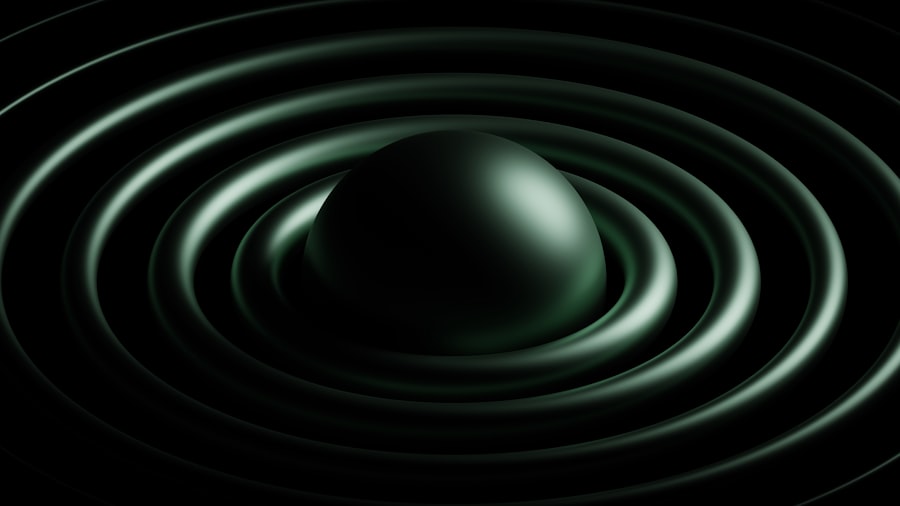
Gravitational waves are generated by some of the most energetic and violent events in the cosmos. Their detection, first directly achieved by the Laser Interferometer Gravitational-Wave Observatory (LIGO) in 2015, opened a new era of astronomical observation. Unlike light, which travels through spacetime, gravitational waves are disturbances of spacetime itself.
Sources of Gravitational Waves: Cosmic Cataclysms
###
The most significant sources of detectable gravitational waves are compact binary systems where massive objects like black holes or neutron stars orbit each other and eventually merge. As these objects spiral inwards, their immense gravitational influence warps spacetime with increasing intensity. The final moments of such mergers release tremendous energy in the form of gravitational waves, carrying information about the masses, spins, and dynamics of the colliding objects. Other potential sources include supernovae, rapidly rotating neutron stars with asymmetries, and possibly even the very early universe during inflation.
The Detection Challenge: Listening to Spacetime’s Whisper
###
Detecting gravitational waves is an extraordinary feat of scientific engineering. The amplitude of these waves, even from cataclysmic events, is incredibly small by the time they reach Earth. Imagine a pebble dropped into a vast ocean creating ripples that are almost imperceptible across the entire body of water. Gravitational wave detectors like LIGO and Virgo use sophisticated laser interferometers to measure minuscule changes in the length of their arms caused by the stretching and squeezing of spacetime as a gravitational wave passes.
The Measurement Comparison: Speed of Gravitational Waves vs. Light
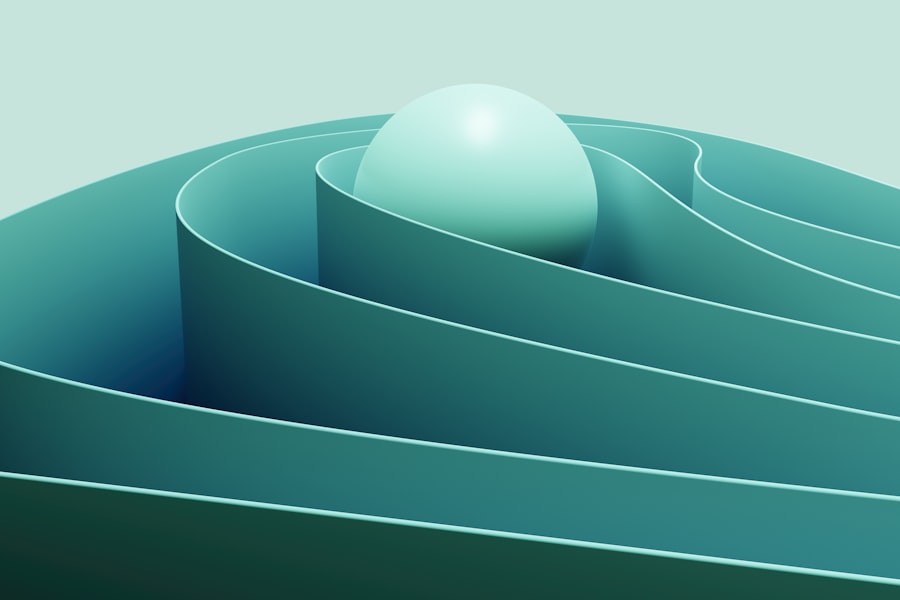
The revolutionary detection of gravitational waves not only confirmed a key prediction of general relativity but also provided a crucial opportunity to test fundamental aspects of the theory, including the speed of these waves.
The Multi-Messenger Astronomy Breakthrough
###
The convergence of gravitational wave detection with observations of electromagnetic radiation from the same cosmic event marked a paradigm shift known as multi-messenger astronomy. The event GW170817, the merger of two neutron stars detected by LIGO and Virgo in August 2017, was a prime example. Crucially, electromagnetic counterparts – gamma rays, X-rays, visible light, and radio waves – were also observed originating from the same region of the sky. This allowed for an unprecedented direct comparison of the arrival times of gravitational waves and light from a single source.
Simultaneous Arrival: A Test of General Relativity
###
The astonishing finding from GW170817 was that the gravitational waves and the gamma-ray burst from the neutron star merger arrived at Earth almost simultaneously, within 1.7 seconds of each other, despite traveling for approximately 130 million years. This incredibly precise alignment provided the strongest evidence to date that gravitational waves travel at the speed of light in a vacuum.
Implications of Near-Identical Speeds
###
The fact that gravitational waves and light travel at virtually the same speed has profound implications. It reinforces the validity of Einstein’s theory of general relativity, which posits that both are mediated by fundamental fields that propagate at ‘c’. It also suggests that the gravitational field itself is massless. If gravitational waves had a different speed, it would imply the existence of a massive graviton, which would lead to deviations from general relativity’s predictions and potentially alter our understanding of gravity at large distances. The near-perfect synchronicity of their arrival is like two highly trained sprinters, starting at the same instant and finishing side-by-side after a marathon, showcasing an almost uncanny shared velocity.
Recent discussions surrounding the measurements of gravitational waves and the speed of light have sparked significant interest in the scientific community. For those looking to delve deeper into this fascinating topic, an insightful article can be found at My Cosmic Ventures, which explores the implications of these measurements on our understanding of the universe. This article highlights how advancements in technology are enhancing our ability to detect gravitational waves, ultimately challenging our perceptions of fundamental physics.
Theoretical Frameworks and Experimental Evidence
| Metric | Gravitational Waves | Light Speed Measurements |
|---|---|---|
| Speed | Approximately 299,792 km/s (speed of light) | 299,792 km/s (defined constant) |
| Measurement Method | Interferometers (e.g., LIGO, Virgo) detecting spacetime distortions | Time-of-flight experiments, cavity resonators, astronomical observations |
| Measurement Precision | Within a fraction of a percent of light speed | Defined exactly as 299,792,458 m/s (by definition since 1983) |
| First Direct Detection | September 14, 2015 (GW150914 event) | Early 20th century (Michelson-Morley experiment and others) |
| Propagation Medium | Travels through spacetime fabric, unaffected by matter | Electromagnetic waves traveling through vacuum or media |
| Significance | Confirms predictions of General Relativity, opens new astronomy window | Fundamental constant for physics, basis for relativity and electromagnetism |
The theoretical underpinnings for gravitational waves traveling at the speed of light are firmly rooted in general relativity. Experimental evidence, particularly from multi-messenger events, has provided robust validation.
General Relativity’s Prediction: A Massless Graviton
###
Within the framework of general relativity, gravity is understood as the curvature of spacetime. The hypothetical particle that mediates this force is the graviton. A key prediction of the theory is that the graviton is massless. Massless particles, by their very nature, must travel at the speed of light in a vacuum. Thus, gravitational waves, being disturbances in spacetime mediated by massless gravitons, are predicted to propagate at ‘c’.
Experimental Constraints: Setting the Pace for Gravity
###
The measurement of the arrival times of gravitational waves and light from GW170817 has placed stringent limits on any potential difference in their speeds. The observed delay of less than two seconds over a distance of 130 million light-years translates to a fractional difference in speed of no more than one part in $10^{15}$. This remarkable agreement provides compelling experimental evidence supporting the theoretical prediction. Future, more sensitive detectors and observations of different astrophysical events will continue to refine these constraints. It’s akin to a cosmic speed-dating event, where the gravitational wave and the light signal show up in near-perfect unison, confirming their shared pace.
Beyond General Relativity: Exploring Alternatives
###
While general relativity has been incredibly successful, physicists are always looking for evidence that might point towards modifications or entirely new theories. If gravitational waves were found to travel at a speed significantly different from light, it would necessitate a revision of our current understanding of gravity. Theories beyond general relativity, such as certain scalar-tensor theories of gravity, predict varying speeds for gravitational waves. The precise measurements from GW170817 have helped to rule out many of these alternative models, reinforcing confidence in Einstein’s enduring theory.
The Future of Gravitational Wave Astronomy and Its Speed
The ongoing advancement of gravitational wave detectors and the burgeoning field of multi-messenger astronomy promise even more profound insights into the universe.
Next-Generation Detectors: Pushing the Limits of Sensitivity
###
Current detectors like LIGO and Virgo are continuously being upgraded to increase their sensitivity, allowing them to detect fainter signals and probe a larger volume of the universe. Future observatories, such as the Einstein Telescope in Europe and Cosmic Explorer in the United States, are planned to be significantly more powerful, capable of observing mergers of black holes and neutron stars across cosmic time. These advancements will undoubtedly lead to more precise measurements of gravitational wave speeds and potentially reveal subtle deviations if they exist.
Unlocking Cosmic Mysteries: What Their Speeds Tell Us
###
The precise matching of the speeds of gravitational waves and light is not just an observational curiosity; it is a fundamental piece of the cosmic puzzle. It speaks to the underlying unification of fundamental forces and fields in the universe. As gravitational wave astronomy matures, the correlation in arrival times will continue to serve as a powerful tool for understanding the nature of gravity, the properties of matter under extreme conditions, and the expansion history of the universe. The consistent speed is like a well-tuned orchestra, with each instrument playing in perfect harmony, guiding our comprehension of the grand cosmic symphony.
FAQs
What are gravitational waves?
Gravitational waves are ripples in the fabric of spacetime caused by some of the most violent and energetic processes in the universe, such as merging black holes or neutron stars. They were predicted by Albert Einstein’s theory of general relativity and were first directly detected in 2015.
How is the speed of gravitational waves measured?
The speed of gravitational waves is measured by detecting the time it takes for the waves to travel between multiple observatories located at different points on Earth. By comparing the arrival times of the waves at these detectors, scientists can calculate their speed, which has been found to be consistent with the speed of light.
Do gravitational waves travel at the speed of light?
Yes, according to both theory and experimental observations, gravitational waves travel at the speed of light in a vacuum, approximately 299,792 kilometers per second (186,282 miles per second).
How do measurements of gravitational waves compare to light speed measurements?
Measurements of gravitational waves have confirmed that they propagate at the speed of light, matching the speed measured for electromagnetic waves (light). This agreement supports Einstein’s theory of general relativity and helps rule out alternative theories of gravity that predict different speeds.
Why is it important to compare gravitational wave speed with light speed?
Comparing the speed of gravitational waves with the speed of light is crucial for testing fundamental physics theories, such as general relativity. It also helps improve our understanding of the universe’s structure and the behavior of extreme cosmic events, ensuring that our models of spacetime and gravity are accurate.