
Gravitational time dilation is a fascinating phenomenon rooted in the principles of Einstein’s theory of general relativity. At its core, this concept suggests that time is not a constant, universal measure but rather a variable that can be influenced by gravitational fields. The stronger the gravitational pull experienced by an object, the slower time passes for that object relative to another in a weaker gravitational field.
This means that a clock situated near a massive body, such as a planet or a star, will tick more slowly than a clock positioned far away from such gravitational influences. The implications of gravitational time dilation extend far beyond theoretical physics; they challenge our fundamental understanding of time itself. In essence, time becomes intertwined with the fabric of space and the mass of objects within it.
This relationship has been confirmed through various experiments and observations, leading to a deeper appreciation of how gravity shapes not only the movement of celestial bodies but also the very passage of time. As scientists continue to explore this intricate connection, they uncover new layers of complexity that redefine humanity’s perception of reality.
Key Takeaways
- Gravitational time dilation is the phenomenon where time passes at different rates in regions of different gravitational potential.
- Gravitational time dilation affects time by causing it to slow down in stronger gravitational fields, such as those near massive objects like black holes or planets.
- The concept of time slowing down due to gravitational time dilation can be explored through thought experiments and mathematical equations.
- Real-life examples of gravitational time dilation include the time difference between a GPS satellite and a receiver on Earth, as well as the slowing down of time near massive celestial bodies.
- Gravitational time dilation has practical impacts on everyday life, such as the need for time adjustments in GPS systems and the potential for time travel near black holes.
How Gravitational Time Dilation Affects Time
The effects of gravitational time dilation can be observed in various contexts, from the vastness of space to the minutiae of everyday life. When considering the influence of gravity on time, it becomes evident that the experience of time is not uniform across different locations.
This difference, though minuscule, accumulates over time and can lead to measurable discrepancies in age between individuals in varying gravitational fields. Moreover, gravitational time dilation has profound implications for our understanding of the universe. It plays a crucial role in the functioning of technologies such as GPS satellites, which must account for both special and general relativity to provide accurate positioning data.
Without correcting for the effects of gravitational time dilation, GPS systems would quickly become unreliable, leading to significant errors in navigation. This practical application underscores how deeply intertwined our technological advancements are with the principles of physics that govern the universe.
Exploring the Concept of Time Slowing Down
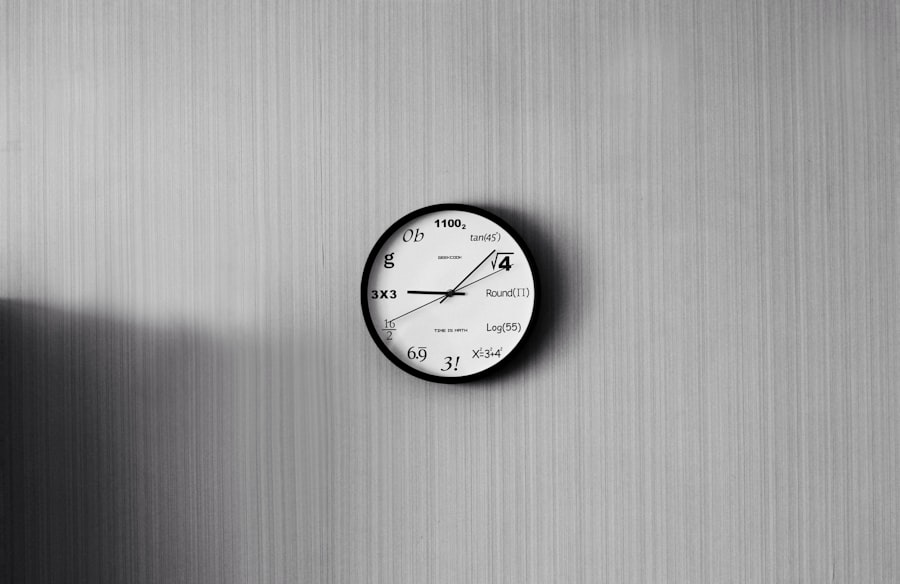
The notion that time can slow down is both intriguing and counterintuitive. In everyday life, people perceive time as a constant flow; however, gravitational time dilation reveals that this perception is relative. When an object is subjected to a stronger gravitational field, its internal processes—such as those governing atomic clocks—are affected, resulting in a slower passage of time compared to objects in weaker fields.
This phenomenon can be likened to watching a movie in slow motion; while everything appears to be moving at a normal pace from one perspective, another observer may perceive it differently based on their position and the forces acting upon them. This concept challenges traditional notions of simultaneity and raises questions about how individuals experience reality. For example, if two twins were separated at birth—one remaining on Earth while the other traveled near a black hole—gravitational time dilation would mean that upon reuniting, the twin who ventured into the stronger gravitational field would have aged significantly less than their Earth-bound sibling.
Such thought experiments illustrate the profound implications of gravitational time dilation on human experience and understanding of life itself.
Real-life Examples of Gravitational Time Dilation
| Real-life Examples of Gravitational Time Dilation |
|---|
| 1. GPS Satellites |
| 2. Atomic Clocks |
| 3. Black Holes |
| 4. Neutron Stars |
Real-life examples of gravitational time dilation can be found in various scientific experiments and technological applications. One notable instance occurred during the Hafele-Keating experiment in 1971, where atomic clocks were flown around the world on commercial airliners. Upon their return, these clocks were compared to stationary clocks on the ground.
The results confirmed predictions made by general relativity: the clocks on the planes recorded less elapsed time than those on Earth due to their altitude and speed, demonstrating how both velocity and gravity influence time. Another compelling example lies within the realm of satellite technology. GPS satellites orbiting Earth are positioned at altitudes where gravity is weaker than on the surface.
To ensure accurate positioning data, engineers must account for this difference in timekeeping when calculating satellite signals. Without these adjustments, GPS systems would yield increasingly inaccurate results over time, illustrating how gravitational time dilation is not merely an abstract concept but a critical factor in modern technology.
The Impact of Gravitational Time Dilation on Everyday Life
While gravitational time dilation may seem like an esoteric concept confined to theoretical physics, its impact permeates everyday life in subtle yet significant ways. The reliance on technologies such as GPS navigation systems highlights how deeply integrated these principles are within contemporary society. As people navigate their daily routines using smartphones and other devices that depend on satellite signals, they unwittingly benefit from corrections made for gravitational time dilation.
Furthermore, as humanity continues to explore space and consider long-duration missions to distant planets or celestial bodies, understanding gravitational time dilation becomes increasingly vital. Astronauts embarking on journeys beyond Earth’s atmosphere will need to account for the effects of gravity on their biological clocks and overall health. As space travel becomes more commonplace, awareness of how time behaves differently in various gravitational environments will be essential for ensuring the safety and well-being of those venturing into the cosmos.
Experimenting with Gravitational Time Dilation at Home
For those intrigued by the concept of gravitational time dilation and eager to explore it further, there are simple experiments that can be conducted at home to illustrate its principles. One accessible method involves using two identical clocks—one placed at ground level and another elevated on a shelf or table. By comparing the two clocks over an extended period, individuals may observe slight differences in their readings due to variations in gravitational strength at different heights.
Another engaging experiment involves using a smartphone app that measures acceleration and altitude changes. By taking measurements while ascending or descending in an elevator or climbing stairs, individuals can gain insight into how changes in elevation affect perceived time intervals. While these home experiments may not yield dramatic results, they serve as practical demonstrations of gravitational time dilation’s underlying principles and encourage curiosity about the nature of time itself.
Tools and Methods for Observing Gravitational Time Dilation
To delve deeper into the study of gravitational time dilation, various tools and methods can be employed by enthusiasts and researchers alike. High-precision atomic clocks are among the most effective instruments for observing this phenomenon. These clocks operate based on the vibrations of atoms and can measure time with remarkable accuracy, allowing scientists to detect even minuscule differences caused by variations in gravitational fields.
In addition to atomic clocks, satellite technology plays a crucial role in observing gravitational time dilation on a larger scale. By analyzing data from GPS satellites and other orbiting instruments, researchers can gather valuable information about how gravity affects time across different altitudes and locations. This data not only enhances our understanding of fundamental physics but also informs practical applications that impact daily life.
Demonstrating Gravitational Time Dilation with Simple Experiments
Demonstrating gravitational time dilation does not require advanced equipment or extensive resources; simple experiments can effectively illustrate its principles. One straightforward approach involves using two synchronized watches—one kept at ground level while another is taken to a higher elevation, such as a hill or tall building. After allowing sufficient time for both watches to run, individuals can compare their readings to observe any discrepancies caused by differences in gravitational strength.
Another engaging demonstration involves utilizing pendulums or swinging objects at varying heights. By measuring the period of oscillation for pendulums at different elevations, individuals can witness how gravity influences motion and indirectly affects the passage of time. These hands-on experiments provide tangible insights into gravitational time dilation while fostering curiosity about the nature of reality.
Observing Gravitational Time Dilation in Different Environments
Gravitational time dilation can be observed across diverse environments, each presenting unique challenges and opportunities for exploration. For instance, researchers studying black holes have long been fascinated by how extreme gravitational fields warp spacetime and affect time itself. Theoretical models suggest that as objects approach a black hole’s event horizon, they experience significant time dilation relative to observers far away from such massive bodies.
On Earth, variations in altitude provide another avenue for observing gravitational time dilation. Mountainous regions offer natural laboratories where scientists can study how changes in elevation impact clock rates and other temporal measurements. By conducting experiments at different altitudes—such as comparing clock rates at sea level versus those atop high peaks—researchers can gather valuable data that enhances our understanding of gravity’s influence on time.
Practical Applications of Gravitational Time Dilation
The practical applications of gravitational time dilation extend far beyond theoretical discussions; they play a crucial role in various fields ranging from navigation to astrophysics. In aviation and space exploration, understanding how gravity affects timekeeping is essential for ensuring accurate positioning and communication systems. GPS technology relies heavily on corrections for both special and general relativity to provide precise location data for users around the globe.
Moreover, advancements in medical imaging techniques have also benefited from insights gained through studying gravitational time dilation. Techniques such as MRI scans utilize principles derived from atomic behavior influenced by gravity, allowing for improved imaging quality and diagnostic capabilities. As research continues to unfold, it is likely that new applications will emerge across diverse sectors, further integrating gravitational time dilation into everyday life.
Exploring the Future of Gravitational Time Dilation Research
As scientists continue to unravel the complexities surrounding gravitational time dilation, future research holds immense potential for expanding humanity’s understanding of the universe. Ongoing studies aim to refine measurements related to this phenomenon while exploring its implications for fundamental physics and cosmology. Investigating how gravity interacts with other forces may lead to groundbreaking discoveries that reshape current theories about spacetime.
Additionally, advancements in technology will likely facilitate more precise observations and experiments related to gravitational time dilation. As researchers develop increasingly sophisticated instruments capable of measuring minute differences in clock rates across varying gravitational fields, new insights will emerge that challenge existing paradigms and inspire further inquiry into the nature of reality itself. In conclusion, gravitational time dilation is not merely an abstract concept confined to theoretical discussions; it has profound implications for our understanding of time and reality itself.
From its effects on modern technology to its potential applications in future research endeavors, this phenomenon continues to captivate scientists and enthusiasts alike as they explore its intricacies and uncover new layers of complexity within the fabric of spacetime.
Gravitational time dilation is a fascinating concept that illustrates how time can pass at different rates depending on the strength of a gravitational field. This phenomenon, predicted by Einstein’s theory of general relativity, suggests that clocks closer to a massive object, like Earth, tick more slowly compared to those further away. For those interested in exploring this concept further, an insightful article on the topic can be found on My Cosmic Ventures. You can read more about the implications of gravitational time dilation and its effects on our daily lives by visiting this article.
WATCH THIS! Time Is An Illusion: Quantum Physics Proves It
FAQs
What is gravitational time dilation?
Gravitational time dilation is a phenomenon predicted by Albert Einstein’s theory of general relativity, where time passes at different rates in regions of different gravitational potential. This means that time runs slower in stronger gravitational fields.
How does gravitational time dilation occur at home?
Gravitational time dilation occurs at home due to the Earth’s gravitational field. The closer an object is to the Earth’s surface, the stronger the gravitational field, and the slower time passes relative to an observer in a weaker gravitational field.
Can we observe gravitational time dilation at home?
While the effects of gravitational time dilation are too small to be noticeable in everyday life, they can be observed using highly precise instruments. For example, atomic clocks placed at different heights will show a measurable difference in the passage of time due to gravitational time dilation.
How does gravitational time dilation affect everyday life at home?
In everyday life at home, the effects of gravitational time dilation are negligible and not noticeable. However, they are important for technologies such as GPS, where precise timekeeping is essential for accurate positioning.
Can we create a stronger gravitational field at home to observe time dilation?
Creating a significantly stronger gravitational field at home is not feasible with current technology. However, the effects of gravitational time dilation can be simulated in laboratory settings using highly sensitive equipment.