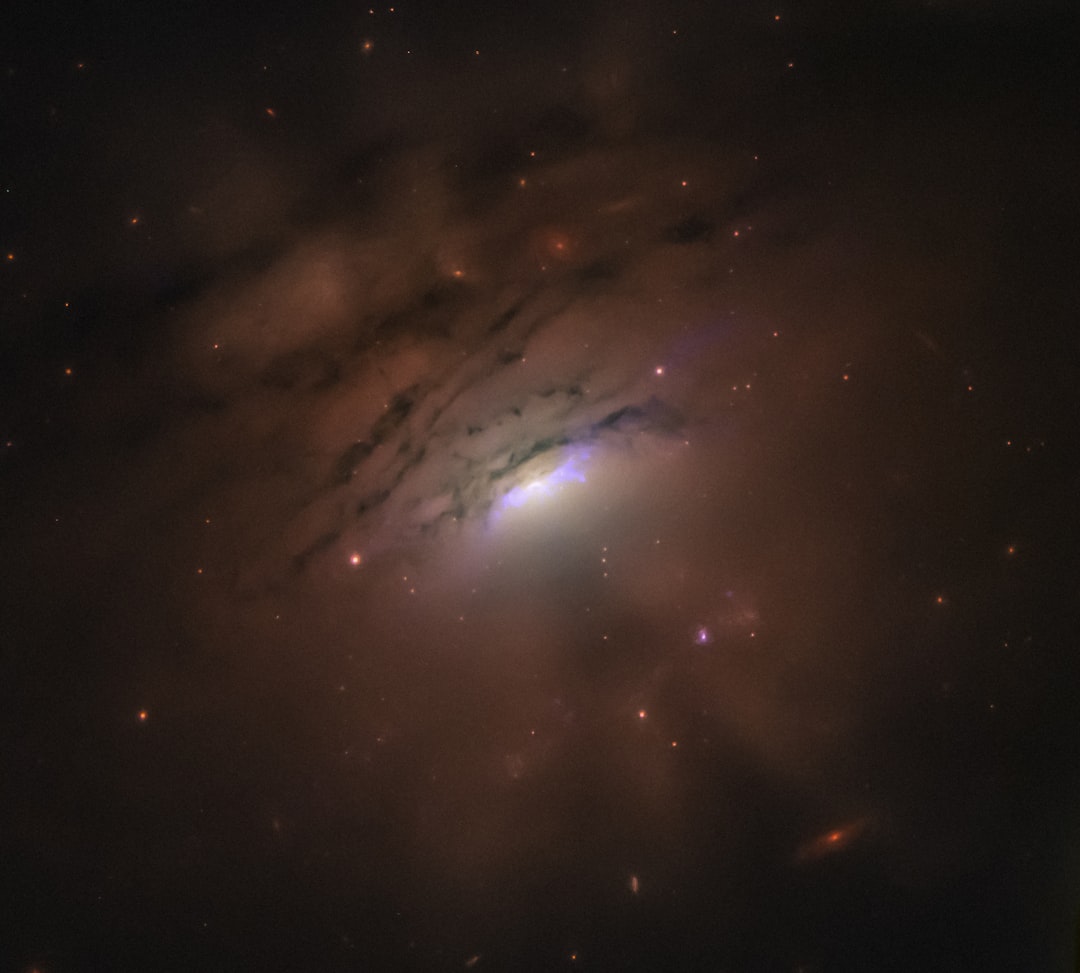
A galaxy cluster black hole, often referred to as a supermassive black hole, is an astronomical entity that resides at the center of a galaxy cluster. These black holes are characterized by their immense mass, typically ranging from millions to billions of solar masses. They are formed through various processes, including the merging of smaller black holes and the accretion of gas and stars over cosmic time.
The presence of these supermassive black holes is a common feature in the centers of most large galaxies, and they play a crucial role in the dynamics and evolution of their host galaxies and the surrounding cluster environment. The study of galaxy cluster black holes has gained significant attention in recent years, as astronomers seek to understand their formation, growth, and influence on galactic structures. These black holes are not merely passive entities; they actively interact with their surroundings, affecting star formation rates and the distribution of matter within their host galaxies.
Their gravitational pull can influence the orbits of stars and gas clouds, while their energetic outflows can shape the intergalactic medium. As such, galaxy cluster black holes are pivotal in the broader context of cosmic evolution.
Key Takeaways
- Galaxy cluster black holes are supermassive black holes located at the center of galaxy clusters, which are the largest structures in the universe.
- Black holes play a crucial role in regulating the growth and evolution of galaxy clusters by releasing energy through various processes.
- The influence of black holes extends to their surrounding environment, affecting the temperature, density, and chemical composition of the gas in galaxy clusters.
- Black hole feedback has a significant impact on star formation within galaxies, as it can suppress or enhance the formation of new stars.
- Understanding the relationship between black hole feedback and galaxy evolution is essential for unraveling the mysteries of the universe and its large-scale structure.
The Role of Black Holes in Galaxy Clusters
Black holes serve as central engines within galaxy clusters, exerting a profound influence on the dynamics and evolution of their host galaxies. Their gravitational forces can dictate the motion of stars and gas in the vicinity, leading to complex interactions that shape the structure of galaxies. In many cases, the presence of a supermassive black hole at the center of a galaxy cluster can stabilize the orbits of surrounding stars, creating a dynamic equilibrium that is essential for maintaining the integrity of the galaxy.
Moreover, black holes are believed to play a critical role in regulating star formation within their host galaxies. The energy released during accretion processes can heat surrounding gas, preventing it from collapsing into new stars. This feedback mechanism can lead to a suppression of star formation in certain regions, resulting in a diverse range of galactic morphologies and evolutionary paths.
As such, understanding the role of black holes in galaxy clusters is essential for comprehending the broader processes that govern galaxy formation and evolution.
How Black Holes Influence the Surrounding Environment

The influence of black holes extends far beyond their immediate vicinity; they have a significant impact on the surrounding environment within galaxy clusters. When matter falls into a black hole, it releases an enormous amount of energy in the form of radiation, which can heat up the surrounding gas and create powerful outflows. These outflows can drive shock waves through the intergalactic medium, redistributing gas and influencing the thermal state of the cluster.
Additionally, black holes can contribute to the phenomenon known as “feedback,” where the energy released during accretion processes affects star formation rates and the overall evolution of galaxies. This feedback can lead to complex interactions between galaxies and their environments, shaping the distribution of matter on both small and large scales. The interplay between black holes and their surroundings is a dynamic process that continues to be a focal point for researchers seeking to unravel the mysteries of cosmic evolution.
The Impact of Black Hole Feedback on Star Formation
| Study Parameter | Result |
|---|---|
| Black Hole Feedback | Reduces Star Formation |
| Feedback Mechanism | Suppresses Gas Cooling |
| Impact on Galaxy Evolution | Slows Down Star Formation Rate |
| Feedback Strength | Correlates with Black Hole Mass |
Black hole feedback has profound implications for star formation within galaxies. As supermassive black holes accrete matter, they release energy that can heat surrounding gas, preventing it from cooling and collapsing into new stars. This process can lead to a suppression of star formation in certain regions, resulting in a diverse array of galactic structures.
In some cases, this feedback mechanism can even quench star formation entirely, transforming once-active galaxies into passive systems. The relationship between black hole feedback and star formation is complex and multifaceted. While feedback can inhibit star formation in some areas, it can also trigger new bursts of star formation in others by redistributing gas and creating conditions conducive to star birth.
This duality highlights the intricate balance between black holes and their host galaxies, underscoring the importance of understanding these interactions for comprehending galaxy evolution.
The Relationship Between Black Hole Feedback and Galaxy Evolution
The interplay between black hole feedback and galaxy evolution is a critical area of research in astrophysics. Supermassive black holes are thought to influence not only the star formation rates within their host galaxies but also their overall morphological evolution. As galaxies interact with their environments—through mergers or encounters with other galaxies—the feedback from central black holes can play a pivotal role in shaping their destinies.
In particular, the energy released during accretion events can lead to significant changes in a galaxy’s structure and dynamics. For instance, feedback processes can drive gas outflows that reshape the distribution of matter within a galaxy, potentially leading to morphological transformations from spiral to elliptical shapes. Understanding this relationship is essential for constructing accurate models of galaxy evolution and for deciphering the complex history of our universe.
Observing Black Hole Feedback in Action
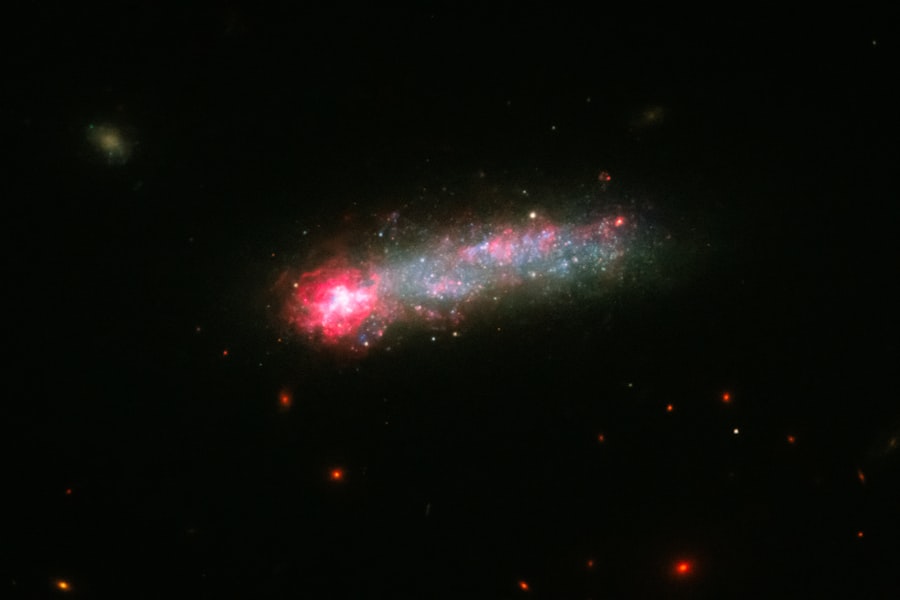
Observing black hole feedback in action presents significant challenges for astronomers, yet advancements in technology have made it increasingly feasible. Observations across various wavelengths—from radio to X-ray—allow researchers to capture different aspects of black hole activity and its effects on surrounding environments. For instance, X-ray emissions from hot gas around accreting black holes provide insights into the energy output associated with feedback processes.
Furthermore, radio observations can reveal powerful jets emitted by supermassive black holes as they expel material at relativistic speeds. These jets can interact with surrounding gas, creating shock waves that influence star formation rates and gas dynamics within galaxies. By piecing together these observations, astronomers can construct a more comprehensive picture of how black hole feedback operates within galaxy clusters.
The Mechanisms of Black Hole Feedback
The mechanisms underlying black hole feedback are diverse and complex, encompassing both radiative and mechanical processes. Radiative feedback occurs when energy is released as matter falls into a black hole, heating surrounding gas and preventing it from cooling sufficiently to form stars. This process can lead to significant changes in star formation rates within galaxies.
Mechanical feedback, on the other hand, involves the expulsion of material through powerful jets or winds generated by accreting black holes. These outflows can drive shock waves through the intergalactic medium, redistributing gas and influencing the thermal state of galaxy clusters. Understanding these mechanisms is crucial for unraveling the intricate relationship between black holes and their host galaxies.
The Connection Between Black Hole Feedback and the Large Scale Structure of the Universe
The influence of black hole feedback extends beyond individual galaxies; it plays a significant role in shaping the large-scale structure of the universe. As supermassive black holes interact with their environments, they contribute to processes that govern galaxy formation and clustering on cosmic scales. The energy released during feedback events can affect the distribution of dark matter and baryonic matter within galaxy clusters, influencing how galaxies form and evolve over time.
Moreover, black hole feedback may help explain observed phenomena such as the correlation between supermassive black hole mass and host galaxy properties. By studying these connections, researchers aim to gain insights into how black holes have influenced cosmic evolution throughout history.
Theoretical Models of Black Hole Feedback
Theoretical models play a crucial role in advancing our understanding of black hole feedback mechanisms. These models aim to simulate the complex interactions between supermassive black holes and their host galaxies, providing valuable insights into how feedback processes operate across different environments.
Recent advancements in computational astrophysics have allowed for increasingly sophisticated simulations that capture the intricacies of black hole feedback. These models not only aid in interpreting observational data but also provide predictions that can guide future research efforts aimed at unraveling the mysteries surrounding supermassive black holes.
The Implications of Black Hole Feedback for Cosmology
The implications of black hole feedback extend far beyond individual galaxies; they have profound consequences for cosmology as a whole. Understanding how supermassive black holes influence galaxy formation and evolution is essential for constructing accurate models of cosmic history. Feedback processes may help explain observed phenomena such as the observed correlation between supermassive black hole mass and host galaxy properties.
Furthermore, insights gained from studying black hole feedback can inform our understanding of dark matter distribution and its role in shaping large-scale structures within the universe. As researchers continue to explore these connections, they may uncover new avenues for understanding fundamental questions about the nature of our cosmos.
Future Research Directions in the Study of Black Hole Feedback
As research into black hole feedback continues to evolve, several key directions are emerging for future exploration. One area of focus is improving observational techniques to capture more detailed data on supermassive black holes and their interactions with surrounding environments. Advancements in telescope technology and observational methods will enable astronomers to probe deeper into cosmic history.
Additionally, further development of theoretical models will be essential for refining our understanding of feedback mechanisms across different cosmic epochs. By integrating observational data with sophisticated simulations, researchers aim to create comprehensive frameworks that elucidate how black holes shape galaxy evolution over time. In conclusion, the study of galaxy cluster black holes and their feedback mechanisms represents a dynamic frontier in astrophysics.
As researchers continue to unravel these complexities, they will undoubtedly enhance our understanding of not only individual galaxies but also the broader structure and evolution of the universe itself.
In recent studies, the role of black hole feedback in galaxy clusters has been a topic of significant interest among astronomers. This feedback mechanism is crucial in regulating star formation and influencing the thermal state of the intracluster medium. For a deeper understanding of how black hole feedback impacts galaxy evolution, you can explore a related article on this subject by visiting this page.
WATCH THIS! 🌌The Biggest Black Hole Is A LIE
FAQs
What is a galaxy cluster black hole feedback?
Galaxy cluster black hole feedback refers to the process by which the supermassive black holes at the centers of galaxy clusters release energy and material into their surroundings, affecting the growth and evolution of the cluster.
How does galaxy cluster black hole feedback occur?
Galaxy cluster black hole feedback occurs when the supermassive black hole at the center of a galaxy cluster accretes large amounts of gas and dust, releasing energy in the form of powerful jets and radiation that can impact the surrounding environment.
What are the effects of galaxy cluster black hole feedback?
The energy and material released by galaxy cluster black hole feedback can have significant effects on the surrounding gas and galaxies within the cluster. It can regulate the growth of galaxies, heat the surrounding gas, and even prevent the cooling and formation of new stars.
Why is galaxy cluster black hole feedback important?
Understanding galaxy cluster black hole feedback is important for understanding the formation and evolution of galaxy clusters, as well as the role of supermassive black holes in shaping the large-scale structure of the universe. It also has implications for our understanding of galaxy formation and the regulation of star formation.