Rogue black holes, enigmatic entities that drift through the cosmos, have captivated the imagination of astronomers and astrophysicists alike. Unlike their more stationary counterparts, which reside at the centers of galaxies, rogue black holes wander freely through the universe, unbound by the gravitational pull of any star system. These solitary giants are born from the remnants of massive stars that have undergone supernova explosions, leaving behind a core that collapses under its own gravity.
The study of rogue black holes not only enhances the understanding of black hole formation and evolution but also raises intriguing questions about their role in the cosmic landscape. The existence of rogue black holes challenges conventional notions of cosmic structure and dynamics. As they traverse the vast expanses of space, they can interact with other celestial bodies, potentially leading to dramatic consequences.
The implications of these interactions extend beyond mere curiosity; they may influence star formation, galactic evolution, and even the fate of entire solar systems. As researchers delve deeper into the mysteries surrounding rogue black holes, they uncover a wealth of information that could reshape our understanding of the universe.
Key Takeaways
- Rogue black holes are black holes that have been ejected from their original galaxies and are now wandering through space.
- Rogue black hole passes occur when these wandering black holes come close to stars or planets in a different galaxy.
- The frequency of rogue black hole passes in the Milky Way is still not well understood, but recent studies suggest that they may be more common than previously thought.
- Rogue black hole passes can have a significant impact on the surrounding stars and planets, potentially disrupting their orbits and causing gravitational disturbances.
- Detecting and observing rogue black hole passes is challenging, but advancements in technology and theoretical models have improved our ability to study these events.
Definition of Rogue Black Hole Passes
Rogue black hole passes refer to the phenomenon where a rogue black hole approaches and interacts with other celestial objects, such as stars or planetary systems. These encounters can vary in proximity and intensity, ranging from distant flybys to close encounters that may significantly alter the trajectories of nearby stars. The defining characteristic of a rogue black hole pass is its unpredictable nature; unlike black holes anchored in galactic centers, rogue black holes can appear unexpectedly in various regions of space.
The dynamics of these passes are complex and can lead to a range of outcomes. In some cases, a rogue black hole may simply pass by a star system without causing any noticeable effects. However, in other instances, the gravitational influence of the rogue black hole can disrupt the orbits of surrounding stars or even strip away planets from their parent systems.
Understanding these interactions is crucial for astrophysicists as they seek to unravel the intricate web of gravitational forces that govern the behavior of celestial bodies.
Frequency of Rogue Black Hole Passes in the Milky Way
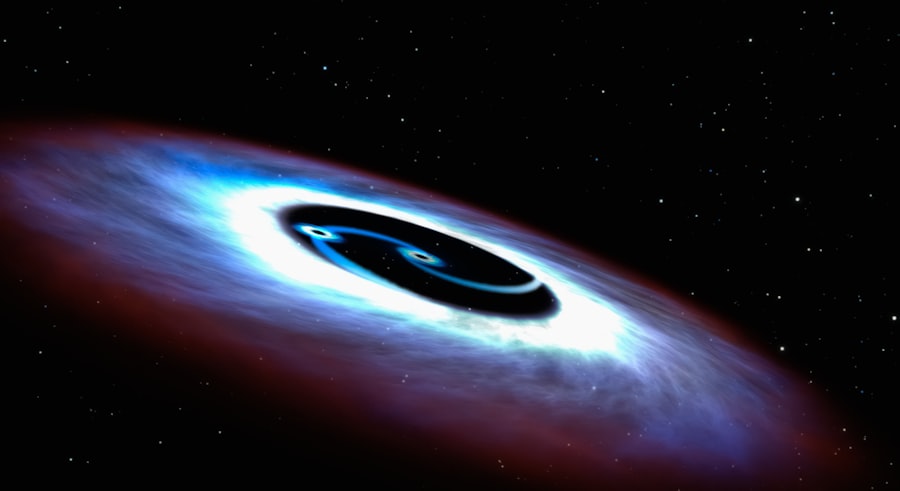
The Milky Way galaxy is home to an estimated number of rogue black holes, though determining their exact frequency remains a challenge for astronomers. Recent studies suggest that there could be thousands of rogue black holes wandering through our galaxy, with some estimates placing their numbers in the range of 20,000 to 100,000. However, the actual frequency of rogue black hole passes is difficult to quantify due to their elusive nature and the vast distances involved.
Observational data indicates that while rogue black holes are relatively rare compared to other celestial phenomena, their potential for interaction with stars and planets makes them significant players in galactic dynamics. The likelihood of a rogue black hole passing close to a star system is influenced by various factors, including the density of stars in a given region and the gravitational interactions that occur over time. As researchers continue to refine their models and gather more observational data, they aim to provide a clearer picture of how often these enigmatic entities traverse our galactic neighborhood.
Impact of Rogue Black Hole Passes on Surrounding Stars and Planets
| Event | Impact |
|---|---|
| Increased Gravitational Pull | Disruption of Orbits |
| High Energy Radiation Emission | Damage to Atmospheres |
| Massive Tidal Forces | Tidal Heating of Planets |
| Displacement of Asteroids and Comets | Increased Impact Risk |
The impact of rogue black hole passes on surrounding stars and planets can be profound and varied. When a rogue black hole approaches a star system, its immense gravitational pull can alter the orbits of nearby stars, potentially leading to destabilization within the system. In some cases, this gravitational influence may cause stars to be ejected from their orbits entirely, sending them hurtling into interstellar space.
Such events can dramatically reshape the dynamics of star clusters and influence the overall structure of galaxies. Moreover, rogue black holes can also pose a threat to planetary systems. If a rogue black hole passes sufficiently close to a planet, it may disrupt its orbit or even strip it away from its parent star altogether.
This could result in planets becoming rogue themselves, wandering through space without a solar system to call home. The consequences of such interactions extend beyond individual systems; they can affect star formation rates and contribute to the overall evolution of galaxies over cosmic timescales.
Detection and Observation of Rogue Black Hole Passes
Detecting rogue black holes poses significant challenges for astronomers due to their elusive nature and lack of visible light emissions. Unlike stars or other celestial objects that emit light across various wavelengths, rogue black holes are characterized by their ability to absorb light and matter. However, researchers have developed innovative techniques to identify these cosmic wanderers indirectly.
One method involves observing the gravitational effects that rogue black holes exert on nearby stars or gas clouds. Gravitational lensing is another powerful tool used in the detection of rogue black holes. When a rogue black hole passes in front of a distant light source, its gravitational field can bend and magnify the light from that source, creating observable distortions.
By analyzing these distortions, astronomers can infer the presence and mass of a rogue black hole. Additionally, advancements in gravitational wave detection have opened new avenues for identifying rogue black holes through their mergers with other black holes or neutron stars.
Theoretical Models for Predicting Rogue Black Hole Passes
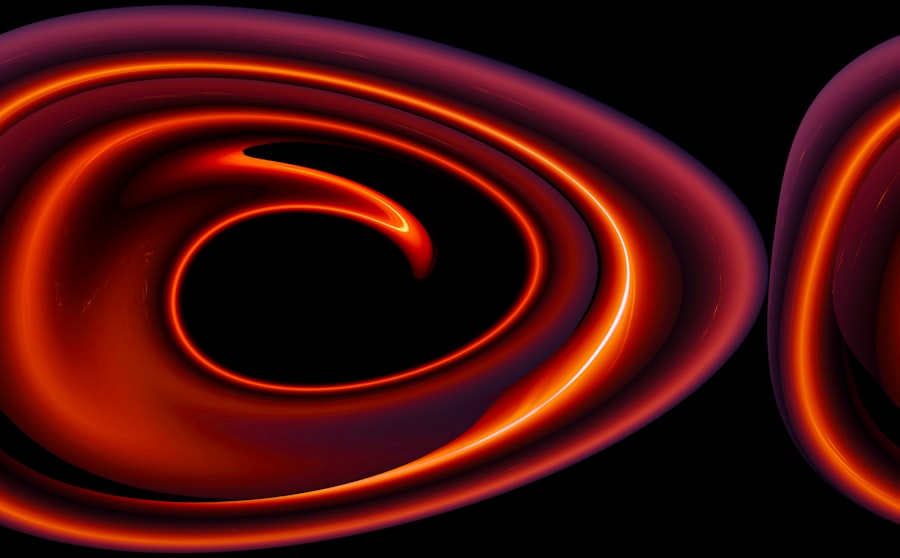
Theoretical models play a crucial role in predicting rogue black hole passes and understanding their dynamics within galaxies. Researchers utilize simulations based on gravitational physics to explore how rogue black holes interact with other celestial bodies over time. These models take into account various factors such as stellar density, velocity distributions, and gravitational interactions to simulate potential encounters between rogue black holes and stars or planetary systems.
One prominent approach involves using N-body simulations, which model the gravitational interactions between multiple bodies within a defined region of space. By running these simulations over extended periods, researchers can observe how rogue black holes might traverse through star clusters or galactic regions and predict the likelihood of close encounters with other objects. As computational power continues to advance, these models become increasingly sophisticated, allowing for more accurate predictions regarding the behavior and impact of rogue black holes in different cosmic environments.
Potential Risks of Rogue Black Hole Passes to Earth
While Earth is currently safe from any immediate threats posed by rogue black holes, the potential risks associated with their passes cannot be entirely dismissed. If a rogue black hole were to approach our solar system closely enough, its gravitational influence could disrupt the orbits of planets within our system. Such an event could lead to catastrophic consequences, including altered climates or even ejection from the solar system for some planets.
Moreover, if a rogue black hole were to pass through our solar system at high velocity, it could create gravitational waves detectable by current technology. These waves would carry information about the mass and trajectory of the rogue black hole, providing valuable data for researchers studying such phenomena. While the likelihood of a rogue black hole passing close enough to Earth to cause significant harm is exceedingly low, understanding these risks is essential for comprehending the broader dynamics of our galaxy.
Comparison of Rogue Black Hole Passes in Different Galaxies
Rogue black holes are not exclusive to the Milky Way; they are believed to exist in various galaxies throughout the universe. However, the frequency and impact of rogue black hole passes can vary significantly between different galactic environments. For instance, galaxies with higher stellar densities may experience more frequent encounters with rogue black holes due to increased gravitational interactions among stars.
In contrast, galaxies that are more diffuse may see fewer rogue black hole passes simply because there are fewer stars for these entities to interact with. Additionally, factors such as galactic morphology and evolutionary history play crucial roles in shaping how rogue black holes behave within different galaxies. By comparing observations across various galactic types—spiral, elliptical, and irregular—researchers can gain insights into how these cosmic wanderers influence galactic evolution on larger scales.
Importance of Studying Rogue Black Hole Passes for Astrophysics
Studying rogue black hole passes is vital for advancing knowledge in astrophysics and cosmology. These enigmatic objects provide unique insights into fundamental questions about gravity, stellar evolution, and galaxy formation. By examining how rogue black holes interact with other celestial bodies, researchers can refine existing theories about gravitational dynamics and enhance models that describe cosmic evolution.
Furthermore, understanding rogue black holes contributes to broader discussions about dark matter and dark energy—two components that remain largely mysterious in modern astrophysics. The behavior of rogue black holes may offer clues about how matter behaves under extreme conditions and how it influences large-scale structures in the universe. As scientists continue to explore these phenomena, they pave the way for new discoveries that could reshape our understanding of fundamental physics.
Future Research and Exploration of Rogue Black Hole Passes
The future of research on rogue black hole passes holds great promise as technology advances and observational techniques improve. Upcoming space missions equipped with advanced telescopes and detectors will enhance our ability to observe distant galaxies and identify potential rogue black holes within them. Additionally, ongoing developments in gravitational wave astronomy will provide new avenues for detecting mergers involving rogue black holes.
Collaborative efforts among international research teams will be essential for advancing knowledge in this field. By pooling resources and expertise from various disciplines—such as theoretical physics, observational astronomy, and computational modeling—scientists can tackle complex questions surrounding rogue black holes more effectively. As researchers continue to push boundaries in understanding these cosmic wanderers, they will undoubtedly uncover new insights that deepen humanity’s comprehension of the universe.
Conclusion and Implications of Rogue Black Hole Passes for the Universe
In conclusion, rogue black holes represent one of the most intriguing aspects of modern astrophysics. Their unpredictable nature and potential for interaction with other celestial bodies raise important questions about cosmic dynamics and evolution. As researchers delve deeper into understanding rogue black hole passes—examining their frequency, impact on surrounding stars and planets, detection methods, and theoretical models—they contribute significantly to our knowledge of the universe.
The implications extend beyond mere academic curiosity; studying these enigmatic entities enhances humanity’s grasp on fundamental physical principles while shedding light on broader cosmic phenomena. As future research endeavors unfold, they promise to reveal even more about these solitary giants that roam through space—ultimately enriching our understanding not only of rogue black holes but also of the intricate tapestry that constitutes our universe.
Recent studies have suggested that rogue black holes, which are black holes that wander through space without being anchored to a galaxy, may pass through our cosmic neighborhood more frequently than previously thought. This intriguing phenomenon raises questions about the potential impact of these wandering giants on surrounding celestial bodies. For a deeper dive into the implications of rogue black holes and their behavior, you can read more in this related article on cosmic exploration: My Cosmic Ventures.
WATCH THIS! The Invisible Threat: A Rogue Black Hole Headed for Our Solar System?
FAQs
What are rogue black holes?
Rogue black holes, also known as isolated black holes, are black holes that do not have a companion star and are not part of a galaxy. They are thought to have been ejected from their original location due to gravitational interactions with other black holes or stars.
How often do rogue black holes pass through the Milky Way?
The frequency of rogue black holes passing through the Milky Way is not precisely known. It is estimated that there could be thousands of rogue black holes in the Milky Way, but their movements and trajectories are difficult to predict.
What are the potential effects of a rogue black hole passing through the Milky Way?
If a rogue black hole were to pass through the Milky Way, it could potentially disrupt the orbits of stars and other celestial bodies. However, the likelihood of a rogue black hole coming close enough to our solar system to cause any significant effects is extremely low.
Can rogue black holes be detected?
Rogue black holes are challenging to detect because they do not emit light and are not associated with any visible objects such as stars or galaxies. However, scientists are developing techniques to search for the gravitational effects of rogue black holes on surrounding matter, which could help in their detection.