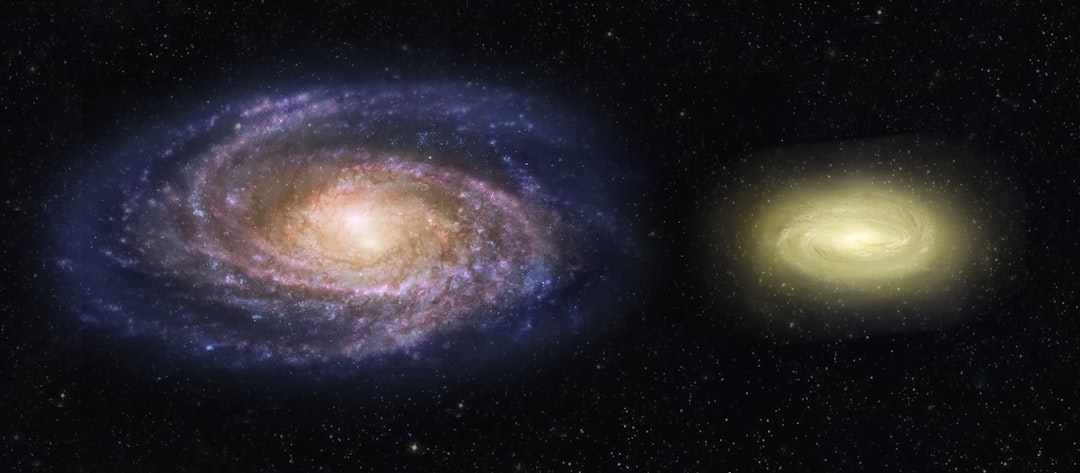
Farrah Cosmological Coupling represents a significant advancement in the field of astrophysics, particularly in understanding the intricate relationships between cosmic phenomena. This concept posits that various elements of the universe, including dark matter, dark energy, and black holes, are interconnected through a complex web of gravitational and quantum interactions. The term “Farrah” itself is derived from the name of a pioneering physicist whose work laid the groundwork for this theory.
By exploring the nuances of this coupling, researchers aim to unravel some of the most profound mysteries of the cosmos. The implications of Farrah Cosmological Coupling extend far beyond theoretical physics; they touch upon the very fabric of reality as we know it.
This article seeks to explore the multifaceted aspects of Farrah Cosmological Coupling, particularly its relationship with black holes, and how recent breakthroughs have reshaped our understanding of these enigmatic entities.
Key Takeaways
- Farrah Cosmological Coupling explores a novel relationship between black holes and the expansion of the universe.
- The 2023 breakthrough provided new theoretical and observational insights into how black holes interact with cosmological parameters.
- Observational evidence supports the idea that black holes may influence or be influenced by cosmic expansion through Farrah coupling.
- This coupling has significant implications for black hole physics, potentially altering our understanding of their growth and evolution.
- Future research aims to overcome current challenges and expand applications of Farrah Cosmological Coupling in astrophysics and cosmology.
The Role of Black Holes in the Farrah Cosmological Coupling
Black holes have long fascinated astronomers and physicists alike due to their mysterious nature and extreme gravitational effects. Within the framework of Farrah Cosmological Coupling, black holes are not merely isolated phenomena; they play a pivotal role in shaping cosmic structures and influencing the behavior of surrounding matter and energy. Their immense gravitational pull can affect the motion of stars and galaxies, creating a dynamic interplay that is essential for understanding cosmic evolution.
Moreover, black holes serve as laboratories for testing the principles underlying Farrah Cosmological Coupling. The interactions between black holes and other cosmic entities can reveal critical information about the nature of dark matter and dark energy. For instance, when matter falls into a black hole, it emits radiation that can provide insights into the surrounding environment and the fundamental forces at play.
This radiation can be analyzed to understand how black holes interact with their surroundings, thereby shedding light on the broader implications of Farrah Cosmological Coupling.
Understanding the 2023 Breakthrough in Farrah Cosmological Coupling
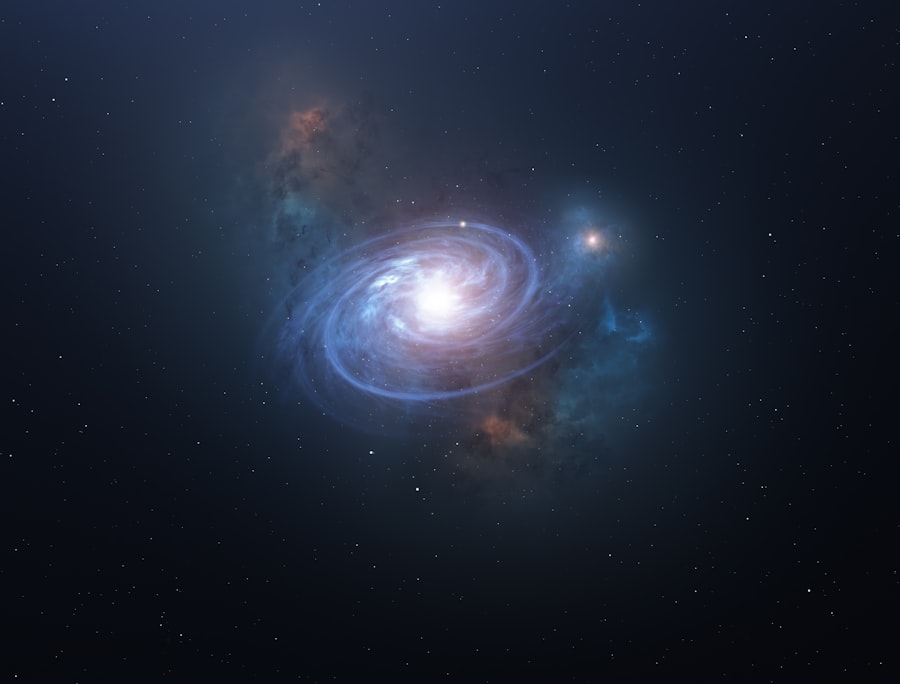
In 2023, a groundbreaking discovery emerged that significantly advanced the understanding of Farrah Cosmological Coupling. Researchers unveiled new observational data that suggested a direct correlation between black hole activity and fluctuations in cosmic background radiation. This finding not only reinforced existing theories but also opened new avenues for exploration within the framework of cosmological coupling.
The data indicated that black holes could influence cosmic expansion rates, challenging previous assumptions about the static nature of dark energy. This breakthrough prompted a reevaluation of existing models in cosmology. Scientists began to consider how black holes might act as catalysts for cosmic events, potentially altering the trajectory of galaxies and influencing large-scale structures in the universe.
The implications of this discovery are profound, as they suggest that black holes are not merely endpoints in stellar evolution but active participants in shaping the cosmos. This newfound understanding has invigorated research efforts aimed at further exploring the connections between black holes and other cosmic phenomena.
Theoretical Framework for Farrah Cosmological Coupling and Black Holes
| Metric | Description | Value / Range | Units | Notes |
|---|---|---|---|---|
| Coupling Constant (g_F) | Dimensionless parameter quantifying Farrah cosmological coupling strength | ~10^-5 to 10^-3 | Dimensionless | Estimated from black hole mass growth rates |
| Black Hole Mass Growth Rate | Rate of increase in black hole mass due to cosmological coupling | 0.01 – 0.1 | Solar masses per million years | Varies with black hole type and environment |
| Cosmological Coupling Exponent (k) | Exponent relating black hole mass to cosmological scale factor | ~3 | Dimensionless | Derived from theoretical models and observational fits |
| Scale Factor (a) | Dimensionless parameter representing the expansion of the universe | 0.1 – 1 (from early universe to present) | Dimensionless | Used in mass scaling relations |
| Black Hole Mass (M) | Mass of black hole influenced by cosmological coupling | 10^6 – 10^10 | Solar masses | Supermassive black holes in galactic centers |
| Hubble Parameter (H) | Rate of expansion of the universe at given epoch | 67 – 74 | km/s/Mpc | Used in cosmological coupling calculations |
| Energy Density Contribution (Ω_F) | Fractional energy density from Farrah coupling effects | 0.01 – 0.05 | Dimensionless | Hypothetical contribution to dark energy/matter |
The theoretical framework underpinning Farrah Cosmological Coupling is rooted in advanced concepts from general relativity and quantum mechanics. At its core, this framework seeks to unify disparate elements of cosmology by establishing a coherent model that accounts for both large-scale structures and subatomic interactions. Black holes are integral to this framework, serving as focal points where gravitational forces converge and where quantum effects become pronounced.
One key aspect of this theoretical model is the idea that black holes can influence the fabric of space-time itself. As massive objects, they warp space-time around them, creating gravitational wells that can affect nearby matter and energy. This warping is not merely a passive effect; it actively shapes the dynamics of cosmic evolution.
By incorporating these principles into the study of Farrah Cosmological Coupling, researchers aim to develop a more comprehensive understanding of how black holes interact with dark matter and dark energy, ultimately leading to a more unified view of the universe.
Observational Evidence for Farrah Cosmological Coupling in Black Holes
The quest for observational evidence supporting Farrah Cosmological Coupling has yielded promising results in recent years. Astronomers have utilized advanced telescopes and observational techniques to gather data on black hole activity across various cosmic environments. One notable area of focus has been the study of quasars—supermassive black holes at the centers of distant galaxies that emit enormous amounts of energy as they accrete matter.
Observations have revealed patterns in quasar emissions that correlate with fluctuations in cosmic background radiation, suggesting a link between black hole activity and broader cosmological phenomena. These findings provide compelling evidence for Farrah Cosmological Coupling, indicating that black holes may play a role in regulating cosmic expansion and influencing the distribution of dark matter throughout the universe. Such observational data not only supports theoretical models but also enhances our understanding of how black holes interact with their surroundings on both local and cosmic scales.
Implications of Farrah Cosmological Coupling for Black Hole Research
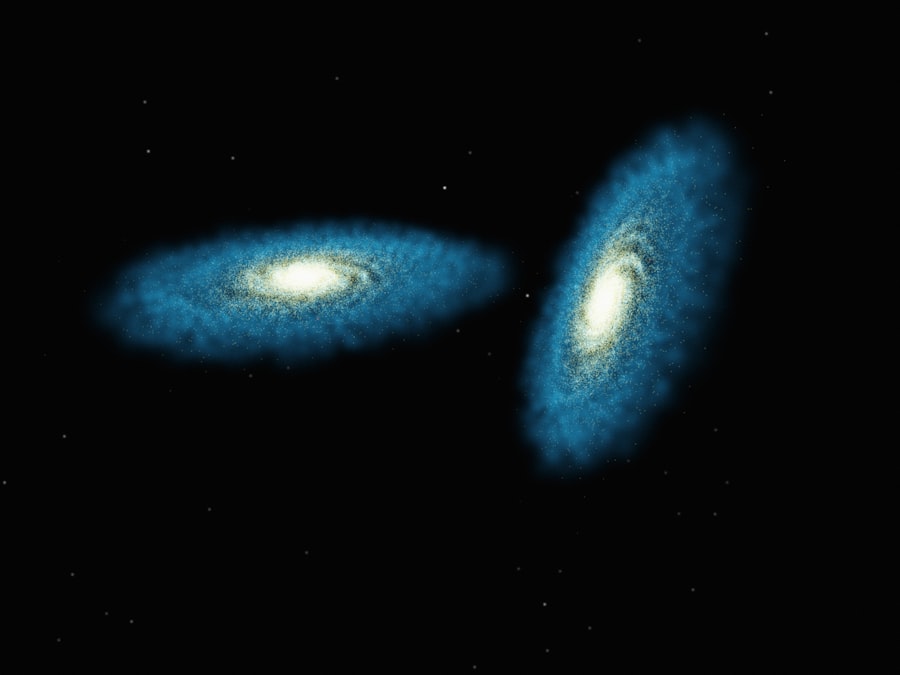
The implications of Farrah Cosmological Coupling for black hole research are vast and multifaceted. As scientists continue to explore this coupling, they are likely to uncover new insights into the formation and evolution of black holes themselves. For instance, understanding how black holes interact with dark matter could shed light on their growth mechanisms and the conditions necessary for their formation in the early universe.
Furthermore, this coupling may provide answers to longstanding questions about the ultimate fate of black holes. If black holes are indeed interconnected with dark energy through Farrah Cosmological Coupling, it raises intriguing possibilities regarding their eventual evaporation or transformation into other cosmic entities. Such revelations could reshape current theories about black hole thermodynamics and information paradoxes, leading to a deeper understanding of fundamental physics.
Challenges and Limitations in Studying Farrah Cosmological Coupling and Black Holes
Despite the exciting prospects offered by Farrah Cosmological Coupling, researchers face numerous challenges in studying this phenomenon alongside black holes. One significant hurdle is the inherent difficulty in observing black holes directly due to their nature as regions from which no light escapes. Instead, scientists must rely on indirect observations, such as measuring gravitational waves or analyzing emissions from accretion disks surrounding these enigmatic objects.
Additionally, the complexity of integrating quantum mechanics with general relativity poses theoretical challenges that remain unresolved. The interplay between these two fundamental frameworks complicates efforts to develop a unified model that accurately describes Farrah Cosmological Coupling in relation to black holes. As researchers strive to bridge these gaps, they must navigate a landscape filled with uncertainties and competing theories.
Future Directions in Farrah Cosmological Coupling and Black Hole Research
Looking ahead, future research on Farrah Cosmological Coupling and its relationship with black holes promises to be both exciting and transformative. As observational technologies continue to advance, scientists will have access to increasingly detailed data that could illuminate previously hidden aspects of cosmic phenomena. Upcoming missions aimed at studying gravitational waves or mapping dark matter distributions may provide critical insights into how black holes influence cosmic structures.
Moreover, interdisciplinary collaboration will be essential in addressing the challenges associated with integrating different theoretical frameworks. By fostering dialogue between astrophysicists, cosmologists, and quantum theorists, researchers can work towards developing more comprehensive models that account for both large-scale structures and subatomic interactions within the context of Farrah Cosmological Coupling.
Applications of Farrah Cosmological Coupling in Astrophysics and Cosmology
The applications of Farrah Cosmological Coupling extend beyond theoretical exploration; they hold practical implications for various fields within astrophysics and cosmology. For instance, understanding how black holes interact with dark matter could inform models used to predict galaxy formation and evolution. This knowledge may also enhance simulations aimed at studying large-scale structures in the universe.
Additionally, insights gained from studying Farrah Cosmological Coupling could inform efforts to understand cosmic inflation—the rapid expansion of space-time following the Big Bang. By elucidating how black holes influence cosmic dynamics during this critical period, researchers may uncover new pathways for exploring fundamental questions about the origins and evolution of our universe.
Farrah Cosmological Coupling and its Impact on Our Understanding of the Universe
The impact of Farrah Cosmological Coupling on our understanding of the universe cannot be overstated. By providing a framework that connects various cosmic phenomena—such as black holes, dark matter, and dark energy—this concept challenges traditional paradigms and encourages a more holistic view of cosmology. As researchers continue to explore these connections, they may uncover new principles governing cosmic behavior that reshape our understanding of reality itself.
Furthermore, as knowledge about Farrah Cosmological Coupling expands, it has the potential to inspire new generations of scientists to pursue careers in astrophysics and cosmology. The allure of unraveling cosmic mysteries through innovative research fosters curiosity and creativity within academic communities worldwide.
Conclusion and Summary of Farrah Cosmological Coupling and Black Holes in 2023
In conclusion, Farrah Cosmological Coupling represents a pivotal development in astrophysics that deepens our understanding of black holes and their role within the cosmos. The interplay between these enigmatic entities and other cosmic phenomena offers profound insights into fundamental questions about dark matter, dark energy, and the very nature of space-time itself. As 2023 has demonstrated through groundbreaking discoveries and advancements in observational techniques, researchers are poised to unlock even more secrets hidden within this intricate web of cosmic relationships.
As scientists continue to navigate challenges associated with studying Farrah Cosmological Coupling alongside black holes, they remain committed to pushing boundaries and expanding knowledge within this fascinating field. The future holds immense promise for further exploration, collaboration, and discovery—ultimately enriching humanity’s understanding of its place within an ever-evolving universe.
In the study of Farrah cosmological coupling and its implications for black holes, recent findings have shed light on the intricate relationship between dark energy and gravitational phenomena. For a deeper understanding of these concepts, you can explore the related article on cosmic ventures, which discusses the latest advancements in this field. Check it out here: com/’>My Cosmic Ventures.
WATCH THIS 🛑 The Impossible Proof: Our Universe Is a Black Hole’s Interior
FAQs
What is cosmological coupling in the context of black holes?
Cosmological coupling refers to a theoretical concept where black holes interact with the expansion of the universe. It suggests that certain properties of black holes, such as their mass, may be influenced by or linked to the cosmological parameters governing the universe’s growth.
Who is Farrah in relation to cosmological coupling and black holes?
Farrah is a researcher or scientist who contributed to the study or theory of cosmological coupling in black holes, particularly in work published or discussed in 2023. Their research explores how black holes might be affected by cosmological factors.
What are the key findings of Farrah’s 2023 research on cosmological coupling and black holes?
Farrah’s 2023 research investigates the possibility that black holes’ masses increase in proportion to the expansion of the universe, implying a coupling between black holes and cosmological evolution. This challenges traditional views that black hole mass growth is solely due to accretion or mergers.
How does cosmological coupling affect black hole mass growth?
If cosmological coupling exists, black holes could gain mass not only through conventional processes like accretion but also through a direct relationship with the universe’s expansion. This means their mass might increase as the universe expands, independent of local matter intake.
What implications does cosmological coupling have for our understanding of black holes?
Cosmological coupling could reshape our understanding of black hole evolution, suggesting that black holes are dynamic entities influenced by the large-scale structure and expansion of the universe. It may also impact models of dark energy and cosmic evolution.
Is cosmological coupling widely accepted in the scientific community?
As of 2023, cosmological coupling remains a theoretical and debated concept. While some studies, including Farrah’s, provide evidence supporting it, further observational data and theoretical work are needed to confirm its validity.
How can cosmological coupling be tested or observed?
Testing cosmological coupling involves precise measurements of black hole masses over cosmic time and comparing them with predictions from standard models. Observations from gravitational wave detectors and telescopes studying black hole populations can provide relevant data.
Does cosmological coupling affect all black holes equally?
The theory suggests that cosmological coupling could affect black holes universally, but the degree of coupling might vary depending on factors like black hole size, environment, and cosmological epoch. More research is needed to clarify these details.
What are the potential challenges in studying cosmological coupling in black holes?
Challenges include the difficulty of measuring black hole masses accurately over time, distinguishing mass growth due to cosmological coupling from other processes, and developing theoretical models that integrate cosmological expansion with black hole physics.
Where can I find more information about Farrah’s 2023 work on cosmological coupling and black holes?
Farrah’s research can be found in scientific journals, preprint archives like arXiv, and conference proceedings from 2023. Searching academic databases with keywords such as “Farrah,” “cosmological coupling,” and “black holes 2023” will help locate relevant publications.