
The fabric of reality, as understood through the lens of modern physics, is a dynamic and intricate construct. Within this framework, the concept of a “worldline” plays a pivotal role, representing the trajectory of a single point particle or an object through spacetime. When these individual worldlines are collectively considered, they form a vast and interconnected network, giving rise to the speculative yet compelling notion of the “Worldline Spacetime Tube.” This article delves into the theoretical underpinnings and potential implications of this concept, exploring its connection to established physics and its possible role in future scientific endeavors.
The concept of a worldline originates from Albert Einstein’s theories of special and general relativity. In these theories, spacetime is not merely a passive backdrop but an active participant, its geometry influencing the paths of objects, and in turn, being influenced by their presence. You can learn more about managing your schedule effectively by watching this video on block time.
The Minkowski Spacetime Diagram
Hermann Minkowski, Einstein’s former professor, introduced a geometric interpretation of special relativity where time is treated as a fourth dimension, fundamentally intertwined with the three spatial dimensions.
- Events and Worldpoints: In this four-dimensional spacetime, any specific point in time and space is referred to as an “event” or “worldpoint.” Imagine, reader, a single flash of light occurring at a precise location at a precise moment – that is an event.
- The Cone of Light: From any given event, light propagates outwards in a spherical wave. When visualized in a spacetime diagram, this expanding sphere forms a cone, known as the “light cone.” This cone delineates the regions of spacetime that are causally connected to the event. For any observer, events within their past light cone can influence them, and events within their future light cone can be influenced by them.
- Massive vs. Massless Particles: The worldlines of massless particles, such as photons, always lie along the surface of the light cone. Their speed is the ultimate cosmic speed limit. In contrast, the worldlines of massive particles, such as electrons or planets, always lie within the light cone, indicating that they travel at speeds less than the speed of light. Their worldlines are thus “timelike,” signifying that they move forward through time.
Geodesics and Curvature
In general relativity, the presence of mass and energy warps the fabric of spacetime, much like a bowling ball distorts a stretched rubber sheet.
- Paths of Least Resistance: Worldlines in general relativity are not simply straight lines, but rather “geodesics” – the shortest or “straightest” possible paths through a curved spacetime. These geodesics are the manifestation of gravity, guiding objects along their trajectories. A planet orbiting a star, for instance, is not being pulled by a mysterious force, but rather following a geodesic path dictated by the star’s curvature of spacetime. Think of it as a marble rolling down a funnel; it isn’t being “pulled” down, but rather following the intrinsic curve of the funnel’s surface.
- Gravitational Lensing: The bending of light as it passes near massive objects, a phenomenon known as gravitational lensing, provides observational evidence for the curvature of spacetime and the geodesic nature of light’s worldline.
The concept of the worldline spacetime tube is intricately linked to the exploration of time travel and the nature of the universe. For a deeper understanding of these fascinating topics, you can read the related article that delves into the implications of spacetime geometry and its potential for allowing time travel. To learn more, visit this article.
Conceptualizing the Worldline Spacetime Tube
While individual worldlines represent the history of single particles, the “Worldline Spacetime Tube” (WST) can be conceptualized as the collective embodiment of all worldlines within a given region of spacetime or even the entire universe.
Analogies for Understanding
To grasp the WST, consider several analogies:
- A River of Histories: Imagine the universe as a vast, multi-dimensional river. Each stream within this river represents the unique path of a particle through time and space. The WST, then, is the entire flow of this river, encompassing all its eddies, currents, and pathways.
- A Spaghetti Muddle: Another, perhaps more chaotic, analogy is a massive bundle of spaghetti, each strand representing a worldline. These strands intertwine, diverge, and converge, forming a complex tube-like structure through spacetime.
- The Unifying Fabric: More abstractly, the WST can be viewed as the underlying and continuously interwoven fabric of all existence, encapsulating the entire evolutionary history of the cosmos.
Challenges in Visualization
Visualizing the WST presents significant challenges due to its four-dimensional nature.
- Dimensions Beyond Direct Perception: Our direct perception is limited to three spatial dimensions, with time usually perceived as a sequential progression rather than an intrinsic dimension to be navigated.
- Abstract Representation: Therefore, any visual representation of the WST is necessarily an abstract projection or a simplification, focusing on specific aspects or cross-sections. While we can draw spacetime diagrams that show a few worldlines, depicting the entirety of the WST is a monumental task.
Implications for Fundamental Physics
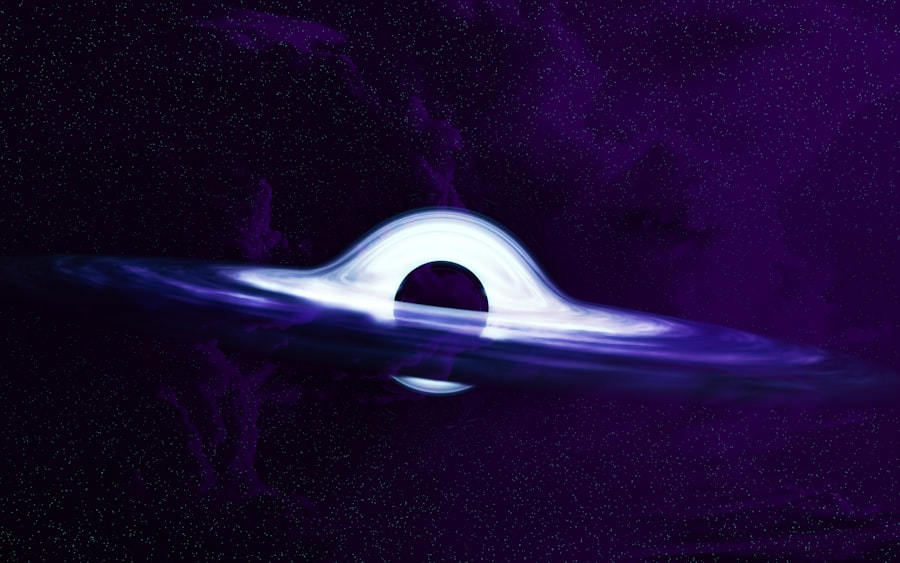
The concept of the WST, though abstract, has profound implications for understanding fundamental physics and could serve as a framework for future theories.
Quantum Field Theory Connection
In quantum field theory (QFT), particles are viewed as excitations of underlying quantum fields.
- Field Excitations as Worldlines: Each excitation, representing a particle, effectively traces out a worldline. The WST, in this context, would represent the collective dance of all these excitations within the various quantum fields.
- Interactions and Worldline Mergers: Particle interactions, such as emission, absorption, or collisions, can be visualized as points where worldlines merge, diverge, or exchange information within the WST. These interactions are fundamental to the dynamics of the universe.
Gravitational Theory and Spacetime Dynamics
The WST could offer a novel perspective on the interplay between matter, energy, and the geometry of spacetime.
- Self-Consistent Geometry: Instead of a static backdrop for worldlines, the WST could be seen as dynamically configuring its own geometry. The collective distribution and motion of all worldlines within the WST would dictate the curvature of spacetime, which in turn influences the future paths of those same worldlines. This creates a self-consistent, feedback loop fundamental to general relativity.
- The Universe as a Single Worldline: In an extreme, highly speculative interpretation, the entire universe itself, from the Big Bang to its ultimate fate, could be considered as a single, immensely complex “worldline” within a higher-dimensional meta-spacetime. This perspective offers a holistic view, integrating all physical processes into a single unbroken trajectory.
Potential for Unification Theories

One of the grand challenges in theoretical physics is to unify general relativity and quantum mechanics into a single, cohesive theory of quantum gravity. The WST might offer a conceptual bridge.
String Theory and Brane Worlds
String theory, a leading candidate for quantum gravity, posits that fundamental particles are not point-like but rather one-dimensional vibrating strings.
- Strings as Extended Worldlines: These strings, as they propagate through spacetime, effectively trace out two-dimensional “worldsheets.” The WST could then be reinterpreted as a tapestry woven from these worldsheets.
- Interactions through String Collisions: The interactions between strings, which give rise to all known forces and particles, would be manifestations of these worldsheets colliding, merging, and splitting within the broader structure of the WST. Consider the WST as a large, intricate loom where the threads are worldsheets, and their intersections and movements weave the fabric of reality.
- Branes and Higher Dimensions: In some extensions of string theory, called M-theory, the fundamental objects are not just strings but higher-dimensional “branes.” These branes would trace out even higher-dimensional world-volumes. The WST concept would then expand to encompass the collective dynamics of all these world-volumes across multiple dimensions.
Loop Quantum Gravity (LQG)
Loop Quantum Gravity, another approach to quantum gravity, attempts to quantize spacetime itself.
- Quantized Spacetime and Worldlines: In LQG, spacetime is envisioned as a network of discrete loops and nodes at the Planck scale. While not directly focusing on worldlines as continuous trajectories, the concept of a WST could provide a framework for understanding how fundamental excitations propagate through this quantized spacetime. Perhaps the WST would manifest as emergent paths within the incredibly fine-grained, granular structure of spacetime proposed by LQG.
The concept of the worldline spacetime tube offers fascinating insights into the nature of time and space, and it is closely related to the exploration of theoretical physics. For those interested in delving deeper into this topic, a related article can be found on My Cosmic Ventures, which discusses the implications of spacetime theories on our understanding of the universe. You can read more about it in this insightful piece here.
Philosophical and Metaphysical Considerations
| Metric | Description | Typical Values / Units |
|---|---|---|
| Worldline | The path that an object traces in 4-dimensional spacetime | Parametrized by proper time (seconds) |
| Spacetime Tube | A volume in spacetime representing the extended presence of an object over time | Cross-sectional area in spatial dimensions × time duration (m²·s) |
| Proper Time (τ) | Time measured by a clock moving with the object along its worldline | Seconds (s) |
| 4-Velocity (U^μ) | Rate of change of the object’s position in spacetime with respect to proper time | Dimensionless (normalized to speed of light) |
| 4-Acceleration (A^μ) | Rate of change of 4-velocity with respect to proper time | m/s² in spacetime context |
| Spacetime Interval (Δs²) | Invariant measure between two events on the worldline | Seconds squared (s²) or meters squared (m²) |
| Light Cone | Boundary defining causal structure around a point on the worldline | Defined by speed of light (c) |
Beyond the purely scientific implications, the Worldline Spacetime Tube concept invites profound philosophical and metaphysical reflections on the nature of reality, determinism, and the very existence of being.
Determinism vs. Free Will
If all worldlines are predetermined paths within the WST, what does this imply for free will?
- The Block Universe: The “block universe” interpretation view spacetime as a static, four-dimensional block where all events, past, present, and future, exist simultaneously. In this view, the WST would be a fixed, unchanging entity, and all individual worldlines would be pre-traced paths within it.
- Quantum Indeterminacy: However, quantum mechanics introduces inherent indeterminacy, suggesting that the future is not entirely predetermined at the microscopic level. The challenge lies in reconciling this quantum indeterminacy with the seemingly fixed nature of worldlines in a block universe. Perhaps the WST is not a rigid structure, but rather a dynamic, ever-evolving entanglement of probabilities until observation “collapses” certain realities.
The Nature of Time
The WST offers a perspective where time is not merely a relentless march forward but an integral, spatial-like dimension.
- Timelike Dimensions: Within the WST, the “flow” of time for an observer is simply their progression along their individual worldline. The past, present, and future are all “there” within the tube, analogous to how different points along a road are “there” even if you have yet to reach them.
- Emergence of Time: It could be argued that the very perception of sequential time emerges from the complex interactions and entanglements of worldlines within the WST. The feeling of “now” could be a local phenomenon arising from the specific configuration of worldlines at that instant.
The Multiverse Hypothesis
While not directly tied to the WST, the concept could be extended to encompass multiverse theories.
- Branching Worldlines: If the universe is one of many in a multiverse, then each possible outcome of a quantum event could correspond to a branching worldline, leading to different “universes” or “branches” within a larger, encompassing Worldline Spacetime Multitube. This expands the scope of the WST from a single universe to a vastly more complex, interwoven tapestry of all possible realities.
In conclusion, the Worldline Spacetime Tube, while a theoretical construct, provides a powerful metaphor and a potentially fruitful framework for understanding the fundamental nature of reality. From the individual trajectories of particles to the grand cosmic evolution, the WST offers a holistic perspective on the interconnectedness of all events in spacetime. Its exploration continues to challenge our understanding of physics, pushing the boundaries of our imagination and revealing the profound mysteries that remain at the heart of the universe.
WATCH THIS 🔥 YOUR PAST STILL EXISTS — Physics Reveals the Shocking Truth About Time
FAQs
What is a worldline in spacetime?
A worldline is the path that an object traces in 4-dimensional spacetime, representing its history as it moves through both space and time.
What does the term “spacetime tube” refer to?
A spacetime tube is a conceptual region around a worldline that encompasses all possible positions of an object over a period of time, accounting for uncertainties or physical dimensions.
How is a worldline spacetime tube used in physics?
It is used to model the trajectory of particles or objects in spacetime, helping to analyze their motion and interactions within the framework of relativity.
What is the significance of worldline spacetime tubes in relativity?
They help visualize and understand how objects move through spacetime, including effects like time dilation and length contraction, by considering the object’s extended presence rather than a single point.
Can worldline spacetime tubes be applied to quantum mechanics?
While primarily a concept in relativity, spacetime tubes can also be related to quantum mechanics when considering the probabilistic nature of particle positions and paths over time.