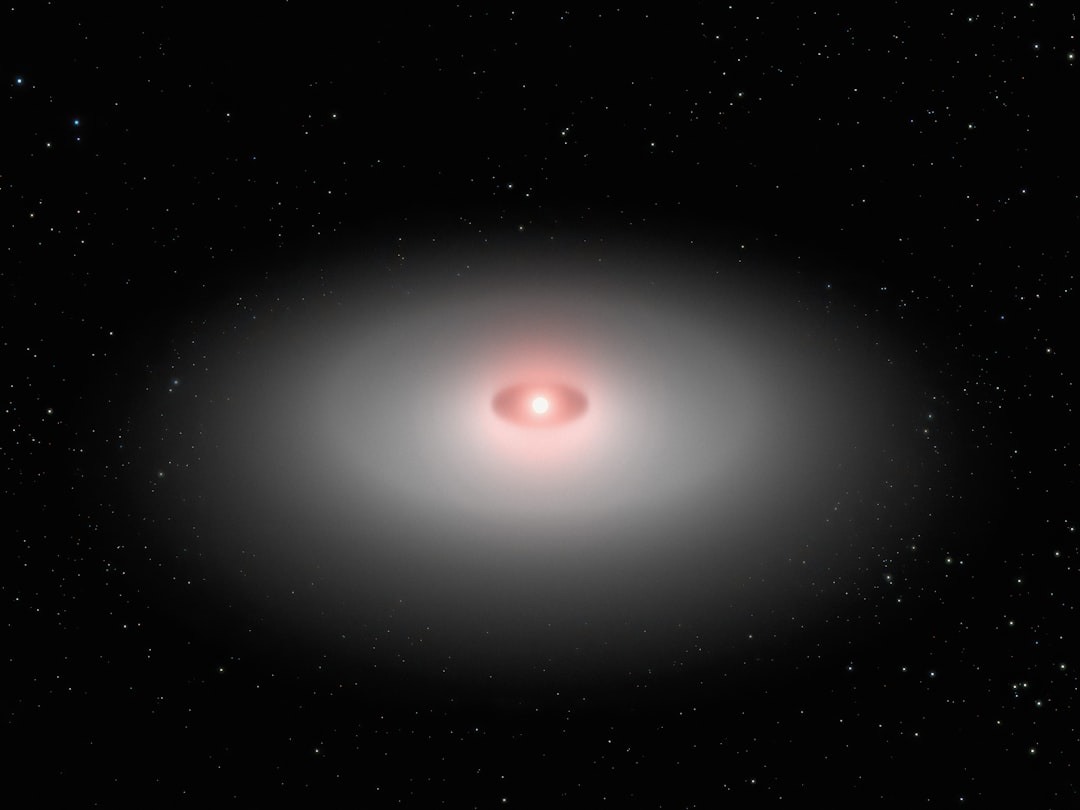
The Rubin Observatory, named after the renowned astronomer Vera Rubin, is poised to revolutionize the field of astrophysics with its ambitious mission. Located in the Andes Mountains of Chile, this state-of-the-art facility is designed to conduct a ten-year survey of the night sky, capturing unprecedented amounts of data that will deepen humanity’s understanding of the universe. The observatory’s primary goal is to explore the mysteries of dark energy and dark matter, but it also aims to shed light on other cosmic phenomena, including black holes.
By utilizing advanced technology and innovative methodologies, the Rubin Observatory seeks to answer some of the most profound questions about the cosmos. At the heart of its mission lies a commitment to collaboration and accessibility. The observatory is not only a hub for scientific research but also a platform for public engagement.
By making its findings available to researchers and enthusiasts alike, the Rubin Observatory aims to foster a global community of astronomers and astrophysicists. This inclusive approach ensures that discoveries made at the observatory will resonate far beyond its walls, inspiring future generations to explore the wonders of the universe.
Key Takeaways
- Rubin Observatory’s mission is to conduct a 10-year survey of the dynamic universe, providing unprecedented insight into the formation and evolution of galaxies, the changing sky, and the transient optical sky.
- Black holes are regions of spacetime where gravity is so strong that nothing, not even light, can escape from them. They form when massive stars collapse at the end of their life cycle.
- Rubin Observatory plays a crucial role in black hole research by using its advanced technology to observe and study the behavior of black holes and their surrounding environments.
- The observatory’s technology includes the Large Synoptic Survey Telescope (LSST), which will capture images of the entire southern sky every few nights, allowing for the detection of transient events such as black hole mergers and flares.
- Rubin Observatory collects data by mapping the universe in unprecedented detail, providing valuable information for understanding the distribution and behavior of black holes and other celestial objects.
Understanding Black Holes: What They Are and How They Form
Black holes are among the most enigmatic objects in the universe, characterized by their immense gravitational pull that nothing, not even light, can escape. They form from the remnants of massive stars that have exhausted their nuclear fuel. When such a star collapses under its own gravity, it can create a singularity—a point of infinite density—surrounded by an event horizon, which marks the boundary beyond which nothing can return.
This process can occur in various ways, including through supernova explosions or the merging of neutron stars. The study of black holes has evolved significantly over the years, transitioning from theoretical predictions to observational confirmations. The existence of black holes was first proposed in the early 20th century, but it wasn’t until the late 20th century that astronomers began to gather compelling evidence for their presence in the universe.
Today, black holes are classified into several categories, including stellar black holes, supermassive black holes found at the centers of galaxies, and intermediate black holes, which remain less understood. Each type offers unique insights into the nature of gravity and the evolution of cosmic structures.
The Role of Rubin Observatory in Black Hole Research
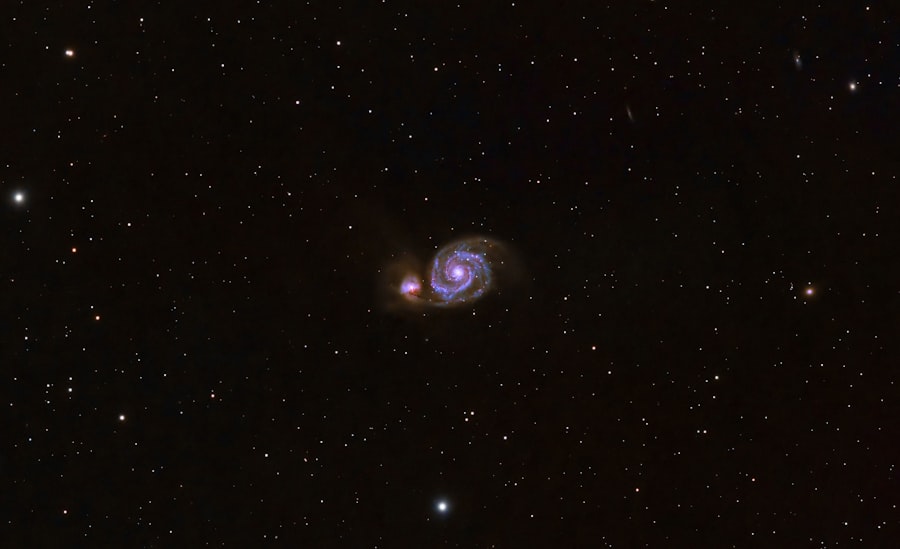
The Rubin Observatory plays a pivotal role in advancing black hole research by providing a comprehensive platform for observation and analysis. With its powerful telescope and wide-field imaging capabilities, the observatory is equipped to detect transient astronomical events that may indicate the presence of black holes. For instance, when a black hole consumes material from a companion star, it can emit powerful bursts of radiation that are detectable from Earth.
The observatory’s ability to monitor these events in real-time allows astronomers to study black holes in unprecedented detail. Moreover, the Rubin Observatory’s Legacy Survey of Space and Time (LSST) will generate an extensive database of astronomical observations over a decade. This wealth of data will enable researchers to identify patterns and anomalies associated with black holes, facilitating new discoveries and enhancing existing theories.
By systematically mapping the night sky, the observatory aims to uncover hidden black holes and provide insights into their formation and evolution within galaxies.
The Technology Behind Rubin Observatory’s Search for Black Holes
| Technology | Details |
|---|---|
| Telescope | 8.4-meter diameter mirror |
| Camera | 3.2-gigapixel camera |
| Data | 20 terabytes of data per night |
| Survey Area | 37 billion stars and galaxies |
| Observations | 10-year survey of the southern sky |
The technological advancements at the Rubin Observatory are integral to its mission of exploring black holes and other cosmic phenomena. At its core is the Large Synoptic Survey Telescope (LSST), which boasts an innovative design that allows for rapid imaging of large portions of the sky. Equipped with an 8.4-meter primary mirror and a state-of-the-art camera capable of capturing high-resolution images, the LSST can survey the entire visible sky every few nights.
This capability is crucial for detecting transient events associated with black holes. In addition to its impressive hardware, the observatory employs sophisticated software algorithms for data processing and analysis. These algorithms are designed to sift through vast amounts of information quickly, identifying potential black hole candidates based on their unique signatures.
The combination of cutting-edge technology and advanced computational techniques positions the Rubin Observatory at the forefront of black hole research, enabling scientists to make significant strides in understanding these mysterious entities.
Mapping the Universe: How Rubin Observatory Collects Data
The data collection process at the Rubin Observatory is a marvel of modern astronomy. Each night, as the telescope scans the sky, it captures millions of images that are then processed and analyzed by a team of scientists and engineers. The observatory’s wide-field camera can capture images covering an area equivalent to 40 times that of the full moon in a single exposure.
This efficiency allows for comprehensive mapping of celestial objects, including stars, galaxies, and potential black holes. Once collected, the data undergoes rigorous calibration and analysis to ensure accuracy and reliability. The observatory’s data management system is designed to handle petabytes of information, making it one of the largest astronomical databases in existence.
Researchers can access this wealth of data to conduct their studies, search for transient events, and explore various cosmic phenomena. The collaborative nature of this data-sharing initiative fosters innovation and encourages interdisciplinary research across astrophysics and related fields.
Challenges in Identifying Black Holes
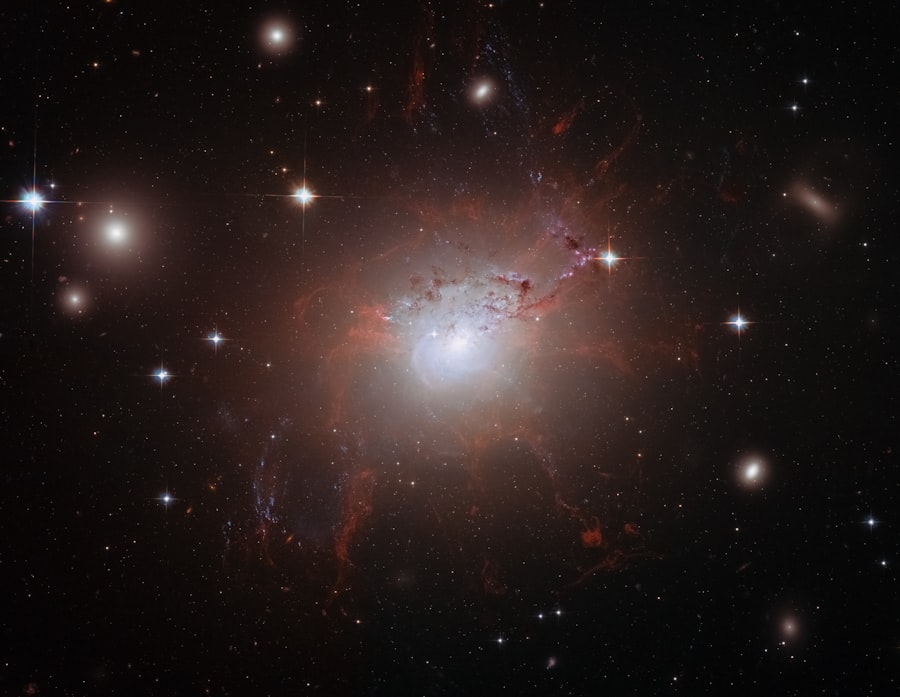
Despite advancements in technology and methodology, identifying black holes remains a formidable challenge for astronomers. One significant hurdle is that black holes do not emit light; instead, they are detected indirectly through their interactions with surrounding matter. This means that researchers must rely on observing phenomena such as X-ray emissions or gravitational waves produced during mergers to infer their presence.
Additionally, distinguishing between different types of black holes can be complex due to their diverse characteristics and behaviors. For instance, stellar black holes may exhibit different signatures compared to supermassive black holes found at galactic centers. The variability in their emissions can complicate detection efforts, requiring astronomers to develop sophisticated models and simulations to predict their behavior accurately.
As such, ongoing research at institutions like the Rubin Observatory is essential for overcoming these challenges and enhancing our understanding of black holes.
The Impact of Black Hole Research on our Understanding of the Universe
Research on black holes has profound implications for our understanding of fundamental physics and cosmology. These enigmatic objects serve as natural laboratories for testing theories related to gravity, quantum mechanics, and general relativity. For instance, studying how matter behaves in extreme gravitational fields can provide insights into the nature of spacetime itself.
Moreover, black holes play a crucial role in galaxy formation and evolution. Supermassive black holes at galactic centers influence star formation rates and drive galactic dynamics through their gravitational pull. Understanding these interactions can help astronomers piece together the history of galaxies and their development over cosmic time.
As research progresses at facilities like the Rubin Observatory, it is expected that new discoveries will continue to reshape our understanding of both black holes and the universe as a whole.
Collaborative Efforts: Rubin Observatory’s Partnerships in Black Hole Research
The success of black hole research at the Rubin Observatory is bolstered by collaborative efforts with various institutions and organizations worldwide. By partnering with universities, research centers, and international space agencies, the observatory fosters an environment conducive to innovation and discovery.
One notable partnership involves collaborations with gravitational wave observatories such as LIGO (Laser Interferometer Gravitational-Wave Observatory) and Virgo. By combining data from these facilities with observations from the Rubin Observatory, researchers can gain a more comprehensive understanding of black hole mergers and their associated gravitational waves. Such interdisciplinary approaches are essential for unraveling the complexities surrounding black holes and advancing astrophysical knowledge.
Future Discoveries: What We Hope to Learn from Rubin Observatory’s Work
As the Rubin Observatory embarks on its decade-long survey mission, astronomers are filled with anticipation regarding potential discoveries related to black holes. One area of interest is identifying previously undetected stellar black holes within our galaxy. By analyzing data from transient events such as gamma-ray bursts or X-ray flares, researchers hope to uncover new candidates that could provide insights into stellar evolution and mass distribution.
Additionally, there is great excitement surrounding the possibility of observing supermassive black hole mergers across cosmic time scales. These events could shed light on how galaxies evolve and interact over billions of years. The ability to monitor these phenomena in real-time will undoubtedly enhance our understanding of both individual black holes and their broader implications for cosmic structure formation.
Theoretical Implications: How Black Hole Research Shapes Astrophysics
The study of black holes has far-reaching theoretical implications that extend beyond observational astronomy. As researchers delve deeper into understanding these objects, they are forced to confront fundamental questions about gravity, spacetime, and quantum mechanics. For instance, exploring how information behaves near a black hole’s event horizon challenges existing paradigms in theoretical physics.
Moreover, advancements in black hole research have prompted scientists to reconsider established theories such as Hawking radiation and information paradoxes. These discussions have sparked new lines of inquiry that could lead to groundbreaking developments in our understanding of fundamental forces governing the universe. As findings emerge from institutions like the Rubin Observatory, they will likely contribute significantly to ongoing debates within theoretical astrophysics.
Engaging the Public: Sharing Rubin Observatory’s Black Hole Discoveries with the World
The Rubin Observatory recognizes that engaging the public is vital for fostering interest in science and astronomy. Through outreach programs, educational initiatives, and public lectures, the observatory aims to share its discoveries related to black holes with audiences around the globe. By making complex scientific concepts accessible to non-experts, they hope to inspire curiosity about the universe.
Additionally, advancements in technology allow for innovative ways to present findings visually through interactive platforms or virtual reality experiences.
By sharing knowledge about black holes—one of nature’s most fascinating phenomena—the Rubin Observatory seeks to ignite passion for exploration among people from all walks of life.
In conclusion, as it embarks on its mission over the next decade, the Rubin Observatory stands at the forefront of astronomical research with its focus on black holes among other cosmic phenomena. Through cutting-edge technology, collaborative efforts, and a commitment to public engagement, it aims not only to uncover new knowledge but also inspire future generations about our universe’s mysteries.
The Rubin Observatory is set to revolutionize our understanding of black holes through its advanced survey capabilities, which will allow astronomers to detect and study these enigmatic objects in unprecedented detail. For more insights into the methodologies and technologies that will be employed in this groundbreaking research, you can read a related article on this topic at My Cosmic Ventures.
WATCH THIS! The Invisible Threat: A Rogue Black Hole Headed for Our Solar System?
FAQs
What is the Rubin Observatory?
The Rubin Observatory, formerly known as the Large Synoptic Survey Telescope (LSST), is a ground-based telescope facility currently under construction in Chile. It is designed to conduct a 10-year survey of the sky, capturing images of the entire visible sky every few nights.
How will the Rubin Observatory find black holes?
The Rubin Observatory will use its powerful telescope and advanced camera system to capture images of the night sky. By observing the movements and interactions of celestial objects, such as stars and galaxies, the observatory will be able to identify potential black hole candidates based on their gravitational effects on surrounding matter.
What technology will the Rubin Observatory use to detect black holes?
The Rubin Observatory will utilize a combination of advanced imaging technology, including a 3.2-gigapixel camera, and sophisticated data analysis techniques to identify potential black holes. It will also monitor the variability of celestial objects over time, which can indicate the presence of black holes.
What are the potential benefits of finding black holes using the Rubin Observatory?
The discovery and study of black holes can provide valuable insights into the fundamental nature of the universe, including the behavior of gravity, the evolution of galaxies, and the formation of massive celestial objects. Additionally, understanding black holes can contribute to advancements in astrophysics and cosmology.