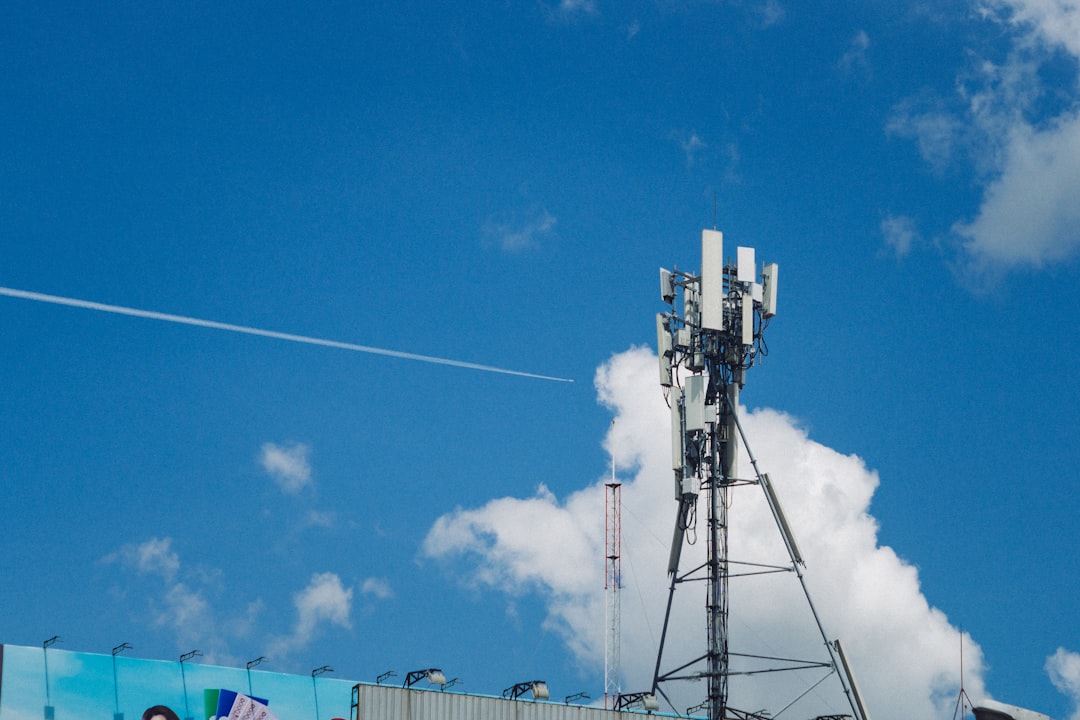
Deep Space Network (DSN) communication functions as the essential infrastructure for interplanetary exploration, facilitating data transmission between Earth and spacecraft in distant regions of space. The system comprises specialized antennas and communication technologies that enable scientists and engineers to maintain contact with missions operating beyond Earth’s vicinity. Through the DSN, mission controllers receive critical telemetry, transmit operational commands, and collect scientific data from spacecraft traversing the solar system.
The DSN operates through three primary facilities strategically positioned approximately 120 degrees apart around the globe—in Goldstone, California; Madrid, Spain; and Canberra, Australia. This geographical distribution ensures continuous communication with spacecraft regardless of Earth’s rotation. As missions venture farther into space, the DSN must overcome significant challenges, including signal attenuation, light-time delays, and bandwidth limitations.
The network’s capabilities continue to evolve with technological advancements, incorporating higher-frequency communications, improved signal processing, and enhanced data compression techniques. These innovations support increasingly ambitious missions, enabling higher data rates and more complex scientific operations at unprecedented distances from Earth.
Key Takeaways
- The Deep Space Network (DSN) is crucial for maintaining communication with spacecraft exploring distant regions of space.
- DSN has evolved significantly since its inception, enabling more complex and far-reaching space missions.
- It operates through a global array of large antennas that send and receive signals across vast interplanetary distances.
- Challenges include signal delay, weak transmissions, and the need for precise tracking and data processing.
- International collaboration and technological advancements are key to the future success and expansion of DSN capabilities.
The History and Development of Deep Space Network Communication
The origins of deep space communication can be traced back to the early days of space exploration in the 1950s. As the first artificial satellites were launched, it became evident that a robust communication system was necessary to monitor their trajectories and collect scientific data. The establishment of the DSN was a response to this need, with NASA officially launching the network in 1963.
Initially, the DSN consisted of three ground stations located in California, Spain, and Australia, strategically positioned to provide continuous coverage as Earth rotated. Over the decades, the DSN has undergone significant advancements in technology and infrastructure.
The network has expanded to include more ground stations and upgraded equipment, allowing for higher bandwidth communication and more reliable connections with spacecraft. This development has been crucial for missions such as Voyager, Mars rovers, and various interplanetary probes that require constant communication with Earth.
The Role of Deep Space Network Communication in Space Exploration

Deep Space Network communication plays a pivotal role in facilitating space exploration missions. It serves as the primary means through which scientists receive data from spacecraft exploring other planets, moons, and celestial bodies. For instance, when NASA’s Perseverance rover landed on Mars in February 2021, it relied on the DSN to transmit images, scientific measurements, and other critical information back to mission control.
This real-time data exchange allows researchers to make informed decisions about the rover’s operations and adjust its mission objectives based on findings. Moreover, the DSN is essential for ensuring the safety and success of space missions. By maintaining constant communication with spacecraft, mission control teams can monitor their health and status, sending commands to adjust trajectories or troubleshoot issues as they arise.
This capability is particularly vital for missions that venture into uncharted territories or operate in harsh environments, where conditions can change rapidly. The DSN’s ability to provide reliable communication channels enhances mission resilience and increases the likelihood of successful outcomes.
How Deep Space Network Communication Works
The operation of Deep Space Network communication relies on a sophisticated array of technologies designed to transmit and receive signals over vast distances. At its core, the DSN consists of large parabolic antennas that can track spacecraft as they move across the sky. These antennas are equipped with advanced radio frequency systems capable of sending and receiving signals that travel at the speed of light.
The signals are modulated to carry data, which can include telemetry information, scientific observations, and commands from mission control. Once a signal is received by a DSN antenna, it undergoes a series of processing steps to extract the information contained within it. This involves demodulating the signal, filtering out noise, and converting it into a format that scientists can analyze.
The processed data is then transmitted to mission control centers where teams can interpret the findings and make decisions regarding the spacecraft’s operations. This intricate process allows for seamless communication between Earth and distant spacecraft, ensuring that valuable scientific data is collected and utilized effectively.
The Challenges of Deep Space Network Communication
| Metric | Description | Typical Value | Unit |
|---|---|---|---|
| Frequency Bands | Radio frequency bands used for communication | X-band, Ka-band | GHz |
| Data Rate | Maximum data transmission rate | Up to 622 | Mbps |
| Signal Latency | Time delay for signal to travel to deep space probes | Up to 20 | minutes (one-way) |
| Antenna Diameter | Size of main DSN antennas | 34, 70 | meters |
| Transmit Power | Power used to send signals to spacecraft | Up to 400 | kW |
| Number of Complexes | DSN ground stations worldwide | 3 | locations |
| Coverage | Percentage of time continuous communication is possible | 99 | % |
Despite its remarkable capabilities, Deep Space Network communication faces several challenges that can impact its effectiveness. One significant issue is the vast distances involved in deep space missions. As spacecraft travel farther from Earth, signals take longer to reach their destination, resulting in increased latency in communication.
For example, a signal sent from Mars can take anywhere from 4 to 24 minutes to reach Earth, depending on their relative positions in their orbits. This delay can complicate real-time decision-making and requires mission planners to anticipate potential issues well in advance. Another challenge is the interference caused by cosmic phenomena and terrestrial obstacles.
Signals traveling through space can be affected by solar flares, cosmic radiation, and other environmental factors that may distort or weaken them. Additionally, ground-based obstacles such as mountains or buildings can obstruct signals between antennas and spacecraft. To mitigate these challenges, engineers continuously work on improving signal processing techniques and developing more resilient communication systems that can adapt to varying conditions.
The Future of Deep Space Network Communication

As humanity’s ambitions in space exploration continue to grow, so too does the need for advanced deep space communication systems. The future of Deep Space Network communication will likely involve significant technological innovations aimed at enhancing data transmission capabilities and reducing latency. One promising area of development is optical communication, which utilizes lasers instead of traditional radio waves to transmit data.
This method has the potential to increase bandwidth dramatically, allowing for faster data transfer rates between Earth and distant spacecraft. Moreover, advancements in artificial intelligence (AI) could play a crucial role in optimizing communication processes within the DSN. AI algorithms could analyze incoming data more efficiently, identify anomalies in signals, and even predict potential issues before they arise.
By integrating AI into deep space communication systems, mission control teams could enhance their ability to respond quickly to challenges and make informed decisions based on real-time data analysis.
Deep Space Network Communication and International Collaboration
Deep Space Network communication is not solely a national endeavor; it represents a collaborative effort among various countries and organizations dedicated to exploring space. Many international missions rely on the DSN for communication support, fostering partnerships that transcend borders. For instance, NASA collaborates with agencies such as the European Space Agency (ESA) and the Indian Space Research Organisation (ISRO) on joint missions that require shared access to deep space communication resources.
This spirit of collaboration extends beyond mere technical support; it also promotes knowledge sharing and joint scientific endeavors. By pooling resources and expertise, international partners can tackle complex challenges associated with deep space exploration more effectively. The DSN serves as a vital link in these collaborative efforts, enabling seamless communication between diverse teams working towards common goals in understanding our universe.
The Impact of Deep Space Network Communication on Scientific Discoveries
The contributions of Deep Space Network communication to scientific discoveries are profound and far-reaching. By facilitating real-time data transmission from distant spacecraft, the DSN has enabled scientists to make groundbreaking discoveries about our solar system and beyond. For example, data collected from NASA’s New Horizons mission provided unprecedented insights into Pluto’s geology and atmosphere during its flyby in 2015.
The ability to communicate effectively with such distant probes allowed researchers to analyze data quickly and share findings with the global scientific community. Furthermore, the DSN has played a crucial role in advancing our understanding of planetary science, astrobiology, and astrophysics. Missions like Mars Science Laboratory have provided invaluable information about Mars’ surface conditions and potential habitability through continuous data transmission facilitated by the DSN.
Each successful mission adds another layer of knowledge about our universe, demonstrating how essential deep space communication is for scientific progress.
Deep Space Network Communication and the Search for Extraterrestrial Life
The quest for extraterrestrial life is one of humanity’s most profound scientific pursuits, and Deep Space Network communication plays an integral role in this endeavor. As missions explore potentially habitable environments on other planets or moons—such as Europa or Enceladus—the ability to communicate findings back to Earth becomes paramount. The DSN enables scientists to analyze data related to atmospheric composition, surface conditions, and geological activity that could indicate signs of life.
Moreover, initiatives like SETI (Search for Extraterrestrial Intelligence) utilize advanced deep space communication technologies to listen for potential signals from intelligent civilizations beyond our planet. The DSN’s capabilities allow researchers to monitor vast swathes of radio frequencies for any unusual patterns that might suggest extraterrestrial communications. In this way, deep space communication not only supports exploration but also fuels humanity’s curiosity about its place in the cosmos.
The Importance of Deep Space Network Communication for Space Missions
Deep Space Network communication is indispensable for the success of modern space missions. Without reliable communication channels, spacecraft would operate in isolation, making it nearly impossible for mission control teams to monitor their status or respond effectively to challenges encountered during their journeys. The DSN ensures that critical telemetry data is transmitted back to Earth so that engineers can assess spacecraft health and performance continuously.
Additionally, effective communication allows for timely adjustments to mission plans based on real-time observations. For instance, if a spacecraft encounters unexpected conditions or anomalies during its mission—such as an unanticipated dust storm on Mars—mission planners can quickly adapt strategies based on incoming data from the DSN. This flexibility enhances mission success rates and maximizes scientific returns from each exploration endeavor.
The Ongoing Evolution of Deep Space Network Communication
In conclusion, Deep Space Network communication stands as a testament to humanity’s relentless pursuit of knowledge beyond our planet. From its humble beginnings in the 1960s to its current status as a sophisticated network supporting numerous interplanetary missions, the DSN has evolved significantly over time. As technology continues to advance, so too will the capabilities of deep space communication systems.
The future promises exciting developments that will further enhance our ability to explore the cosmos—whether through improved data transmission methods or international collaborations that unite scientists across borders. As humanity embarks on new missions into uncharted territories—such as crewed missions to Mars or explorations of distant exoplanets—the importance of robust deep space communication will only grow stronger. Ultimately, it is through these ongoing advancements that humanity will continue its journey into the unknown realms of space exploration.
The Deep Space Network (DSN) plays a crucial role in facilitating communication with spacecraft exploring the far reaches of our solar system. For a deeper understanding of the challenges and advancements in this field, you can read more in the article available at this link. This resource provides insights into the technology and strategies employed to maintain contact with distant missions, ensuring that we continue to receive valuable data from our explorations of deep space.
FAQs
What is the Deep Space Network (DSN)?
The Deep Space Network (DSN) is a worldwide network of large antennas and communication facilities that support interplanetary spacecraft missions, as well as some Earth-orbiting missions. It is managed by NASA’s Jet Propulsion Laboratory (JPL).
How does the Deep Space Network communicate with spacecraft?
The DSN uses large parabolic dish antennas to send and receive radio signals to and from spacecraft. These signals carry commands to the spacecraft and transmit scientific data and telemetry back to Earth.
Where are the DSN facilities located?
The DSN has three main complexes located approximately 120 degrees apart around the globe to provide continuous communication coverage: in Goldstone, California (USA); near Madrid, Spain; and near Canberra, Australia.
Why are the DSN antennas so large?
The antennas are large, typically 34 to 70 meters in diameter, to capture the very weak signals sent from distant spacecraft and to transmit signals over vast distances in space with sufficient power.
What types of missions does the DSN support?
The DSN supports a variety of missions including Mars rovers, outer planet probes, deep space observatories, and interstellar missions like Voyager. It also supports some Earth-orbiting satellites.
How does the DSN handle communication delays?
Because signals travel at the speed of light, there can be significant delays (minutes to hours) depending on the spacecraft’s distance. The DSN and mission teams plan commands and data transmissions accordingly, often using autonomous spacecraft systems.
Is the Deep Space Network used for human spaceflight communication?
While the DSN primarily supports robotic missions, it has also been used to support communication with crewed missions beyond low Earth orbit, such as the Apollo missions to the Moon.
How is the DSN evolving to meet future needs?
NASA is upgrading DSN antennas with advanced technologies like higher frequency bands, improved receivers, and automation to handle increased data rates and support upcoming missions to the Moon, Mars, and beyond.
Can the public access data from the DSN?
Data received by the DSN is typically processed and distributed by mission teams and NASA centers. Some mission data is made publicly available through NASA’s archives and websites.
What challenges does the DSN face?
Challenges include managing increasing demand for communication time, mitigating radio frequency interference, maintaining aging infrastructure, and upgrading technology to support higher data rates and new mission requirements.