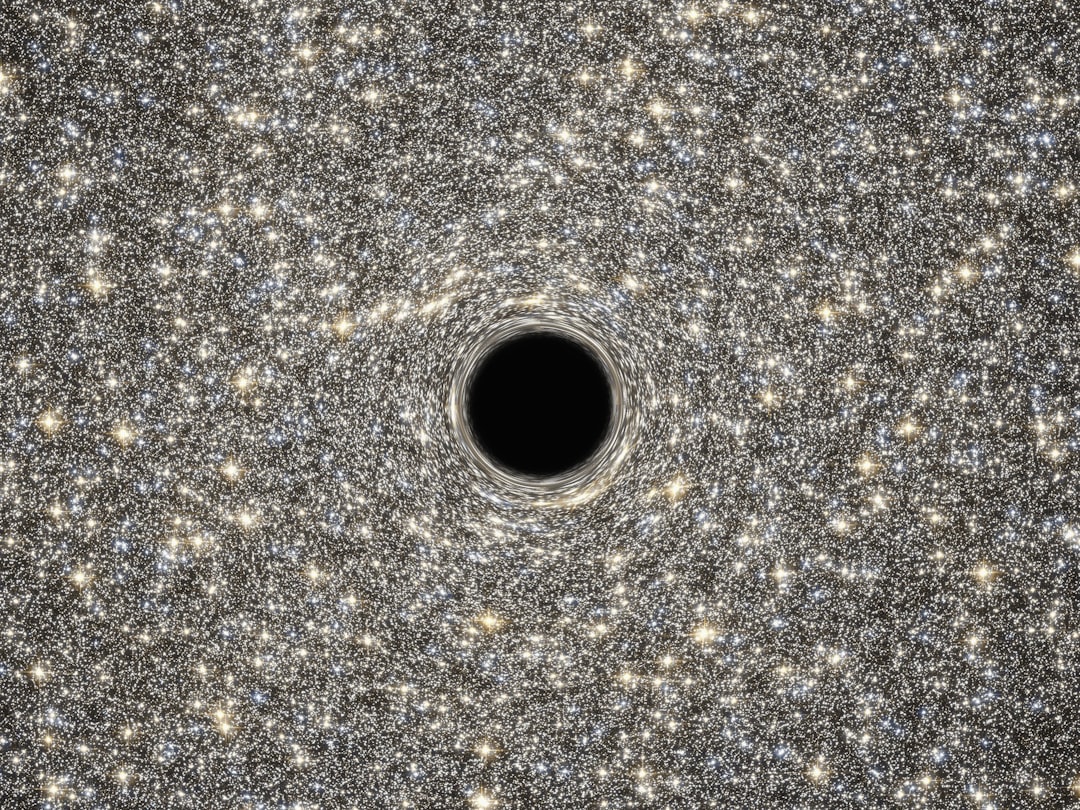
Black holes have long captivated the imagination of scientists and the general public alike, serving as a profound enigma in the realm of astrophysics. These cosmic phenomena, regions in space where the gravitational pull is so intense that nothing, not even light, can escape, challenge the very fabric of our understanding of the universe. The term “black hole” was first coined in the 1960s, but the concept has roots that trace back to the early 18th century when the British natural philosopher John Michell speculated about “dark stars.” Since then, black holes have evolved from theoretical curiosities into essential components of modern astrophysics, influencing theories about the nature of space, time, and gravity.
The allure of black holes lies not only in their mysterious nature but also in their implications for the universe. They serve as laboratories for testing the laws of physics under extreme conditions, pushing the boundaries of what is known. As researchers delve deeper into the study of black holes, they uncover insights that could reshape our understanding of fundamental concepts such as time, causality, and the very structure of reality itself.
The journey into the heart of black holes is not merely an exploration of cosmic oddities; it is a quest to unravel some of the most profound questions about existence and the universe.
Key Takeaways
- Black holes form from the collapse of massive stars and have a boundary called the event horizon beyond which nothing can escape.
- Gravity inside black holes is so intense that it creates a singularity, a point of infinite density.
- Hawking radiation suggests black holes can emit particles and slowly lose mass over time.
- The information paradox challenges our understanding of how information behaves in black holes, linking quantum mechanics and general relativity.
- Advances in telescopes and gravitational wave detection are enhancing our ability to observe and study black holes.
The Formation of Black Holes
The formation of black holes is a complex process that typically begins with the life cycle of massive stars. When a star exhausts its nuclear fuel, it can no longer support itself against gravitational collapse. For stars with a mass greater than approximately three solar masses, this collapse leads to a supernova explosion, an event that can outshine entire galaxies for a brief period.
What remains after this cataclysmic event is a core that may collapse into a black hole. This process illustrates how black holes are born from the remnants of stellar evolution, marking a dramatic end to a star’s life. In addition to stellar black holes, there are also supermassive black holes, which reside at the centers of most galaxies, including our own Milky Way.
These giants can have masses equivalent to millions or even billions of suns. Their formation is still a subject of intense research and debate among astrophysicists. Some theories suggest that they may form from the merging of smaller black holes or from the direct collapse of massive gas clouds in the early universe.
Understanding how these supermassive entities come into existence is crucial for piecing together the history and evolution of galaxies themselves.
The Event Horizon and Singularity
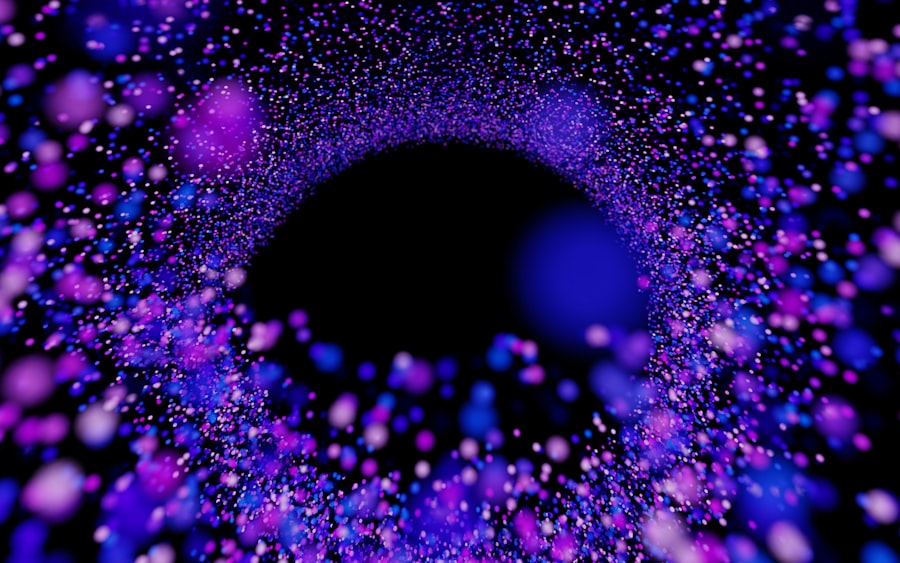
At the heart of every black hole lies a boundary known as the event horizon, which marks the point beyond which nothing can escape the gravitational pull of the black hole. This boundary is not a physical surface but rather a mathematical construct that defines the limits of observable effects caused by the black hole.
The event horizon thus serves as a one-way barrier, beyond which information cannot escape to be observed by an outside observer. The singularity itself presents profound challenges to physicists. It represents a breakdown in our understanding of space and time, where conventional theories fail to provide answers.
The nature of singularities raises questions about what happens to matter and energy when they are compressed to such extremes. Some theorists propose that quantum mechanics may play a role in understanding singularities, suggesting that new physics may emerge at these critical points. The interplay between general relativity and quantum mechanics remains one of the most significant challenges in modern theoretical physics.
The Role of Gravity in Black Holes
| Metric | Description | Value/Range | Unit |
|---|---|---|---|
| Gravitational Force | Force exerted by the black hole’s mass on nearby objects | Up to 10^39 | Newtons (N) |
| Event Horizon Radius (Schwarzschild Radius) | Radius at which escape velocity equals the speed of light | 3 to 30,000 | Kilometers (km) (varies by black hole mass) |
| Mass | Mass of the black hole influencing gravitational strength | 5 to 10^10 | Solar Masses (M☉) |
| Escape Velocity | Velocity needed to escape the gravitational pull | 299,792 | Kilometers per second (km/s) |
| Gravitational Time Dilation | Effect of gravity on the passage of time near the black hole | Up to infinite (at event horizon) | Time ratio (relative to distant observer) |
| Spacetime Curvature | Degree of bending of spacetime caused by black hole’s gravity | Extremely high near singularity | Dimensionless (curvature scalar) |
Gravity is the fundamental force that governs the behavior of black holes, dictating their formation, structure, and interactions with surrounding matter. According to Einstein’s theory of general relativity, gravity is not merely a force but a curvature of spacetime caused by mass. In the case of black holes, this curvature becomes so pronounced that it creates a region from which nothing can escape.
The immense gravitational pull of black holes influences nearby stars and gas clouds, often leading to phenomena such as accretion disks—disks of material spiraling into the black hole—and relativistic jets that can extend for thousands of light-years.
Supermassive black holes at galactic centers are thought to regulate star formation and galaxy dynamics through their gravitational pull.
As matter falls into a black hole, it releases energy in the form of radiation, which can affect surrounding regions and contribute to galactic evolution. Thus, black holes are not isolated entities but integral components of the cosmic tapestry.
Hawking Radiation and Black Hole Thermodynamics
In 1974, physicist Stephen Hawking proposed a groundbreaking theory that introduced the concept of Hawking radiation, suggesting that black holes are not entirely black but can emit radiation due to quantum effects near the event horizon. This phenomenon arises from virtual particle-antiparticle pairs that spontaneously form in empty space. If one particle falls into the black hole while its counterpart escapes, it results in a net loss of mass for the black hole over time.
This revelation led to profound implications for our understanding of black hole thermodynamics and their eventual fate. Hawking’s work bridged concepts from thermodynamics and quantum mechanics, leading to intriguing discussions about entropy and information loss in black holes. The idea that black holes could emit radiation implies that they might eventually evaporate completely over astronomical timescales.
This challenges traditional notions about conservation laws and raises questions about what happens to information when it falls into a black hole—a topic that continues to spark debate among physicists today.
Spaghettification: The Effects of Tidal Forces
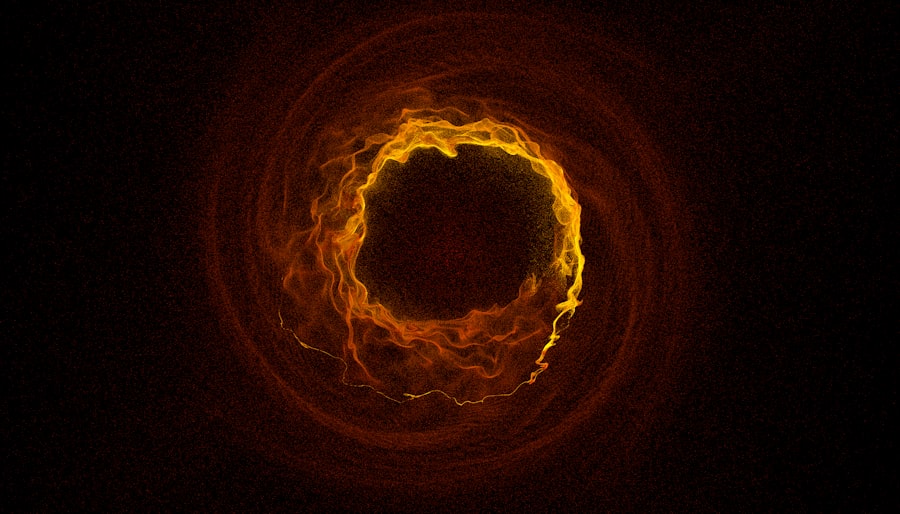
One of the most dramatic effects experienced by objects approaching a black hole is known as spaghettification—a term that vividly describes what happens when tidal forces stretch an object into long, thin shapes resembling spaghetti. As an object nears a black hole, the gravitational pull on its nearest side becomes significantly stronger than on its farthest side due to the steep gradient in gravitational force near the event horizon. This differential force can lead to extreme stretching and compression, ultimately tearing apart even massive celestial bodies.
Spaghettification serves as a stark reminder of the extreme conditions present near black holes. For instance, an astronaut venturing too close would experience this phenomenon long before reaching the event horizon. The experience would be both fascinating and terrifying; while they might witness incredible cosmic sights, they would also be subjected to forces that would ultimately lead to their demise.
Such extreme tidal forces highlight not only the dangers posed by black holes but also their unique ability to warp spacetime itself.
Quantum Mechanics and Black Holes
The intersection between quantum mechanics and black holes presents one of the most significant challenges in theoretical physics today. While general relativity provides a robust framework for understanding gravity on large scales, it does not account for quantum effects that govern subatomic particles. This discrepancy becomes particularly pronounced when considering phenomena such as Hawking radiation and singularities within black holes.
Researchers are actively exploring ways to reconcile these two seemingly incompatible theories. One approach involves developing a theory of quantum gravity that could unify general relativity with quantum mechanics. Various candidates for such a theory exist, including string theory and loop quantum gravity, each offering different perspectives on how gravity operates at quantum scales.
Understanding how quantum mechanics influences black holes could lead to breakthroughs in comprehending fundamental aspects of reality, including time itself and the nature of spacetime.
Information Paradox and Black Holes
The information paradox is one of the most perplexing issues arising from the study of black holes and their relationship with quantum mechanics. According to quantum theory, information cannot be destroyed; however, if matter falls into a black hole and eventually evaporates through Hawking radiation, it raises questions about what happens to that information. Does it simply vanish forever? Or is there a mechanism by which it can be recovered? This paradox has sparked intense debate among physicists and has led to various proposed solutions. Some theorists suggest that information may be encoded on the event horizon itself or stored in subtle correlations within Hawking radiation. Others propose that new physics may emerge at or near singularities that could allow for information retrieval in ways not yet understood. The resolution of this paradox could have profound implications for our understanding of reality and may lead to new insights into how information is processed in quantum systems.
Black Holes and the Theory of General Relativity
Black holes serve as one of the most striking predictions of Einstein’s theory of general relativity, which revolutionized our understanding of gravity over a century ago. General relativity describes gravity as a curvature in spacetime caused by mass, leading to predictions about how massive objects interact with one another. Black holes represent extreme manifestations of this curvature, where spacetime becomes so warped that it creates regions from which nothing can escape.
The study of black holes has provided critical tests for general relativity under extreme conditions. Observations such as gravitational waves from colliding black holes have confirmed many predictions made by Einstein’s theory, reinforcing its validity even in scenarios where traditional physics breaks down. As researchers continue to explore these enigmatic objects, they not only deepen their understanding of gravity but also probe fundamental questions about spacetime itself.
Observing Black Holes: Telescopes and Gravitational Waves
Despite their elusive nature, astronomers have developed innovative techniques for observing black holes indirectly through their interactions with surrounding matter and radiation. Telescopes equipped with advanced imaging technology can capture high-energy emissions from accretion disks around black holes or detect X-rays emitted as matter spirals inward. Additionally, recent advancements in gravitational wave astronomy have opened new avenues for studying these cosmic giants by detecting ripples in spacetime caused by merging black holes.
The Event Horizon Telescope (EHT) project made headlines in 2019 when it captured the first-ever image of a black hole’s shadow at the center of galaxy M87. This groundbreaking achievement marked a significant milestone in astrophysics and demonstrated how collaborative efforts across global observatories can yield remarkable insights into these enigmatic objects. As technology continues to advance, astronomers anticipate even more detailed observations that will enhance our understanding of black holes and their role in shaping galaxies.
The Future of Black Hole Research
The future of black hole research promises exciting developments as scientists continue to push the boundaries of knowledge in astrophysics. Ongoing missions such as NASA’s James Webb Space Telescope aim to explore distant galaxies and potentially uncover new insights into supermassive black holes’ formation and evolution over cosmic time scales. Additionally, advancements in gravitational wave detection will likely lead to more discoveries regarding binary black hole systems and their interactions.
As researchers grapple with unresolved questions surrounding quantum mechanics and information loss associated with black holes, interdisciplinary collaboration will be crucial for making progress in this field. The quest to understand these cosmic enigmas not only deepens humanity’s comprehension of fundamental physics but also inspires future generations to explore the mysteries of our universe further. With each discovery made about black holes, scientists inch closer to unraveling some of nature’s most profound secrets—secrets that could redefine humanity’s place within the cosmos itself.
Recent advancements in our understanding of black hole interiors have sparked significant interest in the field of theoretical physics. One particularly insightful article that delves into the complexities of these enigmatic regions is available at this link. It explores the implications of quantum mechanics and general relativity on the structure of black holes, shedding light on the mysteries that lie within their event horizons.
WATCH THIS! The Paradox That Broke Physics: Quantum vs. Black Holes
FAQs
What is the interior of a black hole?
The interior of a black hole refers to the region inside its event horizon, where gravity is so strong that nothing, not even light, can escape. This region includes the singularity, a point where density and gravitational forces become infinite according to classical physics.
What happens to matter inside a black hole?
Matter that crosses the event horizon is pulled inexorably toward the singularity due to intense gravitational forces. According to general relativity, it is crushed to an infinitely small point, but the exact physical processes remain uncertain due to the breakdown of known physics at the singularity.
Can we observe the interior of a black hole?
No, the interior of a black hole cannot be observed directly because the event horizon prevents any information or light from escaping. Our understanding relies on theoretical models and indirect observations of black hole effects on surrounding matter.
What is the singularity inside a black hole?
The singularity is a theoretical point at the center of a black hole where gravitational forces cause matter to have infinite density and zero volume. It represents a breakdown of classical physics, and its true nature is a subject of ongoing research in quantum gravity.
How does general relativity describe black hole interiors?
General relativity predicts that inside the event horizon, spacetime is curved so extremely that all paths lead toward the singularity. Time and space coordinates switch roles, making the singularity an inevitable future for anything inside the horizon.
Are there different types of black hole interiors?
Yes, the interior structure can vary depending on the black hole type. For example, rotating (Kerr) black holes have more complex interiors with features like inner horizons and ring singularities, while charged (Reissner-Nordström) black holes have different internal horizons.
What role does quantum mechanics play in black hole interiors?
Quantum mechanics is expected to modify the classical picture of black hole interiors, potentially resolving singularities and explaining information retention. However, a complete theory of quantum gravity that fully describes black hole interiors is still under development.
Why is studying black hole interiors important?
Studying black hole interiors helps physicists understand the fundamental laws of gravity, quantum mechanics, and spacetime. Insights gained may lead to breakthroughs in unifying these theories and understanding the universe’s most extreme environments.