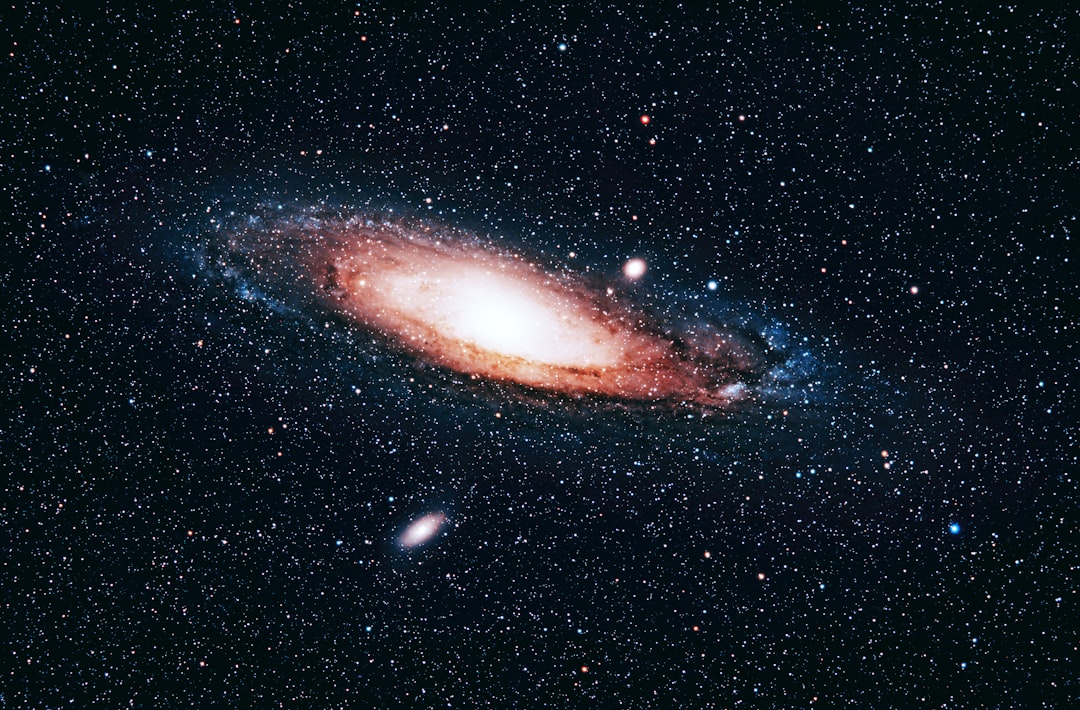
The past hypothesis is a pivotal concept in cosmology that seeks to explain the nature of time and the universe’s evolution. It posits that the universe began in a highly ordered state, characterized by low entropy, which has since evolved into the more disordered state observed today. This hypothesis serves as a foundation for understanding the directionality of time and the progression of cosmic events.
By examining the past hypothesis, cosmologists aim to unravel the mysteries surrounding the universe’s origins and its eventual fate. The significance of the past hypothesis extends beyond mere theoretical musings; it challenges scientists to reconcile the laws of thermodynamics with the observable universe. The second law of thermodynamics states that entropy, or disorder, tends to increase over time.
As researchers delve deeper into this hypothesis, they uncover insights that could reshape humanity’s understanding of time, existence, and the cosmos itself.
Key Takeaways
- The Past Hypothesis in cosmology seeks to explain the low entropy state of the early universe.
- Understanding the Arrow of Time involves exploring why time seems to only move in one direction.
- Entropy plays a crucial role in the universe, as it tends to increase over time according to the second law of thermodynamics.
- The Big Bang Theory is the prevailing explanation for the origin and evolution of the universe.
- Cosmic Microwave Background Radiation provides important evidence for the Big Bang Theory and the early universe’s conditions.
Understanding the Arrow of Time
The arrow of time is a concept that encapsulates the one-way directionality of time, distinguishing between past, present, and future. It is intrinsically linked to the past hypothesis, as it provides a framework for understanding why events unfold in a particular sequence. The arrow of time can be observed in various phenomena, such as aging, decay, and the progression of cosmic events.
This directional flow is not merely a philosophical notion; it has profound implications for physics and cosmology. One of the most compelling aspects of the arrow of time is its relationship with entropy. As entropy increases, systems evolve from order to disorder, creating a clear distinction between past and future states.
This relationship suggests that time’s arrow is fundamentally tied to thermodynamic processes. In essence, the past is marked by lower entropy states, while the future is characterized by higher entropy. This understanding not only informs cosmological theories but also influences how scientists approach problems across various disciplines.
The Role of Entropy in the Universe

Entropy plays a crucial role in shaping the universe’s structure and behavior. It serves as a measure of disorder within a system, influencing everything from the formation of stars to the evolution of galaxies. In cosmology, entropy is often associated with the distribution of energy and matter throughout the universe.
As systems evolve, they tend to move toward states of higher entropy, leading to increased disorder over time. The implications of entropy extend beyond mere physical processes; they also touch upon philosophical questions regarding the nature of existence and time.
Will it continue to expand indefinitely, leading to a “heat death,” or will it eventually collapse into a singularity? These questions underscore the importance of understanding entropy in cosmological research and its role in shaping theories about the universe’s past and future.
Exploring the Big Bang Theory
| Topic | Metrics |
|---|---|
| Number of Seasons | 12 |
| Main Characters | 5 |
| Episodes | 279 |
| Viewership | Over 18 million for the finale |
| Awards | 52 wins and 216 nominations |
The Big Bang theory stands as one of the most widely accepted explanations for the origins of the universe. It posits that approximately 13.8 billion years ago, all matter and energy were concentrated in an infinitely dense point known as a singularity. This singularity underwent an explosive expansion, leading to the formation of space, time, and all known matter.
The Big Bang theory provides a framework for understanding how the universe evolved from a hot, dense state into the vast cosmos observed today. As researchers explore the implications of the Big Bang theory, they uncover evidence that supports its validity. Observations of cosmic background radiation, redshifted light from distant galaxies, and the abundance of light elements all point toward a universe that has been expanding since its inception.
This expansion aligns with the past hypothesis, suggesting that the universe began in a low-entropy state and has since evolved into its current high-entropy configuration.
The Concept of Cosmic Microwave Background Radiation
Cosmic Microwave Background (CMB) radiation is one of the most significant pieces of evidence supporting the Big Bang theory. This faint glow permeates the universe and is thought to be a remnant from the early stages of cosmic evolution. Approximately 380,000 years after the Big Bang, when the universe cooled sufficiently for atoms to form, photons were released, creating what is now observed as CMB radiation.
This radiation provides a snapshot of the universe at a critical juncture in its history. The study of CMB radiation has yielded invaluable insights into the universe’s structure and composition. By analyzing its temperature fluctuations and anisotropies, cosmologists can infer information about the distribution of matter and energy in the early universe.
These observations not only support the past hypothesis but also help refine models of cosmic evolution. The CMB serves as a bridge between theoretical predictions and observational evidence, reinforcing our understanding of how the universe has transformed over billions of years.
Investigating the Expansion of the Universe

The expansion of the universe is a fundamental aspect of modern cosmology that has profound implications for understanding its history and future. Initially discovered by Edwin Hubble in the 1920s, this phenomenon reveals that galaxies are moving away from each other at speeds proportional to their distances—a relationship known as Hubble’s Law. This observation supports the notion that the universe has been expanding since its inception during the Big Bang.
As researchers investigate this expansion further, they encounter intriguing questions about its underlying mechanisms. The discovery of dark energy—a mysterious force driving accelerated expansion—has added complexity to cosmological models. Understanding how dark energy interacts with matter and influences cosmic expansion is crucial for refining theories about the universe’s fate.
The ongoing exploration of this expansion not only sheds light on past events but also informs predictions about future cosmic evolution.
Examining the Inflationary Model
The inflationary model offers an intriguing extension to traditional Big Bang theory by proposing a rapid exponential expansion during the universe’s earliest moments. This brief period of inflation is thought to have occurred within fractions of a second after the Big Bang, leading to a uniform distribution of energy and matter across vast distances. The inflationary model addresses several key issues in cosmology, such as the uniformity of CMB radiation and the large-scale structure of galaxies.
By examining this model, researchers gain insights into how quantum fluctuations during inflation could have seeded cosmic structures observed today. The inflationary paradigm not only complements existing theories but also provides a framework for understanding how initial conditions may have influenced subsequent cosmic evolution. As scientists continue to explore inflationary dynamics, they uncover new avenues for research that could reshape our understanding of both time and space.
Theoretical Challenges to the Past Hypothesis
Despite its compelling nature, the past hypothesis faces several theoretical challenges that warrant careful consideration. One significant issue arises from reconciling quantum mechanics with classical thermodynamics. While classical physics suggests a clear directionality in time due to increasing entropy, quantum mechanics introduces uncertainty and probabilistic behavior that complicate this narrative.
Additionally, some cosmologists question whether low-entropy initial conditions are necessary for explaining cosmic evolution. Alternative models propose different scenarios for understanding time’s arrow without relying solely on entropy considerations. These challenges highlight ongoing debates within cosmology regarding foundational principles and encourage researchers to explore diverse perspectives on time and existence.
Observational Evidence for the Past Hypothesis
Observational evidence plays a crucial role in validating or challenging theoretical frameworks within cosmology. In support of the past hypothesis, numerous observations align with predictions regarding cosmic evolution from low-entropy states to higher-entropy configurations. For instance, studies examining galaxy formation reveal patterns consistent with increasing disorder over time.
Furthermore, investigations into stellar evolution demonstrate how stars transition from stable phases to supernovae—events characterized by dramatic increases in entropy. These observations reinforce notions surrounding time’s arrow and provide empirical support for theories rooted in low-entropy beginnings. As researchers continue to gather data from telescopes and experiments worldwide, they contribute to an ever-expanding body of evidence that informs our understanding of cosmic history.
Implications for the Future of Cosmology
The implications of exploring concepts like the past hypothesis extend far beyond theoretical discussions; they shape future directions in cosmological research. As scientists grapple with questions surrounding entropy, time’s arrow, and cosmic evolution, they are compelled to refine existing models and develop new frameworks for understanding complex phenomena. Moreover, advancements in observational technology promise to unveil deeper insights into cosmic mysteries.
Future missions aimed at studying dark energy, gravitational waves, and high-energy particles could provide critical data that informs theories about both past events and future trajectories within our universe. As researchers continue their quest for knowledge, they remain poised at the forefront of discovery—challenging established paradigms while seeking answers to fundamental questions about existence itself.
Conclusion and Future Directions in Cosmological Research
In conclusion, the past hypothesis serves as a cornerstone for understanding cosmology’s intricate tapestry—intertwining concepts such as entropy, time’s arrow, and cosmic evolution into a cohesive narrative about our universe’s origins and fate. As researchers navigate theoretical challenges while gathering observational evidence, they contribute to an ever-evolving dialogue surrounding these profound questions. Looking ahead, future directions in cosmological research promise exciting possibilities for unraveling mysteries yet untold.
With advancements in technology enabling deeper exploration into dark energy dynamics or quantum gravitational effects on cosmic structures—scientists stand ready to push boundaries further than ever before. Ultimately, this journey through time will not only illuminate humanity’s place within an expansive cosmos but also inspire generations to ponder their own existence amidst its vastness.
The past hypothesis in cosmology posits that the universe began in a highly ordered state, which has significant implications for our understanding of entropy and the arrow of time. For a deeper exploration of these concepts, you can read more in the article available at My Cosmic Ventures, where various theories and perspectives on the origins of the universe are discussed in detail.
WATCH THIS! The Universe Doesn’t Exist (And Science Proves It)
FAQs
What is the past hypothesis in cosmology?
The past hypothesis in cosmology is the idea that the universe began in a low entropy state, which is a measure of disorder, and has been evolving towards higher entropy ever since.
How does the past hypothesis relate to the second law of thermodynamics?
The past hypothesis is closely related to the second law of thermodynamics, which states that the entropy of a closed system will tend to increase over time. The past hypothesis suggests that the low entropy state of the early universe is a result of a special initial condition.
What are the implications of the past hypothesis for the future of the universe?
The past hypothesis implies that the universe will continue to evolve towards higher entropy, eventually leading to a state of maximum entropy known as the heat death of the universe.
How does the past hypothesis impact our understanding of the origins of the universe?
The past hypothesis provides a framework for understanding the initial conditions of the universe and how they have led to the current state of the cosmos. It helps to explain why the universe began in a highly ordered state and has been evolving towards greater disorder over time.
Are there any alternative theories to the past hypothesis in cosmology?
While the past hypothesis is a widely accepted concept in cosmology, there are alternative theories that seek to explain the initial conditions of the universe in different ways. Some of these theories propose that the low entropy state of the early universe is a result of quantum fluctuations or other mechanisms.