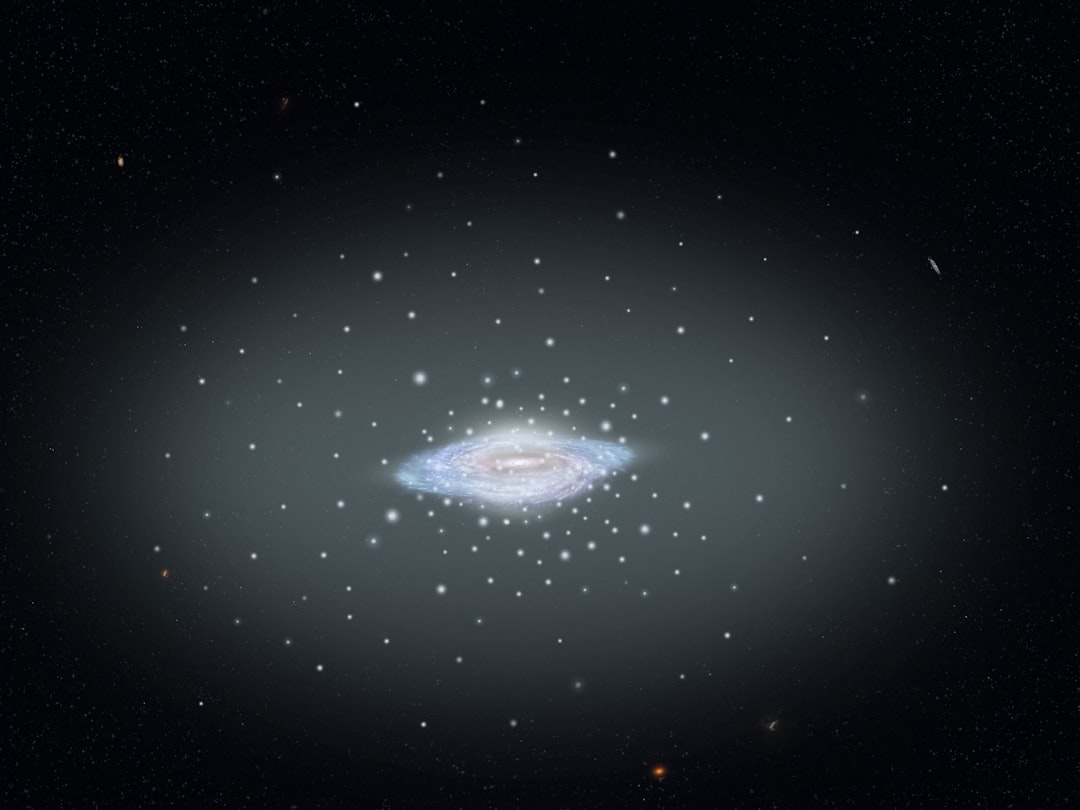
The observable universe is the portion of space accessible to human observation through scientific instruments and methods. It contains all detectable celestial objects, cosmic structures, and radiation from the Big Bang. This region represents not only physical entities but also a chronological record of cosmic evolution, as greater distances reveal earlier periods in universal history.
The observable universe continues to be a primary focus of astronomical research and cosmological inquiry. As scientific capabilities advance, our understanding of the observable universe expands accordingly. Modern observational technologies, including space-based telescopes and sophisticated detection systems, have progressively revealed greater cosmic depths and details.
This ongoing exploration is fundamentally dynamic, with new discoveries regularly refining theoretical models. The investigation of the observable universe represents one of humanity’s most significant scientific endeavors, systematically documenting the physical properties and evolutionary processes of cosmic structures across approximately 13.8 billion years of universal history.
Key Takeaways
- The observable universe is vast but limited by the speed of light and cosmic expansion.
- Its boundaries are defined by the farthest light we can detect, known as the cosmic microwave background radiation.
- The universe is continuously expanding, increasing the observable volume over time.
- Mapping techniques help us understand the structure and scale of the universe within the observable limits.
- Beyond the observable universe lie theoretical realms that remain speculative and challenge our understanding.
The Size and Scale of the Observable Universe
The sheer size of the observable universe is staggering, stretching approximately 93 billion light-years in diameter. This immense scale can be difficult for the human mind to grasp, as it transcends everyday experiences and perceptions. To put this into perspective, one light-year—the distance light travels in a year—equates to about 5.88 trillion miles.
Thus, when considering the observable universe’s expanse, one can begin to appreciate the vast distances that separate galaxies, stars, and other celestial objects. Within this colossal framework, there are an estimated two trillion galaxies, each containing millions or even billions of stars. The Milky Way, our home galaxy, is just one among this multitude.
Each galaxy is a microcosm of cosmic activity, hosting not only stars but also planets, nebulae, and black holes. The scale of the observable universe challenges conventional notions of size and distance, prompting scientists to develop new methods for measuring and visualizing these astronomical distances. As researchers continue to explore this vastness, they are constantly reminded of how small humanity’s place is within this grand cosmic arena.
Understanding the Boundaries of the Observable Universe
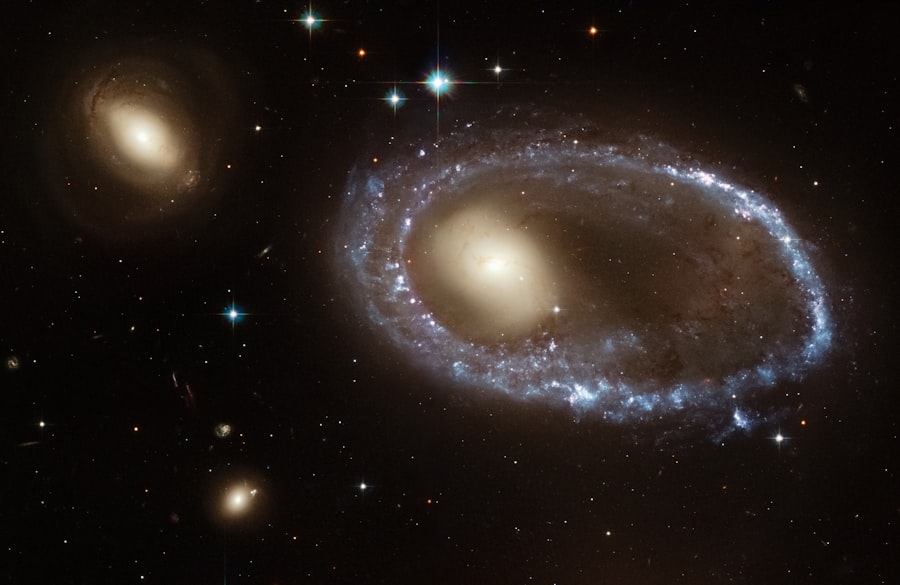
The boundaries of the observable universe are defined by the limits of what can be seen or detected from Earth. This boundary is not a physical wall but rather a horizon determined by the finite speed of light and the age of the universe. Since light from distant objects takes time to reach us, there are regions of space that remain beyond our observational reach.
The observable universe is thus a sphere centered around Earth, with its radius determined by how far light has traveled since the Big Bang approximately 13.8 billion years ago. However, this boundary is not fixed; it is constantly expanding as light from more distant objects reaches Earth over time. As telescopes become more advanced and sensitive, astronomers can detect fainter and more distant objects, pushing the limits of our observable horizon further outward.
This dynamic nature of the observable universe raises intriguing questions about what lies beyond our current observational capabilities. While we may have a clear view of a significant portion of the cosmos, there remains an infinite expanse that eludes our understanding.
Exploring the Limitations of Observation
Despite remarkable advancements in technology and methodology, there are inherent limitations to what can be observed in the universe.
For instance, while light travels at an incredible speed, it still takes time to traverse vast distances.
Consequently, when astronomers observe distant galaxies, they are essentially looking back in time, witnessing events that occurred millions or even billions of years ago. Moreover, cosmic dust and gas can obscure observations, making it challenging to see certain celestial objects clearly. This phenomenon necessitates the use of different wavelengths of light—such as infrared or radio waves—to penetrate these barriers and reveal hidden structures within the universe.
Additionally, as space continues to expand due to cosmic inflation, some regions may eventually move beyond our observational reach altogether. These limitations serve as a reminder that while humanity has made significant strides in understanding the cosmos, there remains much that is still shrouded in mystery.
The Expansion of the Observable Universe
| Metric | Value | Units | Description |
|---|---|---|---|
| Radius of Observable Universe | 46.5 | billion light years | Distance from Earth to the edge of the observable universe |
| Diameter of Observable Universe | 93 | billion light years | Total width of the observable universe |
| Age of Universe | 13.8 | billion years | Time since the Big Bang |
| Cosmic Microwave Background (CMB) Distance | 46 | billion light years | Distance to the surface of last scattering, marking the observable boundary |
| Redshift at Observable Boundary | ~1100 | z (dimensionless) | Redshift corresponding to the CMB, defining the observable limit |
| Hubble Radius | 14.4 | billion light years | Distance at which cosmic expansion velocity equals the speed of light |
The observable universe is not static; it is in a state of continuous expansion. This expansion was first discovered by Edwin Hubble in the early 20th century when he observed that distant galaxies were moving away from Earth at speeds proportional to their distances—a phenomenon now known as Hubble’s Law. This discovery fundamentally changed our understanding of the cosmos and led to the formulation of the Big Bang theory, which posits that the universe began as a singularity and has been expanding ever since.
The expansion of the observable universe is driven by dark energy, a mysterious force that permeates space and accelerates this growth. While dark energy remains one of the greatest enigmas in modern cosmology, its effects are evident in the increasing distances between galaxies over time. As researchers continue to study this expansion, they seek to unravel its implications for the fate of the universe itself—whether it will continue to expand indefinitely or eventually contract in a “Big Crunch.” The ongoing exploration of this phenomenon highlights humanity’s quest to understand not only how the universe began but also how it will evolve in the future.
The Hubble Volume and Beyond
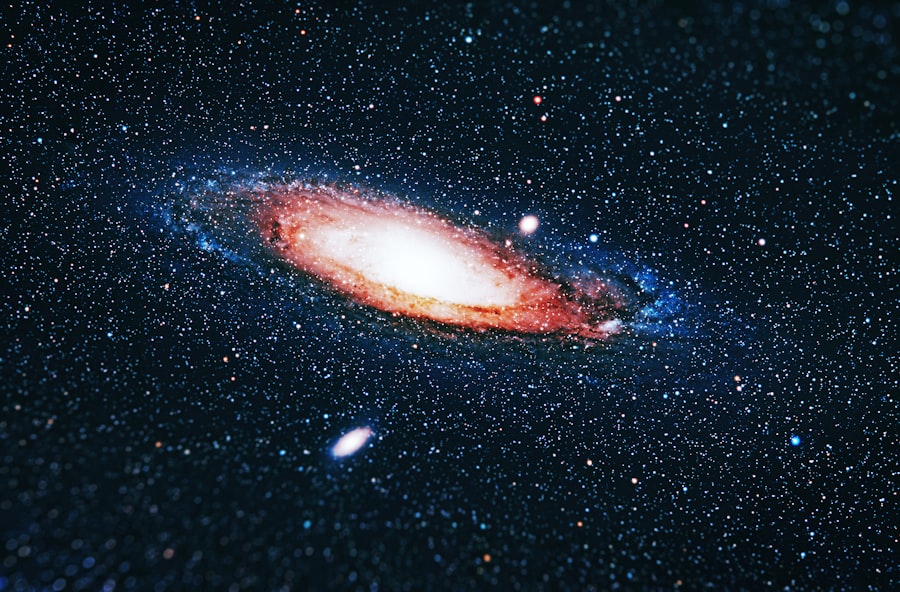
The Hubble Volume refers to a specific region of space that has been extensively studied using data from the Hubble Space Telescope and other observatories. This volume encompasses a significant portion of the observable universe and has provided invaluable insights into galaxy formation, cosmic structure, and dark matter distribution. By analyzing this region, astronomers have been able to map out large-scale structures such as galaxy clusters and filaments that form a cosmic web.
However, while the Hubble Volume has yielded remarkable discoveries, it represents only a fraction of what lies beyond our current observational capabilities. As technology advances and new telescopes are developed—such as the James Webb Space Telescope—scientists are poised to explore even deeper into space and time. These future observations will likely reveal new galaxies, stars, and phenomena that challenge existing theories and expand our understanding of cosmic evolution.
The Cosmic Microwave Background Radiation
One of the most significant pieces of evidence supporting the Big Bang theory is the Cosmic Microwave Background (CMB) radiation. This faint glow permeates the entire universe and represents relic radiation from when the universe was just 380,000 years old—a time when it cooled enough for atoms to form and light could travel freely through space. The CMB serves as a snapshot of the early universe and provides crucial information about its composition, structure, and evolution.
Discovered accidentally by Arno Penzias and Robert Wilson in 1965, CMB radiation has since been studied extensively by various missions such as NASA’s Wilkinson Microwave Anisotropy Probe (WMAP) and the European Space Agency’s Planck satellite. These studies have revealed minute fluctuations in temperature across the CMB map, which correspond to density variations in matter at that early stage. Analyzing these fluctuations allows scientists to glean insights into fundamental questions about dark matter, dark energy, and the overall geometry of space-time.
Mapping the Observable Universe
Mapping the observable universe is an ongoing endeavor that combines observational data with advanced computational techniques to create detailed representations of cosmic structures. Astronomers utilize various methods—such as redshift surveys—to measure distances to galaxies based on their light spectra. By compiling this data into three-dimensional maps, researchers can visualize how galaxies are distributed across vast scales.
These maps reveal intricate patterns within the cosmos, including clusters and voids that shape our understanding of large-scale structure formation. Projects like the Sloan Digital Sky Survey (SDSS) have significantly contributed to this effort by cataloging millions of celestial objects and providing a comprehensive view of our local universe. As mapping techniques continue to improve with advancements in technology and data analysis methods, scientists are poised to uncover even more about how galaxies interact and evolve over cosmic time.
The Future of Observing the Universe
The future of observing the universe holds immense promise as new technologies emerge that will enhance humanity’s ability to explore distant realms of space.
This capability will enable scientists to study exoplanets’ atmospheres, investigate star formation in distant galaxies, and explore cosmic phenomena like black holes.
Moreover, advancements in artificial intelligence and machine learning are revolutionizing data analysis in astronomy. These technologies can sift through vast amounts of observational data more efficiently than ever before, identifying patterns and anomalies that may have gone unnoticed by human researchers. As these tools become integrated into astronomical research workflows, they will undoubtedly accelerate discoveries and deepen humanity’s understanding of the cosmos.
Beyond the Observable Universe: Theoretical Speculations
While much has been learned about the observable universe, questions remain about what lies beyond its boundaries. Theoretical physicists have proposed various models that suggest multiple universes or dimensions may exist outside our observable realm—a concept often referred to as “multiverse theory.” These ideas challenge traditional notions of reality and invite speculation about alternate realities or different physical laws governing other universes. Additionally, concepts such as string theory propose that fundamental particles may exist in higher dimensions beyond those we can perceive.
While these theories remain speculative at present due to a lack of empirical evidence, they highlight humanity’s innate desire to explore not only what we can see but also what might exist beyond our current understanding.
The Endless Quest to Explore the Universe
The quest to explore the observable universe is an enduring journey fueled by curiosity and wonder about existence itself. From its vast size and intricate structures to its dynamic nature shaped by expansion and evolution, every discovery brings new questions that propel humanity forward in its pursuit of knowledge. As technology continues to advance and new observational techniques emerge, researchers stand on the brink of uncovering even more profound truths about our cosmos.
Ultimately, this journey reflects humanity’s unyielding spirit—a desire not only to understand where we come from but also to contemplate our place within this grand tapestry of existence. As scientists gaze into the depths of space with ever-increasing clarity, they remind us all that while we may be small within this vast universe, our quest for understanding knows no bounds.
The concept of the observable universe and its boundaries is a fascinating topic in cosmology, as it defines the limits of what we can see and measure in the universe. For a deeper understanding of this subject, you can explore the article on the observable universe boundaries available at