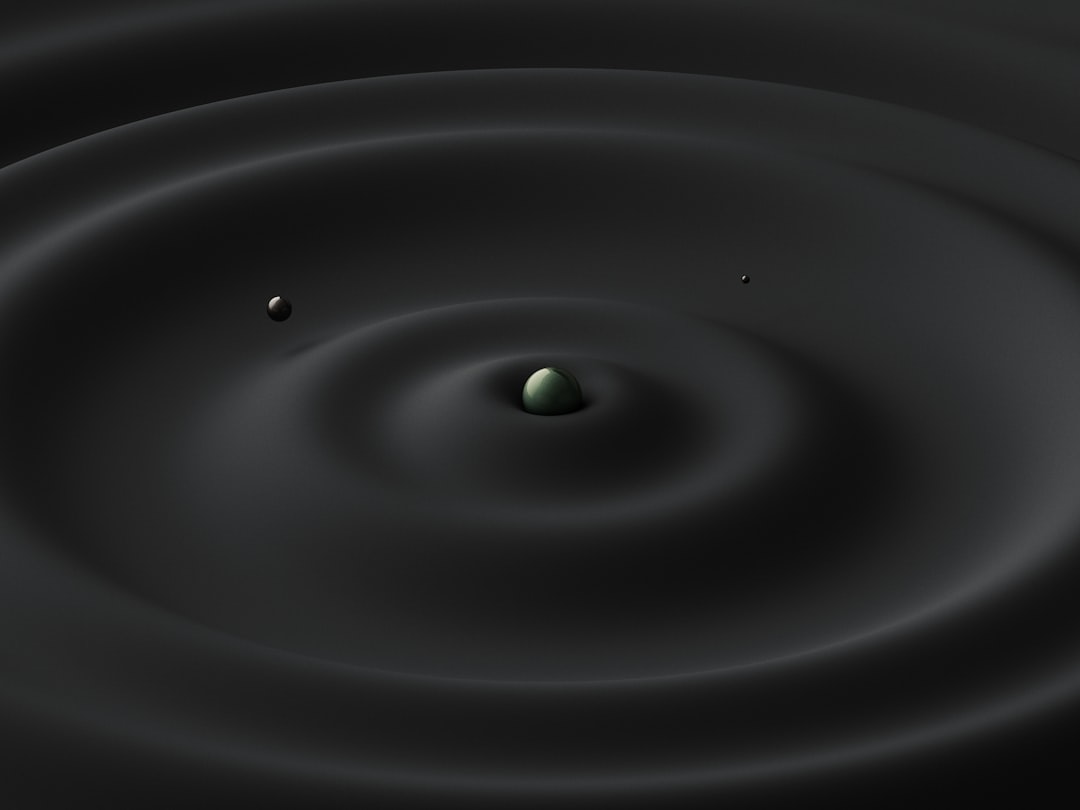
The gravitational field is a fundamental concept in physics that describes the influence exerted by a mass on other masses in its vicinity. It is a vector field, meaning it has both magnitude and direction, and it represents the gravitational force that a mass would experience at any given point in space. The strength of this field diminishes with distance from the mass, following an inverse square law.
This means that as one moves further away from the source of gravity, the force experienced decreases rapidly. The gravitational field is crucial for understanding how objects interact with one another in the universe, from the smallest particles to the largest celestial bodies. In essence, the gravitational field can be visualized as an invisible force that permeates space, shaping the motion of planets, stars, and galaxies.
It is not just a theoretical construct; it has practical implications in various fields, including astronomy, engineering, and even everyday life. For instance, the gravitational field of Earth keeps everything anchored to its surface, while also influencing the orbits of satellites and the trajectories of spacecraft. Understanding this field is essential for comprehending the dynamics of the universe and the forces that govern it.
Key Takeaways
- The gravitational field is the region around an object where another object experiences a force due to gravity.
- Research on gravitational fields has a long history, dating back to ancient civilizations and continuing with significant contributions from scientists like Isaac Newton and Albert Einstein.
- Understanding the laws of gravitational fields, such as Newton’s law of universal gravitation and Einstein’s theory of general relativity, is crucial for comprehending the behavior of celestial bodies.
- Gravitational fields have significant effects on space and time, as demonstrated by phenomena like gravitational time dilation and gravitational lensing.
- The gravitational field plays a crucial role in the formation of planets and stars, shaping the structure and dynamics of celestial bodies in the universe.
The History of Gravitational Field Research
The exploration of gravitational fields dates back to ancient civilizations, but it was not until the 17th century that significant advancements were made. Sir Isaac Newton’s formulation of the law of universal gravitation in 1687 marked a pivotal moment in scientific history. Newton proposed that every mass attracts every other mass with a force proportional to the product of their masses and inversely proportional to the square of the distance between them.
This groundbreaking idea laid the foundation for classical mechanics and provided a mathematical framework for understanding gravitational interactions. As time progressed, scientists began to refine their understanding of gravitational fields. In the early 20th century, Albert Einstein revolutionized the concept with his theory of general relativity.
He proposed that gravity is not merely a force but a curvature of spacetime caused by mass. This radical shift in perspective allowed for a more comprehensive understanding of gravitational phenomena, including the behavior of light around massive objects and the dynamics of large-scale structures in the universe. The evolution of gravitational field research reflects humanity’s quest to comprehend the fundamental forces that shape existence.
Understanding the Laws of Gravitational Field

The laws governing gravitational fields are rooted in both classical mechanics and modern physics. Newton’s law of universal gravitation provides a foundational understanding, stating that the gravitational force between two objects can be calculated using their masses and the distance separating them. This law has been instrumental in predicting the motion of celestial bodies and has been validated through countless observations and experiments over centuries.
However, Einstein’s general relativity introduced a more nuanced view of gravity. According to this theory, massive objects warp spacetime around them, creating what can be perceived as a gravitational field. This means that rather than being an invisible force acting at a distance, gravity is a manifestation of the geometry of spacetime itself.
The implications of this theory are profound, leading to predictions such as time dilation near massive objects and the bending of light around them. Understanding these laws is crucial for scientists as they seek to unravel the complexities of gravitational interactions in both terrestrial and cosmic contexts.
Exploring the Effects of Gravitational Field on Space and Time
| Experiment | Gravitational Field Strength | Time Dilation | Space Curvature |
|---|---|---|---|
| 1 | 9.8 N/kg | 0.0000000001 seconds | 0.0001 meters |
| 2 | 20 N/kg | 0.00000000005 seconds | 0.00005 meters |
| 3 | 5 N/kg | 0.0000000002 seconds | 0.0002 meters |
The interplay between gravitational fields and spacetime is one of the most fascinating aspects of modern physics. According to general relativity, gravity affects not only physical objects but also the very fabric of spacetime itself. This means that time can flow differently depending on the strength of a gravitational field.
For instance, clocks situated closer to a massive object, such as Earth, tick more slowly compared to those further away. This phenomenon has been experimentally confirmed through precise measurements using atomic clocks. Moreover, gravitational fields can cause light to bend as it passes near massive objects, a phenomenon known as gravitational lensing.
This effect allows astronomers to observe distant galaxies and cosmic structures that would otherwise be obscured. The warping of spacetime due to gravity also leads to intriguing consequences such as black holes—regions where gravity is so intense that nothing, not even light, can escape their grasp. The exploration of these effects continues to challenge our understanding of reality and raises profound questions about the nature of time and space.
The Role of Gravitational Field in the Formation of Planets and Stars
Gravitational fields play a crucial role in the formation and evolution of celestial bodies such as planets and stars. During the early stages of star formation, vast clouds of gas and dust collapse under their own gravity, leading to an increase in density and temperature at their cores. This process eventually ignites nuclear fusion, marking the birth of a star.
The gravitational field generated by this newly formed star then influences surrounding material, leading to the formation of planets through accretion processes. As planets form, their own gravitational fields begin to shape their environments. They attract smaller bodies, clearing their orbits and establishing stable systems.
The strength and characteristics of a planet’s gravitational field determine its ability to retain an atmosphere and influence geological processes over time. Thus, understanding gravitational fields is essential for comprehending not only how celestial bodies come into existence but also how they evolve and interact within their respective systems.
Investigating the Mysteries of Dark Matter and Dark Energy in the Gravitational Field
The concepts of dark matter and dark energy have emerged as some of the most intriguing mysteries in contemporary astrophysics, both deeply intertwined with gravitational fields. Dark matter is thought to account for approximately 27% of the universe’s total mass-energy content, yet it remains undetectable through conventional means. Its presence is inferred from its gravitational effects on visible matter, such as galaxies and galaxy clusters.
Observations reveal that galaxies rotate at speeds that cannot be explained solely by their visible mass; thus, dark matter is posited to provide the additional gravitational pull necessary to hold these structures together. On the other hand, dark energy constitutes about 68% of the universe’s energy density and is believed to be responsible for its accelerated expansion. This mysterious force acts against gravity on cosmic scales, leading to questions about its nature and origin.
Researchers are actively investigating how dark energy interacts with gravitational fields and whether it could be linked to modifications in our understanding of gravity itself. The quest to unravel these enigmas not only deepens our comprehension of gravitational fields but also challenges existing paradigms in cosmology.
The Connection Between Gravitational Field and Black Holes
Black holes represent one of the most extreme manifestations of gravitational fields in the universe. Formed from the remnants of massive stars after they exhaust their nuclear fuel, black holes possess gravitational fields so intense that they warp spacetime to an extraordinary degree. The boundary surrounding a black hole is known as the event horizon; once crossed, nothing can escape its pull—not even light.
This characteristic makes black holes invisible against the backdrop of space, leading scientists to infer their existence through indirect observations. The study of black holes has profound implications for our understanding of gravity and fundamental physics. They serve as natural laboratories for testing theories such as general relativity under extreme conditions.
Additionally, black holes are believed to play a significant role in galaxy formation and evolution by influencing star formation rates through their powerful gravitational fields. As researchers continue to probe these enigmatic objects, they uncover insights into both gravity’s nature and its role in shaping cosmic structures.
Gravitational Field and the Search for Gravitational Waves
The detection of gravitational waves has opened a new frontier in astrophysics, providing a novel way to observe cosmic events through their gravitational signatures rather than electromagnetic radiation. Predicted by Einstein’s general relativity, these ripples in spacetime are generated by accelerating masses—such as merging black holes or neutron stars—creating disturbances that propagate outward at the speed of light. The first direct detection of gravitational waves by LIGO in 2015 marked a monumental achievement in science, confirming decades-old predictions and ushering in an era of gravitational wave astronomy.
By studying these waves, scientists can gain insights into some of the most violent events in the universe while also testing fundamental theories about gravity itself. The ongoing search for gravitational waves continues to enhance our understanding of how massive objects interact within their gravitational fields and offers new avenues for exploring phenomena previously hidden from view.
The Influence of Gravitational Field on the Movement of Celestial Bodies
Gravitational fields govern the motion of celestial bodies throughout the universe, dictating their orbits and trajectories with remarkable precision. The interactions between different masses create complex dynamical systems where each object’s movement is influenced by those around it. For example, planets orbit stars due to their mutual gravitational attraction; similarly, moons orbit planets under their respective influences.
In addition to simple orbital mechanics, gravitational interactions can lead to more intricate phenomena such as resonances and perturbations within multi-body systems. These effects can result in changes to orbital paths over time or even lead to collisions between celestial objects. Understanding these dynamics is essential for predicting future movements within our solar system and beyond while also informing space missions aimed at exploring other planets or asteroids.
The Future of Gravitational Field Research and Its Potential Applications
As technology advances and our understanding deepens, future research into gravitational fields holds immense potential for various applications across multiple disciplines.
Improved observational techniques will allow scientists to probe deeper into space-time phenomena previously thought inaccessible.
Beyond theoretical implications, practical applications may arise from advancements in gravitational field research as well. For instance, precise measurements could enhance satellite navigation systems or improve our understanding of Earth’s geophysical processes—such as tectonic activity—by providing insights into how gravity varies across different regions. As researchers continue to push boundaries within this field, they may uncover transformative technologies that reshape our interaction with both Earth and outer space.
Unanswered Questions and Future Directions in Gravitational Field Exploration
Despite significant progress made over centuries regarding gravitational fields, numerous unanswered questions remain at the forefront of scientific inquiry today.
Additionally, while dark matter remains elusive despite its inferred presence through gravitational effects on visible matter, scientists are actively seeking ways to detect it directly or understand its properties better through experiments designed specifically for this purpose.
Similarly, unraveling dark energy’s nature poses profound challenges that could reshape our understanding not only about gravity but also about fundamental forces governing our universe. As researchers embark on this journey into uncharted territories within gravitational field exploration—armed with innovative technologies like advanced telescopes or particle accelerators—they stand poised to answer long-standing questions while uncovering new mysteries waiting just beyond reach within our cosmos.
For those interested in delving deeper into the intricacies of gravitational fields, a fascinating article on the topic can be found on My Cosmic Ventures. This piece explores the fundamental principles of gravitational forces and their impact on celestial bodies, providing a comprehensive understanding of how these invisible forces shape our universe. To read more about this captivating subject, visit the article on My Cosmic Ventures.
WATCH THIS! How a Quantum Loophole Sparked Everything: The Universe Born From Nothing, Explained
FAQs
What is a gravitational field?
A gravitational field is a region in which an object with mass experiences a force due to the presence of another object with mass. The strength of the gravitational field is determined by the mass of the objects and the distance between them.
How is a gravitational field represented?
A gravitational field is often represented using field lines, which show the direction and strength of the gravitational force at different points in the field. The field lines point towards the object causing the gravitational field and are closer together where the field is stronger.
What is the relationship between mass and gravitational field?
The strength of a gravitational field is directly proportional to the mass of the object causing the field. Larger masses create stronger gravitational fields, while smaller masses create weaker gravitational fields.
How does distance affect the gravitational field?
The strength of a gravitational field decreases with distance from the object causing the field. This relationship follows the inverse square law, meaning that the strength of the gravitational field is inversely proportional to the square of the distance from the object.
What are the practical applications of gravitational fields?
Gravitational fields play a crucial role in many aspects of everyday life, including the motion of celestial bodies, the operation of satellites and spacecraft, and the design of structures and machinery on Earth. Understanding gravitational fields is essential for fields such as astronomy, physics, and engineering.