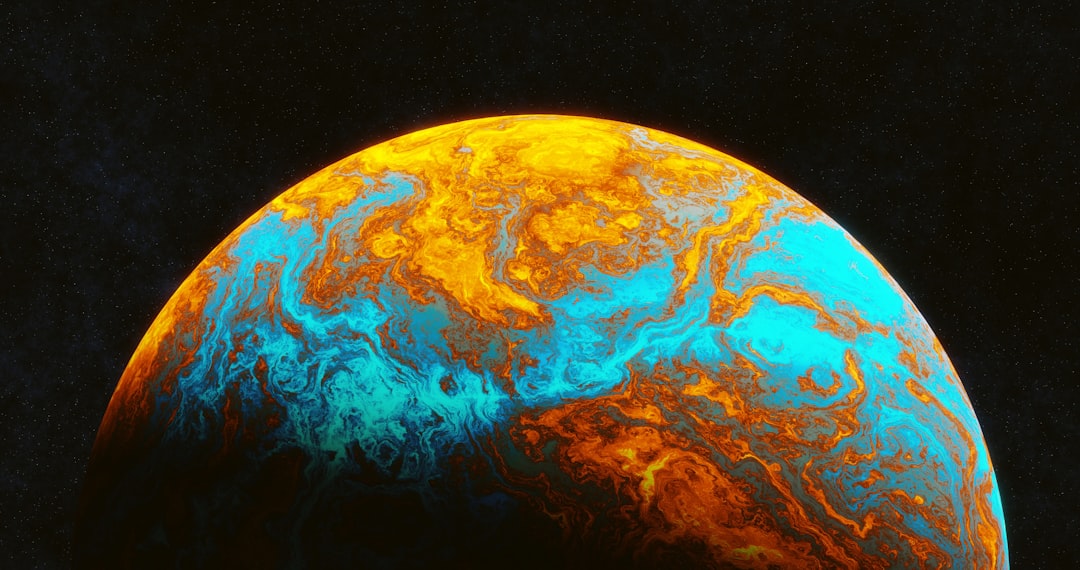
The Big Bang Theory stands as one of the most significant scientific concepts in understanding the origins of the universe. It posits that approximately 13.8 billion years ago, the universe began as an infinitely small, hot, and dense point, which then expanded rapidly in a colossal explosion. This event marked the inception of time and space as we know them.
As scientists delve deeper into this cosmic event, they continue to unravel the complexities surrounding the birth of everything that exists. The implications of the Big Bang Theory extend far beyond mere origins; they challenge humanity’s understanding of existence itself.
It raises profound questions about what preceded this monumental event and whether time itself is a construct that began with the Big Bang. The theory has evolved over decades, incorporating new findings and refining its predictions. As researchers utilize advanced technologies and methodologies, they are piecing together a more comprehensive picture of the universe’s infancy, revealing a narrative that is as intricate as it is awe-inspiring.
Key Takeaways
- The Big Bang Theory is the leading explanation for the origin of the universe, suggesting that it began as a singularity and rapidly expanded.
- The expansion of the universe allows us to look back in time and observe the early stages of its development, providing valuable insights into its evolution.
- Cosmic Microwave Background Radiation serves as a crucial clue from the early universe, offering evidence for the Big Bang and the subsequent formation of galaxies and stars.
- Dark Matter and Dark Energy, though invisible, play significant roles in shaping the cosmos and are essential for understanding the universe’s structure and behavior.
- The formation of galaxies and stars provides a means of tracing the evolution of the universe, shedding light on its development over billions of years.
The Expansion of the Universe: How We Look Back in Time
The expansion of the universe is a phenomenon that allows astronomers to look back in time, offering a glimpse into the cosmos’s distant past. Edwin Hubble’s observations in the 1920s revealed that galaxies are moving away from each other, suggesting that the universe is not static but rather in a state of continuous expansion. This expansion can be likened to dots on a balloon being pushed apart as it inflates; as space itself stretches, galaxies recede from one another.
By measuring the redshift of light from these galaxies, scientists can determine how far away they are and how long their light has taken to reach Earth, effectively allowing them to observe the universe at various stages of its evolution. This concept of looking back in time is not merely theoretical; it has practical implications for understanding cosmic history. For instance, when astronomers observe a galaxy that is billions of light-years away, they are witnessing it as it was billions of years ago.
This ability to peer into the past enables researchers to study the formation and evolution of galaxies, stars, and other celestial bodies over cosmic timescales. As technology advances, telescopes equipped with sophisticated instruments continue to push the boundaries of what can be observed, revealing new insights into the universe’s expansion and its implications for future cosmic evolution.
Cosmic Microwave Background Radiation: Clues from the Early Universe
Cosmic Microwave Background Radiation (CMB) serves as a crucial remnant from the early universe, providing invaluable insights into its formative moments. Discovered accidentally by Arno Penzias and Robert Wilson in 1965, CMB is a faint glow permeating the universe, a relic from when it was just 380,000 years old. At this stage, the universe had cooled sufficiently for protons and electrons to combine into hydrogen atoms, allowing photons to travel freely through space for the first time.
The CMB represents this ancient light, carrying with it information about the conditions that prevailed shortly after the Big Bang. The study of CMB has revolutionized cosmology by offering a snapshot of the universe’s early state. Variations in temperature and density within this radiation reveal critical details about the distribution of matter and energy in the nascent universe.
These fluctuations laid the groundwork for the formation of galaxies and large-scale structures we observe today. By analyzing CMB data collected from missions like NASA’s Wilkinson Microwave Anisotropy Probe (WMAP) and the European Space Agency’s Planck satellite, scientists have been able to refine their models of cosmic evolution and gain deeper insights into fundamental questions about dark matter, dark energy, and the overall geometry of space.
Dark Matter and Dark Energy: The Invisible Forces Shaping the Cosmos
| Topic | Data/Metric |
|---|---|
| Dark Matter | Estimated to make up about 27% of the universe |
| Dark Energy | Believed to constitute about 68% of the universe |
| Observations | Based on gravitational effects and cosmic microwave background radiation |
| Impact | Key to understanding the expansion and structure of the universe |
Dark matter and dark energy are two enigmatic components that dominate the universe yet remain largely invisible to direct observation. Dark matter, which constitutes about 27% of the universe’s total mass-energy content, does not emit or absorb light, making it undetectable by conventional means. Its existence is inferred from gravitational effects on visible matter, such as stars and galaxies.
Observations of galaxy rotation curves and gravitational lensing provide compelling evidence for dark matter’s presence, suggesting that it plays a crucial role in holding galaxies together and influencing their formation. In contrast, dark energy accounts for approximately 68% of the universe’s energy density and is believed to be responsible for its accelerated expansion. This mysterious force acts against gravity on cosmic scales, pushing galaxies apart at an increasing rate.
The discovery of dark energy in 1998 was a groundbreaking moment in cosmology, leading to new theories about the fate of the universe. Despite extensive research efforts, both dark matter and dark energy remain poorly understood, posing significant challenges for physicists and astronomers alike. As scientists continue to explore these invisible forces, they hope to unlock fundamental truths about the nature of reality itself.
The Formation of Galaxies and Stars: Tracing the Evolution of the Universe
The formation of galaxies and stars is a complex process that illustrates how matter coalesces over time to create the structures observed in today’s universe. Initially, after the Big Bang, matter was distributed relatively uniformly throughout space. However, slight fluctuations in density led to gravitational instabilities that caused gas clouds to collapse under their own weight.
Over millions of years, these clouds formed stars, which then grouped together to create galaxies. This process is not only fascinating but also essential for understanding how elements were forged in stellar interiors and distributed throughout space via supernova explosions. As galaxies evolved, they underwent various interactions and mergers that shaped their current forms.
The hierarchical model of galaxy formation suggests that smaller structures combined to form larger ones over time. This model is supported by observations of distant galaxies at different stages of evolution, providing a timeline for cosmic history. The study of star formation within these galaxies reveals insights into chemical enrichment processes and how different types of stars contribute to galactic ecosystems.
By examining these processes across various environments, astronomers can piece together a comprehensive narrative about how galaxies and stars have evolved since their inception.
Black Holes: Gateways to the Past
Black holes represent some of the most intriguing phenomena in astrophysics, acting as gateways to understanding both extreme physics and cosmic history. Formed from the remnants of massive stars that have undergone gravitational collapse, black holes possess gravitational fields so strong that not even light can escape their grasp. Their existence challenges our understanding of space and time, raising questions about what happens at their singularities—points where density becomes infinite and current physical laws break down.
The study of black holes has revealed fascinating insights into their role within galaxies. Supermassive black holes are often found at the centers of large galaxies, influencing their dynamics and evolution through gravitational interactions. Observations suggest that these black holes grow over time by accreting matter from their surroundings or merging with other black holes.
As researchers continue to explore these enigmatic objects through advanced techniques such as gravitational wave detection and high-energy astrophysics, they hope to uncover more about their nature and their impact on cosmic evolution.
Gravitational Waves: Ripples in Spacetime from the Distant Universe
Gravitational waves are ripples in spacetime caused by some of the most violent events in the universe, such as colliding black holes or neutron stars. Predicted by Albert Einstein’s General Theory of Relativity over a century ago, these waves were first directly detected by LIGO (Laser Interferometer Gravitational-Wave Observatory) in 2015. This groundbreaking discovery opened a new window into astrophysics, allowing scientists to observe phenomena that were previously invisible through traditional electromagnetic observations.
The detection of gravitational waves has provided unprecedented insights into cosmic events that occur billions of light-years away. Each wave carries information about its source, enabling researchers to study phenomena such as black hole mergers or neutron star collisions in ways never before possible. This new field of gravitational wave astronomy complements existing observational techniques and enhances our understanding of fundamental physics while also offering clues about the nature of gravity itself.
As detection technology continues to improve, scientists anticipate uncovering even more secrets hidden within these ripples across spacetime.
The Role of Quantum Mechanics in Understanding the Early Universe
Quantum mechanics plays a pivotal role in shaping our understanding of the early universe, particularly during its infancy when conditions were extreme and classical physics breaks down. At this scale, quantum fluctuations could have influenced cosmic structures’ formation by creating variations in density that seeded galaxy formation. The interplay between quantum mechanics and general relativity remains one of modern physics’ greatest challenges; reconciling these two frameworks is essential for developing a comprehensive theory of everything.
Researchers are exploring various approaches to bridge this gap, including quantum field theory in curved spacetime and string theory. These theories aim to describe how quantum effects may have influenced cosmic inflation—the rapid expansion that occurred just after the Big Bang—leading to observable consequences in today’s universe. By investigating these connections between quantum mechanics and cosmology, scientists hope to gain deeper insights into fundamental questions about reality itself while also addressing unresolved mysteries surrounding dark matter and dark energy.
The Search for Exoplanets: Exploring Other Worlds and Other Times
The search for exoplanets—planets orbiting stars outside our solar system—has become one of astronomy’s most exciting frontiers in recent years. With thousands of confirmed exoplanets discovered since the first detection in 1992, researchers are now focused on characterizing these distant worlds to understand their potential for habitability and their role within their respective systems. Techniques such as transit photometry and radial velocity measurements have enabled astronomers to identify planets across diverse environments ranging from gas giants to rocky terrestrial worlds.
As technology advances further with missions like NASA’s James Webb Space Telescope (JWST), scientists are poised to explore exoplanet atmospheres for signs of life or conditions conducive to it. The implications extend beyond mere curiosity; understanding exoplanets can provide insights into planetary formation processes while also informing theories about life’s potential elsewhere in the universe. As researchers continue this quest for knowledge beyond our solar system, they are not only expanding our understanding of planetary systems but also contemplating humanity’s place within an ever-expanding cosmos.
The Multiverse Theory: Could There Be Other Universes Beyond Our Own?
The multiverse theory posits that our universe may be just one among many others—each with its own distinct physical laws and constants. This concept arises from various interpretations of quantum mechanics and cosmological models suggesting that different regions could experience divergent outcomes during cosmic inflation or other processes. While still speculative, multiverse theories challenge traditional notions about reality by proposing an infinite array of possibilities beyond what we observe.
Exploring multiverse theories raises profound philosophical questions regarding existence itself: If multiple universes exist with varying conditions, what does it mean for our understanding of life? Are there alternate versions of ourselves living out different realities? While empirical evidence remains elusive at present—making it difficult to test these ideas—scientists continue to investigate potential implications through theoretical frameworks such as string theory or inflationary cosmology.
As discussions surrounding multiverses evolve within scientific communities, they invite contemplation about humanity’s place within an expansive tapestry woven across dimensions yet unseen.
The Future of Cosmology: New Discoveries and Unanswered Questions
The future of cosmology promises exciting discoveries alongside persistent unanswered questions that challenge our understanding of existence itself. As technology advances—enabling more precise measurements across various wavelengths—scientists anticipate uncovering new phenomena while refining existing theories regarding dark matter, dark energy, black holes, and cosmic evolution overall. Upcoming missions like NASA’s Euclid spacecraft aim to map dark energy’s influence on galaxy formation while probing fundamental aspects related to gravity’s role within cosmological contexts.
Despite remarkable progress made thus far—transforming our comprehension regarding origins—the cosmos remains shrouded in mystery; many fundamental questions linger unanswered: What lies beyond observable limits? How do quantum mechanics reconcile with gravity? Is there life elsewhere?
As researchers continue their quest for knowledge amid an ever-expanding universe filled with enigmas yet untold—the pursuit remains not only scientific but deeply philosophical—inviting humanity’s curiosity toward understanding its place within this grand cosmic narrative unfolding across time itself.
In the fascinating realm of cosmology, the concept of look-back time offers a unique perspective on observing the universe. This concept allows astronomers to essentially look back in time as they observe distant celestial objects, providing insights into the early universe. For those interested in delving deeper into this topic, an article on My Cosmic Ventures explores the intricacies of look-back time and its implications for our understanding of cosmic history. This resource provides a comprehensive overview of how astronomers utilize this concept to unravel the mysteries of the cosmos, making it an essential read for anyone intrigued by the universe’s past.
WATCH THIS! 🌌The Biggest Black Hole Is A LIE
FAQs
What is cosmology?
Cosmology is the scientific study of the origin, evolution, and eventual fate of the universe.
What is look back time in cosmology?
Look back time in cosmology refers to the amount of time it takes for the light from an astronomical object to reach us on Earth. This means that when we observe distant objects in space, we are actually seeing them as they appeared in the past, due to the finite speed of light.
How is look back time calculated?
Look back time is calculated using the concept of the speed of light and the distance to the astronomical object. By measuring the redshift of the light from the object, astronomers can determine its distance and calculate the amount of time it took for the light to travel to Earth.
What can we learn from look back time in cosmology?
By studying the look back time of distant objects, astronomers can gain insights into the early universe, the formation and evolution of galaxies, and the expansion of the universe. This allows us to better understand the history and dynamics of the cosmos.
How does look back time relate to the Big Bang theory?
The concept of look back time is closely related to the Big Bang theory, as it allows astronomers to observe the universe at different stages of its evolution. By studying the light from distant objects, we can gain a better understanding of the early universe and the processes that led to its current state.