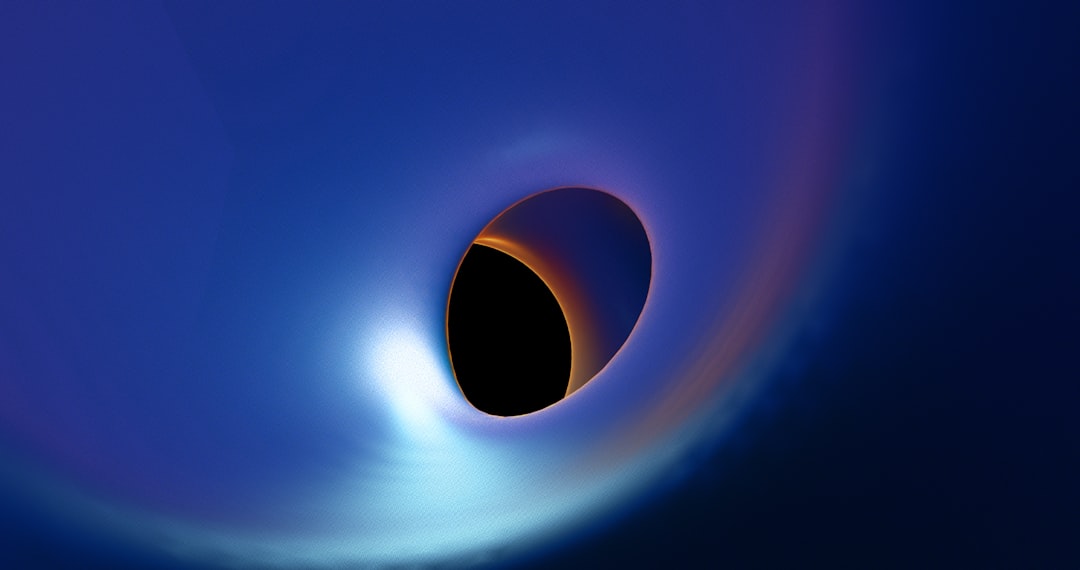
Black holes have long captivated the imagination of scientists and the general public alike.
The concept of a black hole challenges the very fabric of our understanding of physics, particularly the laws of gravity and the nature of space-time.
As researchers delve deeper into the mysteries surrounding these celestial phenomena, they uncover not only their fascinating characteristics but also their profound implications for the universe at large. The study of black holes is not merely an academic pursuit; it has far-reaching consequences for our comprehension of the cosmos. From their formation to their potential role in the evolution of galaxies, black holes serve as a critical focal point in astrophysics.
As scientists continue to explore these cosmic giants, they are piecing together a more comprehensive picture of how black holes influence their surroundings and contribute to the dynamic processes that shape galaxies, including our own Milky Way.
Key Takeaways
- Black holes are regions in space where the gravitational pull is so strong that nothing, not even light, can escape.
- The Milky Way is a spiral galaxy that contains our solar system and is home to billions of stars, including our sun.
- Black holes play a crucial role in the formation and evolution of galaxies like the Milky Way.
- There are three main types of black holes: stellar, intermediate, and supermassive, each with different characteristics and formation processes.
- Scientists use various methods, such as observing the behavior of nearby stars and detecting gravitational waves, to discover and study black holes in the Milky Way.
What is the Milky Way?
The Milky Way is a barred spiral galaxy that serves as the home to our solar system and billions of other stars. It is a vast collection of stars, gas, dust, and dark matter, all bound together by gravity. Spanning approximately 100,000 light-years in diameter, the Milky Way is a complex structure with a central bulge surrounded by a flat disk containing spiral arms.
These arms are rich in star formation and are where many of the galaxy’s younger stars reside. The Milky Way is not just a static entity; it is a dynamic system that is constantly evolving due to gravitational interactions and the processes of star formation and death. Within this grand structure lies a diverse array of celestial phenomena, including nebulae, star clusters, and, notably, black holes.
The Milky Way is estimated to contain hundreds of billions of stars, each with its own unique characteristics and life cycle. The galaxy’s intricate design and vastness make it a subject of endless fascination for astronomers and astrophysicists who seek to understand its formation, evolution, and the forces that govern its behavior.
The Role of Black Holes in the Milky Way

Black holes play a pivotal role in the dynamics of the Milky Way galaxy. At its center lies a supermassive black hole known as Sagittarius A*, which has a mass equivalent to approximately four million suns. This colossal entity exerts a significant gravitational influence on the surrounding stars and gas, shaping the orbits of nearby celestial bodies and contributing to the overall structure of the galaxy.
The presence of Sagittarius A* is believed to be crucial in maintaining the stability of the Milky Way’s central region. Moreover, black holes are not limited to the galactic core; they can also be found throughout the galaxy in various forms. Stellar black holes, formed from the remnants of massive stars after supernova explosions, are scattered across the Milky Way.
These smaller black holes can influence their surroundings by pulling in nearby matter, leading to the formation of accretion disks that emit X-rays as material spirals inward. This process not only illuminates the presence of black holes but also contributes to the energetic environment of the galaxy.
Types of Black Holes
| Type of Black Hole | Description |
|---|---|
| Stellar Black Hole | Formed from the remnants of a massive star that has collapsed under its own gravity |
| Intermediate Black Hole | Believed to be formed from the merging of smaller black holes or from the remnants of massive stars |
| Supermassive Black Hole | Found at the center of most galaxies, including the Milky Way, and can have masses millions or billions of times that of the sun |
Black holes can be categorized into three primary types: stellar black holes, supermassive black holes, and intermediate black holes. Stellar black holes are formed when massive stars exhaust their nuclear fuel and collapse under their own gravity during supernova events. Typically ranging from three to several tens of solar masses, these black holes are relatively common throughout the universe.
Supermassive black holes, on the other hand, reside at the centers of galaxies and can possess masses ranging from millions to billions of solar masses. Their formation remains an area of active research, with theories suggesting they may have originated from the merging of smaller black holes or from direct collapse scenarios in dense star clusters. Intermediate black holes are less understood and are thought to exist between stellar and supermassive black holes, with masses ranging from hundreds to thousands of solar masses.
Each type of black hole plays a distinct role in cosmic evolution and influences their environments in unique ways. Understanding these categories helps astronomers piece together the history and dynamics of galaxies like the Milky Way.
How Do Scientists Discover Black Holes?
The discovery of black holes is not straightforward due to their elusive nature; they do not emit light or radiation that can be directly observed. Instead, scientists rely on indirect methods to infer their presence. One common technique involves observing the motion of stars and gas clouds around an unseen mass.
By applying Kepler’s laws of motion and Newton’s law of gravitation, astronomers can estimate the mass of an object based on how quickly nearby stars orbit it. Another method involves detecting X-rays emitted by material falling into a black hole. As matter spirals toward a black hole, it forms an accretion disk that heats up due to friction and gravitational forces, emitting X-rays detectable by space-based observatories.
Instruments like NASA’s Chandra X-ray Observatory have been instrumental in identifying potential black hole candidates by capturing these high-energy emissions. Gravitational wave astronomy has also emerged as a groundbreaking approach for discovering black holes. When two black holes merge, they produce ripples in space-time known as gravitational waves.
Detectors like LIGO (Laser Interferometer Gravitational-Wave Observatory) have successfully identified these waves, providing direct evidence for the existence of binary black hole systems and offering new insights into their properties.
The Search for Black Holes in the Milky Way

The search for black holes within the Milky Way is an ongoing endeavor that combines observational astronomy with theoretical modeling. Astronomers utilize various telescopes and instruments to survey regions where black holes are likely to exist, such as dense star clusters or areas with high stellar density near the galactic center. By analyzing stellar motions and X-ray emissions, researchers can identify potential candidates for further study.
One notable project is the study of stars orbiting Sagittarius A*, which has provided valuable data on the mass and size of this supermassive black hole. Observations over several years have revealed stars moving at incredible speeds around this central entity, allowing scientists to calculate its mass with remarkable precision. Such studies not only confirm the existence of Sagittarius A* but also enhance our understanding of its influence on surrounding stars.
Additionally, surveys aimed at detecting stellar black holes throughout the galaxy are gaining momentum. By examining regions with high stellar density or remnants from supernova explosions, astronomers hope to uncover more about these elusive objects and their distribution within the Milky Way.
Characteristics of Milky Way Black Holes
Black holes within the Milky Way exhibit a range of characteristics that reflect their formation processes and environments. Stellar black holes typically possess masses between three and several tens of solar masses and are often found in binary systems where they interact with companion stars. These interactions can lead to phenomena such as X-ray emissions or even gamma-ray bursts during dramatic events like supernovae.
Supermassive black holes like Sagittarius A* are characterized by their immense mass and gravitational pull, which influences not only nearby stars but also gas clouds and other matter in their vicinity. The accretion process around these supermassive entities can lead to powerful jets that emit radiation across various wavelengths, contributing to our understanding of high-energy astrophysics. The study of intermediate black holes remains an active area of research as scientists seek to identify their properties and understand their formation mechanisms.
These elusive objects may provide crucial insights into how black holes evolve over time and how they contribute to galactic dynamics.
The Impact of Black Holes on the Milky Way
Black holes exert a profound influence on the structure and evolution of the Milky Way galaxy. Their gravitational pull affects star formation rates by regulating gas dynamics within molecular clouds. In regions where supermassive black holes reside, such as at the center of galaxies, they can trigger bursts of star formation or suppress it through energetic feedback mechanisms.
Moreover, black holes play a role in shaping galactic morphology through interactions with other celestial bodies. When galaxies collide or merge, their respective black holes can influence star orbits and lead to new star formation patterns. This interplay between black holes and their environments highlights their significance in understanding galaxy evolution over cosmic timescales.
The presence of black holes also raises intriguing questions about dark matter and its role in galactic dynamics. As researchers investigate how black holes interact with dark matter halos surrounding galaxies, they may uncover new insights into one of cosmology’s most profound mysteries.
The Future of Black Hole Exploration in the Milky Way
The future of black hole exploration within the Milky Way holds great promise as advancements in technology continue to enhance observational capabilities. Upcoming space missions equipped with advanced telescopes will allow astronomers to probe deeper into regions previously obscured by dust or distance. These missions aim to identify new black hole candidates and refine existing models regarding their formation and evolution.
Additionally, ongoing research into gravitational wave astronomy will likely yield further discoveries related to binary black hole systems and their mergers. As detectors become more sensitive, scientists anticipate detecting more events that will provide valuable data on black hole populations within our galaxy. The integration of multi-wavelength observations—from radio waves to gamma rays—will also play a crucial role in advancing our understanding of black holes in various contexts.
Theoretical and Practical Applications of Milky Way Black Hole Research
Research on Milky Way black holes extends beyond mere curiosity; it has both theoretical implications and practical applications across various fields. Understanding how black holes influence galactic dynamics can inform theories related to cosmology, dark matter distribution, and even fundamental physics principles such as general relativity. Moreover, insights gained from studying black holes may have practical applications in technology development.
For instance, advancements in computational methods used for simulating black hole interactions could find applications in fields such as data analysis or artificial intelligence. Furthermore, public interest in black hole research fosters educational opportunities that inspire future generations of scientists and engineers. By engaging with captivating topics like black holes, educators can spark curiosity about science and technology among students, encouraging them to pursue careers in STEM fields.
The Importance of Understanding Milky Way Black Holes
In conclusion, understanding black holes within the Milky Way is essential for unraveling some of the universe’s most profound mysteries. These enigmatic entities not only challenge our understanding of physics but also play a crucial role in shaping galaxies’ structures and evolution over time. As researchers continue to explore their properties through innovative observational techniques and theoretical modeling, they contribute significantly to our knowledge about cosmic phenomena.
The implications extend beyond academia; insights gained from studying black holes can inform broader scientific inquiries while inspiring future generations to engage with science and technology. As humanity stands on the brink of new discoveries regarding these cosmic giants, it becomes increasingly clear that comprehending Milky Way black holes is vital for unlocking secrets about our universe’s past, present, and future.
Recent studies suggest that there may be as many as 100 million black holes in the Milky Way galaxy, a staggering number that has intrigued astronomers for years. For a deeper dive into the fascinating world of black holes and their implications for our understanding of the universe, you can read more in this related article on cosmic phenomena at My Cosmic Ventures.
WATCH THIS! The Invisible Threat: A Rogue Black Hole Headed for Our Solar System?
FAQs
What is a black hole?
A black hole is a region in space where the gravitational pull is so strong that nothing, not even light, can escape from it.
How many black holes are estimated to be in the Milky Way?
It is estimated that there are between 100 million to 1 billion black holes in the Milky Way galaxy.
How are black holes formed?
Black holes are formed when massive stars collapse under their own gravity at the end of their life cycle.
Can black holes be observed directly?
Black holes cannot be observed directly as they do not emit any light. However, their presence can be inferred through their effects on nearby stars and gas.
What is the largest black hole in the Milky Way?
The largest black hole in the Milky Way is Sagittarius A*, which is located at the center of the galaxy and has a mass of about 4 million times that of the sun.