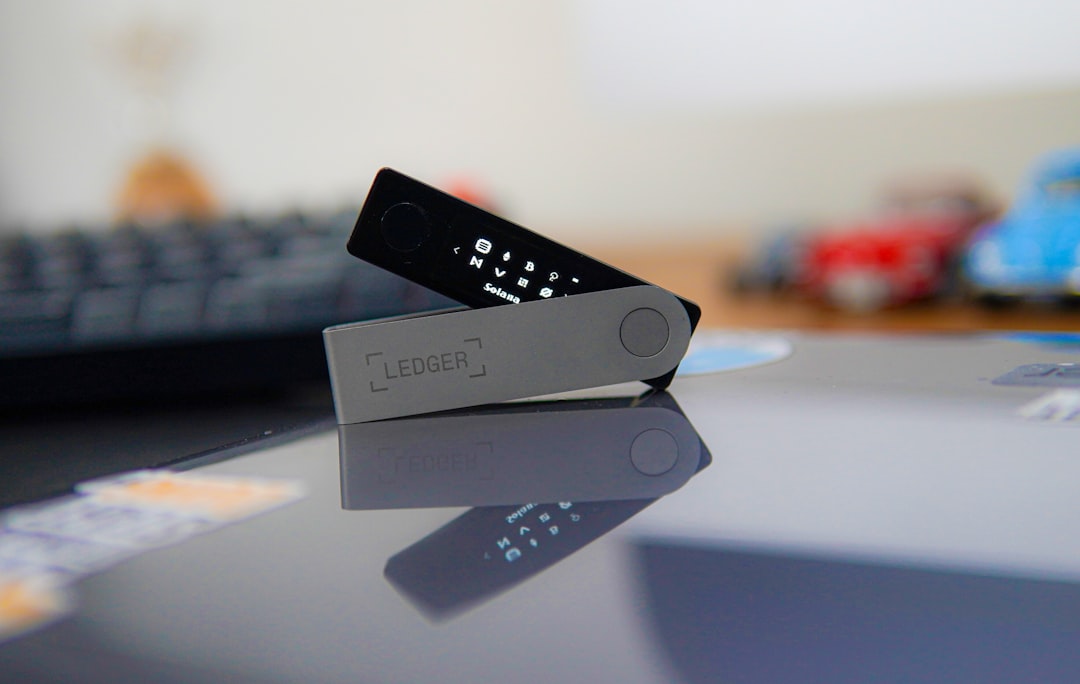
The Ledger universe, primarily understood as the ecosystem surrounding Ledger hardware wallets, presents a multifaceted landscape for individuals engaging with cryptocurrencies and digital assets. This guide aims to provide a comprehensive overview, dissecting its core components, functionalities, and the broader implications for digital security and asset management.
At its core, the Ledger universe revolves around hardware wallets. These devices serve as a critical defense layer against the pervasive threats in the digital realm. You can learn more about the block universe theory in this insightful video.
Defining Hardware Wallets
A hardware wallet is a physical electronic device designed to securely store the private keys for cryptocurrencies offline. Unlike software wallets, which are susceptible to malware and phishing attacks on internet-connected computers, hardware wallets isolate these crucial cryptographic secrets from networked environments. This isolation acts as an impenetrable vault, protecting the private keys even if the connected computer is compromised. The device signs transactions internally, only transmitting the signed (but not the private key itself) transaction to the online world.
The Significance of Offline Storage
The concept of “offline storage” is paramount. Imagine your bank safe deposit box; the contents are physically separated from public view and access. Similarly, a hardware wallet keeps your cryptographic keys – the ultimate control over your digital assets – disconnected from the internet. This air-gapped security model is the bedrock of Ledger’s appeal. Even if a sophisticated attacker gains full control over your computer, they cannot extract your private keys from a Ledger device without physical access and knowledge of your PIN.
Evolution of Hardware Wallets
Early cryptocurrency storage solutions were often rudimentary, relying on paper wallets or insecure software. The advent of hardware wallets, pioneered by companies like Ledger, marked a significant leap forward in addressing the burgeoning security concerns surrounding digital assets. Their continued evolution includes enhanced security chips, improved user interfaces, and broader asset support.
In exploring the concept of the information ledger universe, you may find it insightful to read a related article that delves deeper into the implications of decentralized data management. This article discusses how information ledgers can transform industries by enhancing transparency and security. For more details, you can check out the article here: Related Article on Information Ledger Universe.
Ledger Devices: A Spectrum of Security
Ledger offers a range of devices, each tailored to different user needs and preferences. Understanding their distinctions is crucial for selecting the appropriate tool for your digital asset management.
Ledger Nano S Plus
The Ledger Nano S Plus represents an evolution of the widely adopted Nano S. It features a larger screen, enhanced memory, and improved processing power, enabling it to support a greater number of applications simultaneously. While still a compact device, its increased capacity allows for a more versatile user experience, accommodating a broader portfolio of cryptocurrencies and decentralized applications (dApps). Its user interface is designed for intuitive navigation, making it accessible even to those relatively new to hardware wallets.
Ledger Nano X
The Ledger Nano X stands as Ledger’s premium offering, distinguished by its Bluetooth connectivity. This feature allows users to manage their assets and sign transactions wirelessly through their mobile devices, providing unparalleled convenience. Despite the wireless capability, the private keys remain securely isolated within the device’s certified secure element, ensuring that the Bluetooth connection only transmits signed, non-sensitive data. The Nano X also boasts a larger screen and more robust battery life than its predecessors, further enhancing its user-friendliness and portability.
Secure Elements and Certification
A cornerstone of Ledger’s security architecture is the integration of a Secure Element (SE) chip. This specialized chip, similar to those found in passports and credit cards, is tamper-resistant and designed to withstand sophisticated physical attacks. Each Ledger device incorporates a Common Criteria EAL5+ certified SE, a global standard for evaluating the security of IT products. This certification attests to the rigorous independent testing and validation the chip has undergone, providing a high degree of assurance regarding its resilience against potential breaches. The SE generates and stores your private keys, ensuring they never leave the device.
The Ledger Live Application: Your Digital Asset Command Center
Beyond the hardware itself, the Ledger Live application serves as the primary interface for managing your digital assets within the Ledger ecosystem. It’s the central hub where the physical device meets the digital world.
Core Functionalities of Ledger Live
Ledger Live streamlines the process of managing cryptocurrencies and NFTs. Its core functionalities include:
- Portfolio Tracking: Users can view their entire digital asset portfolio in one place, with real-time market value updates. This provides a clear snapshot of their holdings across various cryptocurrencies.
- Sending and Receiving Transactions: The application facilitates secure sending and receiving of supported cryptocurrencies. Every transaction initiated through Ledger Live requires physical confirmation on the Ledger device, acting as a mandatory “second signature” for all outgoing transfers.
- Staking and Earning Rewards: For certain proof-of-stake cryptocurrencies, Ledger Live allows users to stake their assets directly from their hardware wallet, participating in network validation and earning rewards without relinquishing control of their private keys.
- NFT Management: Ledger Live has expanded its capabilities to include the secure management of Non-Fungible Tokens (NFTs). Users can view and manage their NFTs directly within the application, extending the same hardware-backed security to these unique digital assets.
- App Catalog: The application provides a curated catalog of cryptocurrency applications that can be installed on the Ledger device. These apps enable support for various blockchains and their associated tokens.
Security Features of Ledger Live
While Ledger Live is an online application, its security model is fundamentally reliant on the hardware wallet. The private keys never reside within the application itself. When you initiate a transaction, Ledger Live prepares the transaction data and sends it to your connected Ledger device. The device then, and only then, signs the transaction internally using its securely stored private keys. This signed transaction is then sent back to Ledger Live for broadcast to the blockchain. This architecture ensures that even if your computer running Ledger Live is compromised, your private keys remain protected within the hardware wallet.
Integration with Third-Party DApps
Ledger Live acts as a gateway to a broader decentralized ecosystem. Through features like WalletConnect, users can securely connect their Ledger device to a multitude of decentralized applications (dApps) and DeFi protocols, extending the hardware wallet’s security to these services. This allows for participation in decentralized finance, NFT marketplaces, and other web3 applications with the assurance that their private keys are always protected by the Ledger device.
Enhancing Security: Best Practices and Advanced Features
Possessing a Ledger device is the first step towards securing your digital assets. However, effective security is a continuous practice, necessitating adherence to best practices and an understanding of advanced features.
PIN Code and Seed Phrase Management
Upon initializing a Ledger device, users are prompted to set a PIN code, which acts as the primary access control to the device. This PIN should be unique, complex, and never shared. Crucially, during initialization, the device generates a 24-word recovery phrase, often referred to as a “seed phrase.” This phrase is the master key to your digital assets. It is imperative to:
- Physically write down the seed phrase: Do not store it digitally, as this defeats the purpose of offline security.
- Store it in multiple secure, secret locations: Consider fireproof or waterproof containers. Think of it as the blueprints to your digital vault – if lost, your vault’s contents are irretrievable.
- Never share it with anyone: No legitimate service or individual will ever ask for your seed phrase. Anyone requesting it is attempting a scam.
Firmware Updates
Ledger periodically releases firmware updates for its devices. These updates are critical for enhancing security, adding new features, and patching potential vulnerabilities. Users should diligently apply these updates through Ledger Live, always verifying the authenticity of the update process. Skipping firmware updates can leave your device exposed to known exploits.
Advanced Security Practices
For users seeking an even higher level of security, several advanced practices can be employed:
- Passphrase (25th Word): This optional feature allows users to add an additional word to their 24-word recovery phrase, creating a “hidden” wallet. This can be used to hold a portion of assets, providing a plausible deniability layer in extortion scenarios. If compelled to reveal your main wallet, the hidden wallet remains secure.
- Using a second hardware wallet for critical assets: For ultra-high-net-worth individuals, using two separate hardware wallets, perhaps from different manufacturers, can add a further layer of redundancy and security.
- Regular backups of the seed phrase: While typically a one-time process, periodically checking the integrity of your physical seed phrase backups is a sound practice.
The concept of an information ledger universe is gaining traction as more organizations seek to enhance their data management strategies. For those interested in exploring this topic further, a related article discusses the implications of decentralized data systems and their potential to revolutionize how we handle information. You can read more about it in this insightful piece on My Cosmic Ventures, which delves into the future of data integrity and security.
The Broader Implications: Digital Sovereignty and the Future
| Metric | Description | Value | Unit |
|---|---|---|---|
| Total Ledgers | Number of distinct ledgers in the information ledger universe | 1,250 | Ledgers |
| Average Ledger Size | Average number of entries per ledger | 15,000 | Entries |
| Total Data Volume | Aggregate size of all ledgers combined | 3.2 | Terabytes |
| Update Frequency | Average number of updates per ledger per day | 120 | Updates/Day |
| Data Retention Period | Average duration data is retained in the ledgers | 5 | Years |
| Access Requests | Number of data access requests per month | 45,000 | Requests/Month |
| Ledger Types | Variety of ledger types in the universe | 7 | Types |
The Ledger universe, by empowering individuals with robust tools for asset security, contributes significantly to the broader themes of digital sovereignty and the evolving landscape of digital finance.
Empowering Individual Ownership
In a world increasingly dominated by centralized financial institutions, hardware wallets like Ledger champion individual ownership and control. They remove the reliance on third-party custodians, returning the power of asset management directly to the user. This decentralization of control is a core tenet of the cryptocurrency movement, and Ledger devices serve as a tangible embodiment of this principle. Users become their own bank, holding the keys to their financial destiny.
Reducing Counterparty Risk
Holding digital assets on exchanges or with other centralized entities introduces “counterparty risk.” This risk involves the possibility that the third party might fail, be hacked, or act maliciously, leading to the loss of your assets. By storing private keys on a Ledger device, users drastically reduce this risk, as they are no longer dependent on the security practices or solvency of a third-party intermediary.
Preparing for a Decentralized Future
As the digital economy continues to mature and decentralization expands across various sectors, the importance of secure self-custody solutions will only grow. The Ledger ecosystem provides a reliable and accessible pathway for individuals to participate in this future, safeguarding their digital wealth and engaging with emerging technologies like decentralized finance (DeFi) and the metaverse with confidence. The continued development of Ledger products and Ledger Live, with its expanding support for new chains, tokens, and dApps, aims to keep pace with innovation in the blockchain space, positioning its users at the forefront of digital asset management. Your hardware wallet is not just a device; it is your personal portal to a new financial paradigm, guarded by cryptography and personal diligence.
FAQs
What is an information ledger universe?
An information ledger universe refers to a comprehensive and interconnected system that records, stores, and manages data or information in a structured and secure manner. It often involves distributed ledger technologies like blockchain to ensure transparency and immutability.
How does an information ledger universe work?
It works by using a network of nodes that validate and record transactions or data entries in a ledger. Each entry is linked cryptographically to previous entries, creating a chain of information that is tamper-resistant and easily auditable.
What are the main components of an information ledger universe?
The main components typically include nodes (participants in the network), the ledger itself (a database of records), consensus mechanisms (protocols to agree on data validity), and cryptographic tools to secure and verify information.
What are the benefits of using an information ledger universe?
Benefits include enhanced data security, transparency, reduced fraud, improved traceability, and decentralized control, which can lead to increased trust among participants and more efficient data management.
In which industries is the information ledger universe commonly used?
It is commonly used in finance, supply chain management, healthcare, real estate, and government sectors, among others, where secure and transparent record-keeping is critical.
Is the information ledger universe the same as blockchain?
While blockchain is a type of information ledger universe, the term can encompass a broader range of ledger technologies and systems designed to manage and secure information beyond just blockchain implementations.
What challenges are associated with implementing an information ledger universe?
Challenges include scalability issues, high energy consumption (in some systems), regulatory uncertainties, integration with existing systems, and the need for widespread adoption to realize full benefits.
How is data privacy maintained in an information ledger universe?
Data privacy is maintained through encryption, permissioned access controls, anonymization techniques, and compliance with data protection regulations to ensure sensitive information is protected while maintaining transparency.
Can an information ledger universe be centralized?
While many information ledger universes are decentralized, some implementations can be centralized or permissioned, where a single entity or a group controls the ledger, depending on the use case and requirements.
What future developments are expected in the information ledger universe?
Future developments may include improved scalability solutions, enhanced interoperability between different ledger systems, integration with artificial intelligence, and broader adoption across various industries for more efficient and secure data management.