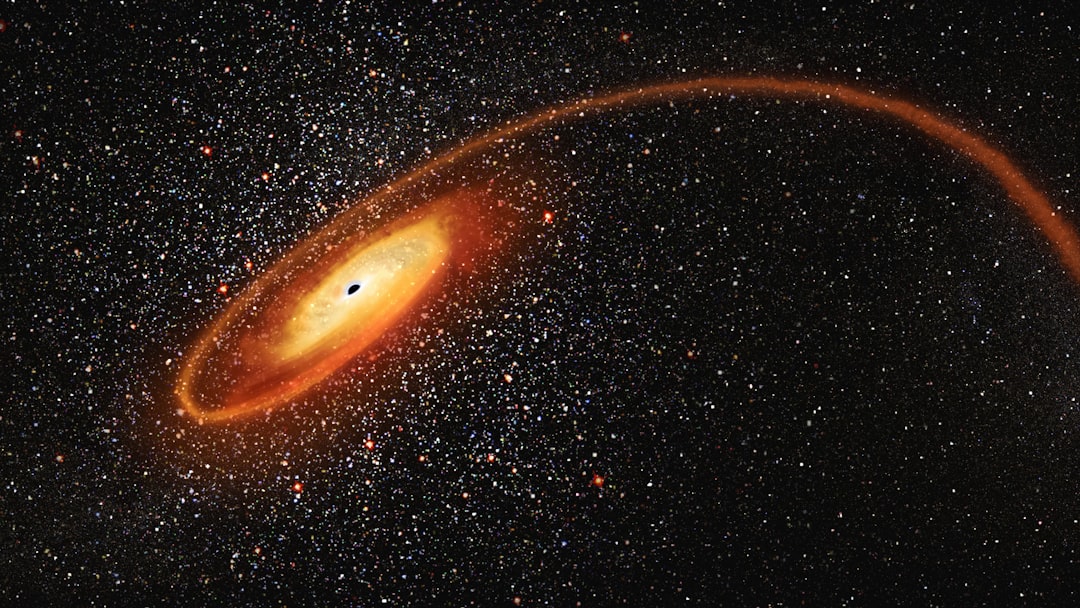
Primordial black holes (PBHs) are hypothesized astronomical objects that formed in the early universe shortly after the Big Bang. Unlike stellar black holes that form from collapsed stars, PBHs originated from density fluctuations in the primordial plasma during the universe’s earliest moments. These fluctuations created regions of highly concentrated matter that collapsed gravitationally to form black holes.
PBHs are significant to cosmology because they may provide evidence about early universe conditions and could potentially constitute a portion of dark matter. The theory of primordial black holes was developed in the 1970s, with Stephen Hawking among the key contributors to this field. Interest in PBHs has increased in recent decades as astronomers and physicists search for explanations regarding the composition of dark matter.
The detection of primordial black holes remains an ongoing scientific challenge, with researchers employing various observational techniques to identify their potential signatures in the cosmos.
Key Takeaways
- Primordial black holes (PBHs) are hypothetical black holes formed in the early universe, offering insights into cosmology and dark matter.
- Current detection methods include gravitational wave observation, microlensing, and space-based telescopes, each with unique challenges.
- Theoretical models suggest various formation scenarios for PBHs, influencing detection strategies and expected signatures.
- Advances in technology and upcoming space missions promise improved sensitivity and new opportunities for PBH discovery.
- Collaborative international research efforts are crucial for overcoming detection challenges and understanding PBHs’ cosmological implications.
Current Methods of Primordial Black Hole Detection
Detecting primordial black holes is a complex endeavor, primarily due to their elusive nature and the vast distances involved in astronomical observations. Currently, researchers employ several methods to identify potential PBHs, each with its own strengths and limitations. One prominent approach involves analyzing gravitational waves produced by the mergers of black holes.
By studying the mass distribution and merger rates of detected black holes, scientists can infer whether some of these objects might be primordial in origin. Another method involves examining cosmic microwave background (CMB) radiation for signatures that could indicate the presence of PBHs.
The CMB is a remnant of the early universe, and its fluctuations can reveal information about density variations that may have led to black hole formation. Researchers analyze these fluctuations to identify patterns that align with theoretical predictions regarding PBH formation. Additionally, gravitational lensing effects caused by massive objects can also serve as a detection method.
When light from distant stars passes near a massive object, such as a black hole, it can be bent and magnified, creating observable effects that may hint at the presence of PBHs.
Challenges in Detecting Primordial Black Holes
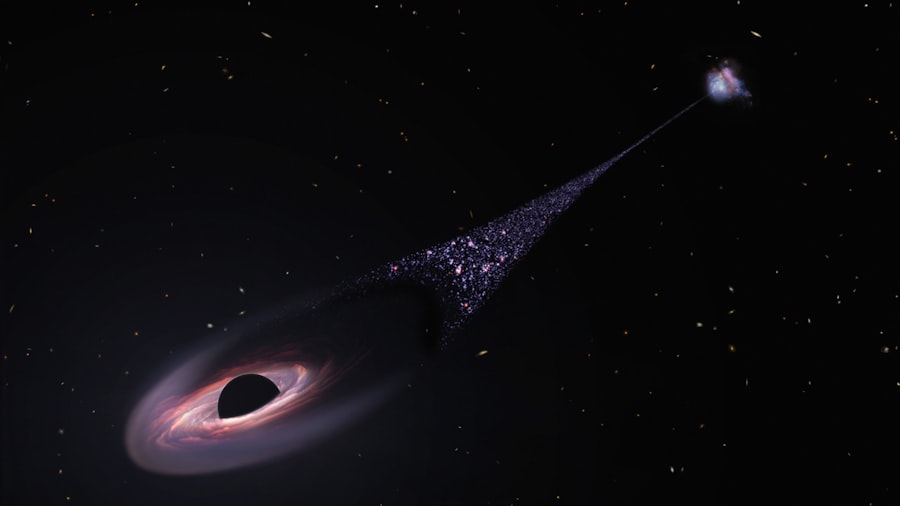
Despite the various methods available for detecting primordial black holes, significant challenges remain. One of the primary obstacles is the lack of direct observational evidence linking specific black holes to primordial origins. Many black holes detected through gravitational waves or other means could easily be stellar in nature, making it difficult to distinguish between them and PBHs.
This ambiguity complicates efforts to establish a clear connection between observed phenomena and primordial black hole theories.
While stellar black holes typically have masses several times greater than that of our Sun, PBHs could range from very small masses to several solar masses.
This wide range complicates detection efforts since different mass scales may require different observational techniques. Additionally, the vastness of space means that even if PBHs exist, they may be too far away or too faint to detect with current technology. As a result, researchers must continually refine their methods and develop new strategies to overcome these challenges.
Theoretical Models for Primordial Black Hole Formation
The formation of primordial black holes is rooted in various theoretical models that attempt to explain how these objects could have emerged from the conditions present in the early universe. One prominent model suggests that PBHs formed from high-density regions created during inflation—a rapid expansion of space that occurred just after the Big Bang. According to this theory, quantum fluctuations during inflation could have led to density variations that eventually collapsed into black holes.
Another model posits that phase transitions in the early universe could have contributed to PBH formation. As the universe cooled, certain fields may have undergone transitions that created localized regions of high energy density. These regions could then collapse under their own gravity, forming primordial black holes.
Additionally, some theories explore the role of cosmic strings—hypothetical one-dimensional defects in spacetime—that could create gravitational wells capable of trapping matter and leading to black hole formation.
New Technologies for Primordial Black Hole Detection
| Metric | Current Status | Future Detection Methods | Expected Improvements | Challenges |
|---|---|---|---|---|
| Mass Range | 10^15 g to several solar masses | Gravitational lensing, gravitational waves, cosmic microwave background (CMB) distortions | Extended sensitivity to lower and higher mass ranges | Distinguishing PBHs from astrophysical black holes |
| Detection Sensitivity | Limited by current instruments | Next-generation gravitational wave detectors (LISA, Einstein Telescope), improved microlensing surveys (LSST) | Higher resolution and longer observation times | Background noise and false positives |
| Event Rate | Uncertain, constrained by existing data | Continuous monitoring of gravitational wave events and microlensing occurrences | Better statistical constraints on PBH abundance | Low event rates and overlapping signals |
| Cosmological Impact | Hypothetical role in dark matter composition | Analysis of CMB anisotropies and 21cm line observations | Improved limits on PBH contribution to dark matter | Complex astrophysical foregrounds |
| Data Analysis Techniques | Basic signal processing and modeling | Machine learning and AI for pattern recognition in large datasets | Enhanced detection accuracy and speed | Training data scarcity and model biases |
As technology advances, new tools and techniques are being developed to enhance the detection of primordial black holes. One promising area is the improvement of gravitational wave observatories. Future upgrades to facilities like LIGO and Virgo aim to increase their sensitivity and expand their detection capabilities.
By enhancing their ability to detect fainter signals from distant mergers, researchers hope to uncover more evidence that could point toward primordial origins. In addition to gravitational wave detection, advancements in observational astronomy are also playing a crucial role. Next-generation telescopes equipped with advanced imaging technologies are being designed to capture more detailed observations of cosmic phenomena.
These telescopes will enable astronomers to probe deeper into space and time, potentially revealing new insights into the distribution and characteristics of primordial black holes. Furthermore, machine learning algorithms are being employed to analyze vast datasets more efficiently, allowing researchers to identify patterns and anomalies that may indicate the presence of PBHs.
Gravitational Wave Detection of Primordial Black Holes
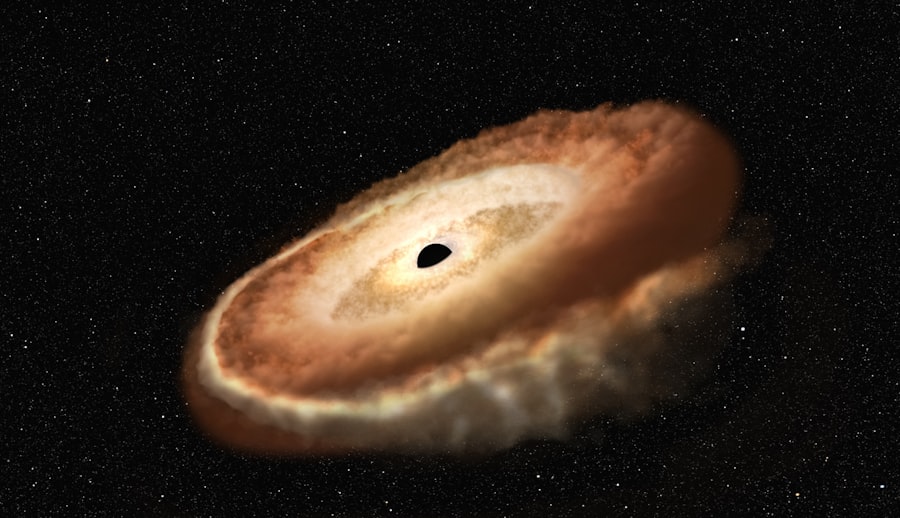
Gravitational wave detection has emerged as one of the most promising avenues for identifying primordial black holes. The groundbreaking discoveries made by LIGO and Virgo have opened up new possibilities for understanding the universe’s most mysterious objects. When two black holes merge, they emit ripples in spacetime known as gravitational waves, which can be detected by sensitive instruments on Earth.
By analyzing these waves, scientists can glean information about the masses and spins of the merging black holes. The significance of gravitational wave detection lies not only in identifying stellar black hole mergers but also in exploring whether some of these events involve primordial black holes. If PBHs exist within certain mass ranges, their mergers could produce distinctive signals that differ from those generated by stellar black holes.
By studying these signals in detail, researchers can potentially distinguish between different types of black hole populations and gain insights into the formation mechanisms behind them.
Microlensing as a Tool for Primordial Black Hole Detection
Microlensing is another innovative technique employed in the search for primordial black holes. This phenomenon occurs when a massive object passes in front of a distant light source, causing the light from that source to bend and magnify due to gravitational effects. If a primordial black hole were to act as a lensing object, it could create observable effects on background stars or galaxies.
Astronomers utilize microlensing surveys to monitor large areas of the sky for transient events caused by gravitational lensing. By analyzing light curves—graphs showing how brightness changes over time—researchers can identify potential microlensing events that may indicate the presence of a primordial black hole. This method has proven effective in detecting objects that are otherwise too faint or distant to observe directly, making it a valuable tool in the ongoing quest to uncover evidence for PBHs.
Future Space Missions for Primordial Black Hole Observation
Looking ahead, future space missions hold great promise for advancing our understanding of primordial black holes. Projects like the European Space Agency’s LISA (Laser Interferometer Space Antenna) aim to create a space-based gravitational wave observatory capable of detecting low-frequency waves generated by massive cosmic events, including potential PBH mergers. By operating outside Earth’s atmosphere, LISA will be able to achieve unprecedented sensitivity and precision in its measurements.
Additionally, missions focused on studying cosmic microwave background radiation will continue to play a crucial role in probing primordial black hole formation theories. Upcoming satellite missions designed to map CMB fluctuations with high resolution will provide valuable data that could help confirm or refute existing models regarding PBH origins. These missions represent a significant step forward in our ability to observe and understand some of the universe’s most elusive phenomena.
Collaborative Efforts in Primordial Black Hole Research
The pursuit of knowledge regarding primordial black holes has fostered collaborative efforts among scientists across various disciplines and institutions worldwide. Researchers from astrophysics, cosmology, particle physics, and mathematics are coming together to share insights and develop comprehensive models that encompass multiple aspects of PBH research. This interdisciplinary approach is essential for tackling complex questions surrounding PBH formation and detection.
Collaborative initiatives often involve large-scale projects that pool resources and expertise from multiple institutions. For instance, international collaborations focused on gravitational wave detection bring together physicists and engineers from different countries to work on advanced observatories like LIGO and Virgo. Such partnerships not only enhance research capabilities but also promote knowledge exchange and innovation within the scientific community.
Implications of Primordial Black Hole Detection for Cosmology
The successful detection of primordial black holes would have profound implications for cosmology and our understanding of the universe’s evolution. If PBHs are confirmed as a component of dark matter, it would reshape current models regarding cosmic structure formation and evolution. This revelation could lead to new insights into how galaxies formed and evolved over billions of years.
Furthermore, understanding primordial black holes may provide clues about fundamental physics beyond current theories. Their existence could challenge or refine existing models related to gravity, quantum mechanics, and high-energy physics. As researchers continue to explore this intriguing area of study, they may uncover new connections between cosmology and particle physics that deepen our understanding of the universe’s fundamental nature.
The Future of Primordial Black Hole Detection
As research into primordial black holes continues to evolve, scientists remain optimistic about future discoveries that could shed light on these enigmatic objects. With advancements in technology, innovative detection methods, and collaborative efforts across disciplines, researchers are better equipped than ever to tackle the challenges associated with identifying PBHs. The potential implications for cosmology are immense; confirming their existence would not only enhance our understanding of dark matter but also provide critical insights into the early universe’s conditions.
In conclusion, while significant hurdles remain in detecting primordial black holes, ongoing research efforts hold promise for unraveling their mysteries. As scientists push the boundaries of knowledge through innovative technologies and collaborative initiatives, they inch closer to answering fundamental questions about our universe’s origins and composition. The future looks bright for those dedicated to exploring this captivating frontier in astrophysics.
Recent advancements in astrophysics have sparked renewed interest in the potential detection of primordial black holes, which are believed to have formed in the early universe. A related article that delves into the implications and methods for detecting these elusive entities can be found on My Cosmic Ventures. For more insights, you can read the article here.
FAQs
What are primordial black holes?
Primordial black holes are hypothetical black holes that are believed to have formed shortly after the Big Bang due to high-density fluctuations in the early universe. Unlike black holes formed from collapsing stars, primordial black holes could have a wide range of masses, including very small ones.
Why is detecting primordial black holes important?
Detecting primordial black holes could provide valuable insights into the conditions of the early universe, the nature of dark matter, and fundamental physics. They may also help explain certain astrophysical phenomena and contribute to our understanding of cosmic evolution.
What methods are used to detect primordial black holes?
Future detection methods include gravitational lensing surveys, gravitational wave observations, cosmic microwave background studies, and searches for Hawking radiation. Instruments like the Laser Interferometer Space Antenna (LISA) and advanced telescopes will play key roles in these efforts.
Can primordial black holes be a component of dark matter?
Yes, one hypothesis is that primordial black holes could make up a significant fraction of dark matter. Detecting them would help confirm or refute this possibility and clarify the composition of dark matter in the universe.
What challenges exist in detecting primordial black holes?
Challenges include their potentially small size, rarity, and the difficulty in distinguishing their signals from other astrophysical sources. Additionally, current observational technologies may not be sensitive enough to detect all possible mass ranges of primordial black holes.
When can we expect to detect primordial black holes?
While no primordial black holes have been definitively detected yet, upcoming advancements in observational technology and data analysis over the next decade increase the likelihood of discovery. However, the exact timeline remains uncertain.
How do gravitational waves help in detecting primordial black holes?
Gravitational waves emitted from the merger of black holes can carry signatures indicating their origin. If primordial black holes merge, their gravitational wave signals might differ from those of stellar black holes, allowing scientists to identify them.
What role does Hawking radiation play in detecting primordial black holes?
Hawking radiation is theoretical radiation emitted by black holes due to quantum effects. Small primordial black holes could emit detectable Hawking radiation as they evaporate, providing a potential observational signature for their detection.