
The exploration of space has fascinated humanity for centuries, but deep space travel only became feasible in the mid-20th century. In 1961, Yuri Gagarin became the first human to orbit Earth, a pivotal achievement in space exploration history. This success prompted an intensified focus on space travel, resulting in the Apollo program, which achieved the first human Moon landing in 1969.
These early missions provided essential knowledge about the technical and environmental challenges of space travel beyond Earth’s atmosphere. The Voyager missions, launched in the late 1970s, significantly advanced understanding of the outer solar system. Voyager 1 and Voyager 2 gathered detailed data and imagery of Jupiter, Saturn, Uranus, and Neptune, fundamentally changing scientific knowledge of these planets.
These missions demonstrated that spacecraft could successfully travel vast distances and highlighted the necessity of sustained planning and international cooperation in space exploration.
Key Takeaways
- Deep space travel has evolved through historical milestones, facing significant technical and human challenges.
- Advanced technology is crucial for overcoming obstacles and enabling sustainable human exploration beyond Earth.
- International collaboration and ethical considerations are key to responsible and effective deep space missions.
- Deep space exploration drives scientific discoveries and holds potential for commercial opportunities.
- Public engagement and sustainability are essential for shaping the future and ensuring long-term success in deep space travel.
Current Challenges in Deep Space Travel
As you consider the current landscape of deep space travel, it becomes evident that numerous challenges persist. One of the most pressing issues is the vast distances involved. For instance, reaching Mars, our closest planetary neighbor, requires a journey of several months, during which astronauts must contend with life support systems, radiation exposure, and psychological stress.
The isolation and confinement of deep space travel can take a toll on mental health, making it crucial to develop strategies to support astronauts during extended missions. Another significant challenge is the technological limitations we face today. While advancements have been made in propulsion systems and spacecraft design, you may find that current technology is still inadequate for long-duration missions beyond Mars.
The need for sustainable life support systems, efficient propulsion methods, and reliable communication channels is paramount. As you reflect on these challenges, it becomes clear that overcoming them will require innovative solutions and a commitment to research and development. Explore the future of space travel with laser sails technology.
The Role of Technology in Advancing Deep Space Travel
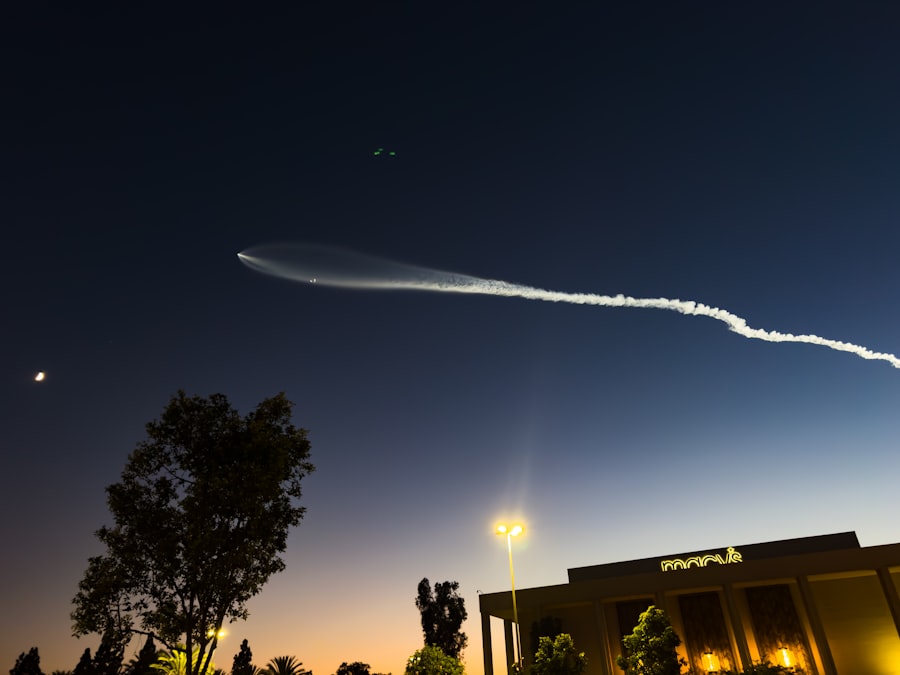
Technology plays a pivotal role in shaping the future of deep space travel.
These technologies promise to reduce travel time significantly, making missions to Mars and beyond more feasible.
As you explore this topic further, consider how innovations in materials science are leading to lighter and more durable spacecraft, enhancing their ability to withstand the harsh conditions of space. Moreover, artificial intelligence (AI) is becoming increasingly integral to deep space missions. You may find it fascinating that AI can assist in navigation, data analysis, and even autonomous decision-making during long missions where communication delays with Earth can hinder real-time responses.
The integration of AI into spacecraft systems not only enhances operational efficiency but also allows for more complex scientific experiments to be conducted during missions. As technology continues to evolve, it will undoubtedly play a crucial role in expanding our reach into the cosmos.
The Potential for Human Exploration of Deep Space
The potential for human exploration of deep space is both exciting and daunting. As you contemplate the possibilities, you may envision a future where humans set foot on Mars or even venture beyond our solar system. The prospect of establishing a human presence on other celestial bodies raises questions about our capabilities and aspirations as a species.
You might find it inspiring to think about how such missions could lead to groundbreaking discoveries about life beyond Earth and our place in the universe. However, human exploration also comes with significant risks and ethical considerations. You may ponder the implications of sending humans into environments that are inhospitable and fraught with danger.
The physical and psychological challenges faced by astronauts must be addressed to ensure their safety and well-being during long-duration missions. As you reflect on these factors, it becomes clear that while the potential for human exploration is immense, it must be approached with caution and thorough planning.
The Importance of Sustainability in Deep Space Travel
| Metric | Current Status | Future Projection (Next 20 Years) | Notes |
|---|---|---|---|
| Maximum Travel Distance | ~0.01 light years (Voyager 1) | Up to 4-5 light years (Proxima Centauri reach) | Advances in propulsion like nuclear fusion or antimatter engines |
| Propulsion Speed | ~17 km/s (Voyager 1) | Up to 0.1c (10% speed of light) | Breakthroughs in ion drives, fusion, or light sail technology |
| Mission Duration | Decades (Voyager missions) | Years to decades | Faster propulsion reduces travel time to nearby stars |
| Communication Delay | Up to 20 hours (Voyager at edge of heliosphere) | Minutes to hours (depending on distance) | Improved laser communication systems |
| Energy Source | Radioisotope Thermoelectric Generators (RTGs) | Nuclear fusion, antimatter, or advanced solar power | Higher energy density needed for deep space propulsion |
| Payload Capacity | ~1 ton (Voyager) | 10-100 tons | Enables more complex scientific instruments and habitats |
| Autonomy Level | Remote controlled with limited AI | Highly autonomous AI systems | Essential for long-duration missions with communication delays |
Sustainability is a critical aspect of deep space travel that cannot be overlooked. As you consider future missions, you may recognize that relying solely on Earth’s resources is not viable for long-term exploration. Developing sustainable practices for resource utilization in space is essential for ensuring that missions can be conducted without depleting Earth’s resources or causing environmental harm.
You might find it compelling to explore concepts such as in-situ resource utilization (ISRU), which involves using local materials on celestial bodies to support human activities. Additionally, sustainability extends beyond resource management; it encompasses the ethical responsibility we have toward preserving celestial environments. As you think about future missions, consider how we can minimize our impact on other planets and moons while conducting scientific research.
This commitment to sustainability will not only benefit future explorers but also reflect our values as stewards of both Earth and the cosmos.
The Impact of Deep Space Travel on Scientific Discoveries

Deep space travel has already yielded remarkable scientific discoveries that have transformed our understanding of the universe. You may recall how missions like Hubble Space Telescope have provided breathtaking images and invaluable data about distant galaxies, stars, and exoplanets.
As you look ahead, consider how future deep space missions could further enhance our scientific understanding. Missions to Mars could uncover evidence of past microbial life or provide insights into planetary formation processes. The study of asteroids and comets may reveal clues about the early solar system and the building blocks of life.
Each mission presents an opportunity to answer fundamental questions about our existence and the nature of the universe itself.
The Role of International Collaboration in Deep Space Travel
International collaboration is essential for advancing deep space travel. As you reflect on this topic, you may recognize that no single nation possesses all the resources or expertise required for ambitious space missions. Collaborative efforts among countries can pool knowledge, technology, and funding to achieve common goals.
You might find it inspiring to think about how partnerships between agencies like NASA, ESA (European Space Agency), Roscosmos (Russian Space Agency), and others have already led to successful missions such as the International Space Station (ISS). Moreover, international collaboration fosters a sense of unity among nations as they work together toward shared objectives in space exploration. You may appreciate how this cooperation can promote peaceful relations and inspire future generations to pursue careers in science and engineering.
As humanity ventures deeper into space, collaboration will be key to overcoming challenges and maximizing the benefits of exploration for all.
The Ethical Considerations of Deep Space Travel
As you contemplate deep space travel, ethical considerations come to the forefront. One pressing issue is the potential contamination of other celestial bodies with Earth-based microorganisms. You may ponder whether we have a moral obligation to protect extraterrestrial environments from human interference.
This concern raises questions about planetary protection protocols and how we can ensure that our explorations do not compromise scientific integrity or harm potential ecosystems. Additionally, there are ethical dilemmas surrounding human exploration itself. You might consider the implications of sending humans into dangerous environments where their lives could be at risk.
The decision-making process regarding who gets selected for such missions raises questions about fairness and representation. As you reflect on these ethical considerations, it becomes clear that responsible exploration requires careful thought and dialogue among scientists, policymakers, and society at large.
The Potential for Commercialization of Deep Space Travel
The commercialization of deep space travel is an emerging frontier that holds great promise for expanding access to space exploration. You may have heard about private companies like SpaceX and Blue Origin making strides in developing reusable rockets and spacecraft designed for deep space missions. This shift toward commercial involvement could lead to increased competition, innovation, and reduced costs for launching missions beyond Earth’s orbit.
As you explore this topic further, consider how commercialization could democratize access to space exploration. With private companies entering the arena, opportunities may arise for research institutions, universities, and even individuals to participate in deep space missions. This could lead to a new era of discovery where diverse voices contribute to our understanding of the cosmos while fostering a sense of shared ownership over humanity’s journey into space.
The Future of Deep Space Travel: Predictions and Speculations
Looking ahead, you might find yourself pondering what the future holds for deep space travel. Predictions suggest that within the next few decades, humans could establish a permanent presence on Mars or even venture toward asteroids for mining operations. As technology continues to advance at an unprecedented pace, you may envision spacecraft capable of traveling beyond our solar system within your lifetime.
Speculations about interstellar travel also capture your imagination—concepts like warp drives or generation ships may seem far-fetched today but could become feasible with breakthroughs in physics and engineering. As you consider these possibilities, remember that each step forward in deep space travel brings us closer to answering profound questions about existence while inspiring generations to dream big.
The Role of Public Engagement in the Future of Deep Space Travel
Public engagement will play a crucial role in shaping the future of deep space travel. As you think about this aspect, consider how fostering interest in space exploration can inspire young minds to pursue careers in STEM fields (science, technology, engineering, mathematics). Engaging communities through educational programs, outreach initiatives, and public events can create a sense of ownership over humanity’s journey into space.
Moreover, public support is vital for funding ambitious missions and ensuring that policymakers prioritize space exploration efforts. You might find it encouraging that initiatives like citizen science projects allow individuals from all walks of life to contribute to scientific research while fostering a deeper connection with the cosmos. By actively involving the public in discussions about deep space travel’s benefits and challenges, we can cultivate a collective vision for a future where exploration knows no bounds.
In conclusion, as you reflect on these various aspects of deep space travel—from its rich history to its ethical implications—you may feel inspired by humanity’s relentless pursuit of knowledge beyond our planet. The challenges are significant but surmountable with collaboration, innovation, and a commitment to sustainability. As we stand on the brink of new discoveries in the cosmos, your engagement with this journey will shape not only your understanding but also the future trajectory of humanity’s exploration among the stars.
As we look towards the future of deep space travel, advancements in technology and innovative mission designs are crucial. A related article that delves into these exciting developments can be found on My Cosmic Ventures, which explores the potential for human exploration beyond our solar system. For more insights, you can read the article [here](https://www.mycosmicventures.com/).
WATCH THIS! 🚀✨ Can Laser Sails Take Us to Alpha Centauri in 20 Years?
FAQs
What is deep space travel?
Deep space travel refers to the exploration and journey of spacecraft beyond Earth’s orbit, typically venturing into regions of space far from our planet, such as other planets, moons, asteroids, and interstellar space.
What are the main challenges of deep space travel?
The primary challenges include long-duration life support, radiation exposure, propulsion technology limitations, psychological effects on astronauts, communication delays, and the need for sustainable resources during extended missions.
What propulsion technologies are being considered for future deep space missions?
Future deep space missions may utilize advanced propulsion methods such as nuclear thermal propulsion, ion thrusters, solar sails, and potentially fusion-based engines to achieve higher speeds and greater efficiency than current chemical rockets.
How long could future deep space missions take?
Mission durations vary depending on the destination and technology used. For example, a crewed mission to Mars could take approximately six to nine months one way, while missions to outer planets or beyond could take several years or decades without advanced propulsion.
What role does artificial intelligence play in deep space travel?
Artificial intelligence can assist in navigation, system monitoring, autonomous decision-making, scientific data analysis, and managing spacecraft operations, especially when communication delays with Earth are significant.
How is radiation exposure managed during deep space travel?
Radiation protection strategies include spacecraft shielding, optimized mission timing to avoid solar storms, use of radiation-hardened electronics, and potential medical countermeasures to protect astronauts from cosmic rays and solar radiation.
What are the prospects for human colonization in deep space?
While still theoretical, human colonization efforts focus on establishing habitats on the Moon, Mars, or other celestial bodies, requiring advancements in life support, sustainable resource utilization, and protection from harsh space environments.
How does communication work during deep space missions?
Communication relies on radio waves transmitted between spacecraft and Earth-based stations. Due to vast distances, there can be significant time delays, ranging from minutes to hours, necessitating autonomous systems onboard spacecraft.
What organizations are leading the development of deep space travel?
Key organizations include NASA, the European Space Agency (ESA), Roscosmos, CNSA (China National Space Administration), and private companies like SpaceX and Blue Origin, all contributing to technology development and mission planning.
What scientific benefits are expected from deep space exploration?
Deep space exploration can provide insights into the origins of the solar system, planetary formation, potential for life beyond Earth, and fundamental physics, as well as drive technological innovation and inspire future generations.