Space has been a subject of human fascination throughout history, inspiring mythology, literature, and scientific research. The universe contains billions of galaxies, stars, planets, and other celestial objects that scientists continue to study and explore. Space science documentaries provide educational content about astronomical discoveries, space exploration missions, and current research in fields such as astrophysics and cosmology.
These productions typically combine high-resolution imagery from telescopes and spacecraft with explanations from researchers and scientists working in relevant fields. Space science documentaries present information about astrophysics, cosmology, and planetary science to general audiences. They document significant achievements in space exploration, including robotic missions to other planets, telescope observations of distant galaxies, and theoretical advances in understanding cosmic phenomena.
These documentaries translate complex scientific concepts into accessible formats, covering topics such as stellar formation, black holes, exoplanets, and the structure of the universe. The content often includes footage from space agencies, computer simulations of cosmic events, and interviews with scientists conducting current research in space-related disciplines.
Key Takeaways
- The documentary provides a comprehensive overview of space science and exploration history.
- It highlights key topics like black holes, star formation, and the search for extraterrestrial life.
- Space telescopes and agencies play crucial roles in advancing our understanding of the cosmos.
- The film discusses both the challenges and future prospects of space exploration.
- It emphasizes the profound impact and awe-inspiring nature of the universe on humanity.
The History of Space Exploration
The history of space exploration is a tale of ambition, innovation, and perseverance. It began in earnest during the mid-20th century when the Cold War spurred a race between nations to conquer the final frontier. The launch of Sputnik 1 by the Soviet Union in 1957 marked a pivotal moment in human history, as it became the first artificial satellite to orbit Earth.
This event ignited a fervor for space exploration that would lead to monumental achievements, including human spaceflight and lunar landings. The Apollo program, culminating in the historic Apollo 11 mission in 1969, showcased humanity’s ability to transcend earthly boundaries and set foot on another celestial body. As the decades progressed, space exploration evolved from government-led initiatives to include international collaborations and private enterprises.
The establishment of the International Space Station (ISS) in 1998 exemplified this shift, bringing together astronauts from various countries to conduct research in microgravity. The documentary highlights these milestones, illustrating how each achievement built upon the last, paving the way for future explorations. It emphasizes that space exploration is not merely a series of events but a continuous journey fueled by human curiosity and ingenuity.
The Search for Extraterrestrial Life
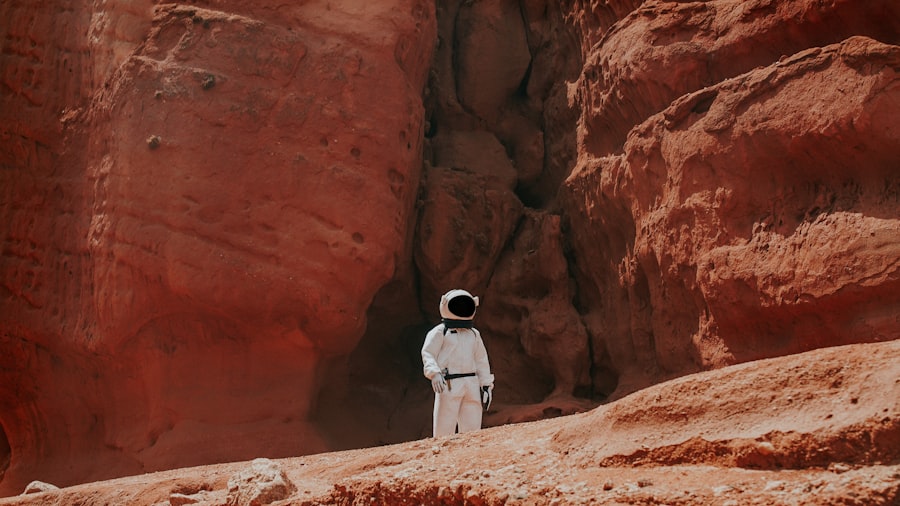
One of the most tantalizing questions in science is whether life exists beyond Earth. The search for extraterrestrial life has driven numerous missions and research initiatives, as scientists seek to answer this profound inquiry. The documentary delves into various approaches taken by researchers, from studying extreme environments on Earth that mimic conditions on other planets to sending probes to distant worlds like Mars and Europa.
These efforts aim to uncover signs of life or conditions suitable for life elsewhere in the universe. Astrobiology emerges as a key theme in this exploration, as it combines elements of biology, chemistry, and planetary science to understand life’s potential beyond Earth. The documentary showcases groundbreaking discoveries, such as the detection of exoplanets in habitable zones around distant stars and the identification of organic molecules on celestial bodies within our solar system.
Each finding adds a piece to the puzzle, fueling hope and excitement about the possibility of discovering life beyond our planet. The narrative encourages viewers to contemplate not only the scientific implications but also the philosophical questions surrounding humanity’s place in a potentially populated universe.
The Mysteries of Black Holes
Black holes represent one of the most enigmatic phenomena in astrophysics, captivating scientists and laypeople alike with their strange properties and implications for our understanding of gravity and spacetime. The documentary explores how black holes form from the remnants of massive stars that have undergone gravitational collapse. Their immense gravitational pull prevents anything, even light, from escaping once it crosses the event horizon, leading to their classification as “black.” This characteristic has sparked intrigue and speculation about what lies within these cosmic voids.
The documentary also addresses recent advancements in black hole research, including the groundbreaking Event Horizon Telescope project that captured the first-ever image of a black hole’s event horizon in 2019. This achievement marked a significant milestone in observational astronomy and provided tangible evidence supporting theories about these mysterious entities. By weaving together scientific explanations with visual representations, the documentary invites viewers to grapple with concepts that challenge conventional understanding while marveling at the beauty and complexity of black holes.
The Formation and Evolution of Stars
| Metric | Value | Notes |
|---|---|---|
| Average Runtime | 60 minutes | Typical length of a single episode or feature |
| Number of Documentaries Released (2023) | 45 | Includes both TV and streaming platforms |
| Most Common Topics | Space Exploration, Astronomy, Astrobiology | Frequently covered themes |
| Average Viewer Rating | 8.2/10 | Based on aggregated review scores |
| Popular Platforms | Netflix, National Geographic, Discovery Channel | Top distributors of space science documentaries |
| Typical Audience Age Range | 15-45 years | Primary demographic interested in space science content |
| Average Production Budget | 1.2 million | Estimated average cost per documentary |
Stars are fundamental building blocks of the universe, illuminating the night sky and playing a crucial role in cosmic evolution. The documentary takes viewers on a journey through stellar formation, beginning with vast clouds of gas and dust known as nebulae. Under the influence of gravity, these materials coalesce to form protostars, which eventually ignite nuclear fusion in their cores, marking their birth as stars.
This process is not only fascinating but also essential for understanding how elements are created and distributed throughout the universe. As stars age, they undergo various stages of evolution depending on their mass. The documentary highlights different types of stars—from small red dwarfs that can burn for trillions of years to massive blue giants that live fast and die young—each contributing uniquely to the cosmic landscape.
The death throes of stars often lead to spectacular events such as supernovae or the formation of neutron stars and black holes. By illustrating these processes with vivid imagery and expert insights, the documentary emphasizes how stars are not just points of light but dynamic entities that shape galaxies and influence planetary systems.
The Importance of Space Telescopes

Space telescopes have revolutionized our understanding of the universe by providing unprecedented views of celestial phenomena free from Earth’s atmospheric interference. The documentary underscores the significance of these instruments, beginning with pioneering missions like Hubble Space Telescope, which has captured breathtaking images and provided invaluable data since its launch in 1990. Hubble’s observations have led to groundbreaking discoveries about galaxy formation, dark matter, and even the expansion rate of the universe.
The narrative also explores newer missions such as the James Webb Space Telescope (JWST), which promises to push the boundaries of astronomical observation even further. With its advanced technology designed to observe infrared wavelengths, JWST aims to study distant galaxies, star formation processes, and potentially habitable exoplanets with unparalleled clarity. By showcasing these telescopes’ contributions to science, the documentary highlights how they serve as windows into the cosmos, allowing humanity to explore regions of space that were once beyond reach.
The Future of Space Exploration
As humanity stands on the brink of a new era in space exploration, the documentary paints an optimistic picture of what lies ahead. With advancements in technology and growing interest from private companies, ambitious missions are being planned that could take humans back to the Moon and even to Mars.
Moreover, international collaborations are becoming increasingly vital as nations recognize that exploring space is a shared endeavor that transcends borders. Initiatives like Mars Sample Return missions involve partnerships between various space agencies to bring back samples from Mars for analysis on Earth. The documentary emphasizes that these future explorations will not only expand humanity’s presence in space but also deepen our understanding of planetary systems and foster technological innovations that can benefit life on Earth.
The Role of Space Agencies in Researching the Cosmos
Space agencies play a pivotal role in advancing our knowledge of the cosmos through coordinated research efforts and mission planning. Organizations such as NASA, ESA (European Space Agency), Roscosmos (Russian Federal Space Agency), and others have been at the forefront of space exploration since its inception. The documentary highlights how these agencies collaborate on various projects while also pursuing independent missions that contribute uniquely to our understanding of space.
The narrative delves into specific missions undertaken by these agencies—such as NASA’s Voyager probes that have traveled beyond our solar system or ESA’s Rosetta mission that successfully landed on a comet—showcasing their contributions to science and technology. Additionally, it emphasizes how these agencies inspire future generations by promoting STEM education and fostering public interest in space science. By showcasing their achievements and ongoing efforts, the documentary underscores that space agencies are not just institutions but vital players in humanity’s quest for knowledge about our universe.
The Impact of Space Science on Earth
The pursuit of knowledge about outer space has far-reaching implications for life on Earth. The documentary illustrates how advancements in space science have led to numerous benefits across various fields, including telecommunications, weather forecasting, environmental monitoring, and even medicine. Technologies developed for space missions often find applications on Earth—such as satellite imaging used for disaster response or GPS systems that enhance navigation.
Moreover, understanding cosmic phenomena can provide insights into Earth’s own environment and climate change challenges. For instance, studying solar activity helps scientists predict space weather events that can impact satellite operations and power grids on Earth. By connecting these dots between space science and terrestrial applications, the documentary emphasizes that exploring the cosmos is not an isolated endeavor but one that enriches life on our planet.
The Challenges of Exploring the Cosmos
Despite remarkable progress in space exploration, significant challenges remain that scientists must overcome to continue their quest for knowledge about the universe. The documentary addresses issues such as funding constraints faced by space agencies amid competing priorities on Earth. Additionally, technical challenges related to spacecraft design, propulsion systems, and long-duration human missions pose hurdles that require innovative solutions.
Another critical aspect discussed is ensuring astronaut safety during deep-space missions—particularly those aimed at Mars or beyond—where exposure to cosmic radiation presents health risks. As humanity ventures further into space, ethical considerations surrounding planetary protection also come into play; safeguarding other celestial bodies from contamination is essential for preserving potential extraterrestrial ecosystems. By highlighting these challenges candidly, the documentary underscores that while exploring the cosmos is fraught with difficulties, it is precisely these obstacles that drive innovation and inspire future generations.
The Beauty and Wonder of the Universe
In conclusion, exploring the cosmos is an endeavor filled with beauty and wonder that transcends mere scientific inquiry; it is a testament to humanity’s insatiable curiosity and desire for discovery. Through documentaries dedicated to this subject matter, audiences are invited to witness not only breathtaking visuals but also profound insights into our place within an expansive universe teeming with mysteries yet to be unraveled.
Ultimately, exploring the cosmos serves as both an adventure into uncharted territories and an opportunity for introspection about humanity’s role in shaping its destiny among the stars.
For those interested in exploring the wonders of the universe, the space science documentary featured on My Cosmic Ventures offers a captivating look into the latest discoveries and theories in astrophysics. To delve deeper into the subject, you can check out a related article that discusses the implications of recent findings in space exploration. You can read more about it in this insightful piece: My Cosmic Ventures.
FAQs
What is a space science documentary?
A space science documentary is a film or video presentation that explores topics related to space, astronomy, astrophysics, and the exploration of the universe. These documentaries often include scientific explanations, visuals from telescopes and space missions, and expert interviews.
What topics are commonly covered in space science documentaries?
Common topics include the formation of stars and planets, black holes, the Big Bang theory, space exploration missions, the solar system, the search for extraterrestrial life, and advancements in space technology.
Who typically produces space science documentaries?
Space science documentaries are often produced by educational organizations, science channels, public broadcasters, space agencies like NASA or ESA, and independent filmmakers specializing in science communication.
Are space science documentaries suitable for all ages?
Many space science documentaries are designed to be accessible to a general audience, including students and adults. However, some may contain complex scientific concepts that require a basic understanding of physics or astronomy.
Where can I watch space science documentaries?
Space science documentaries can be found on streaming platforms such as Netflix, Amazon Prime, YouTube, and specialized science channels like National Geographic, Discovery Channel, and PBS.
How accurate are space science documentaries?
Most reputable space science documentaries strive for scientific accuracy by consulting experts and using up-to-date research. However, some may simplify or dramatize content for entertainment purposes.
Can space science documentaries help with learning about space?
Yes, space science documentaries are valuable educational tools that provide visual and narrative explanations of complex space phenomena, making it easier to understand and retain scientific information.
Do space science documentaries include real footage from space?
Many space science documentaries feature real footage from telescopes, satellites, space probes, and astronauts aboard the International Space Station, alongside computer-generated imagery to illustrate concepts that cannot be filmed directly.