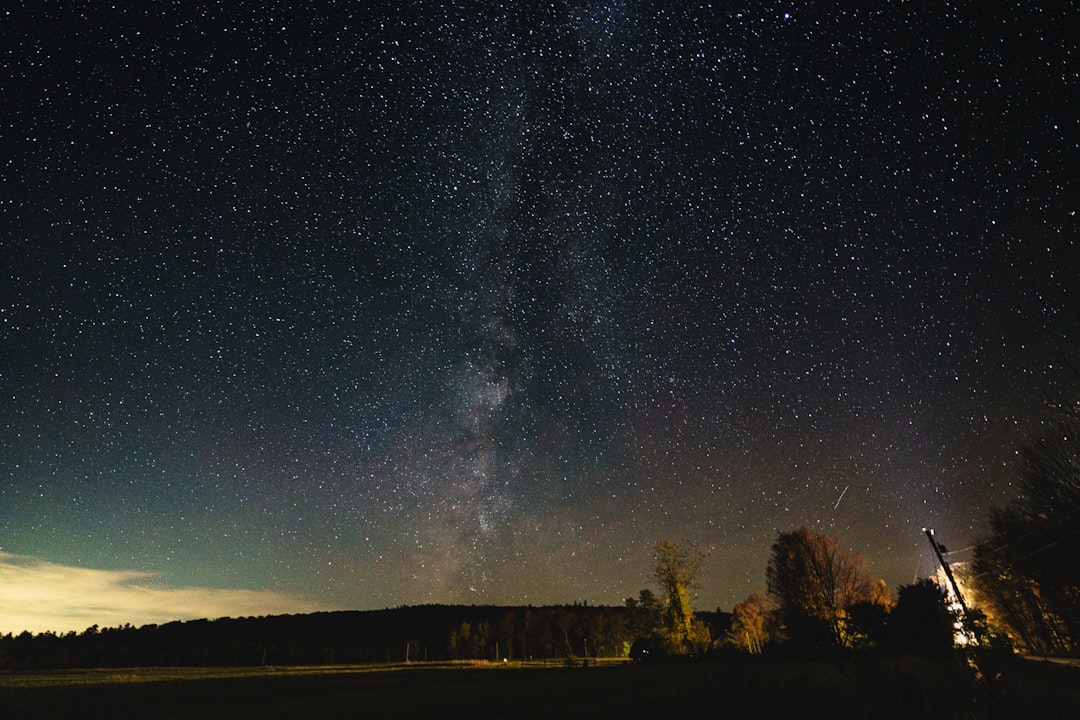
The cosmic horizon defines the observable boundary of our universe, determined by the speed of light and the universe’s age. This fundamental limit shapes our understanding of cosmic space-time relationships. Beyond this observational threshold exists a vast universe containing countless galaxies and stellar phenomena that remain invisible to us.
This boundary represents both a physical limitation and an intellectual frontier in cosmology. The regions beyond our cosmic horizon likely contain galaxies, stars, and potentially other phenomena that will permanently remain unobservable from Earth. The cosmic horizon thus serves as both a constraint on direct observation and a catalyst for theoretical exploration, driving scientific inquiry into the nature and extent of the universe beyond our observable limits.
Explore the fascinating connection between a near death experience quantum physics in this insightful video.
Key Takeaways
- The cosmic horizon defines the limit of the observable universe from Earth.
- Advanced tools like telescopes and satellites enable detailed observation of distant galaxies and cosmic phenomena.
- Challenges such as cosmic expansion and interference complicate observing the farthest reaches of space.
- Studying cosmic microwave background radiation helps map the universe’s large-scale structure.
- Future technologies aim to deepen our understanding of dark matter, dark energy, and the universe’s evolution.
The Observable Universe: What Can We See?
When you think about the observable universe, it encompasses everything that you can potentially see from your vantage point on Earth. This includes an estimated 2 trillion galaxies, each containing billions of stars and countless planets. The observable universe extends approximately 93 billion light-years in diameter, a staggering distance that highlights just how vast your cosmic neighborhood truly is.
However, it’s essential to recognize that what you see is limited by the age of the universe and the speed at which light travels. As you explore this observable realm, you encounter a rich tapestry of celestial objects. From the nearest stars in your Milky Way galaxy to distant quasars that shine with incredible brightness, each object tells a story about the universe’s history and evolution.
You may find yourself captivated by nebulae, where new stars are born, or by supernovae, which mark the explosive deaths of massive stars. Each observation adds a layer to your understanding of cosmic phenomena, revealing not just what exists but also how these entities interact and evolve over time.
Observing the Universe from Earth

Your journey into the cosmos often begins right here on Earth. Despite its limitations, your planet offers unique advantages for astronomical observation. With a clear night sky, you can witness celestial events such as meteor showers, lunar eclipses, and planetary alignments.
These occurrences connect you to the rhythms of the universe and remind you of your place within it. However, light pollution and atmospheric conditions can hinder your ability to see faint objects, prompting many to seek darker locations for optimal stargazing. In addition to natural observations, Earth-based telescopes have revolutionized your understanding of the universe.
Ground-based observatories equipped with powerful instruments allow you to capture images and data from distant celestial bodies. These telescopes can detect various wavelengths of light, from radio waves to gamma rays, providing a comprehensive view of cosmic phenomena. As you engage with these tools, you become part of a long tradition of astronomers who have sought to unlock the mysteries of the night sky.
Tools and Techniques for Observing the Universe
To truly appreciate the wonders of the universe, you rely on an array of sophisticated tools and techniques designed for astronomical observation. Telescopes are perhaps the most iconic instruments in this endeavor, allowing you to magnify distant objects and gather light from across vast distances. Optical telescopes capture visible light, while radio telescopes detect radio waves emitted by celestial bodies.
Each type of telescope offers unique insights into different aspects of the universe. In addition to telescopes, advancements in technology have introduced you to a variety of observational techniques. Spectroscopy enables you to analyze light from stars and galaxies, revealing their composition, temperature, and motion.
This technique allows you to decipher the chemical makeup of distant objects and understand their life cycles. Furthermore, space-based observatories like the Hubble Space Telescope provide an unobstructed view of the cosmos, free from Earth’s atmospheric interference. These tools collectively enhance your ability to explore and understand the universe in ways that were once unimaginable.
Challenges in Observing the Cosmic Horizon
| Metric | Value | Unit | Description |
|---|---|---|---|
| Radius of Observable Universe | 46.5 | billion light years | Distance from Earth to the edge of the observable universe |
| Diameter of Observable Universe | 93 | billion light years | Total width of the observable universe |
| Age of the Universe | 13.8 | billion years | Time since the Big Bang |
| Cosmic Horizon | 46.5 | billion light years | Maximum distance from which light has had time to reach us |
| Hubble Constant | 67.4 | km/s/Mpc | Rate of expansion of the universe |
| Observable Universe Volume | 4 × 10^32 | cubic light years | Volume contained within the observable universe |
While your quest to observe the universe is filled with excitement, it is not without its challenges. One significant hurdle is the vast distances involved; light from distant galaxies takes millions or even billions of years to reach you. This means that when you observe these galaxies, you are looking back in time, witnessing them as they were long ago rather than as they are today.
This temporal aspect complicates your understanding of cosmic evolution and raises questions about what has changed since that light first began its journey. Another challenge lies in the limitations imposed by technology and human perception. Despite advancements in observational tools, there are still regions of space that remain elusive due to factors such as dust clouds obscuring your view or wavelengths of light that current instruments cannot detect.
Additionally, interpreting data from these observations requires a deep understanding of physics and cosmology, making it essential for you to engage with complex theories and models to make sense of what you see.
The Expansion of the Universe

As you delve deeper into cosmology, one fundamental concept that emerges is the expansion of the universe. This phenomenon was first proposed by Edwin Hubble in the early 20th century when he observed that distant galaxies are moving away from you at speeds proportional to their distance. This observation led to the realization that the universe is not static but rather dynamic and ever-expanding.
The implications of this discovery are profound; they suggest that everything in the universe was once concentrated in a singularity before undergoing a rapid expansion known as the Big Bang. Understanding this expansion invites you to consider its implications for the future of the universe. As galaxies continue to drift apart, questions arise about their ultimate fate.
Will they eventually recede beyond your cosmic horizon? Will gravitational forces eventually halt this expansion? These inquiries challenge your perception of time and space, prompting you to think about how interconnected everything is within this vast cosmos.
Studying the Cosmic Microwave Background Radiation
One of the most significant discoveries in cosmology is the cosmic microwave background radiation (CMBR), which serves as a relic from the early universe. As you explore this phenomenon, you’ll find that it provides crucial insights into the conditions that existed shortly after the Big Bang. The CMBR is essentially a faint glow permeating all of space, a remnant of hot plasma that cooled as the universe expanded.
By studying this radiation, you gain access to information about the universe’s infancy and its subsequent evolution. The CMBR offers a wealth of data that helps refine your understanding of cosmological models. By analyzing its temperature fluctuations and patterns, scientists can infer details about the distribution of matter in the early universe and how it has evolved over billions of years.
This study not only enhances your knowledge of cosmic history but also reinforces fundamental principles such as inflation theory—the idea that rapid expansion occurred just after the Big Bang—shaping your comprehension of how structures like galaxies formed.
Mapping the Large-Scale Structure of the Universe
As you venture further into cosmology, mapping the large-scale structure of the universe becomes an essential endeavor. This mapping involves studying how galaxies are distributed across vast distances and identifying patterns within this distribution. You may find yourself fascinated by concepts such as galaxy clusters, superclusters, and cosmic filaments—structures that reveal how matter is organized on grand scales.
Through surveys like the Sloan Digital Sky Survey (SDSS), astronomers have compiled extensive data on millions of galaxies, allowing them to create detailed maps that illustrate these large-scale structures. By analyzing these maps, you can gain insights into how gravity influences galaxy formation and clustering over time. Understanding these patterns not only enriches your knowledge but also raises questions about dark matter’s role in shaping this structure—a mystery that continues to intrigue scientists.
Observing Distant Galaxies and Quasars
Your exploration of distant galaxies and quasars opens up new frontiers in understanding cosmic evolution. Quasars are among the most luminous objects in the universe, powered by supermassive black holes at their centers. As you observe these distant beacons, you’re witnessing some of the earliest stages in galaxy formation and evolution—events that occurred billions of years ago when the universe was still young.
The study of distant galaxies allows you to piece together a timeline of cosmic history. By examining their light spectra and redshifts, you can determine their distances and velocities relative to Earth. This information helps construct models that explain how galaxies have evolved over time and how they interact with one another through gravitational forces.
Exploring Dark Matter and Dark Energy
As you delve deeper into cosmology, two enigmatic components emerge: dark matter and dark energy. Dark matter is thought to make up approximately 27% of the universe’s total mass-energy content yet remains invisible to direct observation. Its presence is inferred through gravitational effects on visible matter—an intriguing puzzle that challenges your understanding of physics.
On the other hand, dark energy accounts for about 68% of the universe’s energy density and is responsible for its accelerated expansion. This mysterious force raises profound questions about fundamental physics and our understanding of gravity itself. As researchers work tirelessly to uncover more about these elusive entities, you’re invited to engage with cutting-edge theories and experiments aimed at shedding light on their nature.
Future of Observing the Observable Universe
Looking ahead, your journey into observing the observable universe promises exciting developments fueled by technological advancements and innovative research initiatives. Upcoming space missions like NASA’s James Webb Space Telescope aim to provide unprecedented views into previously uncharted territories—offering insights into exoplanets’ atmospheres or probing deeper into galaxy formation than ever before. Moreover, advancements in artificial intelligence and data analysis techniques will enhance your ability to process vast amounts of astronomical data efficiently.
As new discoveries unfold before your eyes—whether through groundbreaking telescopes or collaborative international efforts—you’ll find yourself at the forefront of humanity’s quest for knowledge about our place in this magnificent cosmos. In conclusion, observing the observable universe is an exhilarating journey filled with challenges and discoveries that expand your understanding beyond imagination. From grappling with concepts like cosmic horizons to exploring dark matter’s mysteries—each step deepens your connection with this vast expanse we call home.
As technology continues evolving alongside human curiosity—there’s no telling what wonders await discovery just beyond your cosmic horizon.
The concept of the cosmic horizon and the observable universe is fascinating, as it defines the limits of what we can see in the vast expanse of space. For a deeper understanding of this topic, you can explore the article on cosmic exploration and its implications for our understanding of the universe at this link. This article delves into the boundaries of the observable universe and the mysteries that lie beyond our current reach.
FAQs
What is the cosmic horizon?
The cosmic horizon, also known as the observable universe’s horizon, is the maximum distance from which light has had time to reach us since the beginning of the universe. It defines the boundary of the observable universe.
How far is the cosmic horizon?
The cosmic horizon is approximately 46.5 billion light-years away in every direction from Earth, making the diameter of the observable universe about 93 billion light-years.
Why can’t we see beyond the cosmic horizon?
We cannot see beyond the cosmic horizon because light from regions beyond this boundary has not had enough time to reach us since the Big Bang, due to the finite speed of light and the expansion of the universe.
Is the cosmic horizon the same as the edge of the universe?
No, the cosmic horizon is not the edge of the entire universe; it is simply the limit of what we can observe. The universe may be much larger or even infinite beyond this horizon.
Does the cosmic horizon change over time?
Yes, the cosmic horizon changes over time as the universe expands. As time passes, light from more distant regions has time to reach us, gradually increasing the size of the observable universe.
What is the difference between the cosmic horizon and the event horizon?
The cosmic horizon refers to the observable limit of the universe due to the finite speed of light and cosmic expansion, while an event horizon is a boundary around a black hole beyond which nothing can escape.
How is the cosmic horizon related to the Big Bang?
The cosmic horizon is directly related to the Big Bang because it marks the maximum distance light has traveled since the universe began approximately 13.8 billion years ago.
Can we observe objects at the cosmic horizon?
Objects near the cosmic horizon are extremely distant and faint, but with powerful telescopes, we can observe some of the earliest galaxies and cosmic microwave background radiation close to this limit.
What role does cosmic inflation play in the cosmic horizon?
Cosmic inflation, a rapid expansion of the universe shortly after the Big Bang, stretched space and set the initial conditions that define the size and nature of the cosmic horizon we observe today.
Is the cosmic horizon the same in all directions?
Yes, the cosmic horizon is roughly spherical and appears the same in all directions due to the isotropic and homogeneous nature of the universe on large scales.