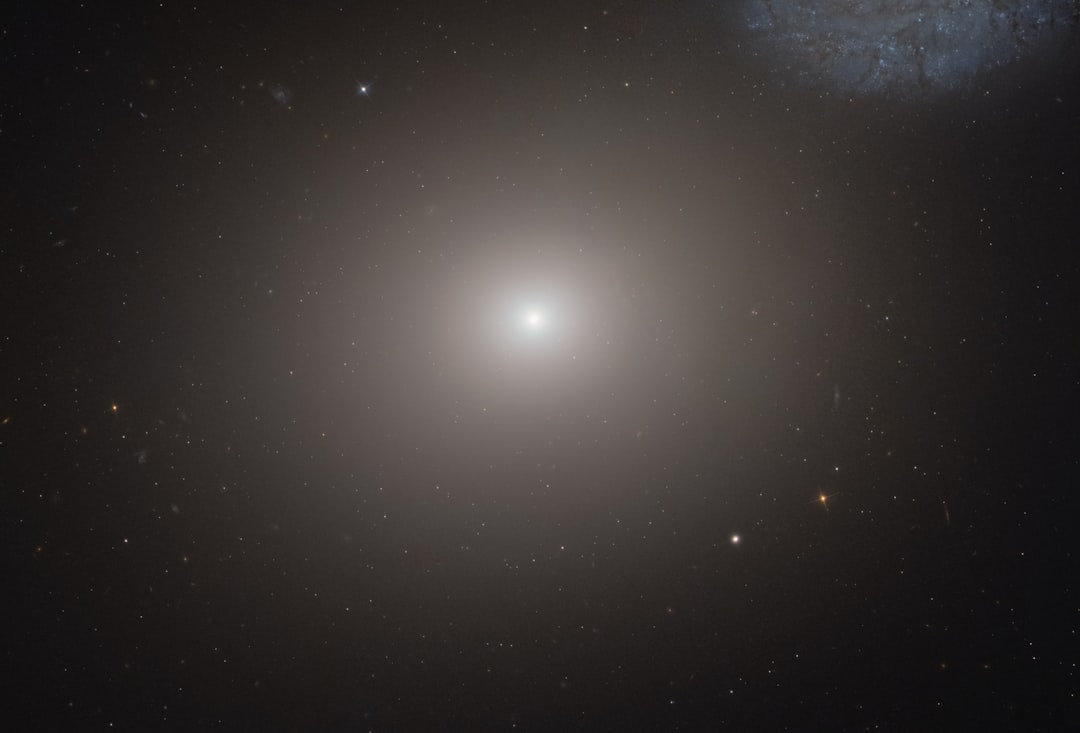
Quasars, or quasi-stellar objects, are extremely luminous centers of distant galaxies powered by supermassive black holes actively accreting surrounding matter. These objects can outshine entire galaxies, emitting substantial energy across the electromagnetic spectrum, including visible light, radio waves, and X-rays, making them among the brightest objects observable in the universe. The term “quasar” was introduced in the 1960s when astronomers identified these radiation sources.
Their star-like appearance initially led to the designation “quasi-stellar.” Subsequent research established that quasars are not stars but rather active galactic nuclei. Due to their great distances from Earth, observing quasars provides a view of the early universe, as their light has traveled for billions of years to reach us. The investigation of quasars has contributed significantly to understanding cosmic evolution and galaxy formation.
The holographic principle is a fascinating concept in theoretical physics that suggests our universe can be described as a two-dimensional information structure.
Key Takeaways
- Quasars are extremely luminous and distant objects powered by supermassive black holes at the centers of galaxies.
- The Very Large Telescope (VLT) is a crucial instrument for capturing detailed data on quasars, enabling advanced observations.
- VLT observations have led to significant discoveries about quasar properties, their host galaxies, and their role in the early universe.
- Studying quasars with the VLT provides insights into black hole growth and galaxy evolution over cosmic time.
- International collaborations and educational outreach using the VLT are vital for advancing quasar research and inspiring future scientists.
The Very Large Telescope: A Powerful Tool for Exploring Quasars
The Very Large Telescope (VLT), located in the Atacama Desert of Chile, is one of the most advanced astronomical observatories in the world. Comprising four individual telescopes, each with an aperture of 8.2 meters, the VLT is capable of capturing high-resolution images and spectra of celestial objects, including quasars. Its location at a high altitude and its advanced technology make it an ideal platform for observing distant cosmic phenomena.
When you think about exploring quasars, the VLT stands out as a powerful tool that has revolutionized our understanding of these distant objects. Equipped with state-of-the-art instruments, the VLT can analyze light from quasars in unprecedented detail. This capability allows astronomers to study their composition, structure, and behavior.
The VLT’s adaptive optics system compensates for atmospheric distortion, enabling clearer images than ever before. As you delve into the world of quasars through the lens of the VLT, you will appreciate how this remarkable telescope has become a cornerstone for modern astrophysics and cosmology.
Observing Quasars: How the Very Large Telescope Captures Data
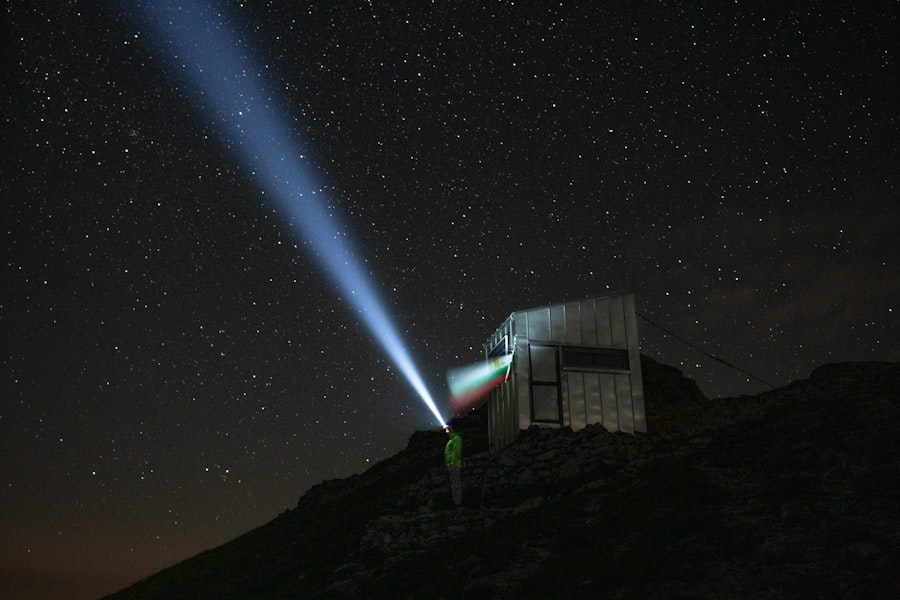
When you observe quasars using the Very Large Telescope, you are engaging in a complex process that involves capturing light from these distant objects and analyzing it to extract valuable information. The VLT employs various instruments to gather data across different wavelengths, including optical and infrared light. By using spectrographs, astronomers can break down the light emitted by quasars into its constituent colors, revealing crucial details about their composition and physical properties.
The process begins with the telescope pointing toward a quasar and collecting light over a specified period. This light is then directed to specialized instruments that measure its intensity and wavelength. The resulting data can provide insights into the quasar’s redshift, which indicates how fast it is moving away from us due to the expansion of the universe.
By analyzing this redshift, you can infer important information about the quasar’s distance and age, helping to piece together the timeline of cosmic evolution.
Unveiling the Mysteries of Quasars: Discoveries Made with the Very Large Telescope
The Very Large Telescope has been instrumental in unveiling many mysteries surrounding quasars. One significant discovery is related to their immense luminosity and energy output. Researchers have found that quasars can emit energy equivalent to thousands of galaxies combined, challenging previous notions about how much energy can be produced by a single object.
This revelation has led to new theories about the processes occurring around supermassive black holes and their role in galaxy formation. Additionally, studies conducted with the VLT have revealed that quasars often reside in massive host galaxies that are undergoing significant transformations. These findings suggest a deep connection between quasar activity and galaxy evolution.
As you explore these discoveries, you will see how they have reshaped our understanding of not only quasars but also the broader context of cosmic history and structure.
The Role of Quasars in Understanding the Early Universe
| Metric | Value | Description |
|---|---|---|
| Survey Name | Very Large Telescope Quasar Survey (VLTS) | Name of the quasar survey conducted using the VLT |
| Telescope | Very Large Telescope (VLT) | Observatory used for the survey |
| Number of Quasars Observed | ~10,000 | Approximate number of quasars detected and studied |
| Redshift Range | 0.5 to 6.5 | Range of redshifts covered by the survey quasars |
| Survey Area | ~1000 square degrees | Sky area covered by the survey |
| Spectral Resolution | R ~ 2000 – 5000 | Typical spectral resolution of the observations |
| Wavelength Coverage | 300 nm to 2500 nm | Range of wavelengths observed in the survey |
| Survey Duration | 2010 – 2020 | Years during which the survey was conducted |
| Primary Science Goals | Quasar evolution, black hole growth, intergalactic medium studies | Main scientific objectives of the survey |
Quasars play a crucial role in our understanding of the early universe. Because they are so distant, observing them allows astronomers to look back in time to when the universe was still young—just a few billion years after the Big Bang. By studying these ancient beacons of light, you can gain insights into the conditions that prevailed during this formative period.
Quasars serve as markers for tracing the evolution of galaxies and cosmic structures over time.
As light from a quasar travels through this medium, it interacts with gas clouds, leaving imprints on its spectrum.
By analyzing these imprints, astronomers can learn about the composition and density of intergalactic matter during different epochs in cosmic history. This knowledge is essential for piecing together a comprehensive picture of how our universe evolved from its earliest moments.
Studying Quasar Host Galaxies with the Very Large Telescope
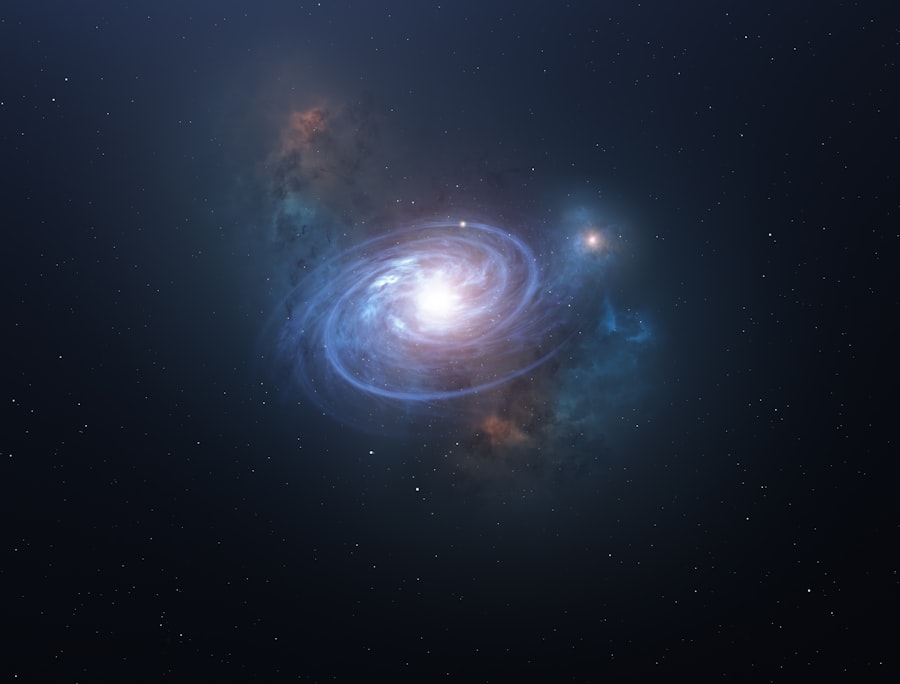
The relationship between quasars and their host galaxies is a subject of intense study using the Very Large Telescope. When you observe a quasar, you are not just looking at a bright point of light; you are also examining the galaxy that harbors it. The VLT has enabled astronomers to investigate these host galaxies in detail, revealing how they influence quasar activity and vice versa.
Research has shown that many quasars reside in massive elliptical galaxies that have undergone significant mergers and interactions with other galaxies. These interactions can trigger bursts of star formation and fuel the supermassive black hole at the galaxy’s center, leading to quasar activity. By studying these host galaxies with the VLT, you can gain insights into how galactic dynamics shape quasar behavior and contribute to our understanding of galaxy evolution as a whole.
Quasars and Black Holes: Insights from the Very Large Telescope
The connection between quasars and supermassive black holes is one of the most intriguing aspects of modern astrophysics. The Very Large Telescope has provided critical insights into this relationship by allowing astronomers to measure the masses of black holes residing at quasar centers. These measurements reveal that supermassive black holes can reach masses billions of times that of our Sun, raising questions about how such massive objects formed in the early universe.
By studying quasars with varying luminosities and characteristics, researchers have begun to understand how black hole growth is linked to their host galaxies’ evolution. The VLT’s ability to capture high-resolution images and spectra has been pivotal in uncovering these connections. As you explore this fascinating interplay between quasars and black holes, you’ll appreciate how these studies contribute to our broader understanding of fundamental astrophysical processes.
The Future of Quasar Research with the Very Large Telescope
As technology continues to advance, so too does our ability to study quasars using the Very Large Telescope. Future research will likely focus on refining our understanding of quasar properties and their role in cosmic evolution. Upcoming upgrades to VLT instruments will enhance its sensitivity and resolution, allowing astronomers to detect fainter quasars and gather more detailed data than ever before.
Moreover, as new telescopes come online—such as the Extremely Large Telescope (ELT)—the synergy between these facilities will enable even more comprehensive studies of quasars across different epochs. You can expect exciting discoveries as researchers leverage both existing and new technologies to deepen our understanding of these enigmatic objects and their significance in shaping our universe.
Collaborative Efforts: International Teams Using the Very Large Telescope for Quasar Studies
Quasar research is inherently collaborative, drawing on expertise from astronomers around the globe. The Very Large Telescope serves as a hub for international teams working together to unlock the secrets of these distant objects. By pooling resources and knowledge, researchers can tackle complex questions about quasar formation, evolution, and their impact on galaxy dynamics.
As you delve into this aspect of quasar research, you’ll see how teamwork enhances scientific discovery and accelerates our understanding of some of the universe’s most intriguing phenomena.
Challenges and Limitations: Overcoming Obstacles in Quasar Exploration with the Very Large Telescope
Despite its capabilities, studying quasars with the Very Large Telescope is not without challenges. One significant limitation is related to distance; many quasars are so far away that their light takes billions of years to reach us, making them faint and difficult to observe. Additionally, atmospheric conditions can affect observations, introducing distortions that complicate data collection.
Astronomers continually work to overcome these obstacles by developing advanced techniques for data analysis and employing adaptive optics systems that correct for atmospheric turbulence. As you explore these challenges, you’ll gain an appreciation for the ingenuity required to push the boundaries of our understanding in quasar research.
Inspiring the Next Generation: Education and Outreach Efforts in Quasar Research with the Very Large Telescope
Education and outreach play a vital role in fostering interest in astronomy and quasar research among young people. The Very Large Telescope actively engages with schools and communities through programs designed to inspire future generations of scientists. By sharing discoveries made with the VLT and explaining complex concepts in accessible ways, astronomers aim to ignite curiosity about the universe.
These outreach efforts often include public lectures, workshops, and interactive exhibits that allow individuals to experience firsthand what it’s like to study distant cosmic phenomena like quasars. As you consider your own journey into astronomy or science communication, you’ll recognize how important it is to inspire others to explore these fascinating topics and contribute to our collective understanding of the cosmos.
The Very Large Telescope (VLT) quasar survey has provided groundbreaking insights into the early universe and the formation of galaxies. For a deeper understanding of the implications of these findings, you can read more in our related article on cosmic exploration at this link. This article delves into the significance of quasars and their role in shaping our understanding of cosmic evolution.
⚡WATCH NOW: Discover why physicists think the laws of physics might be changing!
FAQs
What is the Very Large Telescope (VLT)?
The Very Large Telescope (VLT) is an array of four individual optical telescopes located at the Paranal Observatory in Chile. Operated by the European Southern Observatory (ESO), it is one of the most advanced and powerful ground-based telescopes in the world, used for a wide range of astronomical observations.
What is a quasar?
A quasar is an extremely luminous and active galactic nucleus powered by a supermassive black hole at its center. Quasars emit enormous amounts of energy, often outshining their host galaxies, and are important objects for studying the early universe.
What is the purpose of the Very Large Telescope quasar survey?
The Very Large Telescope quasar survey aims to identify, observe, and analyze quasars to better understand their properties, distribution, and evolution. This survey helps astronomers study the growth of supermassive black holes, the intergalactic medium, and the large-scale structure of the universe.
How does the VLT quasar survey work?
The survey uses the VLT’s powerful instruments to collect high-resolution spectra and images of quasar candidates. By analyzing the light from these distant objects, astronomers can determine their redshifts, chemical composition, and other physical characteristics.
Why are quasars important for astronomy?
Quasars serve as cosmic beacons that allow astronomers to probe the distant universe. They provide insights into the formation and growth of black holes, the evolution of galaxies, and the conditions of the early universe. Additionally, quasars help map the distribution of matter across cosmic scales.
What kind of data does the VLT quasar survey produce?
The survey produces detailed spectroscopic data, including measurements of quasar redshifts, emission and absorption lines, and continuum properties. This data is used to study quasar environments, black hole masses, and the intergalactic medium.
Who conducts the Very Large Telescope quasar survey?
The survey is conducted by teams of astronomers affiliated with the European Southern Observatory and various international research institutions. Collaboration among scientists worldwide is common to maximize the scientific output of the survey.
How can the public access results from the VLT quasar survey?
Data and findings from the VLT quasar survey are often published in scientific journals and made available through ESO’s public archives. Some results may also be shared via press releases and educational outreach programs.
What challenges are associated with conducting a quasar survey using the VLT?
Challenges include the need for precise target selection, dealing with faint and distant objects, atmospheric interference, and the requirement for long observation times to obtain high-quality data. Additionally, distinguishing quasars from other celestial objects can be complex.
What future developments are expected in quasar surveys with the VLT?
Future developments may include the use of upgraded instruments with higher sensitivity and resolution, integration with other observatories for multi-wavelength studies, and larger surveys covering more of the sky to discover new quasars and refine cosmological models.