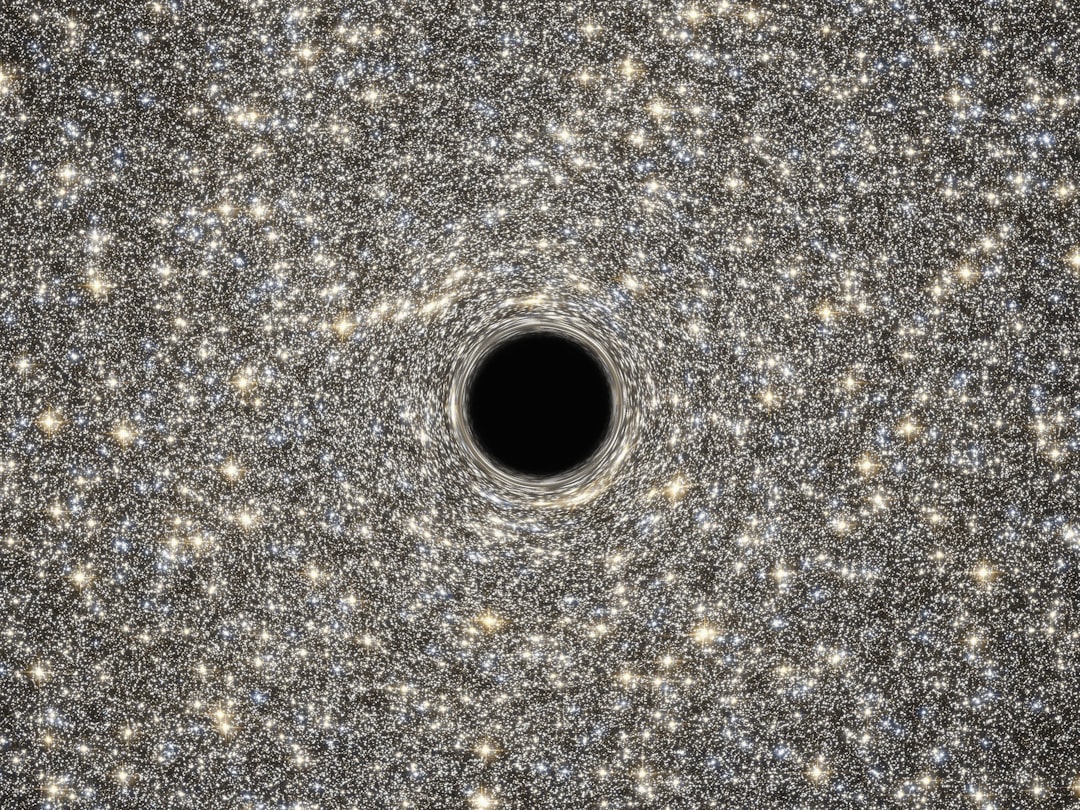
Primordial black holes (PBHs) are a theoretical concept in astrophysics, hypothesized to have formed during the early universe shortly after the Big Bang. Unlike stellar black holes that form from collapsed massive stars, PBHs would have originated from density fluctuations in the primordial plasma that permeated the early universe. These fluctuations potentially created regions where matter concentration was sufficient to trigger gravitational collapse into black holes.
The theoretical mass range for PBHs is extensive, spanning from microscopic scales to multiple solar masses, determined by the specific conditions during their formation period. PBHs represent a significant area of cosmological research due to their potential implications for understanding universal evolution and dark matter composition. If confirmed to exist, they could constitute a portion of the dark matter that scientists have detected indirectly through gravitational effects.
Research into PBHs provides valuable insights into fundamental cosmological principles and early universe physics.
Key Takeaways
- Primordial black holes (PBHs) are hypothesized black holes formed in the early universe, potentially contributing to dark matter.
- PBH halos form through gravitational clustering, influencing the dynamics and structure of surrounding matter.
- Studying the kinematics of PBH halos helps understand their motion, distribution, and interaction with other cosmic structures.
- Observations and analyses of PBH halo kinematics provide insights into their role in galaxy formation and dark matter composition.
- Research on PBH halos faces challenges but holds promise for advancing cosmology and understanding the universe’s evolution.
The Formation of Primordial Black Hole Halos
The formation of primordial black hole halos is a complex process that hinges on the conditions present in the early universe. During the first moments after the Big Bang, the universe was a hot, dense soup of particles and radiation. As it expanded and cooled, quantum fluctuations in density could have led to regions where matter was more concentrated than in surrounding areas.
If these density fluctuations reached a critical threshold, gravitational forces would take over, causing these regions to collapse into black holes. These primordial black holes would not form in isolation; rather, they would create halos of gravitational influence around them. These halos consist of matter that has been drawn in by the black hole’s gravitational pull, forming a structure that can affect the dynamics of surrounding matter.
The size and mass distribution of these halos depend on various factors, including the initial density fluctuations and the subsequent evolution of the universe. Understanding how these halos form is crucial for comprehending their role in cosmic evolution and their potential impact on galaxy formation.
Understanding Halo Kinematics
Halo kinematics refers to the study of the motion and dynamics of matter within a halo structure, particularly in relation to gravitational influences. In the context of primordial black hole halos, kinematics plays a vital role in understanding how these structures interact with their surroundings and influence cosmic evolution. The motion of stars, gas, and dark matter within these halos can provide valuable insights into their mass distribution and gravitational effects.
The kinematic behavior within a primordial black hole halo is influenced by several factors, including the mass of the black hole itself and the distribution of matter within the halo. For instance, stars and gas clouds orbiting a black hole will exhibit specific velocity patterns that can be analyzed to infer the mass and density profile of the halo. By studying these kinematic signatures, astrophysicists can gain a deeper understanding of how primordial black holes contribute to the overall structure of galaxies and clusters.
Observing Primordial Black Hole Halos
Observing primordial black hole halos presents significant challenges due to their elusive nature and the vast distances involved in cosmic observations. However, advancements in observational techniques and technology have opened new avenues for detecting these structures. Astronomers utilize various methods, including gravitational lensing, electromagnetic radiation observations, and cosmic microwave background studies, to search for evidence of primordial black holes and their associated halos.
By analyzing the distortions in light patterns caused by these gravitational effects, researchers can infer the presence of primordial black holes and their halos. Additionally, observations of cosmic microwave background radiation can provide indirect evidence for primordial black holes by revealing imprints left on the early universe’s thermal history.
These observational strategies are crucial for confirming or refuting theories surrounding primordial black holes and their role in cosmic evolution.
Analyzing the Kinematics of Primordial Black Hole Halos
| Metric | Description | Typical Value | Units | Notes |
|---|---|---|---|---|
| Velocity Dispersion | Measure of the range of velocities of primordial black holes (PBHs) in the halo | 100 – 300 | km/s | Depends on halo mass and radius |
| Halo Mass | Total mass of the dark matter halo composed of PBHs | 10^9 – 10^12 | Solar Masses | Varies with galaxy type |
| Density Profile | Spatial distribution of PBHs within the halo | NFW or Isothermal | — | Commonly modeled with Navarro-Frenk-White profile |
| Typical PBH Mass | Mass of individual primordial black holes in the halo | 10^-16 to 10^2 | Solar Masses | Wide range depending on formation scenarios |
| Orbital Period | Time taken for PBHs to orbit the galactic center | 10^7 – 10^8 | Years | Depends on orbital radius |
| Escape Velocity | Minimum velocity needed for PBHs to escape the halo gravitational potential | 500 – 700 | km/s | Varies with halo mass and radius |
Analyzing the kinematics of primordial black hole halos involves studying the motion of stars and gas within these structures to understand their gravitational dynamics better. This analysis typically employs sophisticated computational models and simulations that replicate the conditions present in these halos. By simulating various scenarios, researchers can explore how different parameters—such as halo mass, density distribution, and orbital dynamics—affect kinematic behavior.
One key aspect of this analysis is determining how the presence of a primordial black hole influences the motion of surrounding matter. For instance, stars orbiting a black hole will exhibit specific velocity profiles that can be measured through spectroscopic observations. By comparing these measurements with theoretical predictions from simulations, scientists can refine their understanding of halo dynamics and gain insights into the properties of primordial black holes themselves.
Implications for Dark Matter
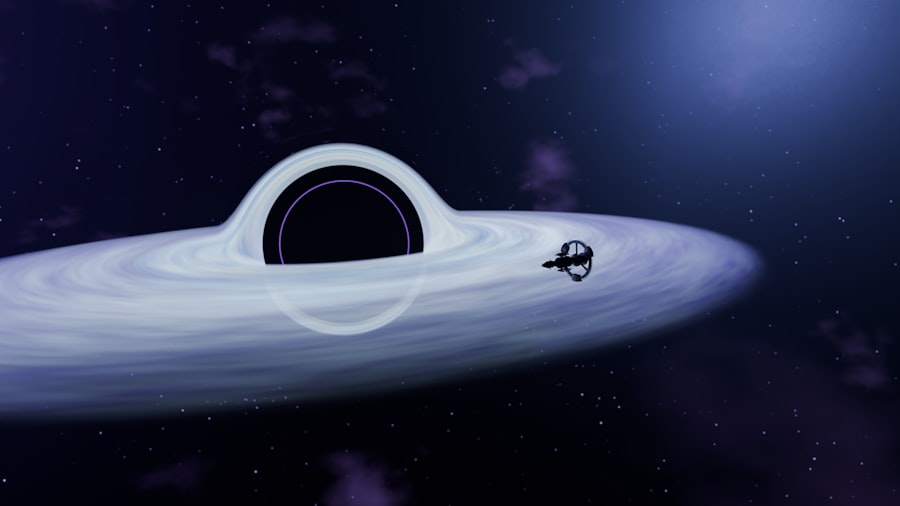
The study of primordial black hole halos has significant implications for our understanding of dark matter—a mysterious substance that constitutes a substantial portion of the universe’s total mass-energy content. If primordial black holes exist and contribute to dark matter, they could provide a compelling explanation for some observed phenomena that cannot be accounted for by conventional dark matter models. For instance, certain gravitational effects observed in galaxy rotation curves may be explained by the presence of primordial black holes within halos.
Moreover, if primordial black holes are indeed a component of dark matter, they could help resolve some longstanding questions about its nature and distribution. The existence of such black holes would imply that dark matter is not solely composed of weakly interacting massive particles (WIMPs) or other exotic candidates but could also include more familiar objects like black holes. This revelation would necessitate a reevaluation of current cosmological models and could lead to new insights into the formation and evolution of galaxies.
Comparing Primordial Black Hole Halos to Other Halo Structures
When comparing primordial black hole halos to other halo structures—such as those formed by baryonic matter or dark matter—several key differences emerge. Traditional halo structures are often associated with large-scale gravitational interactions among galaxies and clusters, while primordial black hole halos may represent localized regions influenced primarily by individual black holes. This distinction is crucial for understanding how different types of halos contribute to cosmic structure formation.
Additionally, while conventional halo structures tend to exhibit specific mass profiles dictated by their formation processes, primordial black hole halos may display a more diverse range of mass distributions due to their varied formation mechanisms. This diversity could lead to unique observational signatures that differentiate them from other halo types. By studying these differences, researchers can gain insights into the underlying physics governing halo formation and evolution across different scales.
The Role of Primordial Black Hole Halos in Galaxy Formation
Primordial black hole halos may play a pivotal role in galaxy formation by influencing how matter accumulates and organizes within cosmic structures. As these halos exert gravitational forces on surrounding matter, they can facilitate gas accretion processes that lead to star formation and galaxy growth. The presence of primordial black holes could thus enhance local gravitational wells, promoting the development of galaxies in regions where these halos exist.
Furthermore, primordial black holes may contribute to feedback mechanisms that regulate star formation rates within galaxies. For instance, as stars form and evolve within a halo influenced by a primordial black hole, their supernova explosions could inject energy back into the surrounding medium, affecting subsequent star formation processes. Understanding these interactions is essential for constructing accurate models of galaxy formation and evolution in a universe where primordial black holes may be present.
Challenges in Studying Primordial Black Hole Halo Kinematics
Studying primordial black hole halo kinematics presents numerous challenges due to their inherent complexity and the limitations of current observational techniques. One significant hurdle is distinguishing between signals from primordial black holes and those from other astrophysical sources. Given that many cosmic phenomena can produce similar observational signatures, isolating the effects specifically attributable to primordial black holes requires sophisticated analysis methods.
Additionally, theoretical models must accurately capture the intricate dynamics involved in halo formation and evolution. This necessitates advanced simulations that account for various factors influencing kinematic behavior, such as baryonic physics and dark matter interactions. As researchers strive to refine these models, they face ongoing challenges related to computational resources and theoretical uncertainties that can complicate interpretations.
Future Research Directions
Future research on primordial black hole halos is poised to expand significantly as new observational technologies emerge and theoretical frameworks evolve. One promising direction involves leveraging next-generation telescopes capable of probing deeper into cosmic history to search for signs of primordial black holes and their associated halos. These observations could provide critical data needed to confirm or refute existing theories regarding their existence.
Moreover, interdisciplinary collaborations between astrophysicists, cosmologists, and particle physicists will be essential for advancing understanding in this field. By integrating insights from various disciplines, researchers can develop more comprehensive models that account for both observational data and theoretical predictions regarding primordial black holes’ role in cosmic evolution.
The Potential Impact of Primordial Black Hole Halo Kinematics on Cosmology
The kinematics of primordial black hole halos hold profound implications for cosmology as a whole. Understanding how these structures interact with surrounding matter can shed light on fundamental questions about dark matter’s nature and distribution throughout the universe. If primordial black holes are confirmed as significant contributors to dark matter, it would necessitate a reevaluation of current cosmological models and potentially lead to new paradigms in our understanding of cosmic evolution.
Furthermore, insights gained from studying halo kinematics could inform theories about galaxy formation and large-scale structure development across cosmic time scales. As researchers continue to explore this intriguing area of study, they may uncover new connections between primordial black holes and other fundamental aspects of cosmology—ultimately enriching humanity’s understanding of its place within the vast universe.
Recent studies on primordial black holes (PBHs) have shed light on their potential role in the formation of dark matter halos and their impact on halo kinematics. For a deeper understanding of this topic, you can refer to the article on cosmic ventures that discusses the implications of PBHs in the context of dark matter: here. This article explores the dynamics of halos influenced by PBHs and provides insights into their gravitational effects on surrounding matter.
FAQs
What are primordial black holes?
Primordial black holes (PBHs) are hypothetical black holes that are thought to have formed in the early universe, shortly after the Big Bang, due to high-density fluctuations. Unlike black holes formed from collapsing stars, PBHs could have a wide range of masses, including very small ones.
What is meant by halo kinematics in the context of primordial black holes?
Halo kinematics refers to the study of the motion and velocity distribution of objects, such as stars, dark matter, or primordial black holes, within the galactic halo. In the context of PBHs, it involves analyzing how these black holes move and interact within the dark matter halo of a galaxy.
Why are primordial black holes considered as dark matter candidates?
Primordial black holes are considered potential dark matter candidates because they could account for some or all of the dark matter in the universe. Since they do not emit light and interact primarily through gravity, they fit the profile of dark matter, which is detected through its gravitational effects.
How can the kinematics of primordial black holes affect galactic dynamics?
The kinematics of primordial black holes can influence the overall gravitational potential and dynamics of a galaxy’s halo. Their distribution and velocities can affect the motion of stars and gas, potentially leaving observable signatures that help distinguish PBHs from other dark matter candidates.
What observational methods are used to study primordial black holes in galactic halos?
Observational methods include gravitational lensing surveys, studying the dynamics of stars and gas in galaxies, and searching for gravitational wave signals from PBH mergers. These methods help constrain the abundance and mass distribution of primordial black holes in galactic halos.
Can primordial black holes be detected directly?
Direct detection of primordial black holes is challenging because they do not emit light. However, they can be indirectly detected through their gravitational effects, such as microlensing events, gravitational waves from mergers, or their influence on the motion of stars and gas in galaxies.
What role do simulations play in understanding primordial black holes halo kinematics?
Simulations help model the formation, distribution, and motion of primordial black holes within galactic halos. They allow researchers to predict observable effects and compare these predictions with astronomical data to test the viability of PBHs as dark matter candidates.
Are there any constraints on the mass and abundance of primordial black holes from halo kinematics studies?
Yes, studies of halo kinematics, along with other observational data, place constraints on the possible mass ranges and abundance of primordial black holes. These constraints help rule out or support certain PBH mass windows as significant contributors to dark matter.
How does the study of primordial black holes halo kinematics contribute to cosmology?
Studying the kinematics of primordial black holes in galactic halos provides insights into the nature of dark matter, the conditions of the early universe, and the formation and evolution of cosmic structures. It helps refine cosmological models and our understanding of fundamental physics.