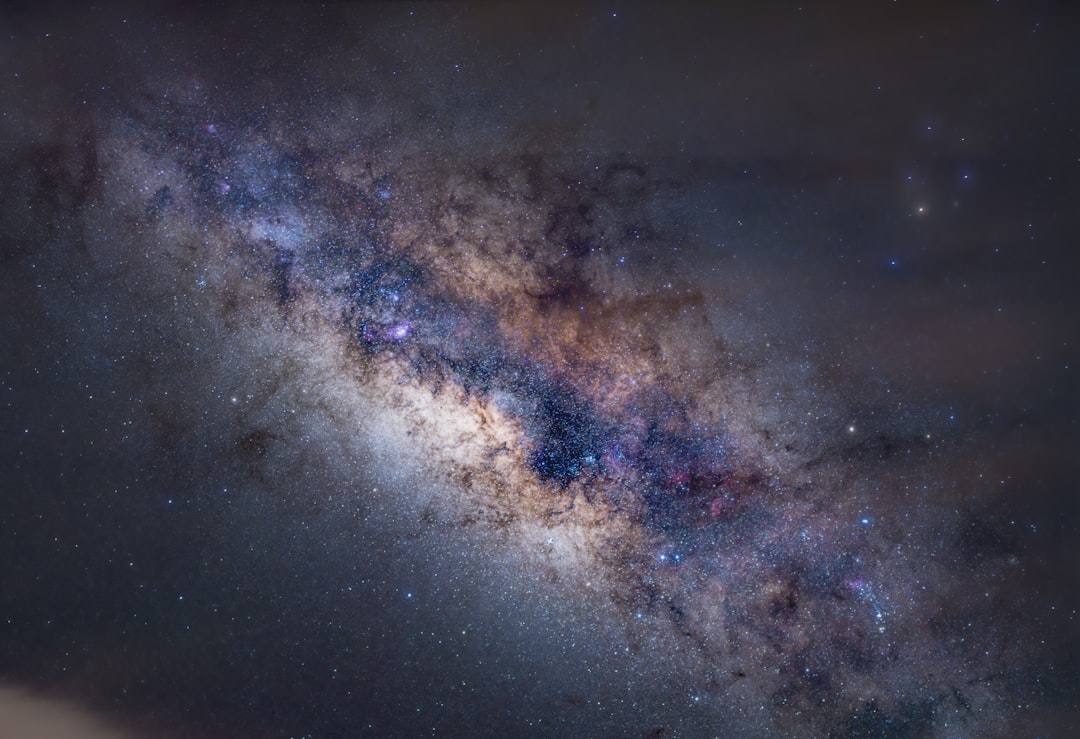
Extreme gravity represents one of the most fascinating and complex phenomena in the universe, challenging the boundaries of human understanding and scientific inquiry. It is a realm where the laws of physics, as described by general relativity, manifest in their most intense forms. This extraordinary gravitational force can be found in various cosmic entities, such as black holes and neutron stars, where the gravitational pull is so strong that it warps the very fabric of spacetime.
The study of extreme gravity not only enhances our comprehension of these celestial bodies but also provides insights into the fundamental nature of the universe itself.
How do these immense gravitational forces influence the behavior of matter and energy?
What can they reveal about the origins and fate of the cosmos? The exploration of extreme gravity is not merely an academic pursuit; it holds profound implications for our understanding of the universe’s structure, evolution, and the fundamental laws that govern it. Through this journey, researchers aim to unravel the complexities of extreme environments and their effects on both cosmic and terrestrial scales.
Key Takeaways
- Extreme gravity refers to the intense gravitational forces present in black holes, neutron stars, and other astrophysical phenomena.
- Black holes play a crucial role in extreme gravity, as their immense mass and compact size create gravitational fields that can significantly warp spacetime.
- Gravitational waves, ripples in spacetime caused by extreme gravity events, provide valuable information about the universe and its most energetic processes.
- Neutron stars, with their incredibly dense and compact nature, exhibit extreme gravity that challenges our understanding of the behavior of matter under such conditions.
- Extreme gravity has a profound impact on the fabric of spacetime, influencing the dynamics of the universe and shaping the evolution of cosmic structures.
The Role of Black Holes in Extreme Gravity
Black holes are perhaps the most iconic representatives of extreme gravity, embodying the ultimate expression of gravitational collapse. Formed from the remnants of massive stars that have exhausted their nuclear fuel, black holes possess gravitational fields so intense that nothing, not even light, can escape their grasp. This characteristic leads to the formation of an event horizon, a boundary beyond which no information can return to the outside universe.
The study of black holes has revolutionized astrophysics, providing a unique laboratory for testing the predictions of general relativity under extreme conditions. The existence of black holes has been confirmed through various observational techniques, including the detection of X-ray emissions from accreting matter and the observation of gravitational waves produced by black hole mergers. These phenomena not only validate theoretical predictions but also open new avenues for understanding how black holes interact with their surroundings.
The dynamics of matter spiraling into a black hole can lead to powerful jets and outflows, influencing star formation and galactic evolution. Thus, black holes serve as critical players in the cosmic drama, shaping the structure and behavior of galaxies across the universe.
Gravitational Waves and their Significance in Astrophysics

Gravitational waves are ripples in spacetime caused by some of the most violent and energetic processes in the universe, such as merging black holes or neutron stars. Predicted by Albert Einstein in 1916 as a consequence of his theory of general relativity, these waves were first directly detected by the LIGO observatory in 2015, marking a monumental milestone in astrophysics. The detection of gravitational waves has opened a new window into the universe, allowing scientists to observe events that were previously hidden from electromagnetic observations.
By analyzing the properties of these waves, researchers can glean information about the masses, spins, and distances of their sources. This data not only enhances our understanding of black hole and neutron star populations but also offers insights into fundamental questions regarding the nature of gravity itself.
As gravitational wave astronomy continues to evolve, it promises to unveil new aspects of cosmic phenomena and deepen our comprehension of extreme gravitational environments.
Exploring Neutron Stars and their Extreme Gravity
| Neutron Star Metric | Value |
|---|---|
| Mass | 1.4 to 3 times the mass of the sun |
| Radius | 10 to 20 kilometers |
| Density | 1×10^14 to 1×10^15 grams per cubic centimeter |
| Surface Temperature | 600,000 to 1,000,000 Kelvin |
| Magnetic Field Strength | 10^8 to 10^15 Gauss |
Neutron stars are another fascinating manifestation of extreme gravity, formed from the remnants of supernova explosions when massive stars collapse under their own weight. These stellar remnants are incredibly dense, with a mass greater than that of the Sun compressed into a sphere only about 20 kilometers in diameter. The gravitational forces at play within neutron stars are so intense that they create conditions where matter exists in an exotic state, primarily composed of neutrons.
The study of neutron stars provides valuable insights into the behavior of matter under extreme conditions. The immense gravitational pressure leads to phenomena such as neutron degeneracy pressure, which counteracts further collapse and stabilizes these compact objects. Additionally, neutron stars can exhibit strong magnetic fields and rapid rotation, resulting in pulsar emissions that allow astronomers to probe their properties with remarkable precision.
By examining these celestial bodies, scientists can test theories related to nuclear physics, particle interactions, and even aspects of quantum mechanics within an astrophysical context.
The Impact of Extreme Gravity on the Fabric of Spacetime
Extreme gravity has profound implications for the structure and behavior of spacetime itself. According to general relativity, massive objects warp spacetime around them, creating a curvature that dictates how other objects move within that region. In areas where gravity is particularly intense—such as near black holes or neutron stars—this curvature becomes extreme, leading to phenomena such as time dilation and gravitational lensing.
Time dilation occurs when time passes at different rates depending on the strength of the gravitational field experienced by an observer. For instance, an observer near a black hole would experience time more slowly compared to someone far away from its influence. This effect has been confirmed through various experiments and has significant implications for our understanding of time itself.
Gravitational lensing, on the other hand, occurs when light from distant objects is bent around massive bodies due to their gravitational fields, allowing astronomers to observe objects that would otherwise be obscured. These effects illustrate how extreme gravity not only shapes celestial bodies but also alters fundamental aspects of reality.
Observing Extreme Gravity through Astrophysical Phenomena

The observation of extreme gravity is facilitated through various astrophysical phenomena that serve as natural laboratories for studying these forces. Events such as supernovae, gamma-ray bursts, and black hole mergers provide opportunities for scientists to witness extreme gravitational interactions firsthand. Each event offers unique insights into how gravity operates under extreme conditions and its effects on surrounding matter.
For example, supernovae are explosive events marking the death throes of massive stars, often leading to the formation of neutron stars or black holes. The immense gravitational forces at play during these explosions can accelerate particles to relativistic speeds, producing gamma-ray bursts that are detectable across vast distances. Similarly, when two black holes merge, they emit gravitational waves that carry information about their masses and spins.
By studying these phenomena, researchers can piece together a more comprehensive picture of how extreme gravity influences cosmic evolution.
Theoretical Models and Simulations of Extreme Gravity
To understand extreme gravity better, scientists rely on theoretical models and computer simulations that explore its effects under various conditions. These models are essential for predicting how matter behaves in strong gravitational fields and for interpreting observational data from telescopes and detectors. Numerical simulations allow researchers to visualize complex interactions between massive objects and their environments, providing insights that are often unattainable through analytical methods alone.
One prominent area of research involves simulating black hole mergers and their associated gravitational wave emissions. By modeling these events with high precision, scientists can compare theoretical predictions with actual observations from detectors like LIGO and Virgo. Such comparisons help refine our understanding of black hole populations and their formation mechanisms.
Additionally, simulations exploring neutron star collisions provide insights into phenomena such as kilonovae—explosions resulting from these mergers—which are believed to be responsible for producing heavy elements like gold and platinum in the universe.
The Search for Intermediate-Mass Black Holes
While stellar-mass black holes (formed from collapsing stars) and supermassive black holes (found at the centers of galaxies) are well-documented, intermediate-mass black holes (IMBHs) remain elusive and enigmatic. These hypothetical objects would have masses ranging from hundreds to thousands of solar masses and could play a crucial role in our understanding of black hole formation and evolution. Their existence could bridge the gap between stellar-mass and supermassive black holes, shedding light on how these massive entities form over cosmic timescales.
The search for IMBHs involves investigating various astrophysical environments where they might reside, such as globular clusters or active galactic nuclei. Observational efforts focus on identifying potential candidates through their interactions with surrounding matter or by detecting gravitational waves from their mergers with other black holes or neutron stars. Discovering IMBHs would not only enhance our understanding of black hole demographics but also provide insights into galaxy formation processes and the role these objects play in cosmic evolution.
Understanding the Behavior of Matter under Extreme Gravity
Extreme gravity profoundly influences how matter behaves at both macroscopic and microscopic levels. In regions where gravitational forces are exceptionally strong, traditional physics often breaks down, necessitating new theories to describe particle interactions and states of matter. For instance, within neutron stars, matter exists in a state dominated by neutrons due to immense pressures that exceed typical atomic structures.
Research into how matter behaves under extreme gravity has implications for various fields beyond astrophysics. It challenges existing theories in nuclear physics and particle physics while prompting investigations into exotic states such as quark-gluon plasma—a state believed to have existed shortly after the Big Bang. Understanding these behaviors not only enriches our knowledge of fundamental physics but also informs models related to stellar evolution and cosmic nucleosynthesis.
Future Prospects and Challenges in Studying Extreme Gravity
As technology advances and observational techniques improve, future prospects for studying extreme gravity appear promising yet challenging. The development of next-generation gravitational wave observatories will enhance sensitivity to fainter signals from distant cosmic events, allowing researchers to probe previously inaccessible regions of parameter space. Additionally, advancements in high-energy astrophysics will enable more detailed observations of phenomena associated with extreme gravity.
However, challenges remain in interpreting data from these observations due to complexities inherent in extreme environments. Theoretical models must continually evolve to account for new findings while remaining consistent with established physics principles. Furthermore, interdisciplinary collaboration between astrophysicists, particle physicists, and cosmologists will be essential for addressing questions related to extreme gravity’s role in shaping the universe.
Implications of Extreme Gravity for Cosmology and the Universe
The study of extreme gravity carries profound implications for cosmology—the branch of astronomy concerned with understanding the universe’s origin, evolution, and ultimate fate. Insights gained from exploring black holes, neutron stars, and gravitational waves contribute significantly to our comprehension of cosmic structures and dynamics. For instance, understanding how supermassive black holes influence galaxy formation can shed light on large-scale structures observed throughout the universe.
Moreover, extreme gravity challenges existing cosmological models by providing new avenues for exploring dark matter and dark energy—two mysterious components believed to constitute a significant portion of the universe’s mass-energy content. As researchers continue to unravel the complexities associated with extreme gravity, they may uncover new connections between fundamental physics and cosmological phenomena that reshape our understanding of reality itself. In conclusion, extreme gravity serves as a gateway into some of the most profound mysteries within astrophysics and cosmology.
Through continued exploration and observation, scientists strive to unlock its secrets while expanding humanity’s knowledge about the universe’s intricate tapestry.
Astrophysics of extreme gravity is a fascinating field that delves into the most intense gravitational environments in the universe, such as those found near black holes and neutron stars. These cosmic phenomena challenge our understanding of physics and push the boundaries of general relativity. For those interested in exploring this topic further, an insightful article can be found on My Cosmic Ventures. This article provides an in-depth look at the latest research and discoveries in the realm of extreme gravity. You can read more about it by visiting this link.
WATCH THIS! 🌌The Biggest Black Hole Is A LIE
FAQs
What is astrophysics of extreme gravity?
Astrophysics of extreme gravity is the study of the behavior of matter and energy under the influence of extremely strong gravitational fields, such as those found near black holes and neutron stars.
What are some of the key phenomena studied in astrophysics of extreme gravity?
Some of the key phenomena studied in astrophysics of extreme gravity include gravitational waves, accretion disks, relativistic jets, and the behavior of matter under extreme pressure and temperature conditions.
How do black holes and neutron stars contribute to the study of extreme gravity?
Black holes and neutron stars are objects with extremely strong gravitational fields, making them ideal laboratories for studying the effects of extreme gravity on matter and energy. They provide valuable insights into the behavior of matter and the nature of spacetime under extreme conditions.
What are some of the observational methods used in the study of extreme gravity?
Observational methods used in the study of extreme gravity include the use of telescopes and detectors to observe the behavior of matter and energy in the vicinity of black holes and neutron stars, as well as the detection of gravitational waves emitted by these objects.
How does the study of extreme gravity contribute to our understanding of the universe?
The study of extreme gravity provides valuable insights into the fundamental nature of spacetime, the behavior of matter under extreme conditions, and the processes that govern the evolution of the universe. It also helps test the predictions of Einstein’s theory of general relativity and other theories of gravity.