
Cosmology, the scientific study of the large-scale properties and evolution of the universe, encompasses a vast array of topics, from the Big Bang to the ultimate fate of the cosmos. It seeks to answer fundamental questions about the nature of existence, the origins of galaxies, stars, and planets, and the forces that govern their interactions. By examining the universe’s structure and history, cosmologists aim to understand not only how the universe came to be but also its current state and future trajectory.
This field of study is crucial as it provides insights into the fundamental laws of physics and the nature of reality itself. The importance of cosmology extends beyond mere academic curiosity; it has profound implications for humanity’s place in the universe. By understanding the cosmos, scientists can address existential questions about life, the potential for extraterrestrial civilizations, and the ultimate fate of humanity.
Furthermore, cosmological research often intersects with other scientific disciplines, such as physics, astronomy, and philosophy, fostering a holistic understanding of the universe. As technology advances and observational techniques improve, cosmology continues to evolve, revealing deeper layers of complexity and wonder about the universe in which we reside.
Key Takeaways
- Cosmology studies the origin and evolution of the universe, crucial for understanding fundamental cosmic phenomena.
- Simulations like IllustrisTNG Millennium enable detailed modeling of galaxy formation, dark matter, and dark energy.
- The IllustrisTNG Millennium Simulation integrates complex physics to replicate large-scale cosmic structures and their evolution.
- Results from the simulation align closely with observational data, validating its accuracy and enhancing our cosmic knowledge.
- Future cosmological simulations will build on IllustrisTNG’s success, driving deeper insights into the universe’s mysteries.
The Role of Simulations in Understanding Cosmology
Simulations play a pivotal role in cosmology by providing a virtual laboratory where scientists can model complex phenomena that are often impossible to observe directly. These computational tools allow researchers to explore various scenarios regarding the formation and evolution of cosmic structures, such as galaxies and clusters. By simulating different initial conditions and physical laws, cosmologists can test hypotheses and refine their understanding of how the universe operates on both large and small scales.
Moreover, simulations serve as a bridge between theoretical predictions and observational data. They enable scientists to visualize processes that occur over billions of years, offering insights into events like galaxy collisions or the influence of dark matter on cosmic structures. As a result, simulations have become indispensable in modern cosmology, allowing researchers to explore questions about the universe’s origins, its current state, and its future evolution in ways that would be otherwise unattainable.
Introducing the IllustrisTNG Millennium Simulation
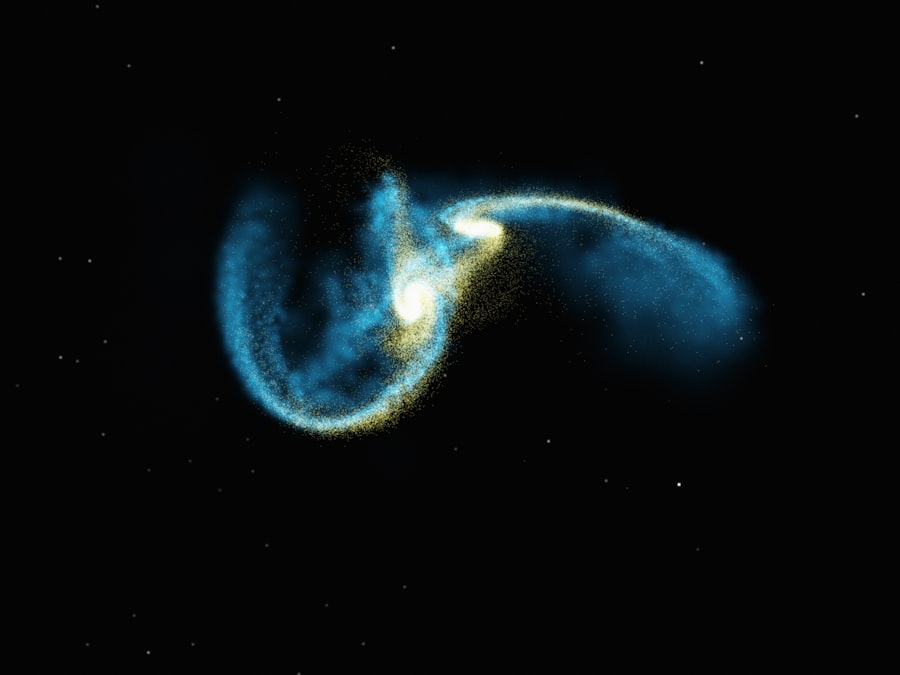
The IllustrisTNG Millennium Simulation represents a significant advancement in cosmological simulations, building upon its predecessor, the original Illustris simulation. Launched in 2017, this ambitious project aims to create a comprehensive model of the universe that incorporates a wide range of physical processes governing galaxy formation and evolution. By simulating a volume of space that is over 100 million light-years on each side, IllustrisTNG provides an unprecedented view of cosmic structures and their interactions.
What sets IllustrisTNG apart is its focus on realism and detail. The simulation incorporates advanced models for star formation, black hole growth, and feedback processes that influence galaxy evolution. This attention to detail allows researchers to explore not only how galaxies form but also how they evolve over time under various conditions.
As a result, IllustrisTNG has become a cornerstone for cosmological research, providing valuable data that can be compared with observational findings from telescopes and other instruments.
How the IllustrisTNG Millennium Simulation Works
At its core, the IllustrisTNG Millennium Simulation employs sophisticated algorithms to model the behavior of dark matter, gas, stars, and black holes within a cosmological framework. The simulation begins with initial conditions derived from the latest cosmological observations, including measurements of cosmic microwave background radiation and galaxy distributions. These conditions are then evolved over time using numerical methods that solve complex equations governing fluid dynamics and gravitational interactions.
The simulation divides the universe into a grid of cells, each representing a small volume of space. Within these cells, various physical processes are modeled, including gas cooling, star formation, supernova explosions, and black hole accretion. By tracking how these processes unfold over billions of years, researchers can observe the emergence of galaxies and their interactions with one another.
The result is a dynamic and evolving representation of the universe that captures both large-scale structures and intricate details of individual galaxies.
Key Findings from the IllustrisTNG Millennium Simulation
| Parameter | Value | Description |
|---|---|---|
| Simulation Name | IllustrisTNG Millennium | Cosmological simulation combining IllustrisTNG with Millennium data |
| Box Size | 500 Mpc/h | Length of one side of the cubic simulation volume |
| Number of Particles | ~2 x 10^10 | Total number of dark matter and baryonic particles |
| Cosmology Model | Planck 2015 | Cosmological parameters based on Planck 2015 results |
| Omega_m | 0.3089 | Matter density parameter |
| Omega_lambda | 0.6911 | Dark energy density parameter |
| Omega_b | 0.0486 | Baryon density parameter |
| Hubble Parameter (h) | 0.6774 | Dimensionless Hubble constant |
| Initial Redshift | 127 | Starting redshift of the simulation |
| Final Redshift | 0 | Ending redshift (present day) |
| Mass Resolution (Dark Matter) | ~1.1 x 10^7 M_sun/h | Mass of individual dark matter particles |
| Mass Resolution (Baryons) | ~2.2 x 10^6 M_sun/h | Mass of individual baryonic particles |
| Spatial Resolution | ~1 kpc/h | Typical spatial resolution of the simulation |
| Physics Included | Gravity, Hydrodynamics, Star Formation, Feedback | Physical processes modeled in the simulation |
The IllustrisTNG Millennium Simulation has yielded numerous key findings that have advanced our understanding of cosmology. One significant discovery is the role of feedback mechanisms in galaxy formation. The simulation demonstrates how energy released from supernovae and active galactic nuclei can regulate star formation rates within galaxies.
This feedback process helps explain why some galaxies are more massive than others and why they exhibit different morphological characteristics. Additionally, IllustrisTNG has provided insights into the distribution of dark matter within galaxies. The simulation reveals that dark matter halos play a crucial role in shaping galaxy formation by influencing their gravitational potential wells.
This finding aligns with observational data from gravitational lensing studies and has implications for understanding the nature of dark matter itself. Overall, these findings underscore the importance of simulations in elucidating complex cosmic phenomena.
Exploring the Formation and Evolution of Galaxies

One of the primary focuses of cosmological research is understanding how galaxies form and evolve over time. The IllustrisTNG Millennium Simulation offers a detailed perspective on this process by modeling various factors that contribute to galaxy formation. For instance, it explores how gas accretion from surrounding environments influences star formation rates within galaxies.
This interaction between galaxies and their surroundings is crucial for understanding their growth and development. Moreover, IllustrisTNG sheds light on the diversity of galaxy types observed in the universe today. By simulating different initial conditions and physical processes, researchers can investigate why some galaxies are spiral-shaped while others are elliptical or irregular.
The simulation also examines how mergers between galaxies can lead to significant changes in their structure and star formation activity. These insights contribute to a more comprehensive understanding of galaxy evolution across cosmic time.
Understanding Dark Matter and Dark Energy through Simulations
Dark matter and dark energy are two of the most enigmatic components of the universe, constituting approximately 95% of its total mass-energy content. Simulations like IllustrisTNG play a crucial role in unraveling their mysteries by providing a framework for studying their effects on cosmic structures.
Furthermore, simulations help explore the implications of dark energy on the universe’s expansion rate. By modeling different scenarios for dark energy’s properties, scientists can assess how it affects cosmic evolution over time. The results from IllustrisTNG have provided valuable insights into how dark matter halos interact with visible matter and how dark energy influences large-scale structures in the universe.
Implications for our Understanding of the Universe
The findings from simulations like IllustrisTNG have far-reaching implications for our understanding of the universe. They challenge existing theories about galaxy formation and evolution while providing new avenues for exploration. For instance, by revealing how feedback processes regulate star formation rates, these simulations prompt researchers to reconsider traditional models that do not account for such complexities.
Moreover, insights gained from IllustrisTNG contribute to ongoing debates about dark matter’s nature and dark energy’s role in cosmic expansion. As researchers continue to analyze simulation data alongside observational evidence, they can refine their models and develop a more cohesive understanding of fundamental cosmic processes. Ultimately, these advancements enhance humanity’s grasp of its place within an ever-expanding universe.
Comparing Simulation Results with Observational Data
A critical aspect of validating cosmological simulations lies in comparing their results with observational data obtained from telescopes and other instruments. The IllustrisTNG Millennium Simulation has been designed with this goal in mind; its outputs are frequently compared with real-world observations to assess their accuracy and reliability. For example, researchers examine galaxy distributions, luminosity functions, and clustering patterns predicted by the simulation against those observed in surveys like the Sloan Digital Sky Survey (SDSS).
This comparison process is essential for refining both simulations and observational techniques. Discrepancies between simulated results and observations can highlight areas where models may need adjustment or where new physics may be required to explain certain phenomena. As observational technology continues to advance—such as through next-generation telescopes—these comparisons will become increasingly sophisticated, leading to deeper insights into cosmic evolution.
Future Directions in Cosmological Simulations
As technology progresses and computational power increases, future directions in cosmological simulations promise even greater advancements in understanding the universe. Researchers are exploring ways to incorporate more complex physical processes into simulations, such as magnetic fields or cosmic rays, which could further enhance realism. Additionally, efforts are underway to simulate larger volumes of space with higher resolution, allowing for more detailed studies of cosmic structures.
Moreover, interdisciplinary collaborations between astronomers, physicists, and computer scientists are becoming increasingly common as they work together to tackle complex questions about the universe’s origins and evolution. These collaborations will likely lead to innovative approaches in simulation techniques and data analysis methods that could revolutionize our understanding of cosmology.
The Impact of the IllustrisTNG Millennium Simulation on Cosmology Research
The IllustrisTNG Millennium Simulation has had a profound impact on cosmology research since its inception. By providing a comprehensive framework for studying galaxy formation and evolution while incorporating realistic physical processes, it has become an invaluable resource for researchers worldwide. Its findings have not only advanced theoretical models but have also inspired new observational campaigns aimed at testing its predictions.
Furthermore, IllustrisTNG has fostered collaboration among scientists across various disciplines by serving as a common reference point for discussions about cosmic evolution. As researchers continue to analyze its data and compare it with observational evidence, they are likely to uncover new insights that will shape future directions in cosmological research. Ultimately, the legacy of IllustrisTNG will be felt for years to come as it continues to inform our understanding of the universe’s complexities and mysteries.
The IllustrisTNG Millennium simulation has significantly advanced our understanding of cosmology by providing detailed insights into the formation and evolution of galaxies. For a deeper exploration of the implications of these simulations on our understanding of the universe, you can read more in this related article on cosmic ventures: Cosmic Ventures: Insights from the IllustrisTNG Simulation. This article delves into the methodologies and findings of the simulation, highlighting its impact on modern astrophysics.
WATCH THIS! 🧠 The Universe Is A Brain. And It’s Having A Stroke.
FAQs
What is the IllustrisTNG Millennium simulation?
The IllustrisTNG Millennium simulation is a large-scale cosmological simulation that models the formation and evolution of galaxies and large-scale structures in the universe. It builds upon the original IllustrisTNG project by incorporating a larger volume and higher resolution to better understand cosmic phenomena.
What cosmological parameters are used in the IllustrisTNG Millennium simulation?
The simulation uses cosmological parameters consistent with the latest observations, such as those from the Planck satellite. These include values for the Hubble constant, matter density, dark energy density, and the amplitude of initial density fluctuations, ensuring realistic modeling of the universe’s evolution.
How does the IllustrisTNG Millennium simulation differ from previous simulations?
Compared to earlier simulations, the IllustrisTNG Millennium offers a larger simulated volume and improved physical models, including more detailed treatments of galaxy formation processes, feedback mechanisms, and dark matter interactions. This allows for more accurate and statistically significant studies of cosmic structures.
What scientific questions does the IllustrisTNG Millennium simulation aim to address?
The simulation aims to explore the formation and evolution of galaxies, the role of dark matter and dark energy in structure formation, the impact of feedback from stars and black holes, and the large-scale distribution of matter in the universe.
Can the data from the IllustrisTNG Millennium simulation be accessed by researchers?
Yes, the data from the IllustrisTNG Millennium simulation is publicly available to the scientific community. Researchers can access simulation outputs, catalogs, and visualization tools through dedicated online platforms provided by the IllustrisTNG collaboration.
What computational resources are required to run the IllustrisTNG Millennium simulation?
Running the IllustrisTNG Millennium simulation requires significant computational power, typically involving supercomputers with thousands of processing cores and large memory capacities. The simulation involves complex calculations over billions of particles to model cosmic evolution accurately.
How does the IllustrisTNG Millennium simulation contribute to our understanding of cosmology?
By providing detailed and realistic models of galaxy formation and large-scale structure, the simulation helps test theoretical predictions, interpret observational data, and refine cosmological models, thereby advancing our understanding of the universe’s origin, composition, and evolution.