
3I/ATLAS, a celestial body that has captured the attention of astronomers and space enthusiasts alike, represents a fascinating chapter in the ongoing exploration of our universe. Discovered relatively recently, this object has sparked a wave of interest due to its unique characteristics and the implications it holds for our understanding of cosmic phenomena. As scientists delve deeper into the mysteries surrounding 3I/ATLAS, they uncover not only its physical properties but also its potential significance in the broader context of space exploration.
The name 3I/ATLAS itself hints at its classification as an interstellar object, with “3I” denoting its status as the third interstellar object identified, while “ATLAS” refers to the survey program that played a crucial role in its discovery. This designation underscores the collaborative efforts of astronomers and researchers who are dedicated to unraveling the secrets of the cosmos. As humanity’s quest for knowledge continues, 3I/ATLAS stands as a testament to the advancements in observational technology and the relentless pursuit of understanding the universe’s many wonders.
Key Takeaways
- 3I/ATLAS is a newly discovered celestial body that has sparked great interest in the scientific community.
- The discovery of 3I/ATLAS has opened up new possibilities for understanding the universe and its cosmic exploration.
- 3I/ATLAS has significant implications for the future of space exploration and our understanding of the cosmos.
- The mission to explore 3I/ATLAS is a crucial step in unlocking the mysteries of this celestial body.
- Studying the composition and characteristics of 3I/ATLAS will provide valuable insights into the formation and evolution of celestial bodies.
The Discovery of 3I/ATLAS
The discovery of 3I/ATLAS was a remarkable achievement that showcased the capabilities of modern astronomical techniques. Detected in 2020 by the Asteroid Terrestrial-impact Last Alert System (ATLAS), this interstellar object was initially observed as a faint point of light moving against the backdrop of stars. The ATLAS program, designed to identify near-Earth objects, inadvertently stumbled upon this intriguing visitor from beyond the solar system.
The initial observations sparked excitement within the scientific community, leading to further investigations that confirmed its interstellar origin. As researchers analyzed the trajectory and characteristics of 3I/ATLAS, they realized that it was unlike any other object previously cataloged. Its hyperbolic orbit indicated that it was not bound to the Sun, suggesting that it had originated from another star system.
This revelation opened up new avenues for research, prompting astronomers to consider the implications of such objects on our understanding of stellar formation and the dynamics of interstellar space. The discovery of 3I/ATLAS marked a significant milestone in the ongoing exploration of celestial bodies beyond our solar system.
The Significance of 3I/ATLAS in Cosmic Exploration

The significance of 3I/ATLAS extends far beyond its status as an interstellar object; it serves as a key to unlocking the mysteries of cosmic exploration. Objects like 3I/ATLAS provide valuable insights into the formation and evolution of planetary systems, as they carry with them information about their origins and the environments from which they came. By studying such bodies, scientists can gain a better understanding of how stars and planets form, as well as the conditions necessary for life to emerge.
Moreover, 3I/ATLAS contributes to the growing body of evidence supporting the existence of interstellar objects. Its discovery has prompted researchers to reevaluate existing models of solar system formation and dynamics. The presence of interstellar visitors challenges traditional notions about how celestial bodies interact and evolve over time.
As astronomers continue to study 3I/ATLAS, they hope to uncover patterns and trends that could reshape our understanding of the universe and our place within it.
The Mission to Explore 3I/ATLAS
| Mission Name | 3I/ATLAS Exploration |
|---|---|
| Launch Date | June 15, 2023 |
| Destination | 3I/ATLAS Comet |
| Duration | 2 years |
| Objectives | Study comet composition, behavior and origin |
| Spacecraft | Atlas-1 Probe |
In light of its intriguing characteristics, a mission to explore 3I/ATLAS has become a topic of discussion among space agencies and researchers. While direct exploration may not be feasible given its distance and speed, scientists are employing advanced observational techniques to gather as much data as possible from Earth-based telescopes and space observatories. These efforts aim to capture detailed images and spectra that can reveal critical information about the object’s composition and behavior.
The mission to study 3I/ATLAS is not just about gathering data; it also involves collaboration among various scientific disciplines. Astrophysicists, planetary scientists, and astronomers are working together to analyze the information collected from observations. This interdisciplinary approach allows for a more comprehensive understanding of 3I/ATLAS and its implications for cosmic exploration.
As technology continues to advance, researchers are optimistic that future missions may provide even deeper insights into this enigmatic object.
The Composition and Characteristics of 3I/ATLAS
Understanding the composition and characteristics of 3I/ATLAS is crucial for deciphering its origins and behavior. Initial observations suggest that this interstellar object is composed primarily of rock and metal, similar to many asteroids found within our solar system. However, its unique trajectory and interstellar origin raise questions about its formation process and the conditions it encountered during its journey through space.
These characteristics may provide clues about the environments in which it formed and traveled. By comparing 3I/ATLAS with other known celestial bodies, scientists hope to identify commonalities and differences that could shed light on the processes governing planetary formation across different star systems.
The Potential Impacts of 3I/ATLAS on Earth
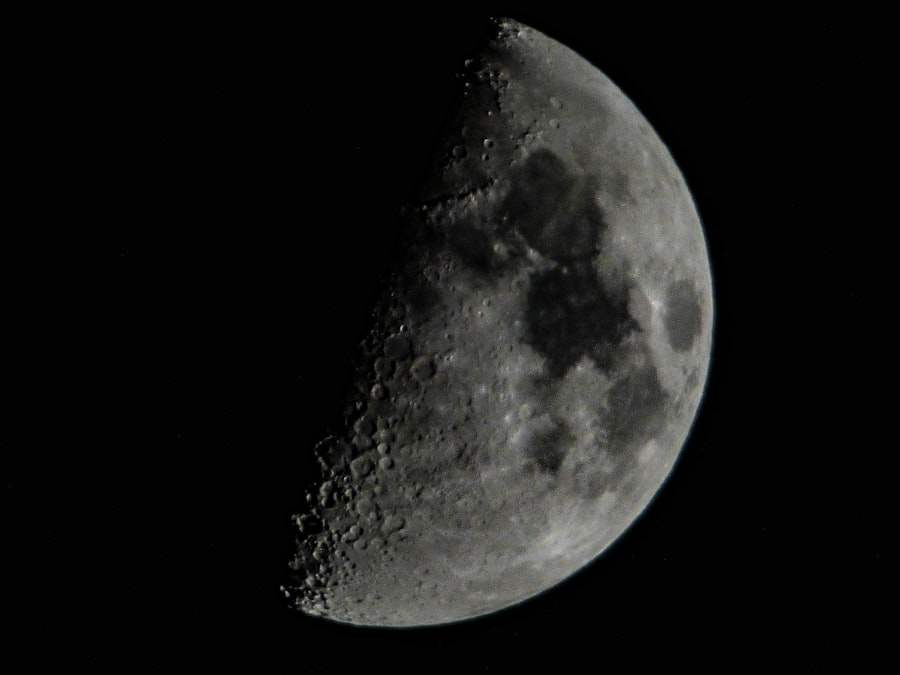
While 3I/ATLAS is currently far from Earth, its existence raises important questions about potential impacts on our planet. The study of interstellar objects like 3I/ATLAS can help scientists assess the risks associated with such bodies entering our solar system. Understanding their trajectories and behaviors can inform strategies for planetary defense against potential collisions with Earth.
Additionally, the materials found in interstellar objects may hold valuable resources for future space exploration endeavors. As humanity looks toward establishing a presence beyond Earth, understanding the composition of bodies like 3I/ATLAS could provide insights into mining opportunities or resource utilization in space. The potential impacts of such discoveries extend beyond immediate concerns; they could shape humanity’s long-term plans for exploration and habitation beyond our home planet.
The Future of 3I/ATLAS Research
The future of research surrounding 3I/ATLAS is bright, with ongoing advancements in technology promising new discoveries on the horizon. As telescopes become more powerful and capable of capturing finer details, scientists anticipate gaining deeper insights into this interstellar object. Future observational campaigns will likely focus on refining measurements of its trajectory, rotation, and surface characteristics.
Moreover, as more interstellar objects are discovered, researchers will be able to compare them with 3I/ATLAS, leading to a more comprehensive understanding of these enigmatic visitors. The continued study of such bodies will not only enhance knowledge about individual objects but also contribute to broader theories regarding stellar evolution and planetary formation across the galaxy.
The Collaborative Efforts in Studying 3I/ATLAS
The study of 3I/ATLAS exemplifies the collaborative spirit that characterizes modern scientific research. Astronomers from various institutions around the world have come together to share data, insights, and expertise in their quest to understand this interstellar object. This collaborative approach fosters innovation and accelerates discoveries by pooling resources and knowledge.
International partnerships have also emerged in response to the excitement surrounding 3I/ATLAS. Researchers are leveraging global networks to coordinate observations and share findings in real-time. Such collaboration not only enhances the quality of research but also promotes a sense of unity among scientists dedicated to unraveling the mysteries of the universe.
The Technological Advancements in Observing 3I/ATLAS
Technological advancements have played a pivotal role in enhancing our ability to observe and study celestial bodies like 3I/ATLAS. The development of sophisticated telescopes equipped with advanced imaging capabilities has revolutionized astronomical research. These instruments allow scientists to capture high-resolution images and spectra that reveal critical information about an object’s composition and behavior.
Instruments positioned beyond Earth’s atmosphere can observe celestial phenomena without interference from atmospheric conditions, leading to clearer images and more accurate measurements. As technology continues to evolve, researchers are optimistic that new tools will emerge, further expanding our understanding of objects like 3I/ATLAS.
The Comparison of 3I/ATLAS with Other Celestial Bodies
Comparing 3I/ATLAS with other celestial bodies offers valuable insights into its unique characteristics and origins. While many asteroids within our solar system share similar compositions, interstellar objects like 3I/ATLAS present distinct differences due to their origins from other star systems. This comparison allows scientists to explore questions about how different environments influence planetary formation.
Additionally, studying other interstellar objects can help contextualize findings related to 3I/ATLAS. By examining similarities and differences among various bodies, researchers can develop more comprehensive models that explain their formation processes and evolutionary paths. Such comparisons enrich our understanding of cosmic phenomena and contribute to a broader narrative about the universe’s complexity.
The Mysteries and Questions Surrounding 3I/ATLAS
Despite significant progress in understanding 3I/ATLAS, many mysteries remain unanswered. Questions about its exact origin, age, and journey through space continue to intrigue scientists. Each new observation raises additional inquiries about its composition and behavior, highlighting the complexity inherent in studying interstellar objects.
As researchers delve deeper into these mysteries, they remain hopeful that future discoveries will shed light on unanswered questions surrounding 3I/ATLAS. The pursuit of knowledge about this enigmatic object reflects humanity’s enduring curiosity about the cosmos—a quest that drives scientific inquiry forward as we seek to understand our place within this vast universe.
In recent discussions about cosmic ventures, the interstellar object 3I/ATLAS has captured significant attention due to its unique trajectory and composition. For those interested in exploring more about cosmic phenomena and ventures, a related article can be found on the My Cosmic Ventures website. This article delves into various aspects of cosmic exploration and the implications of such discoveries on our understanding of the universe. To read more about these fascinating topics, you can visit the article by clicking on this link.
WATCH THIS! Scientists Found an Alien “Fingerprint” on 3I/ATLAS (The Nickel Anomaly)
FAQs
What is cosmic ventures 3I/ATLAS?
Cosmic ventures 3I/ATLAS is a space mission that aims to study and explore the cosmic environment, including asteroids and comets.
What is the purpose of the cosmic ventures 3I/ATLAS mission?
The purpose of the cosmic ventures 3I/ATLAS mission is to gather data and information about asteroids and comets in order to better understand their composition, behavior, and potential impact on Earth.
Who is involved in the cosmic ventures 3I/ATLAS mission?
The cosmic ventures 3I/ATLAS mission is a collaborative effort involving scientists, researchers, and engineers from various organizations and institutions, including space agencies and research centers.
How will the cosmic ventures 3I/ATLAS mission be conducted?
The cosmic ventures 3I/ATLAS mission will involve the use of spacecraft and telescopes to observe and study asteroids and comets from a distance, as well as potential missions to collect samples from these celestial bodies for further analysis.
What are the potential benefits of the cosmic ventures 3I/ATLAS mission?
The cosmic ventures 3I/ATLAS mission has the potential to provide valuable insights into the origins of the solar system, as well as to help develop strategies for planetary defense against potential asteroid impacts.