
Black holes have long captivated the imagination of scientists and the general public alike. These enigmatic cosmic entities, formed from the remnants of massive stars, possess gravitational forces so intense that nothing, not even light, can escape their grasp. The concept of a black hole challenges the very fabric of our understanding of physics and the universe.
As researchers delve deeper into the mysteries surrounding these phenomena, they uncover not only the mechanics of their existence but also their profound implications for the cosmos. The allure of black holes lies not only in their mysterious nature but also in their potential to reshape our understanding of space and time. They serve as a bridge between the known and the unknown, prompting questions about the fundamental laws governing the universe.
As humanity continues to explore the cosmos, black holes remain a focal point of inquiry, pushing the boundaries of scientific knowledge and inspiring a sense of wonder about the vastness of existence.
Key Takeaways
- Black holes are regions in space where the gravitational pull is so strong that nothing, not even light, can escape.
- Black holes are formed from the remnants of massive stars that have collapsed under their own gravity.
- The event horizon is the point of no return around a black hole, while the singularity is the infinitely dense core at the center.
- Black holes play a crucial role in the universe by influencing the motion of nearby objects and even shaping the structure of galaxies.
- Time dilation occurs near black holes, where time appears to slow down for an outside observer.
The Formation and Characteristics of Black Holes
Black holes are born from the catastrophic collapse of massive stars at the end of their life cycles. When a star exhausts its nuclear fuel, it can no longer support itself against gravitational forces. This leads to a dramatic implosion, resulting in a supernova explosion that ejects the outer layers of the star into space.
What remains is a core that can collapse under its own gravity, forming a black hole. The mass of the original star determines the size and type of black hole that forms, with stellar black holes typically ranging from three to several tens of solar masses. The characteristics of black holes are defined by their mass, charge, and angular momentum.
The most commonly discussed types include stellar black holes, supermassive black holes found at the centers of galaxies, and intermediate black holes, which are less understood but believed to exist in various environments. Each type exhibits unique properties, yet all share the defining feature of an event horizon—the boundary beyond which nothing can escape. This event horizon marks a point of no return, creating an intriguing paradox that challenges our understanding of reality.
The Event Horizon and Singularity
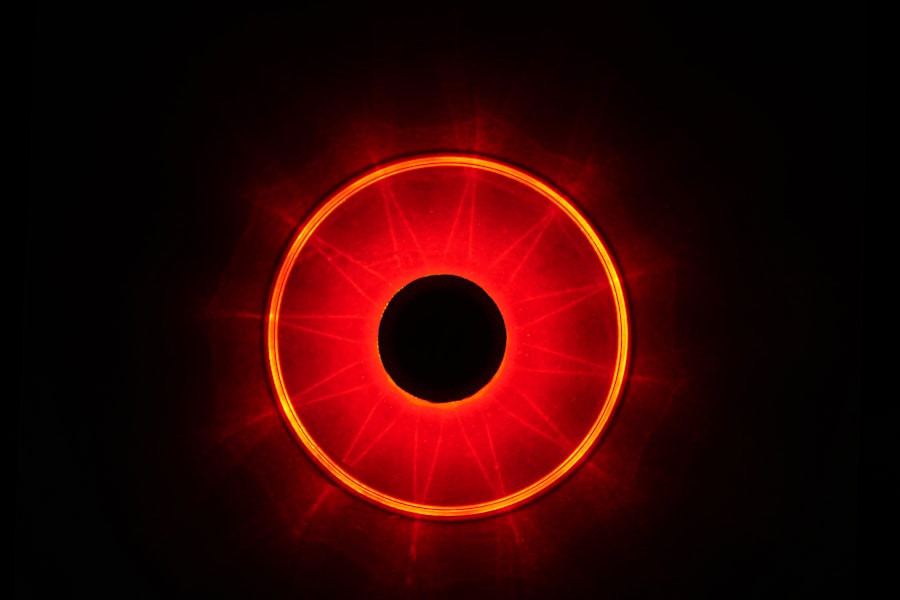
At the heart of every black hole lies a singularity, a point where gravitational forces compress matter to an infinitely dense state. Surrounding this singularity is the event horizon, an invisible boundary that delineates the region from which no information or matter can escape. The event horizon is not a physical surface but rather a mathematical construct that signifies the limits of our observational capabilities.
Once an object crosses this threshold, it is irrevocably drawn into the black hole’s depths.
Current theories, including general relativity, break down under the extreme conditions present at a singularity, leading scientists to seek a unified theory that can reconcile quantum mechanics with gravitational forces.
This quest for understanding has sparked debates among physicists about the fundamental nature of reality and whether singularities represent true endpoints or if they might be gateways to other dimensions or universes.
The Role of Black Holes in the Universe
| Aspect | Details |
|---|---|
| Definition | A region of spacetime where gravity is so strong that nothing, not even light, can escape from it |
| Formation | Occurs when a massive star collapses under its own gravity |
| Types | Stellar black holes, Intermediate black holes, Supermassive black holes |
| Role | Regulates the growth of galaxies, influences the movement of stars, and may play a role in the creation of elements |
| Research | Scientists continue to study black holes to better understand their impact on the universe |
Black holes play a crucial role in shaping the structure and evolution of galaxies. Supermassive black holes, often found at galactic centers, exert immense gravitational influence on surrounding stars and gas clouds. Their presence can regulate star formation rates and contribute to the dynamics of galactic rotation.
As matter spirals into these colossal entities, it forms an accretion disk that emits powerful radiation, often observed as quasars or active galactic nuclei. Moreover, black holes are integral to our understanding of cosmic evolution. They serve as laboratories for testing theories of gravity and high-energy physics under extreme conditions.
The interactions between black holes and their environments can lead to phenomena such as gravitational waves—ripples in spacetime caused by massive objects accelerating through space. These waves provide valuable insights into the nature of black holes and their interactions with other celestial bodies.
Black Holes and Time Dilation
One of the most fascinating aspects of black holes is their effect on time. According to Einstein’s theory of relativity, gravity can warp spacetime, causing time to pass differently depending on one’s proximity to a massive object. Near a black hole, this effect becomes pronounced; time slows down significantly for an observer close to the event horizon compared to someone far away.
This phenomenon is known as time dilation and has profound implications for our understanding of time itself. The implications of time dilation extend beyond theoretical musings; they challenge our perceptions of reality and raise questions about causality and simultaneity. For instance, if an astronaut were to approach a black hole and return after what felt like only a few hours for them, they could find that many years have passed for observers on Earth.
Such scenarios highlight the intricate relationship between gravity, time, and space, prompting further exploration into how these elements interact within the universe.
The Search for Black Holes

The quest to identify and study black holes has evolved significantly over recent decades. Initially, their existence was inferred through indirect observations—such as the behavior of stars orbiting invisible masses or X-ray emissions from accreting matter. However, advancements in technology have enabled astronomers to develop more sophisticated methods for detecting these elusive entities.
Instruments like gravitational wave detectors and powerful telescopes have opened new avenues for exploration. Gravitational wave astronomy has revolutionized our understanding of black holes by allowing scientists to observe mergers between these cosmic giants directly. The first detection of gravitational waves in 2015 marked a turning point in astrophysics, confirming predictions made by Einstein over a century earlier.
As researchers continue to refine their techniques and expand their observational capabilities, they are uncovering new insights into the population and distribution of black holes throughout the universe.
The Impact of Black Holes on Nearby Objects
The gravitational influence exerted by black holes extends far beyond their immediate vicinity. As they interact with nearby stars and gas clouds, they can significantly alter their trajectories and behaviors. For instance, when a star ventures too close to a supermassive black hole, it may be torn apart by tidal forces in a process known as spaghettification.
This dramatic event can lead to bursts of radiation as material is consumed by the black hole. Additionally, black holes can influence star formation within their host galaxies. Their immense gravitational pull can compress surrounding gas clouds, triggering new star formation or inhibiting it altogether depending on various factors such as distance and mass distribution.
This interplay between black holes and their environments underscores their role as dynamic agents within cosmic ecosystems.
Theories and Speculations about Black Holes
The study of black holes has given rise to numerous theories and speculations regarding their nature and implications for our understanding of the universe. One prominent idea is that black holes may serve as portals to other dimensions or even other universes—a concept popularized in science fiction but grounded in theoretical physics. Some researchers propose that information swallowed by black holes might not be lost but rather encoded in some form at the event horizon, leading to discussions about information preservation in quantum mechanics.
Another area of speculation involves the potential existence of primordial black holes—hypothetical entities formed shortly after the Big Bang from density fluctuations in the early universe. These primordial black holes could vary widely in size and might account for some dark matter observed today. As scientists continue to explore these theories, they push the boundaries of our understanding and challenge conventional wisdom about cosmic phenomena.
Recent Discoveries and Observations of Black Holes
Recent advancements in observational technology have led to groundbreaking discoveries regarding black holes. In 2019, astronomers achieved a historic milestone by capturing the first-ever image of a black hole’s event horizon in the galaxy M87 using the Event Horizon Telescope (EHT). This achievement provided visual confirmation of theoretical predictions and opened new avenues for studying these enigmatic objects.
Furthermore, ongoing research has revealed previously unknown populations of black holes within our galaxy and beyond. Observations from gravitational wave events have identified numerous binary systems containing black holes merging with one another, shedding light on their formation processes and demographics. These discoveries not only enhance our understanding of black holes but also contribute to broader questions about cosmic evolution and structure.
The Future of Black Hole Research
The future of black hole research holds immense promise as scientists continue to refine their methodologies and expand their observational capabilities. Upcoming missions such as NASA’s James Webb Space Telescope aim to probe deeper into cosmic history, potentially uncovering new insights into black hole formation and evolution across different epochs. Additionally, advancements in gravitational wave astronomy will likely yield further discoveries regarding binary systems and mergers.
As researchers delve deeper into the mysteries surrounding black holes, they will continue to confront fundamental questions about gravity, spacetime, and the nature of reality itself. The interplay between theoretical physics and observational data will drive future investigations, fostering collaboration across disciplines as scientists seek to unravel one of the universe’s most profound enigmas.
Unraveling the Mysteries of Black Holes
In conclusion, black holes represent one of the most intriguing phenomena in astrophysics, challenging our understanding of fundamental principles governing the universe. From their formation through stellar collapse to their profound effects on time and space, these cosmic giants continue to inspire awe and curiosity among scientists and enthusiasts alike. As research progresses and new discoveries emerge, humanity stands on the brink of unraveling some of the deepest mysteries surrounding these enigmatic entities.
The journey into understanding black holes is far from over; it is an ongoing exploration that promises to reshape our comprehension of existence itself. With each new finding, researchers inch closer to answering age-old questions while simultaneously raising new ones about the nature of reality and our place within it. As we gaze into the depths of these cosmic wonders, we are reminded that there is still much left to discover in this vast universe we inhabit.
The “Cosmic Ventures: Black Hole Documentary” offers a fascinating exploration into the enigmatic phenomena of black holes, delving into their mysteries and the latest scientific discoveries. For those interested in further expanding their knowledge on cosmic phenomena, a related article can be found on the Cosmic Ventures website. This article provides additional insights and complements the documentary by discussing recent advancements in space exploration and the role of black holes in our universe. To read more, visit the Cosmic Ventures website where you can find a wealth of information on this captivating subject.
WATCH THIS! 🌌The Biggest Black Hole Is A LIE
FAQs
What is the Cosmic Ventures Black Hole Documentary about?
The Cosmic Ventures Black Hole Documentary explores the fascinating world of black holes, their formation, characteristics, and the latest scientific research and discoveries related to these enigmatic cosmic entities.
Who is the target audience for the Cosmic Ventures Black Hole Documentary?
The documentary is designed for anyone with an interest in space, astronomy, and astrophysics. It aims to educate and entertain viewers with a curiosity about the mysteries of black holes.
What can viewers expect to learn from the Cosmic Ventures Black Hole Documentary?
Viewers can expect to gain a deeper understanding of black holes, including their gravitational pull, event horizons, and the impact they have on the surrounding space. The documentary also delves into the cutting-edge research being conducted to unravel the secrets of black holes.
Where can one watch the Cosmic Ventures Black Hole Documentary?
The documentary may be available for streaming on various platforms, such as streaming services, educational websites, or through purchase as a DVD or digital download. Check with your local television networks or online streaming services for availability.
Who are the experts featured in the Cosmic Ventures Black Hole Documentary?
The documentary may feature interviews and insights from leading astrophysicists, astronomers, and researchers who have dedicated their careers to studying black holes. These experts provide valuable knowledge and perspectives on the topic.