
Black holes have long captivated the imagination of scientists and the public alike, serving as a focal point for discussions about the nature of the universe. These enigmatic entities, formed from the remnants of massive stars that have undergone gravitational collapse, possess gravitational fields so intense that nothing, not even light, can escape their grasp. The concept of a black hole challenges conventional understanding of physics, particularly in the realms of general relativity and quantum mechanics.
As researchers delve deeper into the cosmos, black holes emerge not only as fascinating objects of study but also as critical components in the broader narrative of cosmic evolution. The study of black holes has evolved significantly since their theoretical inception in the early 20th century. Initially dismissed as mere mathematical curiosities, they have since been confirmed through various observational techniques.
The detection of gravitational waves from colliding black holes and the imaging of a black hole’s event horizon by the Event Horizon Telescope have marked monumental milestones in astrophysics. As scientists continue to unravel the complexities surrounding these cosmic giants, they are increasingly turning to advanced technologies, particularly X-ray astronomy, to gain deeper insights into their formation, behavior, and impact on their surroundings.
Key Takeaways
- Black holes are mysterious and fascinating objects in the universe, with intense gravitational pull that not even light can escape.
- X-ray astronomy plays a crucial role in exploring black holes, providing valuable insights into their formation, characteristics, and behavior.
- Understanding black hole formation and characteristics is essential for unraveling the mysteries of these enigmatic cosmic entities.
- X-ray emission from black holes offers valuable information about their surroundings and the processes occurring within them.
- Observing black holes with X-ray telescopes allows scientists to study their behavior and interactions with their environment, leading to significant discoveries and insights.
The Role of X-ray Astronomy in Black Hole Exploration
X-ray astronomy has emerged as a pivotal tool in the exploration of black holes, providing a unique window into their properties and behaviors. Unlike optical telescopes that capture visible light, X-ray telescopes are designed to detect high-energy radiation emitted by various cosmic phenomena. This capability is particularly crucial for studying black holes, as they often interact with surrounding matter in ways that produce significant X-ray emissions.
By observing these emissions, astronomers can glean vital information about the conditions near black holes and the processes occurring in their vicinity. The significance of X-ray astronomy lies in its ability to reveal aspects of black holes that are otherwise hidden from view. For instance, when matter falls into a black hole, it forms an accretion disk—a swirling mass of gas and dust that heats up to extreme temperatures, emitting X-rays in the process.
These emissions serve as a beacon for astronomers, allowing them to identify and study black holes that would otherwise remain undetected. Through X-ray observations, researchers can also investigate the dynamics of accretion processes and the powerful jets that some black holes produce, further enhancing our understanding of these mysterious objects.
Understanding Black Hole Formation and Characteristics
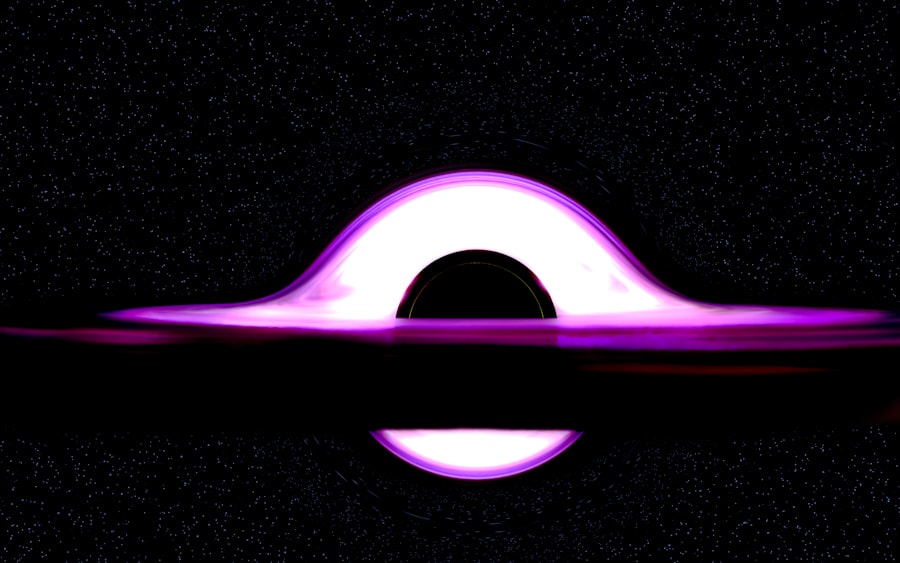
The formation of black holes is a complex process that can occur through several mechanisms, primarily involving the death of massive stars. When such a star exhausts its nuclear fuel, it undergoes a supernova explosion, leaving behind a core that collapses under its own gravity. If the remaining mass is sufficient—typically more than three solar masses—the core will continue to collapse until it forms a singularity surrounded by an event horizon.
This process not only leads to the creation of stellar black holes but also contributes to the formation of supermassive black holes found at the centers of galaxies. In addition to their formation, understanding the characteristics of black holes is essential for comprehending their role in the universe. Black holes are classified into several categories based on their mass: stellar black holes, which range from a few to several tens of solar masses; intermediate black holes, with masses between stellar and supermassive; and supermassive black holes, which can contain millions to billions of solar masses.
Each type exhibits distinct behaviors and influences on their surroundings, shaping galaxy formation and evolution. The study of these characteristics is crucial for piecing together the cosmic puzzle and understanding how black holes interact with other celestial bodies.
X-ray Emission from Black Holes
| Black Hole | X-ray Emission (erg/s) | Distance from Earth (light years) |
|---|---|---|
| Cygnus X-1 | 2.5 x 10^36 | 6,070 |
| V404 Cygni | 1.1 x 10^37 | 7,800 |
| SS 433 | 1.0 x 10^38 | 16,000 |
X-ray emissions from black holes are primarily generated through processes associated with accretion. As matter spirals into a black hole, it forms an accretion disk that becomes increasingly hot due to friction and gravitational forces. This heating causes the material in the disk to emit X-rays, which can be detected by specialized telescopes.
The intensity and spectrum of these emissions provide valuable insights into the physical conditions near the black hole, including temperature, density, and velocity of the infalling material. Moreover, X-ray emissions can vary significantly depending on the state of the accretion process. For instance, during periods of rapid accretion, known as outbursts, X-ray luminosity can increase dramatically, allowing astronomers to observe transient phenomena associated with black holes.
These fluctuations not only help in identifying different types of black holes but also offer clues about their growth and evolution over time. By analyzing these emissions, researchers can construct models that describe how black holes interact with their environment and influence galactic dynamics.
Observing Black Holes with X-ray Telescopes
The advent of X-ray telescopes has revolutionized our ability to observe black holes and their environments. Instruments such as NASA’s Chandra X-ray Observatory and ESA’s XMM-Newton have provided unprecedented views of high-energy phenomena across the universe. These telescopes utilize advanced technology to detect X-rays emitted from cosmic sources, allowing astronomers to study black holes in various contexts—from binary systems where one star is a black hole to supermassive black holes at galactic centers.
Observations made by these telescopes have led to significant discoveries regarding the behavior and characteristics of black holes. For example, Chandra has captured images revealing intricate structures around supermassive black holes, including jets and outflows that extend vast distances into space. Such observations not only enhance our understanding of individual black holes but also contribute to broader theories about galaxy formation and evolution.
The ability to observe X-ray emissions has thus become an indispensable aspect of modern astrophysics.
Discoveries and Insights from X-ray Astronomy
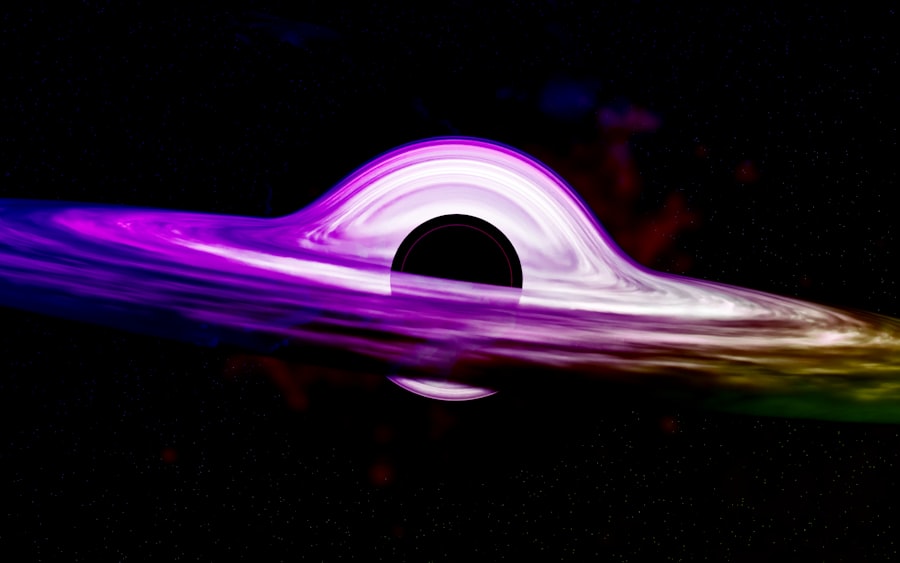
X-ray astronomy has yielded numerous discoveries that have reshaped our understanding of black holes and their role in the universe. One notable finding is the existence of intermediate-mass black holes, which were once thought to be purely theoretical. Observations from X-ray telescopes have identified several candidates for this elusive category, suggesting that they may play a crucial role in bridging the gap between stellar and supermassive black holes.
Additionally, X-ray observations have provided insights into the dynamics of accretion processes and the behavior of matter near black holes. For instance, studies have revealed that some black holes exhibit periodic outbursts of X-ray emissions, indicating complex interactions between accreting material and magnetic fields. These findings challenge existing models and prompt researchers to refine their understanding of how matter behaves under extreme gravitational forces.
As more data becomes available through ongoing observations, astronomers continue to uncover new layers of complexity surrounding these enigmatic objects.
Studying Black Hole Accretion and Jets with X-ray Observations
The study of accretion processes around black holes is one of the most compelling areas of research facilitated by X-ray observations. When matter falls into a black hole, it does not do so uniformly; instead, it often forms an accretion disk characterized by turbulent flows and varying densities. X-ray telescopes allow scientists to monitor these processes in real-time, providing insights into how material interacts with gravitational forces and magnetic fields.
Moreover, some black holes produce powerful jets—narrow streams of particles ejected at nearly the speed of light—resulting from complex interactions between accreting material and magnetic fields. These jets can extend thousands of light-years into space and are often associated with high-energy phenomena observed in X-rays. By studying these jets through X-ray emissions, researchers can gain a deeper understanding of how energy is transferred from black holes to their surroundings and how this process influences galaxy formation and evolution.
Unveiling the Mysteries of Black Hole Environments with X-ray Astronomy
X-ray astronomy plays a crucial role in unveiling the mysteries surrounding the environments in which black holes exist. The regions near black holes are often characterized by extreme conditions—intense gravitational forces, high temperatures, and complex magnetic fields—that challenge our understanding of physics. By observing X-ray emissions from these regions, astronomers can gather data on the composition and dynamics of surrounding matter.
These observations have revealed intricate structures around black holes, including outflows and inflows that shape their environments. For instance, studies have shown that supermassive black holes at the centers of galaxies can influence star formation rates in their host galaxies through feedback mechanisms driven by X-ray emissions. Understanding these interactions is essential for constructing comprehensive models that describe how black holes affect their surroundings on both local and cosmic scales.
Challenges and Future Prospects in X-ray Astronomy for Black Hole Exploration
Despite its successes, X-ray astronomy faces several challenges that researchers must navigate as they continue to explore black holes.
Developing more sensitive instruments will be crucial for identifying new black hole candidates and studying their properties in greater detail.
Looking ahead, future missions such as NASA’s upcoming XRISM (X-Ray Imaging and Spectroscopy Mission) aim to address these challenges by providing enhanced capabilities for observing high-energy phenomena. Such advancements will enable astronomers to probe deeper into the mysteries surrounding black holes and refine existing models based on new data. As technology continues to evolve, so too will our understanding of these enigmatic objects.
Collaborative Efforts in Black Hole Research using X-ray Astronomy
Collaboration among scientists across various disciplines has become increasingly important in advancing our understanding of black holes through X-ray astronomy. Researchers from different fields—astrophysics, computer science, engineering—are coming together to develop innovative solutions for analyzing data collected by X-ray telescopes. This interdisciplinary approach fosters creativity and allows for more comprehensive studies that integrate diverse perspectives.
International collaborations also play a vital role in expanding research capabilities. By pooling resources and expertise from institutions around the world, scientists can tackle complex questions related to black hole formation and behavior more effectively than ever before. Such collaborative efforts not only enhance scientific knowledge but also promote global engagement in addressing fundamental questions about our universe.
Implications of X-ray Astronomy for Understanding the Universe’s Most Mysterious Objects
The implications of X-ray astronomy extend far beyond individual studies of black holes; they contribute significantly to our broader understanding of cosmic evolution and structure formation. By investigating how black holes interact with their environments through high-energy emissions, researchers can gain insights into fundamental processes that govern galaxy formation and evolution over cosmic time scales. Furthermore, discoveries made through X-ray observations challenge existing theories about gravity, matter behavior under extreme conditions, and even fundamental aspects of quantum mechanics.
As scientists continue to explore these enigmatic objects using advanced technologies like X-ray telescopes, they are not only unraveling the mysteries surrounding black holes but also pushing the boundaries of human knowledge about the universe itself. In conclusion, X-ray astronomy has become an indispensable tool for exploring one of nature’s most intriguing phenomena: black holes. Through continued advancements in technology and collaborative research efforts, scientists are poised to uncover even more secrets hidden within these cosmic giants—ultimately enriching our understanding of the universe’s most mysterious objects.
X-ray astronomy has significantly advanced our understanding of black holes, providing insights into their behavior and the extreme environments surrounding them. A related article that delves deeper into the fascinating world of X-ray astronomy and its role in studying black holes can be found on My Cosmic Ventures. This article explores the latest discoveries and technological advancements in the field, shedding light on how X-ray observations help scientists unravel the mysteries of these enigmatic cosmic entities. For more detailed information, you can read the full article by visiting this link.
WATCH THIS! 🌌The Biggest Black Hole Is A LIE
FAQs
What is X-ray astronomy?
X-ray astronomy is the branch of astronomy that deals with the study of astronomical objects and phenomena that emit X-rays. This includes black holes, neutron stars, supernova remnants, and other high-energy sources.
What are black holes in the context of X-ray astronomy?
In the context of X-ray astronomy, black holes are extremely dense objects with gravitational fields so strong that not even light can escape from them. When matter falls into a black hole, it can emit X-rays as it is heated to extremely high temperatures.
How are black holes studied using X-ray astronomy?
Black holes are studied using X-ray astronomy by observing the X-rays emitted from the hot gas and matter as it falls into the black hole. X-ray telescopes in space, such as NASA’s Chandra X-ray Observatory, are used to detect and study these X-ray emissions.
What can we learn from studying black holes with X-ray astronomy?
Studying black holes with X-ray astronomy can provide insights into the behavior of matter under extreme conditions, the dynamics of black hole accretion disks, and the effects of strong gravitational fields. It can also help astronomers understand the role of black holes in the evolution of galaxies.
What are some notable discoveries in black hole X-ray astronomy?
Notable discoveries in black hole X-ray astronomy include the detection of X-ray emissions from supermassive black holes at the centers of galaxies, the observation of X-ray flares from stellar-mass black holes in binary systems, and the identification of X-ray jets and outflows from black hole accretion disks.