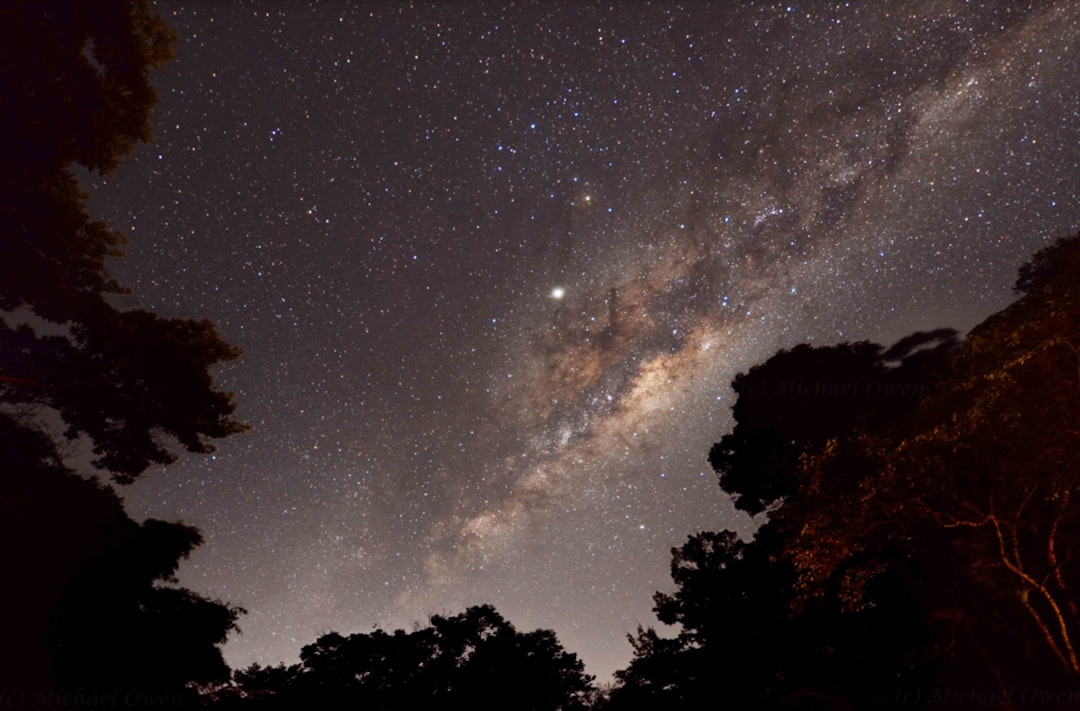
The night sky reveals the vastness of the universe and raises questions about extraterrestrial life. Modern astronomy and astrobiology focus on identifying habitable planets, driven by the question of whether life exists beyond Earth. Scientists have established specific criteria for planetary habitability, including orbital distance from a star, water presence, and atmospheric composition.
The discovery of exoplanets—planets orbiting stars outside our solar system—has expanded this search significantly, with thousands now documented. Many exoplanets exist within the “habitable zone” or “Goldilocks Zone,” where conditions permit liquid water to exist on a planet’s surface. The search for habitable worlds has practical significance beyond academic research.
Earth currently faces environmental and demographic pressures, including climate change and population growth. Identifying potentially habitable planets could provide options for human expansion and long-term species survival. However, this search encounters substantial obstacles, including technological limitations and the immense distances between star systems.
Current capabilities restrict our ability to thoroughly examine distant planets, and interstellar travel remains technologically unfeasible. Despite these challenges, the systematic study of exoplanets continues to advance, requiring sustained investment in research infrastructure and innovative methodologies to overcome existing constraints.
Key Takeaways
- Identifying habitable planets is crucial but complicated by vast interstellar distances and environmental uncertainties.
- Advanced propulsion systems and AI are essential to overcome the technical challenges of interstellar travel.
- Interstellar journeys may significantly affect human physiology, requiring new medical and biological solutions.
- Ethical, legal, and political frameworks must evolve to address the complexities of exploring and utilizing extraterrestrial environments.
- Interstellar exploration will profoundly influence human culture, society, and our understanding of life beyond Earth.
Challenges of Interstellar Travel
Interstellar travel presents a myriad of challenges that can seem almost insurmountable. One of the most significant hurdles is the sheer distance between stars. Even at the speed of light, it would take over four years to reach Proxima Centauri, our closest stellar neighbor.
You might find it hard to fathom just how vast these distances are, especially when considering that our current spacecraft travel at a fraction of that speed. The limitations of propulsion technology mean that reaching even the nearest star systems could take decades or centuries, raising questions about the feasibility of human travel. Moreover, the physical and psychological challenges of long-duration space travel cannot be overlooked.
You may imagine being confined in a spacecraft for years on end, with limited social interaction and resources. The effects of microgravity on human health are well-documented, including muscle atrophy and bone density loss. Additionally, cosmic radiation poses a significant risk to astronauts on extended missions.
As you contemplate these challenges, it becomes evident that interstellar travel is not just about reaching another star; it involves ensuring the safety and well-being of those who embark on such a journey. Explore the future of space travel with laser sails technology.
Propulsion Systems for Interstellar Travel
To make interstellar travel a reality, advancements in propulsion systems are essential. Current chemical rockets are insufficient for such ambitious missions, prompting scientists to explore alternative technologies. You may have heard of concepts like nuclear propulsion, which harnesses nuclear reactions to produce thrust.
This method could potentially reduce travel time to nearby stars significantly compared to conventional rockets. Another exciting possibility is the use of solar sails, which utilize the pressure of sunlight to propel spacecraft across vast distances. One of the most intriguing concepts is the idea of warp drives, which theoretically allow for faster-than-light travel by bending space-time.
While this remains largely theoretical and faces numerous scientific challenges, it captures your imagination as a potential game-changer in interstellar exploration. As you consider these various propulsion systems, it becomes clear that innovation will be key to overcoming the limitations of our current technology and making interstellar travel feasible.
The Role of Artificial Intelligence in Interstellar Travel
Artificial intelligence (AI) is poised to play a crucial role in the future of interstellar travel. As you think about the complexities involved in navigating vast distances and managing spacecraft systems, AI emerges as an invaluable tool. It can assist in real-time decision-making, analyze data from distant celestial bodies, and even manage life support systems during long missions.
You might envision AI as a co-pilot, capable of optimizing routes and ensuring that resources are used efficiently. Moreover, AI can enhance communication between Earth and distant spacecraft. Given the time delays inherent in interstellar communication—messages could take years to reach their destination—AI could help automate responses and manage information flow.
This capability would be essential for maintaining contact with astronauts on long missions and ensuring their safety. As you reflect on these possibilities, it becomes evident that AI will not only facilitate interstellar travel but also redefine our understanding of exploration itself.
Potential Impact on Human Physiology
| Metric | Value/Estimate | Unit | Notes |
|---|---|---|---|
| Distance to Proxima Centauri | 4.24 | light years | Closest star to the Sun |
| Speed of Voyager 1 | 17 | km/s | Fastest human-made object leaving the solar system |
| Travel time to Proxima Centauri at Voyager 1 speed | 79,000 | years | Estimated duration at current speed |
| Proposed speed for interstellar probes (Breakthrough Starshot) | 0.2 | c (speed of light) | 20% speed of light using light sail technology |
| Travel time to Proxima Centauri at 0.2c | 20 | years | Estimated duration with advanced propulsion |
| Energy required for 1 kg probe at 0.2c | 1.8 x 10^15 | Joules | Relativistic kinetic energy calculation |
| Typical payload mass for interstellar probes | 1 – 10 | kg | Small, lightweight probes preferred |
| Estimated communication delay to Proxima Centauri | 4.24 | years one-way | Limited by speed of light |
| Potential travel time with fusion propulsion | 100 – 1000 | years | Highly speculative advanced propulsion |
The journey into deep space will undoubtedly have profound effects on human physiology. As you consider the implications of long-term space travel, you may be struck by how little we truly understand about how the human body will adapt to such extreme conditions. Microgravity can lead to significant changes in muscle mass and bone density, which could pose serious health risks for astronauts on extended missions.
You might imagine a future where astronauts undergo rigorous training and preparation to mitigate these effects before embarking on their journeys. Additionally, exposure to cosmic radiation presents another challenge that could impact human health during interstellar travel. You may find it concerning that current shielding technologies may not be sufficient to protect astronauts from high-energy particles encountered in deep space.
Research into advanced materials and protective measures will be crucial in safeguarding human health during these missions. As you ponder these physiological challenges, it becomes clear that understanding and addressing them will be vital for the success of interstellar exploration.
Ethical Considerations of Interstellar Exploration

As humanity stands on the brink of interstellar exploration, ethical considerations come to the forefront. You may find yourself questioning the morality of colonizing other planets or moons, especially if they harbor life forms or ecosystems yet unknown to us. The potential for contamination—both biological and ecological—raises significant ethical dilemmas about our responsibility as explorers.
Should we prioritize our survival over the preservation of other worlds? These questions demand careful consideration as we venture into uncharted territories. Furthermore, there are ethical implications surrounding the treatment of astronauts who undertake these perilous journeys.
You might wonder about their rights and well-being during long missions away from Earth. The psychological toll of isolation and confinement must be addressed to ensure that those who venture into space are treated with dignity and respect. As you reflect on these ethical considerations, it becomes clear that responsible exploration requires not only technological advancements but also a commitment to ethical principles that guide our actions in the cosmos.
Communication with Potential Extraterrestrial Life
The prospect of encountering extraterrestrial life raises intriguing questions about communication across vast distances. As you contemplate this possibility, you may wonder how we would even begin to establish contact with intelligent beings from other worlds. The challenges are immense; differences in language, culture, and even biology could complicate any attempts at communication.
You might envision scenarios where we send messages encoded in mathematical patterns or universal scientific principles in hopes that they would be understood by alien civilizations. Moreover, the implications of such contact could be profound for humanity as a whole. You may consider how our understanding of ourselves would shift if we were to discover intelligent life beyond Earth.
The ethical dimensions of this interaction would require careful thought and consideration as we navigate this uncharted territory. As you reflect on these possibilities, it becomes evident that communication with extraterrestrial life is not just a technical challenge; it is also a deeply philosophical one.
The Search for Extraterrestrial Resources
As humanity looks toward interstellar exploration, the search for extraterrestrial resources becomes increasingly relevant. You may envision a future where mining asteroids or harvesting materials from other planets could provide essential resources for sustaining life on Earth or supporting long-term space missions. The potential for discovering valuable minerals or even water sources on other celestial bodies could revolutionize our approach to resource management.
However, this pursuit raises important questions about ownership and exploitation. You might find yourself pondering who has the right to claim resources found in space—nations, corporations, or humanity as a whole? The legal frameworks governing space exploration are still evolving, and as you consider these issues, it becomes clear that establishing guidelines for resource extraction will be crucial in ensuring that we do not repeat past mistakes made during colonial expansions on Earth.
Legal and Political Implications of Interstellar Travel
The legal and political landscape surrounding interstellar travel is complex and multifaceted. As you think about humanity’s potential expansion into space, you may wonder how existing treaties and laws will apply to interstellar exploration. The Outer Space Treaty of 1967 established principles governing activities in outer space but does not specifically address interstellar travel or colonization efforts beyond our solar system.
This gap presents challenges as nations and private entities prepare for potential missions beyond Earth. You might also consider how international cooperation will play a role in shaping the future of interstellar exploration. Collaborative efforts could lead to shared knowledge and resources, fostering peaceful exploration rather than competition among nations.
However, political tensions could also arise as countries vie for dominance in space exploration efforts. As you reflect on these legal and political implications, it becomes evident that establishing a framework for responsible governance will be essential as humanity embarks on its journey into the cosmos.
Cultural and Societal Impacts of Interstellar Exploration
The cultural and societal impacts of interstellar exploration are profound and far-reaching. As you contemplate humanity’s potential expansion into space, you may envision how this endeavor could reshape our understanding of identity and belonging. The idea of becoming a multi-planetary species could foster a sense of unity among people on Earth as we collectively strive toward a common goal—exploration beyond our home planet.
Moreover, interstellar exploration could inspire new forms of art, literature, and philosophy as humanity grapples with its place in the universe. You might imagine how stories about distant worlds and encounters with alien civilizations could influence cultural narratives and spark creativity across various mediums. As you reflect on these cultural shifts, it becomes clear that interstellar exploration has the potential to enrich human experience in ways we have yet to fully comprehend.
The Future of Interstellar Travel: Possibilities and Limitations
As you look toward the future of interstellar travel, you may feel a mix of excitement and trepidation about what lies ahead. The possibilities are vast; advancements in technology could one day make journeys to distant stars feasible within human lifetimes. However, significant limitations remain—both technological and ethical—that must be addressed before we can embark on such ambitious missions.
You might envision a future where humanity has established colonies on other planets or moons within our solar system while simultaneously laying the groundwork for interstellar exploration beyond our immediate neighborhood. Yet even as we dream big, it is essential to remain grounded in reality; understanding our limitations will be crucial in shaping responsible exploration efforts moving forward. As you contemplate these possibilities and limitations, it becomes evident that while interstellar travel may still be a distant dream today, it is one worth pursuing with careful consideration and thoughtful planning for generations to come.
Interstellar travel beyond our solar system has long been a topic of fascination for scientists and enthusiasts alike. A related article that delves into the possibilities and challenges of such journeys can be found on My Cosmic Ventures. For more insights and information, you can read the article [here](https://www.mycosmicventures.com/).
WATCH THIS! 🚀✨ Can Laser Sails Take Us to Alpha Centauri in 20 Years?
FAQs
What is interstellar travel?
Interstellar travel refers to the hypothetical journey of spacecraft traveling between stars, beyond our solar system. It involves covering vast distances that are measured in light-years.
Why is interstellar travel challenging?
Interstellar travel is challenging due to the immense distances between stars, requiring advanced propulsion technologies, enormous energy resources, and solutions for long-duration life support and communication delays.
What propulsion methods are considered for interstellar travel?
Potential propulsion methods include nuclear fusion or fission drives, antimatter engines, laser sails, and theoretical concepts like the Alcubierre warp drive, which involves bending space-time.
How long would it take to travel to the nearest star?
Using current technology, it would take tens of thousands of years to reach the nearest star, Proxima Centauri, which is about 4.24 light-years away. Advanced propulsion could reduce this to decades or centuries.
Have any missions been planned for interstellar travel?
Projects like Breakthrough Starshot aim to send tiny, laser-propelled probes to nearby stars within a few decades, but no crewed interstellar missions are currently feasible.
What are the main obstacles to human interstellar travel?
Key obstacles include protecting humans from cosmic radiation, providing sustainable life support, psychological effects of long-duration spaceflight, and the enormous energy and material requirements.
Is faster-than-light travel possible?
According to current physics, faster-than-light travel is not possible. Concepts like warp drives remain theoretical and have not been demonstrated or proven feasible.
What scientific benefits could interstellar travel provide?
Interstellar travel could enable direct exploration of exoplanets, advance our understanding of the universe, and potentially discover extraterrestrial life or new resources.
How does interstellar travel differ from interplanetary travel?
Interstellar travel involves traveling between stars, covering distances thousands of times greater than interplanetary travel, which occurs within a single solar system.
What technologies need to be developed for interstellar travel?
Technologies needed include advanced propulsion systems, life support for long-duration missions, radiation shielding, autonomous navigation, and communication systems capable of handling vast distances.