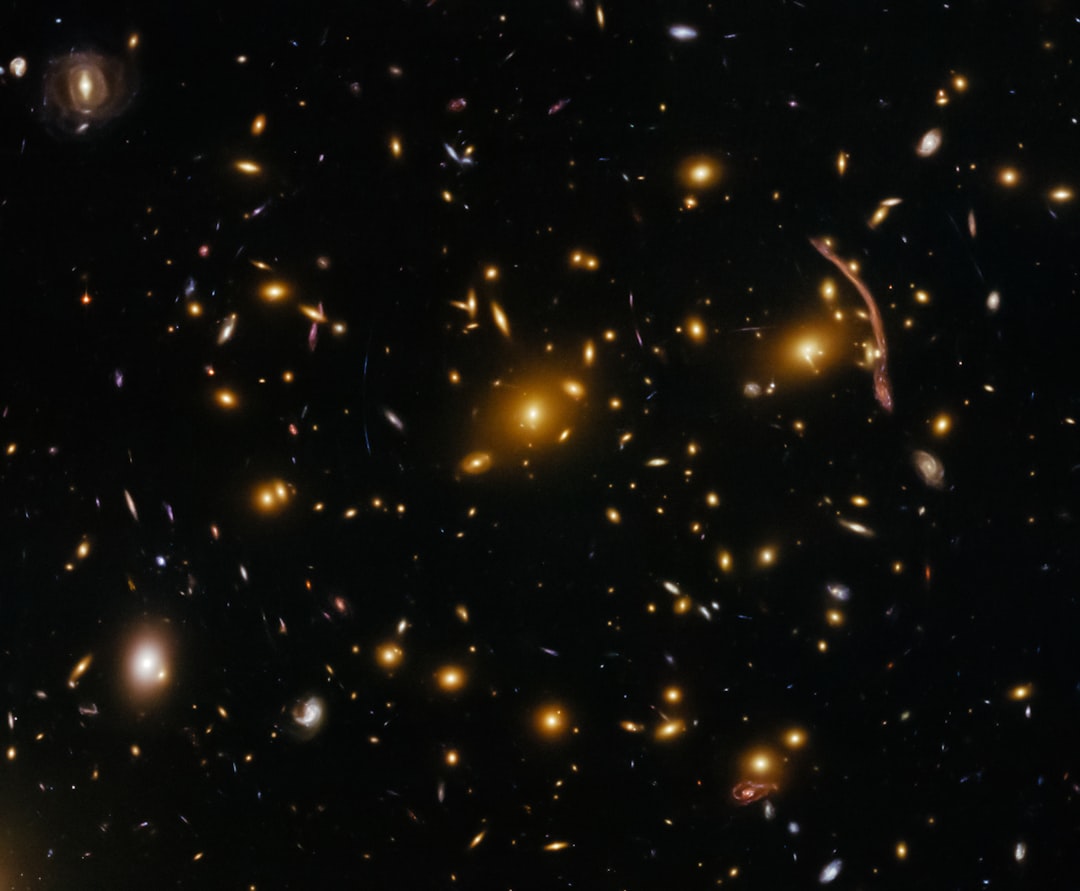
The concept of determinism, which posits that all events, including human actions, are ultimately determined by causes external to the will, has been a subject of extensive philosophical and scientific inquiry for centuries. This article explores the implications of embracing a deterministic worldview, examining its historical foundations, scientific underpinnings, and the intellectual and practical consequences of such an understanding.
Determinism, in its various forms, has roots in ancient Greek philosophy and has evolved through myriad intellectual traditions. Understanding these historical threads is crucial for grasping its contemporary relevance. You can learn more about the block universe theory in this insightful video.
Ancient Greek Perspectives
Early discussions of determinism can be traced back to the pre-Socratic philosophers. Leucippus and Democritus, proponents of early atomism, suggested that the universe is composed of indivisible atoms moving in a void, their interactions governed by fixed physical laws. This mechanistic view implied a future entirely predictable if one possessed sufficient knowledge of the initial conditions.
- Stoicism and Fate: The Stoics, particularly Zeno of Citium, Chrysippus, and Marcus Aurelius, embraced a form of theological determinism where the universe was governed by an all-encompassing divine reason or ‘logos’. For Stoics, acceptance of one’s fate, rather than resistance, was the path to virtue and tranquility. This did not negate individual responsibility but reframed it within a divinely ordained order.
- Epicureanism and the ‘Swerve’: In contrast, Epicurus introduced the concept of the ‘swerve’ (parenklisis) of atoms, a random, uncaused deviation from their predetermined paths. This seemingly minor addition was significant, as it provided a physical basis for free will, creating a counterpoint to strict determinism within ancient thought.
The Enlightenment and Scientific Determinism
The Scientific Revolution and the Enlightenment period saw a resurgence of mechanistic determinism, largely driven by advancements in physics and astronomy. Figures like Isaac Newton provided a coherent framework for understanding the universe as a grand clockwork mechanism.
- Newtonian Mechanics: Newton’s laws of motion and universal gravitation described a universe where the future state of a system could be precisely calculated given its current state and the forces acting upon it. This model profoundly influenced subsequent philosophical thought, suggesting that all phenomena, from planetary orbits to the flight of a thrown object, were governed by immutable laws.
- Pierre-Simon Laplace’s Demon: The epitome of classical scientific determinism is often attributed to Pierre-Simon Laplace. He famously articulated the concept of Laplace’s Demon: an intellect that, if it knew the position and momentum of every atom in the universe at a given instant, could perfectly predict its future and retrodict its past. This thought experiment vividly illustrates the implications of a strictly deterministic universe.
In exploring the concept of meaning within a deterministic universe, one can gain further insights by examining the article “The Illusion of Free Will in a Deterministic World.” This piece delves into the philosophical implications of determinism and how it shapes our understanding of choice and purpose. For a deeper understanding, you can read the article here: The Illusion of Free Will in a Deterministic World.
Scientific Underpinnings of Determinism
Modern science, while refining classical conceptions, continues to grapple with and, in many areas, reinforce deterministic principles. However, quantum mechanics introduces complexities that challenge a naive interpretation of determinism.
Classical Physics and Predictability
Classical physics, encompassing Newtonian mechanics, electromagnetism, and classical thermodynamics, largely operates on deterministic principles. The equations governing these fields relate initial conditions to subsequent states in a predictable manner.
- Conservation Laws: Fundamental conservation laws, such as the conservation of energy, momentum, and angular momentum, underpin the deterministic nature of classical systems. These laws dictate that certain quantities remain constant, constraining the possible evolution of a system.
- Chaos Theory’s Nuance: While deterministic, classical systems with high sensitivity to initial conditions can exhibit chaotic behavior. Deterministic chaos, exemplified by the butterfly effect, does not negate determinism but rather highlights the practical impossibility of long-term prediction in certain complex systems due to the need for infinitely precise initial data. A precise knowledge of the ‘push’ on the first domino still allows for prediction of the cascade, even if that push is infinitesimally small.
Quantum Mechanics and Probabilistic Determinism
Quantum mechanics, the theory describing the behavior of matter at the atomic and subatomic levels, presents a more nuanced picture. It introduces inherent probabilistic elements that seem to challenge strict determinism.
- Wave Function Collapse: In quantum mechanics, the state of a particle is described by a wave function, which evolves deterministically according to the Schrödinger equation. However, the act of measurement causes the wave function to ‘collapse’ into a definite state, and the outcome of this collapse is generally described probabilistically.
- Interpretations of Quantum Mechanics: While the outcomes of individual quantum events are probabilistic, some interpretations of quantum mechanics, such as the Many-Worlds Interpretation, retain a form of determinism. In this view, all possible outcomes of a quantum measurement are realized in different parallel universes, meaning the universe’s evolution remains deterministic but branches into countless realities. Other interpretations, like objective collapse theories, propose that the universe itself has non-deterministic elements at the quantum level.
Implications for Free Will

The relationship between determinism and free will is one of the most contentious and widely debated aspects of this philosophy. If all actions are predetermined, what space remains for genuine choice?
Hard Determinism
Hard determinism asserts that determinism is true and free will is an illusion. Our actions, thoughts, and desires are merely the inevitable consequence of a chain of prior causes stretching back to the beginning of the universe.
- Moral Responsibility Challenged: A central challenge for hard determinism lies in reconciling it with traditional notions of moral responsibility. If individuals could not have acted otherwise, how can they be held accountable for their choices, or praised for their virtues? This perspective often leads to a re-evaluation of justice systems and personal blame.
- The Illusion of Choice: From a hard deterministic standpoint, the subjective experience of making a choice is merely the conscious awareness of a decision that has already been irrevocably determined by antecedent conditions. One might feel as though they are choosing, but this ‘feeling’ itself is a determined event.
Compatibilism
Compatibilism attempts to reconcile determinism with free will. It argues that free will can exist even if all events are causally determined, redefining what ‘free will’ means.
- Freedom as Lack of Coercion: Compatibilists often define free will not as the ability to have acted otherwise in an absolute sense, but as the ability to act according to one’s own desires and intentions, without external coercion or internal compulsions (like phobias or addictions). An action is ‘free’ if it originates from the agent’s internal mental states, even if those mental states are themselves determined.
- Moral Accountability Retained: By redefining free will, compatibilists seek to preserve moral responsibility. An individual is responsible for their actions if those actions were caused by their own reasons and motives, even if those reasons and motives were themselves determined. The focus shifts from the ultimate origin of the desire to the immediate cause of the action.
Libertarianism (as a Counterpoint)
While not a form of determinism, libertarianism stands as its direct antithesis in the free will debate. Libertarians argue that free will is real and incompatible with determinism, therefore determinism must be false.
- Agent Causation: Libertarian theories often propose a concept of ‘agent causation,’ where an agent (a person) can initiate a new causal chain, not merely be part of a pre-existing one. This means the agent, not just preceding events, is the ultimate cause of an action.
Living in a Deterministic Universe

Embracing determinism, whether in its hard or compatibilist forms, can lead to significant shifts in one’s perspective on life, personal responsibility, and the nature of reality.
Shifting Perspectives on Blame and Forgiveness
A deterministic worldview can fundamentally alter one’s approach to blame, culpability, and forgiveness. If all actions are determined, then assigning blame for inherently ‘free’ choices becomes problematic.
- Understanding Causes, Not Just Outcomes: Instead of focusing solely on the negative outcome of an action and assigning fault, a deterministic lens encourages inquiry into the underlying causal factors. It asks, “What chain of events and influences led this person to act in this way?” This fosters empathy and a more nuanced understanding of human behavior.
- Constructive Responses to Harm: While determinism might challenge traditional retributive justice, it does not negate the need for consequences. Instead, it shifts the focus towards preventative measures, rehabilitation, and addressing the root causes of harmful behavior, recognizing that such measures are themselves part of the determined chain of events.
Cultivating Acceptance and Serenity
The acceptance of determinism can be a powerful tool for cultivating inner peace and reducing anxiety, mirroring some aspects of Stoic philosophy.
- Letting Go of Counterfactuals: Dwelling on “what ifs” or regretting past choices that could not have been otherwise becomes less meaningful. One recognizes that the past was the only possible past, and the future, while unknown, will similarly unfold as it must. This can liberate individuals from the burden of self-blame and endless rumination.
- Focusing on Influence, Not Absolute Control: While the future is determined, an individual’s actions are part of the causal fabric. Embracing determinism does not mean passive resignation but understanding that one’s efforts, choices, and interventions are themselves determined causes that will produce their determined effects. It shifts the focus from having ultimate control over an external reality to understanding one’s determined role within it.
In exploring the concept of meaning within a deterministic universe, one can find intriguing insights in the article on cosmic perspectives. This piece delves into how our understanding of fate and free will shapes our perception of purpose in life. For a deeper exploration of these themes, you can read more in the article on cosmic perspectives. It challenges readers to consider how determinism influences our choices and the significance we assign to our experiences.
The Practical Implications for Society
| Aspect | Description | Implication for Meaning | Example Metric or Data |
|---|---|---|---|
| Determinism Definition | The philosophical concept that all events are determined completely by previously existing causes. | Suggests a fixed, predictable universe where free will may be an illusion. | Percentage of physical processes modeled deterministically: ~95% |
| Free Will Compatibility | Whether free will can coexist with determinism (compatibilism vs incompatibilism). | Determines if meaning can be self-generated or preordained. | Survey: 60% philosophers support compatibilism |
| Existential Meaning | Meaning derived from individual purpose or subjective experience. | May be challenged if universe is fully deterministic. | Reported sense of meaning in deterministic worldview: 45% |
| Predictability of Events | Degree to which future states can be predicted from current conditions. | Higher predictability may reduce perceived randomness and chance. | Classical physics predictability accuracy: >99% |
| Quantum Indeterminacy | Quantum mechanics introduces probabilistic outcomes at micro level. | Challenges strict determinism, allowing room for randomness. | Probability of quantum event outcomes: inherently probabilistic |
| Philosophical Impact | Influence of determinism on ethics, responsibility, and meaning. | May redefine moral responsibility and personal meaning. | Number of philosophical works on determinism and meaning: 1200+ |
Beyond individual psychology, a deterministic understanding has profound implications for societal structures, ethical considerations, and the pursuit of knowledge.
Redefining Justice and Punishment
Societal frameworks for justice, crime, and punishment are heavily predicated on the notion of free will and personal responsibility. Determinism necessitates a re-evaluation of these foundations.
- From Retribution to Rehabilitation: If wrongdoers could not have acted otherwise, the primary justification for punishment shifts from retribution (deserving to suffer) to rehabilitation, deterrence, and incapacitation. The goal becomes to reform individuals and prevent future harm, rather than to exact a payment for a ‘free’ transgression.
- Addressing Systemic Causes: A deterministic perspective encourages a deeper examination of systemic injustices and societal conditions that contribute to crime and undesirable behaviors. It highlights that individuals are not isolated agents but products of their environments, genetics, and historical circumstances. This promotes policies aimed at addressing underlying social determinants.
Informing Education and Personal Growth
Education, personal development, and self-improvement are often framed as exercises in choosing a better path. How does determinism fit into this picture?
- Understanding Learning Mechanisms: Determinism can inform educational strategies by emphasizing the predictable ways in which environments, stimuli, and experiences shape behavior and cognition. It suggests that individuals learn and grow because their brains are determined to respond to certain inputs in particular ways.
- The Power of Environment: Recognizing that an individual’s potential and outcomes are heavily influenced by their environment and upbringing underscores the societal responsibility to create nurturing and stimulating environments for all. It views personal growth as a process of continuous determined development, where individuals are constantly being shaped by internal and external forces.
In conclusion, embracing a deterministic universe is not about surrendering to fatalism but about achieving a deeper, more profound understanding of reality. It challenges deeply ingrained notions of control, responsibility, and choice, often replacing them with a sense of interconnectedness, empathy, and a focus on understanding causal mechanisms. While the intricacies of quantum mechanics continue to fuel debate, and the question of free will remains a philosophical battleground, the intellectual journey of engaging with determinism offers a powerful lens through which to comprehend the cosmos and humanity’s place within it. It encourages one to perceive the intricate dance of cause and effect that orchestrates every moment, recognizing that each action, thought, and event is an indispensable thread in the tapestry of existence.
FAQs
What is a deterministic universe?
A deterministic universe is a concept in which all events and states are determined completely by previously existing causes. In such a universe, given the initial conditions and the laws of nature, the future is entirely predictable.
What does “meaning” refer to in a deterministic universe?
In the context of a deterministic universe, “meaning” often refers to the purpose, significance, or value of events, actions, or existence, despite the idea that everything is predetermined by prior causes.
How does determinism affect the concept of free will?
Determinism challenges the traditional notion of free will by suggesting that choices and actions are predetermined by prior states of the universe. This raises questions about moral responsibility and autonomy.
Can there be meaning or purpose in a deterministic universe?
Yes, many philosophers argue that meaning and purpose can still exist in a deterministic universe. Meaning can be derived from subjective experiences, relationships, goals, and values, even if outcomes are predetermined.
Is determinism the same as fatalism?
No, determinism and fatalism are different. Determinism is the idea that every event is caused by preceding events according to natural laws, while fatalism is the belief that outcomes are fixed regardless of actions taken.
How does quantum mechanics impact the idea of a deterministic universe?
Quantum mechanics introduces elements of randomness and probability at the microscopic level, which challenges strict determinism. However, interpretations vary, and some propose deterministic models compatible with quantum phenomena.
What are some philosophical implications of a deterministic universe?
Philosophical implications include debates about free will, moral responsibility, the nature of consciousness, and how humans find meaning and purpose if all events are predetermined.
Are there any scientific theories that support determinism?
Classical physics, such as Newtonian mechanics, supports a deterministic view where the future state of a system can be predicted from its current state. However, modern physics, especially quantum theory, complicates this view.
How do people find meaning if the universe is deterministic?
People may find meaning through personal goals, relationships, creativity, and experiences. Many argue that meaning is a human construct that does not depend on indeterminism or randomness.
What is the difference between hard determinism and compatibilism?
Hard determinism asserts that determinism is true and incompatible with free will, denying free will altogether. Compatibilism holds that free will and determinism can coexist, redefining free will in a way that fits a deterministic framework.