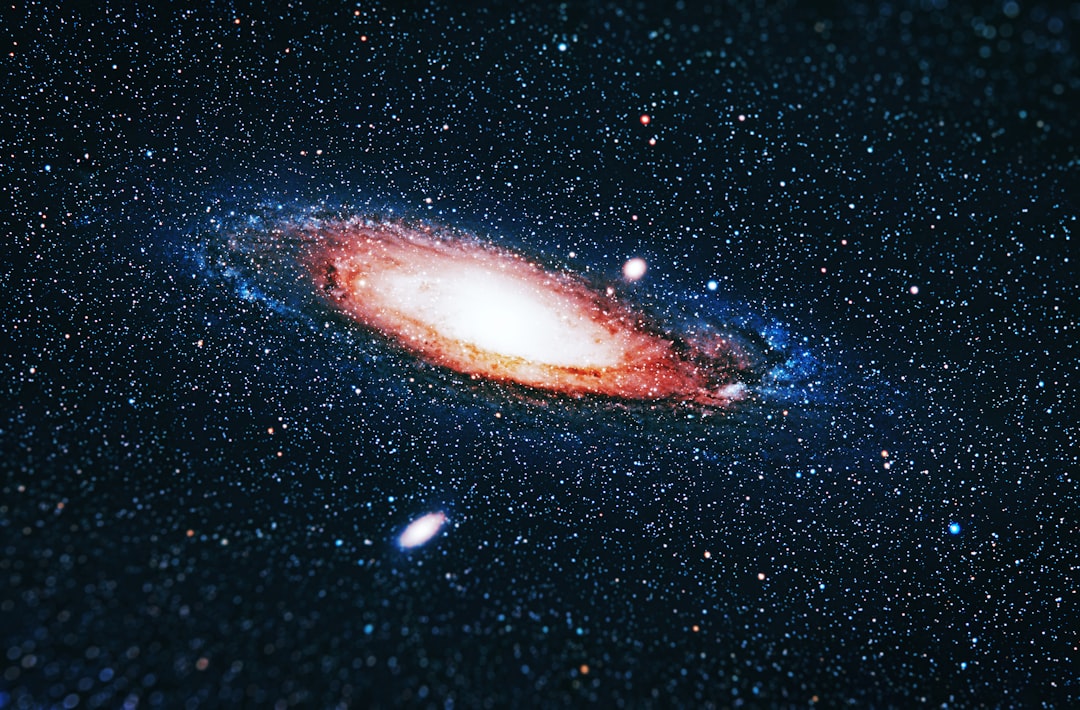
The Ekpyrotic Universe presents a fascinating alternative to the conventional Big Bang theory, proposing a model of cosmic evolution that is rooted in the collision of branes in higher-dimensional space. This theory, which emerged from string theory, suggests that our universe is just one of many that exist within a larger multiverse. The term “ekpyrotic” derives from the Greek word for “conflagration,” reflecting the idea that the universe was born from a cataclysmic event involving these branes.
Unlike the Big Bang, which posits an initial singularity, the Ekpyrotic model emphasizes a cyclical nature of cosmic events, where universes can be born and reborn through repeated collisions. In this framework, the universe’s expansion is not merely a consequence of an initial explosion but rather a result of the dynamics between these branes. The Ekpyrotic Universe offers a compelling narrative that seeks to address some of the fundamental questions in cosmology, such as the nature of dark energy and the origin of cosmic structure.
By exploring this model, researchers aim to gain insights into the very fabric of reality and the forces that govern it. The implications of this theory extend beyond mere academic curiosity; they challenge existing paradigms and invite a reevaluation of how humanity understands its place in the cosmos.
Key Takeaways
- The Ekpyrotic Universe theory offers an alternative cosmological model involving cyclic collisions of branes, influencing black hole formation and collapse.
- Black hole collapse within this framework is deeply connected to dark energy dynamics and the universe’s contraction phases.
- The interplay between quantum mechanics and general relativity is crucial for understanding black hole behavior in the Ekpyrotic context.
- Observational data and theoretical models provide partial support but also highlight significant challenges and controversies.
- Studying black hole collapse in the Ekpyrotic Universe could lead to new insights into cosmology and potential future applications in physics.
The Theory of Black Hole Collapse in the Ekpyrotic Universe
Within the context of the Ekpyrotic Universe, black hole collapse takes on a unique significance. Traditional models of black hole formation typically involve massive stars exhausting their nuclear fuel and succumbing to gravitational collapse.
This perspective opens up new avenues for understanding how black holes might behave differently than previously thought, particularly in relation to their formation and eventual fate. The collapse of black holes in this model could be influenced by the cyclical nature of the universe itself. As branes collide and interact, they may create conditions conducive to black hole formation, leading to a complex interplay between cosmic evolution and gravitational phenomena.
This relationship raises intriguing questions about the lifecycle of black holes and their potential role in the broader narrative of cosmic history. By examining these dynamics, researchers can explore how black holes might contribute to or disrupt the cyclical processes that define the Ekpyrotic Universe.
Understanding the Ekpyrotic Universe and its Connection to Black Holes
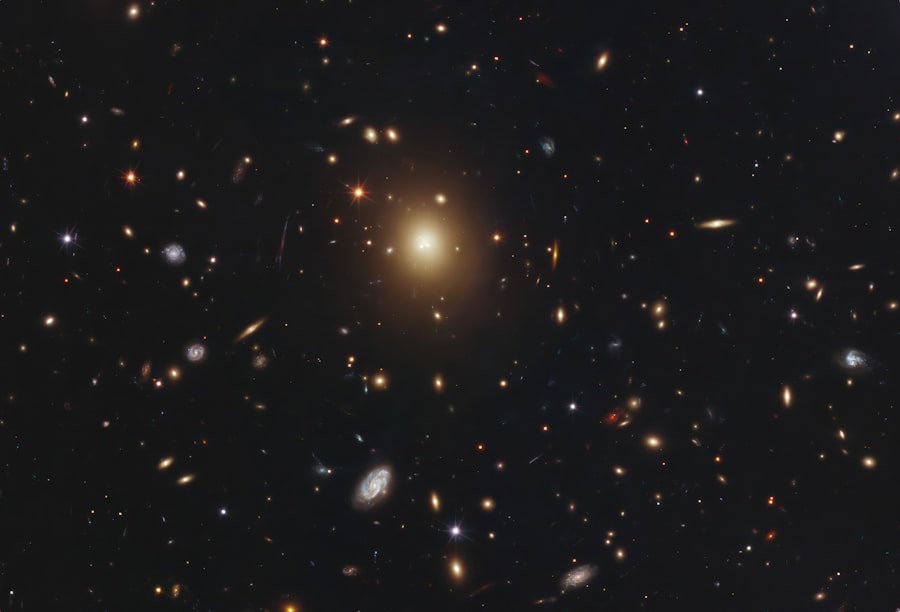
To fully grasp the connection between the Ekpyrotic Universe and black holes, one must delve into the fundamental principles that underpin this cosmological model. The Ekpyrotic theory posits that our universe is a three-dimensional brane embedded within a higher-dimensional space, where interactions with other branes can lead to significant cosmic events. These interactions can generate energy densities that may give rise to black holes, suggesting that black holes are not merely endpoints of stellar evolution but integral components of cosmic dynamics.
Moreover, understanding how black holes fit into this framework requires an exploration of their properties and behaviors in relation to brane collisions. For instance, when two branes collide, they can produce gravitational waves and other phenomena that may influence black hole formation. This perspective challenges conventional notions about black holes as isolated entities and instead positions them as active participants in the ongoing evolution of the universe.
By examining these connections, researchers can develop a more nuanced understanding of both black holes and the Ekpyrotic Universe itself.
The Role of Dark Energy in Black Hole Collapse in the Ekpyrotic Universe
| Metric | Description | Value / Range | Unit | Notes |
|---|---|---|---|---|
| Dark Energy Density (ρ_DE) | Energy density attributed to dark energy in the universe | 6.91 × 10^-27 | kg/m³ | Assumed constant in Ekpyrotic models |
| Ekpyrotic Potential Slope (c) | Parameter defining steepness of scalar field potential | 10 – 20 | Dimensionless | Controls contraction rate in the model |
| Black Hole Mass Threshold (M_crit) | Minimum mass for black hole formation during collapse | 5 × 10^5 – 10^7 | Solar Masses | Influenced by dark energy pressure effects |
| Collapse Time Scale (t_collapse) | Time taken for black hole collapse in Ekpyrotic scenario | 10^3 – 10^5 | Years | Depends on dark energy interaction strength |
| Equation of State Parameter (w_DE) | Ratio of pressure to energy density for dark energy | -1.0 to -0.9 | Dimensionless | Close to cosmological constant value |
| Scalar Field Energy Density (ρ_φ) | Energy density of scalar field driving Ekpyrotic contraction | Variable | kg/m³ | Varies with time and potential slope |
Dark energy plays a pivotal role in contemporary cosmology, influencing the expansion rate of the universe and shaping its large-scale structure. In the context of the Ekpyrotic Universe, dark energy takes on additional significance as it interacts with branes and affects their dynamics. The interplay between dark energy and black hole collapse is particularly intriguing, as it raises questions about how these forces might influence one another during cosmic events.
In an ekpyrotic scenario, dark energy could contribute to the conditions necessary for black hole formation by altering the energy landscape during brane collisions. As branes collide and interact, dark energy may either facilitate or hinder the collapse process, depending on its properties and behavior at different stages of cosmic evolution. This relationship underscores the complexity of cosmic dynamics and highlights the need for further research into how dark energy influences not only the expansion of the universe but also the lifecycle of black holes within it.
Exploring the Potential Implications of Black Hole Collapse in the Ekpyrotic Universe
The implications of black hole collapse within the Ekpyrotic Universe extend far beyond theoretical musings; they have profound consequences for our understanding of cosmology and fundamental physics. If black holes are indeed products of brane interactions, this could reshape our understanding of their formation mechanisms and their role in cosmic evolution. Furthermore, it raises questions about what happens to information that falls into black holes—a topic that has long puzzled physicists.
The potential for black holes to serve as bridges between different cosmic cycles introduces a fascinating dimension to their study. If black holes can connect disparate epochs within an ekpyrotic framework, they may hold clues to understanding not only our universe’s past but also its future. This perspective invites researchers to consider how black holes might influence subsequent cycles of cosmic evolution, potentially leading to new insights into the nature of time, entropy, and information in a cyclical universe.
Theoretical Models and Predictions for Black Hole Collapse in the Ekpyrotic Universe

Theoretical models exploring black hole collapse within the Ekpyrotic Universe are still in their infancy but offer exciting possibilities for future research. These models aim to integrate principles from both general relativity and quantum mechanics while accounting for the unique dynamics introduced by brane interactions. By developing robust mathematical frameworks, researchers can make predictions about how black holes might form, evolve, and ultimately collapse within this cosmological context.
One promising avenue involves simulating brane collisions and their resulting gravitational effects on nearby matter. Such simulations could provide valuable insights into how energy is distributed during these events and how it influences black hole formation. Additionally, researchers are exploring how variations in dark energy density might affect these processes, leading to different outcomes for black hole collapse depending on cosmic conditions.
As these models evolve, they will enhance our understanding of both black holes and the broader dynamics of the Ekpyrotic Universe.
Observational Evidence and Research Supporting Black Hole Collapse in the Ekpyrotic Universe
While much of the research surrounding black hole collapse in the Ekpyrotic Universe remains theoretical, there are emerging observational efforts aimed at providing empirical support for these ideas. Astronomers are increasingly utilizing advanced telescopes and observational techniques to study gravitational waves generated by colliding black holes—events that could potentially align with predictions made by ekpyrotic models. Furthermore, researchers are investigating cosmic microwave background radiation for signatures that might indicate past brane collisions or other phenomena associated with an ekpyrotic framework.
By analyzing data from missions such as Planck or future observatories like the James Webb Space Telescope, scientists hope to uncover evidence that could validate or challenge existing theories about black hole formation and collapse within this unique cosmological model.
Challenges and Controversies Surrounding the Concept of Black Hole Collapse in the Ekpyrotic Universe
Despite its intriguing possibilities, the concept of black hole collapse within the Ekpyrotic Universe is not without its challenges and controversies. One significant hurdle lies in reconciling this model with established theories in physics, particularly general relativity and quantum mechanics. Critics argue that without a comprehensive framework that unifies these principles, claims about black hole behavior in an ekpyrotic context remain speculative at best.
Additionally, there are ongoing debates regarding the nature of dark energy itself and its role in cosmic evolution. As researchers continue to grapple with these fundamental questions, they must also contend with potential observational discrepancies that could arise from differing interpretations of data related to black holes and cosmic expansion.
The Intersection of Quantum Mechanics and General Relativity in the Context of Black Hole Collapse in the Ekpyrotic Universe
The intersection of quantum mechanics and general relativity is one of the most profound challenges facing modern physics, particularly when it comes to understanding phenomena like black holes. In an ekpyrotic framework, this intersection becomes even more complex as researchers seek to integrate principles from both fields into a cohesive understanding of black hole collapse. One area of focus involves exploring how quantum effects might influence gravitational collapse during brane interactions.
For instance, researchers are investigating whether quantum fluctuations could play a role in determining whether a collapsing object forms a black hole or undergoes some other fate. By examining these interactions through both theoretical modeling and experimental approaches, scientists hope to shed light on how quantum mechanics can coexist with general relativity in describing cosmic phenomena.
Potential Applications and Future Directions for Studying Black Hole Collapse in the Ekpyrotic Universe
The study of black hole collapse within the Ekpyrotic Universe holds promise not only for advancing theoretical physics but also for informing practical applications across various fields. Insights gained from this research could have implications for understanding fundamental forces governing matter and energy at both macroscopic and microscopic scales. Moreover, as observational techniques continue to improve, there may be opportunities to test predictions made by ekpyrotic models against empirical data.
This could lead to breakthroughs not only in cosmology but also in related disciplines such as particle physics or quantum information theory. By fostering interdisciplinary collaboration among researchers from diverse backgrounds, new avenues for exploration may emerge that deepen humanity’s understanding of both black holes and the cosmos at large.
The Ongoing Quest to Unravel the Mysteries of Black Hole Collapse in the Ekpyrotic Universe
The quest to unravel the mysteries surrounding black hole collapse within the Ekpyrotic Universe represents one of modern science’s most ambitious endeavors. As researchers continue to explore this intriguing model, they confront fundamental questions about existence itself—questions that challenge established paradigms while inviting new perspectives on reality. While significant challenges remain on this journey toward understanding, each step forward brings humanity closer to comprehending not only black holes but also their role within a larger cosmic narrative defined by cycles of birth and rebirth.
The ongoing exploration of these ideas promises to illuminate not just our universe’s past but also its future—offering glimpses into realms yet uncharted by human thought or imagination.
The concept of the ekpyrotic universe, which posits that our universe originated from the collision of two three-dimensional worlds, offers intriguing insights into black hole collapse. For a deeper understanding of this theory and its implications, you can explore a related article on the topic at this link. This article delves into the connections between black holes and the ekpyrotic model, shedding light on how these phenomena might interact within the framework of modern cosmology.
WATCH THIS 🛑 The Impossible Proof: Our Universe Is a Black Hole’s Interior
FAQs
What is the ekpyrotic universe theory?
The ekpyrotic universe theory is a cosmological model that proposes the universe originated from the collision of two three-dimensional “branes” in a higher-dimensional space. This model offers an alternative to the traditional Big Bang theory by suggesting a cyclic process of contraction and expansion rather than a singular explosive beginning.
How does black hole collapse relate to the ekpyrotic universe?
In the context of the ekpyrotic universe, black hole collapse can be studied to understand how matter behaves during the contraction phase of the universe. The dynamics of black hole formation and collapse may provide insights into the conditions preceding the universe’s bounce or transition to expansion.
What distinguishes the ekpyrotic universe from the Big Bang model?
Unlike the Big Bang model, which starts with a singularity and rapid expansion, the ekpyrotic universe involves a slow contraction phase followed by a bounce leading to expansion. It avoids the initial singularity problem and suggests a cyclic or oscillatory nature of the cosmos.
Can black hole collapse occur during the ekpyrotic phase?
Yes, black hole collapse can theoretically occur during the ekpyrotic phase. The high-density conditions during contraction could lead to gravitational collapse, forming black holes that might influence the universe’s evolution through the bounce.
What role do branes play in the ekpyrotic universe?
Branes are multidimensional objects in string theory that, in the ekpyrotic model, represent the “universes.” The collision and separation of these branes drive the cyclic process of contraction and expansion, effectively replacing the singular Big Bang event.
Is the ekpyrotic universe widely accepted in the scientific community?
The ekpyrotic universe is a theoretical model that offers intriguing alternatives to standard cosmology but remains less widely accepted than the Big Bang theory. It is an active area of research, with ongoing studies examining its predictions and consistency with observational data.
How does the ekpyrotic model address cosmic inflation?
The ekpyrotic model provides an alternative to cosmic inflation by explaining the observed homogeneity and flatness of the universe through the slow contraction phase before the bounce, rather than a rapid exponential expansion.
Are there observational evidences supporting the ekpyrotic universe?
Currently, there is no definitive observational evidence that conclusively supports the ekpyrotic universe over the Big Bang model. However, researchers continue to explore potential signatures, such as specific patterns in the cosmic microwave background or gravitational waves, that could distinguish between these models.
What challenges exist in studying black hole collapse in the ekpyrotic universe?
Studying black hole collapse in the ekpyrotic universe involves complex theoretical and computational challenges, including modeling high-energy physics in higher-dimensional spaces and understanding the behavior of matter and spacetime near the bounce.
Where can I learn more about the ekpyrotic universe and black hole collapse?
To learn more, consider reviewing scientific literature on cosmology, string theory, and gravitational physics. Academic journals, university courses, and reputable science communication platforms often provide detailed explanations and updates on research related to the ekpyrotic universe and black hole physics.