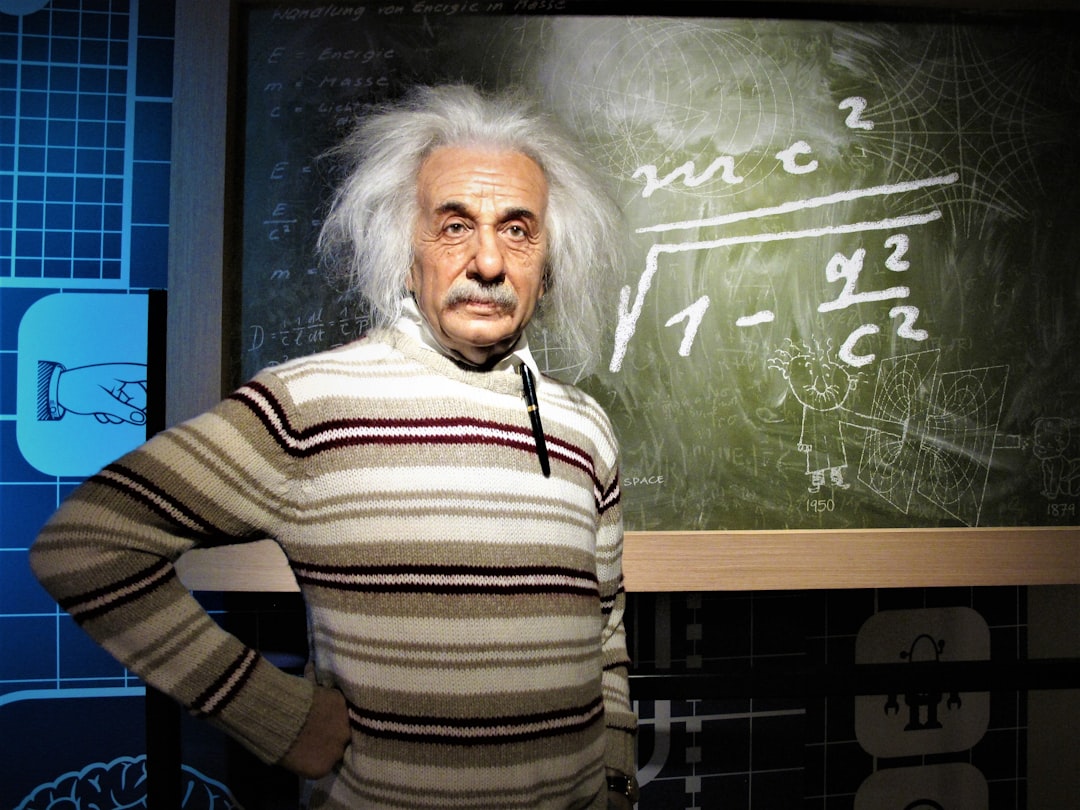
Albert Einstein, a name synonymous with groundbreaking scientific theories, also had a profound appreciation for music. You may not know that this iconic physicist was an accomplished violinist who often turned to music as a source of inspiration and solace. His love for music was not merely a hobby; it was intricately woven into the fabric of his scientific explorations.
As you delve into the relationship between Einstein’s scientific discoveries and the world of music, you will uncover a fascinating interplay that reveals how the two realms can inform and enrich one another. Einstein’s musical journey began in his childhood, where he was introduced to the violin by his mother. This early exposure to music shaped his understanding of rhythm and harmony, elements that would later resonate in his scientific work.
You might find it intriguing that Einstein often used music as a mental tool, employing it to think through complex problems in physics. This unique blend of art and science not only highlights his multifaceted genius but also sets the stage for a deeper exploration of how his theories, particularly the Theory of Relativity, have influenced the world of music.
Key Takeaways
- Einstein’s discovery of the connection between music and science revolutionized the way we understand the relationship between time, space, and music.
- Einstein’s theory of relativity had a profound impact on music, inspiring composers to explore new ways of expressing the concept of time and space in their compositions.
- Einstein’s work highlighted the deep connection between time and music, leading to a greater appreciation for the rhythmic and temporal elements of musical expression.
- Einstein’s ideas influenced musical composition by encouraging composers to experiment with unconventional rhythms and tempos, pushing the boundaries of traditional musical structures.
- The concept of time dilation, as proposed by Einstein, has been reflected in music through the use of techniques that manipulate the perception of time and create a sense of time distortion in musical compositions.
Einstein’s Theory of Relativity and its Impact on Music
The Theory of Relativity, one of Einstein’s most significant contributions to science, fundamentally altered our understanding of space and time. As you consider its implications, you may realize that this theory extends beyond the realm of physics and into the world of music. The relativity of time, as proposed by Einstein, suggests that time is not a constant but rather a fluid concept that can vary depending on speed and gravity.
This notion has profound implications for how we perceive rhythm and tempo in music. In music, tempo is often considered a fixed element, yet Einstein’s ideas challenge this perception. You might find it fascinating that composers and musicians have begun to explore the idea of flexible tempo, mirroring the fluidity of time described in relativity.
This has led to innovative compositions that play with the listener’s expectations, creating a dynamic experience that reflects the complexities of time itself. By embracing the principles of relativity, musicians can create works that resonate on both emotional and intellectual levels, inviting audiences to engage with music in new and profound ways.
The Connection between Time and Music in Einstein’s Work
Time is a central theme in both Einstein’s scientific theories and the art of music. As you explore this connection, you may come to appreciate how music serves as a unique medium for expressing temporal concepts. In your own experience with music, you might have noticed how different pieces evoke varying perceptions of time—some may feel fleeting, while others seem to stretch on indefinitely.
This subjective experience of time aligns closely with Einstein’s assertion that time is relative.
Composers often use techniques such as syncopation or polyrhythms to create tension and release, altering your sense of time as you listen.
You may find it intriguing that these musical techniques echo Einstein’s theories, as they challenge conventional notions of rhythm and timing. By understanding this connection, you can gain a deeper appreciation for how music not only reflects but also shapes our experience of time.
The Influence of Einstein’s Ideas on Musical Composition
| Composer | Composition | Influence of Einstein’s Ideas |
|---|---|---|
| George Antheil | Ballet Mécanique | Incorporated mechanical and rhythmic elements inspired by Einstein’s theories |
| Philip Glass | Einstein on the Beach | Composed an opera inspired by Einstein’s life and ideas |
| John Adams | Doctor Atomic | Explored the ethical implications of nuclear physics, influenced by Einstein’s work |
As you delve into the world of musical composition, you may discover that many contemporary composers have drawn inspiration from Einstein’s theories. The idea that time is not a linear progression but rather a complex interplay of moments has led to innovative approaches in composition. You might be surprised to learn that some composers intentionally incorporate elements of relativity into their works, creating pieces that challenge traditional structures and invite listeners to experience music in new ways.
For instance, composers like John Cage and Steve Reich have experimented with non-linear forms and unconventional rhythms, reflecting the fluidity of time described by Einstein. You may find it fascinating how these artists have embraced uncertainty and ambiguity in their compositions, mirroring the unpredictable nature of time itself. By doing so, they invite you to engage with music on a deeper level, encouraging you to explore your own perceptions and interpretations.
The Concept of Time Dilation and its Reflection in Music
Time dilation, a phenomenon predicted by Einstein’s Theory of Relativity, refers to the idea that time can pass at different rates depending on relative speed or gravitational fields. As you consider this concept, you might find it intriguing how it can be reflected in musical compositions. For example, certain pieces may create a sense of suspended time through slow tempos or extended harmonies, allowing listeners to experience moments that feel both fleeting and eternal.
In your exploration of music influenced by time dilation, you may encounter works that utilize silence or pauses as powerful tools for manipulating your perception of time. Composers like Morton Feldman have created pieces where silence plays an integral role, inviting you to reflect on the nature of time itself. By incorporating elements of time dilation into their compositions, these artists challenge you to reconsider your relationship with music and the temporal experience it offers.
Einstein’s Contribution to the Understanding of Rhythm and Tempo
Rhythm and tempo are foundational elements in music that dictate how we experience sound over time. As you reflect on Einstein’s contributions to our understanding of these concepts, you may recognize that his theories provide a framework for rethinking traditional notions of rhythm. The idea that time is relative opens up new possibilities for how musicians can approach tempo and rhythm in their compositions.
You might find it interesting that some contemporary musicians have begun to experiment with irregular rhythms or shifting tempos, echoing the fluidity inherent in Einstein’s theories. This exploration allows for a more dynamic interaction between musicians and their audience, as listeners are invited to engage with the music in real-time rather than adhering to rigid structures. By embracing Einstein’s insights into time, musicians can create works that resonate with the complexities of human experience.
The Use of Einstein’s Theories in Modern Music Production
In today’s music production landscape, you may notice an increasing influence of scientific principles on artistic creation. Producers and sound engineers often draw upon concepts from physics, including those introduced by Einstein, to shape their work. For instance, the manipulation of sound waves and frequencies can be likened to the principles of relativity—where different elements interact in complex ways to create a cohesive whole.
As you explore modern music production techniques, you might find it fascinating how technology allows for greater experimentation with sound. Producers can layer tracks, alter tempos, and manipulate rhythms in ways that reflect Einstein’s ideas about time and space. This blending of science and art not only enhances the listening experience but also invites you to consider how these principles can be applied creatively across various genres.
Einstein’s Influence on the Perception of Time in Musical Performance
The performance aspect of music is where the interplay between time and art truly comes alive. As you attend concerts or listen to live performances, you may become aware of how musicians interpret tempo and rhythm in real-time. This dynamic interaction between performers and their audience can evoke a heightened awareness of time—an experience deeply rooted in Einstein’s theories.
You might find it compelling how performers often make spontaneous decisions regarding tempo or phrasing during live shows, creating an atmosphere where time feels elastic.
By embracing this concept during performances, musicians invite you to engage with their work on a more intimate level, allowing for a shared exploration of time through sound.
The Intersection of Science and Art in Einstein’s Musical Discovery
The relationship between science and art has long been a subject of fascination for thinkers across disciplines. As you consider Einstein’s musical discovery, you may recognize how his scientific insights have informed artistic expression in profound ways. The intersection of these two realms invites you to explore how creativity can emerge from scientific inquiry and vice versa.
Einstein himself embodied this intersection; his love for music was not separate from his scientific pursuits but rather an integral part of his intellectual life. You might find it inspiring how he viewed music as a universal language capable of transcending cultural boundaries—a sentiment echoed by many artists today who seek to bridge gaps between disciplines through their work. By embracing this intersection, you can gain a deeper appreciation for the ways in which science and art enrich one another.
The Legacy of Einstein’s Ideas in Contemporary Music
As you reflect on the legacy of Einstein’s ideas within contemporary music, it becomes clear that his influence extends far beyond the realm of physics. Many modern composers and musicians continue to draw inspiration from his theories, exploring themes related to time, space, and perception in their work. You may find it fascinating how these ideas resonate across genres—from classical compositions to experimental electronic music—demonstrating the enduring relevance of Einstein’s insights.
In your exploration of contemporary music influenced by Einstein’s legacy, you might encounter artists who actively engage with scientific concepts in their creative processes. This ongoing dialogue between science and art serves as a testament to the power of interdisciplinary thinking—encouraging you to consider how diverse fields can inform one another in meaningful ways.
Einstein’s Enduring Influence on the World of Music
In conclusion, Albert Einstein’s enduring influence on the world of music is a testament to the profound connections between science and art. As you reflect on his musical discovery and its implications for contemporary composition and performance, you may come to appreciate how his theories have reshaped our understanding of rhythm, tempo, and time itself. Through this exploration, you’ve uncovered a rich tapestry woven from threads of creativity and inquiry—one that invites you to engage with both music and science in new ways.
As you continue your journey through the realms of sound and theory, remember that the interplay between these disciplines offers endless possibilities for exploration and discovery. Whether you’re listening to a symphony or experimenting with your own musical creations, let the spirit of inquiry inspired by Einstein guide your experience—reminding you that both science and art are essential components of our shared human experience.
The musical “Einstein: A Matter of Time” explores the fascinating intersection of science and art, delving into the life and theories of Albert Einstein through a captivating theatrical experience. For those interested in further exploring the themes of time and space, a related article on the My Cosmic Ventures website provides additional insights into the cosmic phenomena that inspired Einstein’s groundbreaking work. You can read more about these intriguing concepts by visiting this related article.
Why Time Freezes at Light Speed
FAQs
What is the Einstein Matter of Time Musical?
The Einstein Matter of Time Musical is a theatrical production that explores the life and work of Albert Einstein through music, dance, and storytelling.
Who created the Einstein Matter of Time Musical?
The Einstein Matter of Time Musical was created by a team of artists, including writers, composers, choreographers, and directors, who sought to bring Einstein’s story to life in a unique and engaging way.
What is the significance of the Einstein Matter of Time Musical?
The musical aims to educate and inspire audiences about the life and achievements of Albert Einstein, as well as to explore the broader themes of science, creativity, and the passage of time.
Where can I see the Einstein Matter of Time Musical?
The Einstein Matter of Time Musical may be performed at theaters, concert halls, or other performance venues. Check the official website or local listings for upcoming performances and ticket information.
Is the Einstein Matter of Time Musical suitable for all ages?
The suitability of the Einstein Matter of Time Musical for different age groups may vary depending on the production and the content of the show. It is recommended to check the show’s rating or contact the venue for more information.