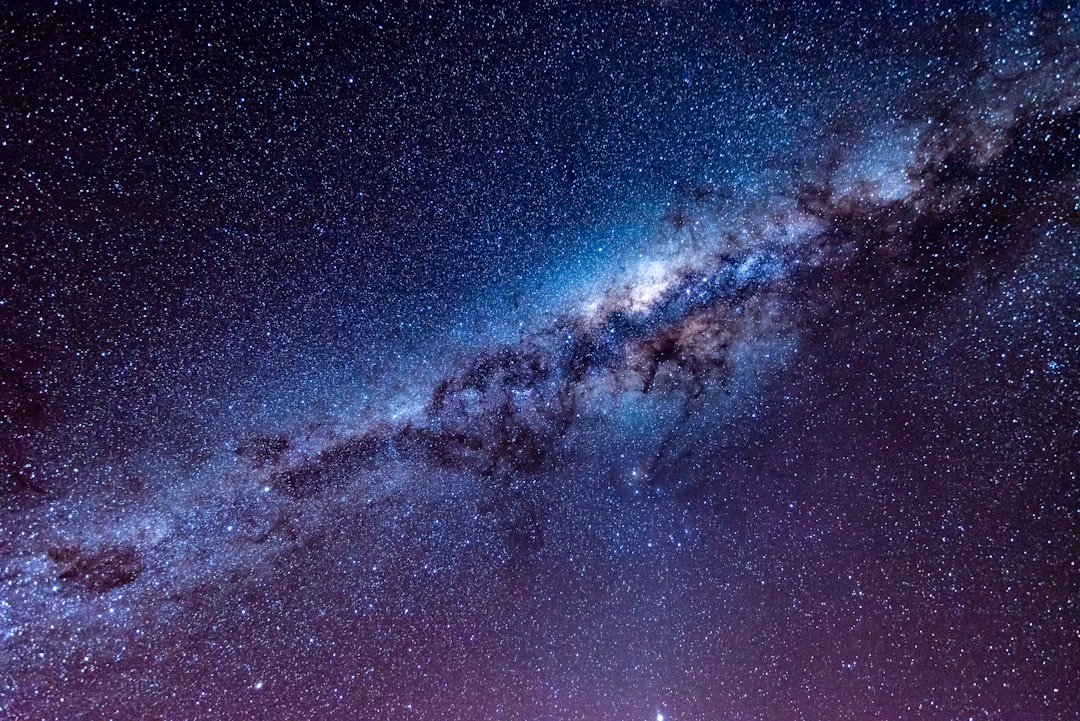
The birth of massive galaxies is a captivating chapter in the story of the universe, one that has intrigued astronomers and cosmologists for decades. These colossal structures, often containing billions of stars, gas, and dark matter, are believed to have formed in the early stages of the universe, shortly after the Big Bang. The prevailing theory suggests that massive galaxies emerged from the gravitational collapse of primordial gas clouds, which coalesced over time to create dense regions in the cosmos.
This process was not instantaneous; rather, it unfolded over billions of years, with galaxies merging and evolving into the massive entities observed today. As researchers delve deeper into the origins of these massive galaxies, they uncover a complex interplay of factors that contributed to their formation. The role of dark matter is particularly significant, as it provides the gravitational scaffolding necessary for ordinary matter to accumulate and form stars.
These elements combined to create a fertile ground for star formation, leading to the birth of massive galaxies that would eventually shape the structure of the universe as a whole.
Key Takeaways
- Massive galaxies are believed to have formed within the first billion years after the Big Bang, contributing to the early evolution of the universe.
- Observing the early universe requires advanced telescopes and instruments capable of detecting faint light from distant galaxies.
- Technological advancements, such as the James Webb Space Telescope, have been crucial in uncovering the existence and properties of massive galaxies in the early universe.
- Understanding the formation of massive galaxies involves studying the processes of star formation, gas accretion, and galaxy mergers in the early universe.
- Dark matter plays a significant role in the formation and evolution of massive galaxies, and studying its properties can provide insights into the early universe’s structure and dynamics.
Observing the Early Universe
Observing the early universe presents a unique set of challenges and opportunities for astronomers. The light from distant galaxies takes billions of years to reach Earth, meaning that when scientists observe these celestial bodies, they are essentially looking back in time. This phenomenon allows researchers to study the conditions and processes that prevailed in the universe’s infancy.
Telescopes equipped with advanced technology have become essential tools in this endeavor, enabling astronomers to peer into the depths of space and capture images of galaxies that existed when the universe was just a fraction of its current age. The significance of these observations cannot be overstated. By analyzing the light emitted from early galaxies, scientists can glean insights into their composition, structure, and formation processes.
Spectroscopy, for instance, allows researchers to determine the chemical makeup of these distant galaxies, revealing clues about star formation rates and the presence of elements like hydrogen and helium. Such data not only enhances understanding of individual galaxies but also contributes to a broader comprehension of cosmic evolution and the conditions that led to the formation of massive galaxies.
The Role of Technology in Unveiling Massive Galaxies
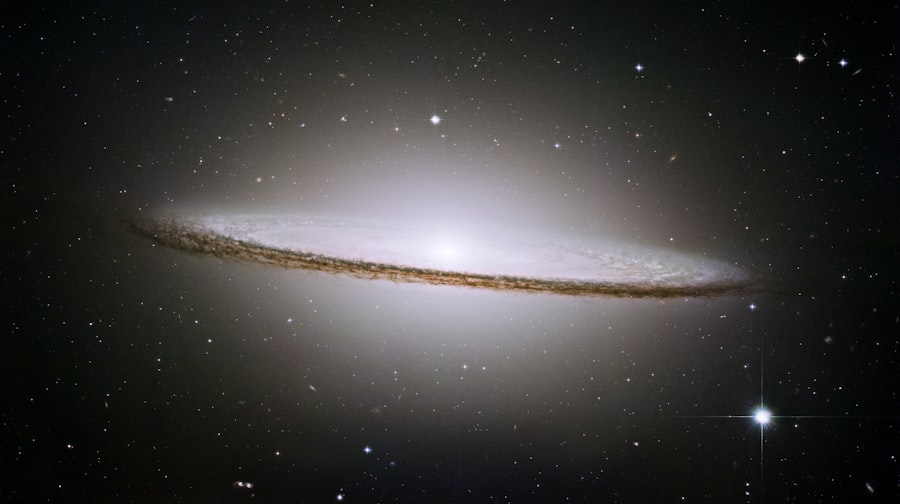
The advancement of technology has revolutionized the field of astronomy, particularly in the study of massive galaxies. Ground-based telescopes equipped with adaptive optics have significantly improved image clarity by compensating for atmospheric distortions. This enhancement allows astronomers to observe distant galaxies with unprecedented detail, revealing intricate structures and features that were previously obscured.
Furthermore, space-based observatories like the Hubble Space Telescope have provided a clearer view of the universe by eliminating atmospheric interference altogether. In addition to optical advancements, radio and infrared technologies have played a crucial role in unveiling massive galaxies. These wavelengths can penetrate cosmic dust clouds that often obscure visible light, allowing astronomers to study regions where star formation is actively occurring.
Instruments such as the Atacama Large Millimeter/submillimeter Array (ALMA) have enabled researchers to detect cold gas and dust in distant galaxies, providing vital information about their formation and evolution. As technology continues to evolve, it promises to unlock even more secrets about massive galaxies and their role in shaping the cosmos.
Understanding the Formation of Massive Galaxies
| Metrics | Data |
|---|---|
| Galaxy Mass | 10^11 to 10^13 solar masses |
| Star Formation Rate | 100 to 1000 solar masses per year |
| Gas Content | 10% to 50% of total mass |
| Metallicity | 0.1 to 1 times solar metallicity |
Understanding how massive galaxies form is a complex puzzle that scientists are gradually piecing together. The prevailing model suggests that these galaxies formed through a combination of hierarchical merging and rapid star formation. In this scenario, smaller galaxies merged over time to create larger structures, while simultaneously undergoing intense bursts of star formation fueled by gas inflows.
This process is thought to have been particularly pronounced during specific epochs in cosmic history when conditions were ripe for galaxy growth. Recent simulations and observations have provided valuable insights into this formation process. For instance, researchers have identified a phenomenon known as “cold mode accretion,” where cold gas flows directly into galaxies without being heated by prior interactions.
This mechanism allows for sustained star formation over extended periods, contributing to the growth of massive galaxies. Additionally, studies have shown that feedback mechanisms from supernovae and active galactic nuclei can regulate star formation rates, influencing how these colossal structures evolve over time.
Uncovering the Secrets of Dark Matter in the Early Universe
Dark matter remains one of the most enigmatic components of the universe, constituting approximately 27% of its total mass-energy content. Its presence is inferred through gravitational effects on visible matter, yet its exact nature remains elusive. In the context of massive galaxies, dark matter plays a pivotal role in their formation and evolution.
Researchers believe that dark matter halos provide the gravitational framework necessary for ordinary matter to accumulate and form stars. Uncovering the secrets of dark matter in the early universe involves studying its distribution and behavior within massive galaxies. Observations suggest that dark matter is not uniformly distributed; instead, it forms halos around galaxies that influence their dynamics and structure.
By analyzing galaxy rotation curves and gravitational lensing effects, scientists can infer properties of dark matter halos and their impact on galaxy formation. These investigations not only enhance understanding of individual galaxies but also contribute to broader cosmological models that seek to explain the universe’s large-scale structure.
The Impact of Massive Galaxies on the Evolution of the Universe
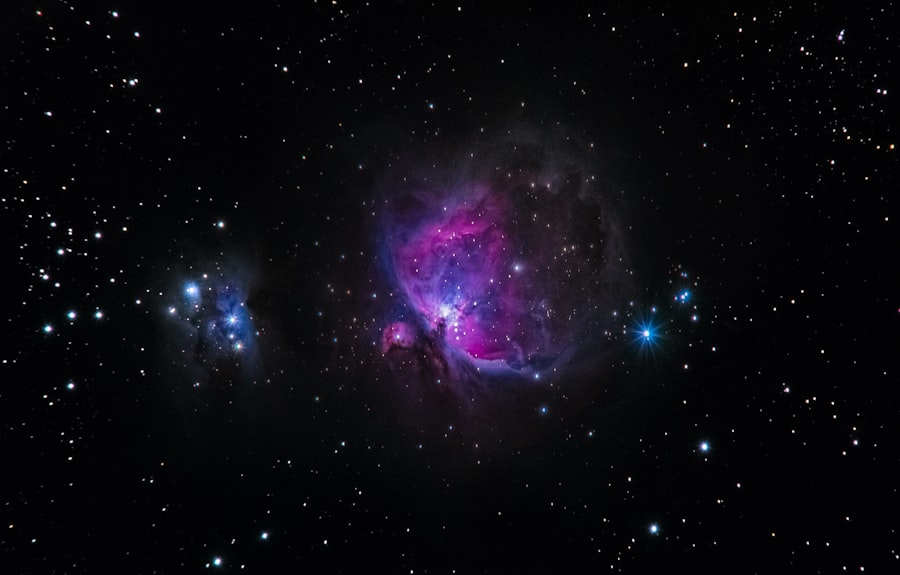
Massive galaxies exert a profound influence on the evolution of the universe as a whole. Their formation and growth are intricately linked to cosmic processes such as star formation, galaxy mergers, and feedback mechanisms. As these colossal structures evolve, they can trigger bursts of star formation in their vicinity, leading to the creation of new stars and galaxies.
This interconnectedness highlights the importance of massive galaxies as key players in shaping cosmic history. Moreover, massive galaxies serve as gravitational anchors within galaxy clusters, affecting their dynamics and interactions with neighboring structures. The gravitational pull exerted by these giants can influence the trajectories of smaller galaxies, leading to mergers and interactions that further drive cosmic evolution.
Understanding how massive galaxies impact their surroundings provides valuable insights into the larger framework of cosmic evolution and helps scientists piece together the intricate tapestry of the universe’s history.
The Connection Between Massive Galaxies and Supermassive Black Holes
The connection between massive galaxies and supermassive black holes is a topic of great interest in contemporary astrophysics. Observations reveal a striking correlation between the mass of supermassive black holes at a galaxy’s center and various properties of their host galaxies, such as stellar mass and bulge size. This relationship suggests that supermassive black holes play a crucial role in regulating galaxy growth and evolution.
The prevailing theory posits that as massive galaxies form and evolve, they acquire supermassive black holes through processes such as mergers with other galaxies or accretion of gas over time. These black holes can influence their host galaxies through feedback mechanisms, where energy released during accretion events can regulate star formation rates and shape galactic structures. Understanding this intricate relationship not only sheds light on galaxy evolution but also provides insights into fundamental questions about black hole formation and growth.
The Significance of Massive Galaxies in Cosmology
Massive galaxies hold significant importance in cosmology due to their role as tracers of cosmic evolution and structure formation. Their distribution across the universe provides valuable information about large-scale structures such as galaxy clusters and filaments within the cosmic web. By studying these colossal entities, cosmologists can gain insights into fundamental questions regarding dark matter, dark energy, and the overall dynamics of the universe.
Furthermore, massive galaxies serve as laboratories for testing theoretical models of galaxy formation and evolution. Observations can validate or challenge existing cosmological theories, leading to refinements in our understanding of how galaxies form and interact over cosmic time scales. As researchers continue to explore these massive structures, they contribute to a more comprehensive understanding of the universe’s history and its underlying physical laws.
Challenges in Studying Massive Galaxies
Despite significant advancements in technology and observational techniques, studying massive galaxies presents numerous challenges for astronomers. One major hurdle is their immense distances from Earth; many massive galaxies are located billions of light-years away, making them faint and difficult to observe in detail. This limitation necessitates highly sensitive instruments capable of detecting faint light across various wavelengths.
Additionally, cosmic dust often obscures observations in certain regions, complicating efforts to study star formation processes within these galaxies. Researchers must employ sophisticated techniques such as multi-wavelength observations to overcome these challenges effectively. By combining data from optical, infrared, radio, and other wavelengths, astronomers can construct a more comprehensive picture of massive galaxies and their intricate structures.
Future Prospects in the Study of Early Universe: Massive Galaxies Unveiled
The future prospects for studying massive galaxies are promising as new technologies continue to emerge. Upcoming space telescopes like NASA’s James Webb Space Telescope (JWST) are set to revolutionize our understanding of the early universe by providing unprecedented sensitivity and resolution across infrared wavelengths. This capability will allow astronomers to probe deeper into cosmic history than ever before, unveiling previously hidden details about massive galaxies.
Moreover, advancements in computational modeling will enable researchers to simulate galaxy formation processes with greater accuracy than ever before. These simulations can help bridge gaps between observational data and theoretical predictions, enhancing understanding of how massive galaxies evolve over time. As scientists continue to push the boundaries of technology and knowledge, they stand poised to uncover new insights into the nature and significance of massive galaxies within our universe.
Implications for Our Understanding of the Universe’s Origins
The study of massive galaxies carries profound implications for understanding the origins of the universe itself. By unraveling their formation processes and evolutionary pathways, scientists gain insights into fundamental questions about cosmic history and structure formation. The interplay between dark matter, baryonic matter, and cosmic radiation during galaxy formation sheds light on conditions present shortly after the Big Bang.
Furthermore, understanding how massive galaxies interact with their environments contributes to broader cosmological models that seek to explain large-scale structures within the universe.
In recent years, astronomers have been captivated by the discovery of massive galaxies that existed in the early universe, challenging our understanding of galaxy formation and evolution. These colossal structures, formed just a few billion years after the Big Bang, suggest that galaxy formation processes were more rapid and complex than previously thought. For those interested in delving deeper into this fascinating topic, a related article can be found on My Cosmic Ventures. This article explores the implications of these early massive galaxies on our current cosmological models and the advanced observational techniques used to study them. To read more, visit