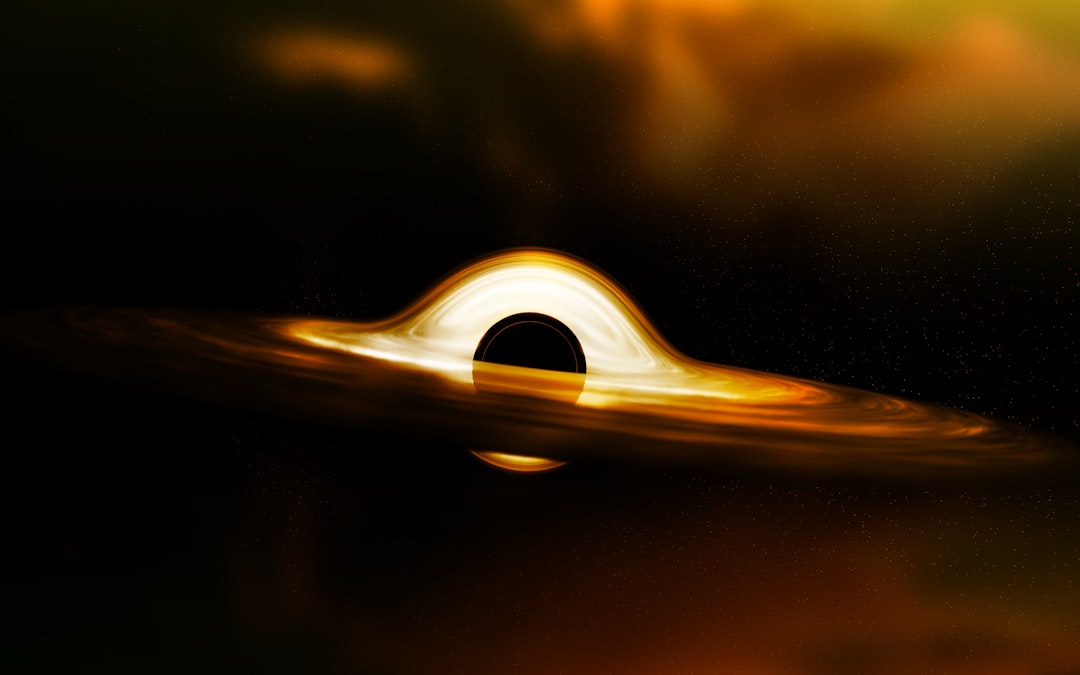
Black holes have long captivated the imagination of scientists and the general public alike. These enigmatic cosmic entities, formed from the remnants of massive stars that have undergone gravitational collapse, possess gravitational fields so intense that nothing, not even light, can escape their grasp. The study of black holes has evolved significantly over the years, transitioning from theoretical constructs to objects of empirical observation.
Their existence challenges the very fabric of our understanding of physics, particularly in the realms of general relativity and quantum mechanics. As researchers delve deeper into the mysteries of black holes, they uncover not only the nature of these fascinating phenomena but also their implications for the universe at large. The allure of black holes lies not only in their mysterious nature but also in their potential to reshape our understanding of space and time.
They serve as natural laboratories for testing the laws of physics under extreme conditions. As scientists continue to explore these cosmic giants, they are piecing together a more comprehensive picture of how black holes influence their surroundings and the universe’s evolution. Among the many black holes scattered throughout the cosmos, one stands out due to its proximity to our solar system, offering a unique opportunity for study and exploration.
Key Takeaways
- Black holes are mysterious and fascinating cosmic entities that have captured the imagination of scientists and the public alike.
- The closest black hole to our solar system is located just 1,000 light-years away in the HR 6819 system.
- The closest black hole was discovered by a team of astronomers using the European Southern Observatory’s Very Large Telescope in Chile.
- The closest black hole is a stellar-mass black hole, with a mass about 4 times that of the sun, and it is in a binary system with a B-type star.
- Studying the closest black hole has implications for our understanding of the dynamics and evolution of our solar system, as well as the potential impact on nearby celestial bodies.
What is the Closest Black Hole to Our Solar System?
The closest known black hole to our solar system is named V616 Monocerotis, or V616 Mon for short. Located approximately 3,000 light-years away in the constellation Monoceros, this stellar black hole is part of a binary system, where it orbits a companion star. V616 Mon is classified as a stellar black hole, which typically forms from the gravitational collapse of massive stars at the end of their life cycles.
This particular black hole has garnered attention not only for its proximity but also for its intriguing characteristics and the insights it may provide into the nature of black holes in general. V616 Mon is estimated to have a mass between 9 and 13 times that of our Sun, placing it within the range of typical stellar black holes. Its relatively close distance makes it an ideal candidate for study, as astronomers can observe its interactions with its companion star and analyze the effects of its gravitational pull on nearby celestial bodies.
The discovery and ongoing research into V616 Mon have opened new avenues for understanding how black holes form, evolve, and influence their environments.
How Was the Closest Black Hole Discovered?
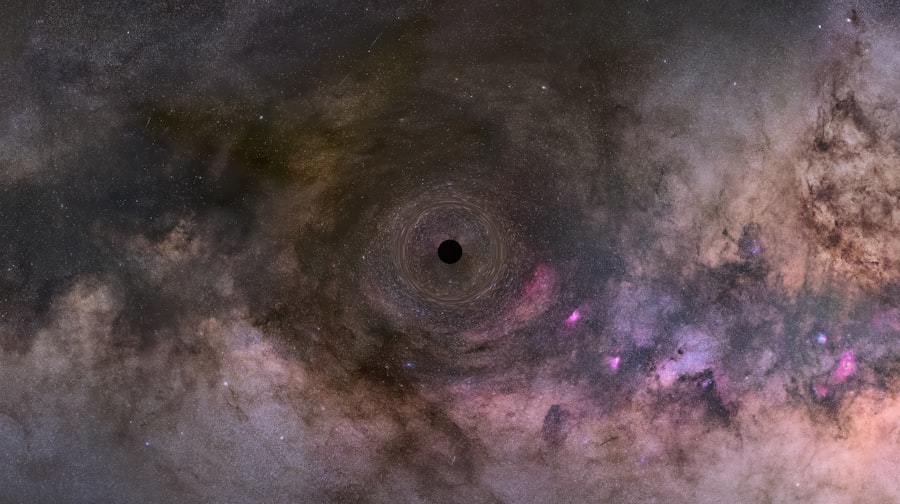
The discovery of V616 Mon was a result of advancements in observational technology and techniques in astrophysics. In the early 1980s, astronomers began to identify potential black hole candidates by observing X-ray emissions from binary star systems. These emissions are produced when matter from a companion star is drawn toward the black hole, forming an accretion disk that heats up and emits X-rays as it spirals inward.
V616 Mon was identified as a strong candidate due to its X-ray emissions, which were detected by various space-based observatories.
By analyzing the motion of this companion star and applying Kepler’s laws of motion, astronomers were able to estimate the mass of V616 Mon.
The combination of X-ray data and stellar dynamics provided compelling evidence for the existence of this nearby black hole, marking a significant milestone in the study of these cosmic phenomena.
Characteristics of the Closest Black Hole
| Characteristic | Value |
|---|---|
| Name | Sagittarius A* |
| Distance from Earth | about 26,000 light-years |
| Mass | about 4 million times that of the Sun |
| Size | about 44 million kilometers in diameter |
| Discovery Year | 1974 |
V616 Mon exhibits several intriguing characteristics that make it a subject of interest for astrophysicists. As a stellar black hole, it is formed from a massive star that underwent supernova explosion, leaving behind a core that collapsed under its own gravity. The mass range of V616 Mon suggests that it is on the heavier end of typical stellar black holes, which can vary widely in mass depending on their progenitor stars.
This mass allows V616 Mon to exert a significant gravitational influence on its surroundings. In addition to its mass, V616 Mon’s proximity to Earth provides an exceptional opportunity for detailed study. Astronomers can observe its accretion disk and measure the X-ray emissions with greater precision than more distant black holes.
The dynamics of its binary system also offer insights into how black holes interact with companion stars, shedding light on processes such as mass transfer and angular momentum exchange. These characteristics make V616 Mon an invaluable asset in understanding not only black holes but also the broader mechanisms at play in stellar evolution.
Implications for Our Solar System
The existence of V616 Mon raises intriguing questions about its implications for our solar system. While it is located thousands of light-years away, its gravitational influence could potentially affect nearby stars and celestial bodies over astronomical timescales. Understanding how V616 Mon interacts with its environment can provide insights into how black holes might influence star formation and evolution in their vicinity.
Moreover, studying V616 Mon can help scientists understand the distribution and frequency of black holes in our galaxy. If V616 Mon is representative of other stellar black holes, it may suggest that there are many more lurking in our galactic neighborhood than previously thought. This realization could lead to a reevaluation of how black holes fit into the larger cosmic picture and their role in shaping galactic structures.
Potential Impact on Nearby Celestial Bodies
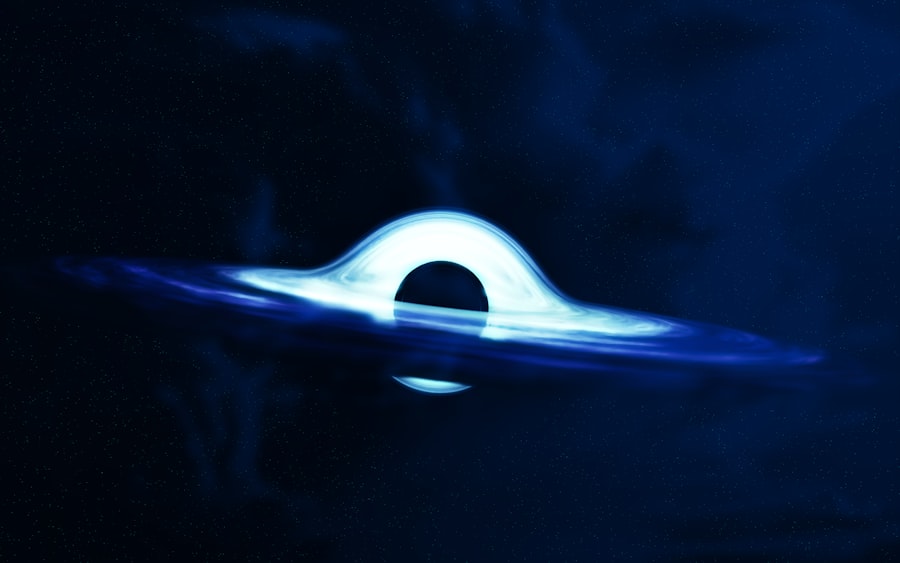
The gravitational pull exerted by V616 Mon could have significant effects on nearby celestial bodies within its vicinity. While it is unlikely to pose any immediate threat to our solar system due to its distance, understanding its gravitational influence can provide valuable insights into how black holes interact with other stars and systems. For instance, if a star were to pass too close to V616 Mon, it could experience tidal forces that might strip away material or even lead to its destruction.
Additionally, studying V616 Mon’s interactions with its companion star can reveal how mass transfer occurs in binary systems involving black holes. This process can lead to phenomena such as X-ray bursts or even gamma-ray bursts if conditions are right. By examining these interactions, astronomers can gain a deeper understanding of how black holes affect their surroundings and contribute to the dynamic processes occurring in galaxies.
How Does the Closest Black Hole Compare to Other Known Black Holes?
When comparing V616 Mon to other known black holes, several factors come into play, including mass, distance, and observational characteristics. While V616 Mon is relatively close to Earth at approximately 3,000 light-years away, there are other black holes that are more massive or located at greater distances. For example, Sagittarius A*, the supermassive black hole at the center of our Milky Way galaxy, has a mass equivalent to about four million suns but is located much farther away.
In terms of size and mass, V616 Mon falls within the typical range for stellar black holes but does not reach the extremes seen in some other examples across the universe. However, its proximity allows for more detailed observations than many distant counterparts. This makes V616 Mon an important benchmark for understanding stellar black holes and their properties while providing a unique opportunity to study their behavior in real-time.
Theoretical and Practical Importance of Studying the Closest Black Hole
The study of V616 Mon holds both theoretical and practical significance for astrophysics. Theoretically, it provides an opportunity to test existing models of black hole formation and evolution against observational data. By analyzing its properties and behavior within its binary system, researchers can refine their understanding of how stellar black holes form from massive stars and how they interact with their environments.
Practically, V616 Mon serves as a valuable laboratory for studying high-energy astrophysical processes. Its X-ray emissions offer insights into accretion physics and the dynamics of matter under extreme gravitational conditions. This knowledge can be applied not only to other black holes but also to various astrophysical phenomena across different scales, enhancing our overall understanding of cosmic processes.
Future Research and Exploration Opportunities
As technology continues to advance, future research opportunities surrounding V616 Mon are likely to expand significantly. Upcoming space missions equipped with advanced observational capabilities will enable astronomers to gather more detailed data about this nearby black hole and its interactions with its companion star. These missions may include next-generation X-ray observatories or gravitational wave detectors that could capture events related to V616 Mon or similar systems.
Moreover, interdisciplinary collaborations between astrophysicists and other scientific fields may yield new insights into the nature of black holes and their role in cosmic evolution. By integrating knowledge from various disciplines, researchers can develop more comprehensive models that account for complex interactions within binary systems and beyond.
Public Interest and Awareness of Black Holes
Public interest in black holes has surged in recent years, fueled by popular media portrayals and scientific breakthroughs that have captured the imagination of audiences worldwide. Documentaries, films, and books have brought these cosmic phenomena into mainstream consciousness, sparking curiosity about their nature and significance in the universe. Events such as the first-ever image of a black hole captured by the Event Horizon Telescope have further fueled public fascination with these mysterious entities.
As awareness grows, so does the importance of communicating scientific findings related to black holes effectively.
By fostering public interest in astrophysics and cosmology, society can cultivate a deeper appreciation for the wonders of the universe.
What the Closest Black Hole Means for Our Understanding of the Universe
The discovery and ongoing study of V616 Mon offer profound implications for humanity’s understanding of the universe. As one of the closest known black holes to our solar system, it serves as a unique window into the nature of these enigmatic objects and their interactions with surrounding celestial bodies. By examining V616 Mon’s characteristics and behavior within its binary system, researchers can refine existing theories about black hole formation and evolution while gaining insights into broader cosmic processes.
Ultimately, V616 Mon represents not just an isolated phenomenon but a key piece in the intricate puzzle that is our universe. As scientists continue to explore its mysteries, they contribute to a growing body of knowledge that enhances humanity’s understanding of fundamental questions about existence itself—questions that have intrigued thinkers for centuries. Through continued research and exploration opportunities surrounding this nearby black hole, humanity stands poised to unlock even more secrets hidden within the cosmos.
Recent studies have revealed fascinating insights about the closest black hole to our solar system, known as V616 Monocerotis or A0620-00. This intriguing celestial object is located approximately 3,000 light-years away and has sparked significant interest among astronomers. For more detailed information on this topic, you can read the related article on our website here.
WATCH THIS! The Invisible Threat: A Rogue Black Hole Headed for Our Solar System?
FAQs
What is the closest black hole to our solar system?
The closest black hole to our solar system is located about 1,000 light-years away in the constellation of Telescopium. It was discovered in 2018 and is known as “LB-1.”
How was the closest black hole to our solar system discovered?
The closest black hole to our solar system was discovered using the radial velocity method, which measures the wobble of a star caused by the gravitational pull of an unseen companion. In this case, the unseen companion was determined to be a black hole.
What are the characteristics of the closest black hole to our solar system?
The closest black hole to our solar system, LB-1, is estimated to be about 70 times the mass of the Sun. It is also orbiting a star that is about 2.9 times the mass of the Sun.
How does the discovery of the closest black hole to our solar system impact our understanding of the universe?
The discovery of the closest black hole to our solar system provides astronomers with a better understanding of the distribution and characteristics of black holes in our galaxy. It also opens up new opportunities for studying the behavior and interactions of black holes with their surrounding environments.
Could the closest black hole to our solar system pose any threat to Earth?
The closest black hole to our solar system, located 1,000 light-years away, poses no direct threat to Earth. Black holes only pose a threat if they are in close proximity to a star or other celestial body, which could potentially be affected by their gravitational pull.