
In recent years, the issue of space debris has escalated into a significant concern for both space agencies and private companies involved in space exploration. As humanity’s presence in space has expanded, so too has the accumulation of defunct satellites, spent rocket stages, and fragments from collisions. The European Space Agency (ESA) estimates that there are over 34,000 pieces of debris larger than 10 centimeters orbiting Earth, with millions of smaller fragments that pose a threat to operational spacecraft.
This growing cloud of debris not only jeopardizes current missions but also threatens the sustainability of future endeavors in space. The origins of this debris are varied, stemming from both intentional actions, such as the decommissioning of satellites, and unintentional events, like collisions between objects in orbit. Each piece of debris travels at incredibly high speeds, making even the smallest fragments capable of causing catastrophic damage to functioning satellites and spacecraft.
As the number of active satellites continues to rise—projected to reach thousands in the coming years—the risk of collision increases exponentially. This situation has prompted urgent calls for effective solutions to mitigate the dangers posed by space debris.
Key Takeaways
- Space debris is a growing problem that poses a threat to space missions and future space exploration.
- Clearspace-1 is the first mission designed to remove space debris from Earth’s orbit.
- Clearspace-1 works by using a robotic arm to capture and remove large pieces of space debris.
- The challenges of removing space debris include tracking, capturing, and disposing of the debris safely.
- Clearing space debris is crucial for the future of space exploration and requires international collaboration and innovative solutions.
The Impact of Space Debris on Space Missions
The presence of space debris has profound implications for ongoing and future space missions. For operational satellites, the risk of collision with debris can lead to costly damages or even total mission failure. Satellite operators must constantly monitor their assets and, when necessary, execute avoidance maneuvers to steer clear of potential collisions.
These maneuvers not only consume fuel but also reduce the operational lifespan of satellites, leading to increased costs and resource depletion. Moreover, the threat posed by space debris extends beyond individual missions; it has broader implications for international cooperation in space exploration. As nations and private entities invest heavily in satellite technology for communication, navigation, and scientific research, the potential for catastrophic collisions raises concerns about the safety and reliability of these systems.
The growing awareness of this issue has led to calls for collaborative efforts to address the problem, emphasizing the need for a unified approach to ensure the long-term sustainability of space activities.
Introduction to Clearspace-1: The First Space Debris Removal Mission

In response to the escalating threat of space debris, innovative solutions have emerged, one of which is Clearspace-1, a pioneering mission designed specifically for debris removal. Developed by ClearSpace SA in collaboration with the European Space Agency (ESA), this mission represents a significant step forward in addressing the challenges posed by orbital debris. Scheduled for launch in 2025, Clearspace-1 aims to capture and deorbit a defunct satellite fragment known as Vespa (Vega Secondary Payload Adapter), which has been floating in low Earth orbit since 2013.
Clearspace-1 is not just a technical endeavor; it symbolizes a shift in how humanity approaches the problem of space debris. By actively removing defunct objects from orbit, this mission sets a precedent for future initiatives aimed at cleaning up Earth’s orbital environment. The success of Clearspace-1 could pave the way for a new industry focused on debris removal, fostering innovation and collaboration among nations and private companies alike.
How Clearspace-1 Works
| Aspect | Details |
|---|---|
| Function | Clearspace-1 works by filtering and purifying air and water to remove pollutants and contaminants. |
| Technology | It utilizes advanced filtration systems and chemical processes to achieve clean air and water. |
| Application | It can be used in various settings such as homes, offices, industrial facilities, and outdoor environments. |
| Benefits | Clearspace-1 helps in improving air and water quality, promoting better health and environmental sustainability. |
The operational mechanics of Clearspace-1 are both innovative and complex. The mission employs a unique capture mechanism designed to grasp and secure the Vespa fragment using robotic arms equipped with specialized tools.
This method not only ensures that the debris is removed from orbit but also minimizes the risk of creating additional fragments during the process. The technology behind Clearspace-1 is a culmination of years of research and development aimed at creating effective solutions for debris removal. The mission incorporates advanced sensors and navigation systems that allow it to accurately track and approach the target fragment.
This level of precision is crucial, as even minor miscalculations could result in failure to capture the debris or unintended collisions with other objects in orbit. By demonstrating this technology in action, Clearspace-1 aims to build confidence in debris removal methods and inspire further advancements in this critical field.
The Challenges of Removing Space Debris
Despite its promise, the task of removing space debris is fraught with challenges that must be addressed for future missions to succeed. One significant hurdle is the sheer diversity and unpredictability of debris objects in orbit. With thousands of pieces varying in size, shape, and trajectory, developing a one-size-fits-all solution is nearly impossible.
Each piece may require a tailored approach for effective capture and removal, complicating mission planning and execution. Additionally, there are technical challenges associated with rendezvousing with fast-moving debris. The relative velocities at which these objects travel can exceed 28,000 kilometers per hour (17,500 miles per hour), making precise maneuvers essential for successful capture.
Furthermore, there are regulatory and legal considerations surrounding space debris removal that must be navigated. International agreements regarding liability and ownership can complicate efforts to remove debris that may belong to different countries or private entities.
The Future of Space Debris Removal
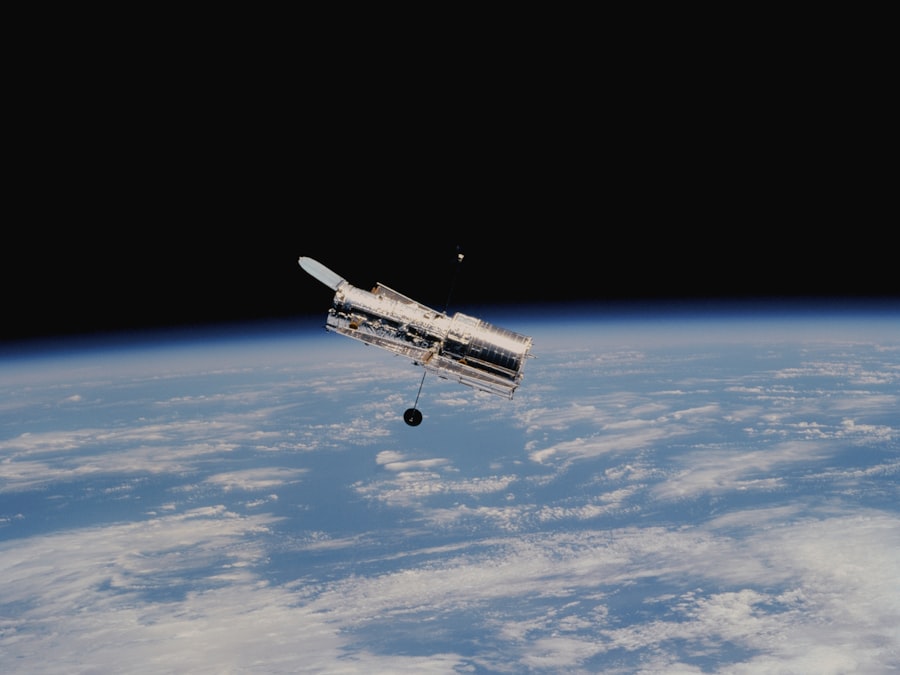
Looking ahead, the future of space debris removal appears promising yet complex. As awareness of the issue grows, so does interest in developing technologies and strategies for effective cleanup operations. Various organizations and companies are exploring innovative solutions ranging from robotic arms to nets and harpoons designed specifically for capturing debris.
Moreover, international collaboration will play a crucial role in shaping the future landscape of space debris removal. As nations recognize that space is a shared resource, cooperative efforts will be essential for establishing guidelines and frameworks that govern debris removal activities.
Initiatives like Clearspace-1 serve as catalysts for broader discussions on how best to tackle this global challenge collectively.
The Importance of Clearing Space Debris for Future Space Exploration
The importance of clearing space debris cannot be overstated when considering humanity’s aspirations for future exploration beyond Earth. As missions to Mars and beyond become more feasible, ensuring a safe operating environment in low Earth orbit is paramount. A congested orbital environment filled with debris poses risks not only to satellites but also to crewed missions that may venture into deeper space.
By prioritizing debris removal efforts now, humanity can lay the groundwork for sustainable exploration practices that will benefit generations to come. A cleaner orbital environment will facilitate safer launches and operations while fostering innovation in satellite technology and exploration missions. Ultimately, addressing the issue of space debris is not just about protecting current assets; it is about securing a future where exploration can thrive without the looming threat of collision.
Clearspace-1 and International Collaboration
Clearspace-1 exemplifies how international collaboration can drive progress in addressing global challenges like space debris. The mission’s development involved partnerships between ESA and ClearSpace SA, showcasing how public-private collaborations can yield innovative solutions. Such partnerships are essential as they combine resources, expertise, and funding from various stakeholders to tackle complex problems that no single entity can solve alone.
Furthermore, Clearspace-1 serves as a model for future collaborative efforts among nations seeking to address space sustainability issues collectively. By sharing knowledge and best practices, countries can work together to establish standards for debris removal operations while fostering an environment conducive to innovation. This spirit of cooperation will be vital as humanity continues to expand its presence in space.
The Environmental Impact of Space Debris
The environmental impact of space debris extends beyond immediate threats to operational satellites; it also raises concerns about long-term sustainability in Earth’s orbital environment. As more objects accumulate in space, the risk of collisions increases exponentially, leading to a cascading effect known as the Kessler Syndrome—where collisions generate more debris, further exacerbating the problem. This scenario could render certain orbits unusable for generations, hindering scientific research and technological advancement.
Moreover, while much focus is placed on the physical dangers posed by space debris, there are also environmental implications associated with its removal processes. Ensuring that cleanup missions do not inadvertently create additional debris or harm existing satellites requires careful planning and execution. As such, developing environmentally responsible methods for debris removal will be crucial as humanity seeks to balance its ambitions in space with its responsibilities toward preserving the orbital environment.
The Economics of Space Debris Removal
The economics surrounding space debris removal present both challenges and opportunities for stakeholders involved in this emerging field. On one hand, the costs associated with developing and deploying debris removal technologies can be substantial. Funding such initiatives often requires collaboration between governments and private entities willing to invest in long-term solutions that may not yield immediate returns.
On the other hand, as awareness grows regarding the risks posed by space debris, there is potential for new markets to emerge focused on cleanup operations. Companies specializing in debris removal could find lucrative opportunities as satellite operators seek assurances regarding their assets’ safety in increasingly crowded orbits. Additionally, governments may recognize that investing in cleanup initiatives can ultimately save costs associated with satellite replacements or collision damages.
Clearspace-1 and the Clean-Up of Earth’s Orbit
In conclusion, Clearspace-1 represents a significant milestone in humanity’s efforts to address the growing problem of space debris. By actively removing defunct objects from orbit, this mission not only aims to enhance safety for current operations but also sets a precedent for future initiatives focused on cleaning up Earth’s orbital environment. The challenges associated with removing space debris are substantial; however, through international collaboration and innovative technologies, there is hope for sustainable solutions.
As humanity continues its journey into space exploration, prioritizing the clearing of space debris will be essential for ensuring safe operations and fostering innovation in satellite technology. Clearspace-1 serves as a beacon of progress—a reminder that while challenges abound, collective action can lead to meaningful change in preserving our shared orbital environment for generations to come.
The ClearSpace-1 mission, a pioneering initiative aimed at tackling space debris, is set to make significant strides in cleaning up Earth’s orbit. This mission, spearheaded by the European Space Agency in collaboration with ClearSpace, a Swiss start-up, is designed to capture and deorbit a piece of space debris using a specially designed spacecraft equipped with robotic arms. For more detailed insights into the mission’s objectives and technological innovations, you can read a related article on the topic by visiting this page. This article delves into the challenges and potential solutions for space debris management, highlighting the importance of the ClearSpace-1 mission in ensuring the sustainability of space activities.
🌌 WATCH THIS! The Billion-Dollar Satellite That Will Trap Humanity on Earth
FAQs
What is the ClearSpace-1 mission?
The ClearSpace-1 mission is a space debris removal mission led by the European Space Agency (ESA). Its goal is to demonstrate the technical and economic feasibility of removing space debris from orbit.
When is the ClearSpace-1 mission scheduled to launch?
The ClearSpace-1 mission is scheduled to launch in 2025.
What is the purpose of the ClearSpace-1 mission?
The purpose of the ClearSpace-1 mission is to remove a specific piece of space debris, the Vespa payload adapter, from low Earth orbit. This will demonstrate the capability to remove large, uncontrolled space debris objects that pose a risk to operational satellites and future space missions.
How will the ClearSpace-1 mission remove the space debris?
The ClearSpace-1 mission will use a robotic arm to capture the Vespa payload adapter and then safely deorbit it, causing it to burn up in the Earth’s atmosphere.
What are the potential benefits of the ClearSpace-1 mission?
The successful completion of the ClearSpace-1 mission could pave the way for future commercial space debris removal services, helping to mitigate the growing problem of space debris and reduce the risk of collisions in orbit.